
The 5 Best Grass Types for a Delaware Lawn (2024)
Stop guessing. We'll show you exactly which grass types will thrive in your Delaware yard, from the sandy coast to the clay-heavy hills of New Castle County.
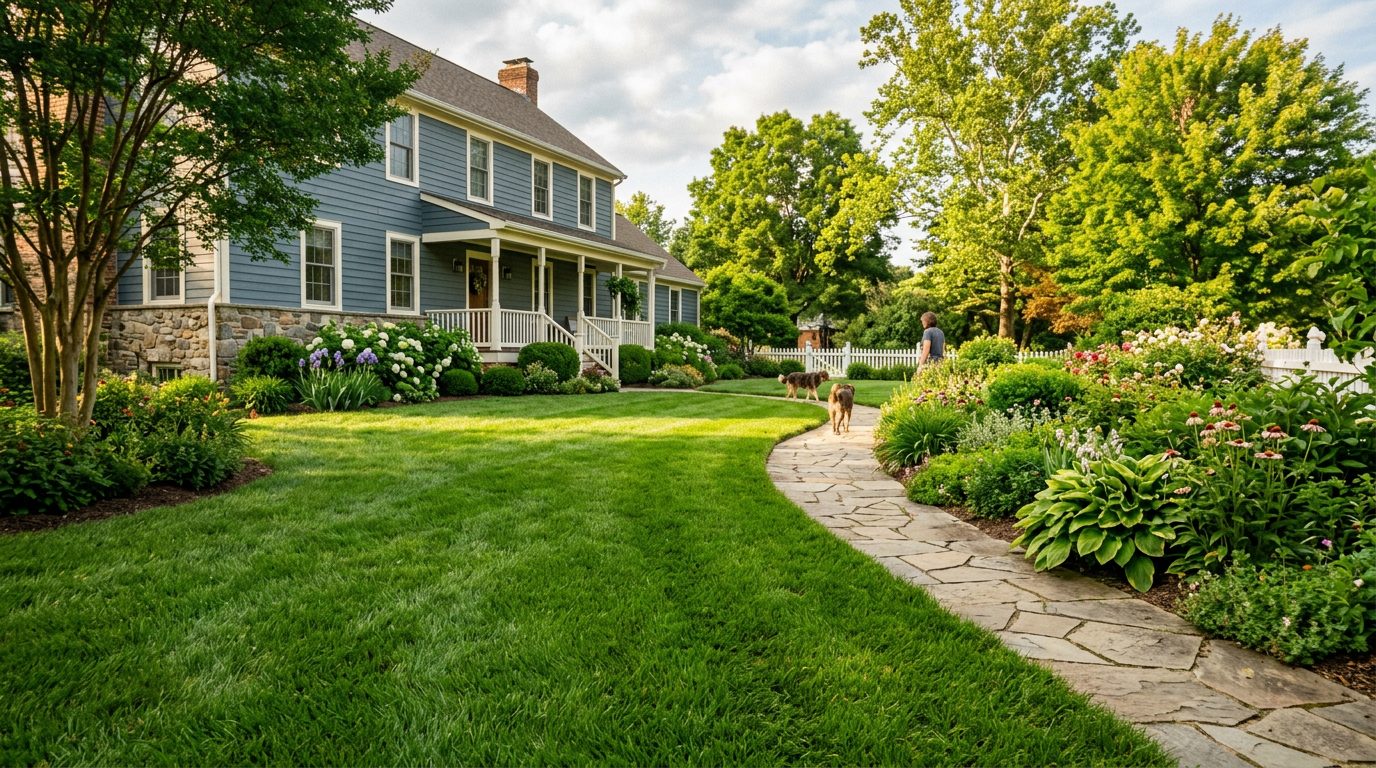
Welcome to the First State, where the lawn care challenges are... unique. If you've ever struggled to keep a lawn green from the rolling hills of New Castle County down to the sandy shores of Sussex, you're not alone. The problem, and the solution, lies in picking the best grass for Delaware's specific climate. We're not here to sell you snake oil; we're here to give you the straight dirt on what actually works.
Delaware sits squarely in what lawn pros call the "transition zone." This means our winters are too cold for most warm-season grasses to stay green, and our summers are too hot and humid for many cool-season grasses to be happy. It's the worst of both worlds, but don't despair. Choosing the right species is 90% of the battle, and we've fought this battle for you.
Understanding Delaware’s Unique Lawn Challenges
Before you rip open a bag of seed, you need to know what you're up against. Delaware's climate (USDA Hardiness Zones 7a and 7b) is the primary hurdle. We get punishing summer heat that stresses cool-season grasses, and freezing winter temperatures that kill off most warm-season types.
Then there's the soil. Up north toward Wilmington and Newark, you're likely dealing with heavier clay soil that holds moisture but can get compacted. Head south of the C&D Canal toward Dover and the beaches, and the soil gets progressively sandier. Sandy soil drains well—sometimes too well—and may need more frequent watering and nutrients.
Your specific site conditions matter, too. Do you have a wide-open, full-sun yard in Middletown? Or a mature, shaded lot in Hockessin? The answers will steer you toward the perfect grass type. Don't fight your environment; choose a grass that embraces it.
Our 5 Best Grass Types for a Delaware Lawn
Forget the generic advice. These are the grasses that we've seen succeed time and again across Delaware. We're ranking them based on a combination of durability, appearance, and suitability for the local climate.
1. Turf-Type Tall Fescue (TTTF)
The All-Star Workhorse. If you're going to pick just one grass for Delaware, this is it. Modern Turf-Type Tall Fescues are light-years ahead of the old, clumpy 'Kentucky 31' your grandpa used. They have deep root systems (up to 3-4 feet deep!), making them the most drought and heat-tolerant of the cool-season grasses. They stand up well to foot traffic from kids and pets, and they have good disease resistance.
- Best For: All-purpose lawns, sunny areas, homes with kids/pets.
- Shade Tolerance: Moderate. Needs at least 4-5 hours of direct sun.
- Our Pick: Jonathan Green Black Beauty Ultra. This is a killer mix available at most garden centers. It blends several elite TTTF varieties with Kentucky Bluegrass and Perennial Ryegrass for a dense, dark-green lawn. A 7-pound bag runs about $45-$55 and covers up to 3,500 sq. ft. for overseeding.
2. Kentucky Bluegrass (KBG)
The Beauty Queen. When you picture a perfect, lush, dark-green carpet of a lawn, you're probably picturing Kentucky Bluegrass. KBG has a beautiful color and a fine texture. Its killer feature is its ability to spread and self-repair via underground stems called rhizomes. This means it can fill in minor bare spots on its own.
The downside? It's a bit of a diva. KBG requires more water and fertilizer than Tall Fescue and is less tolerant of heat and drought. It's also slow to germinate. For Delaware, we almost never recommend a 100% KBG lawn. Instead, it's a fantastic team player when mixed with Tall Fescue.
- Best For: High-visibility areas, mixing with other grasses.
- Shade Tolerance: Low. Needs 6+ hours of sun.
- Our Pick: Use it as part of a blend like the Scott's Turf Builder Sun & Shade Mix, which uses KBG for density and fescues for durability. You can find this everywhere, from Home Depot in Dover to Lowe's in Wilmington.
3. Perennial Ryegrass
The Sprinter. Perennial Ryegrass is the Usain Bolt of the grass world. It germinates incredibly fast (5-7 days), providing quick color and ground cover. This makes it an essential component of many seed mixes and the go-to choice for temporary winter overseeding on sports fields.
While it has a beautiful fine texture and dark color, it's not the most durable on its own. It's a bunch-type grass (like fescue) and can struggle in Delaware's summer heat. Its real value is in a mix, where it provides rapid green-up while the slower-growing Fescue and KBG get established.
- Best For: Overseeding, quick repairs, erosion control.
- Shade Tolerance: Moderate.
- Our Pick: We love Pennington's Annual Ryegrass (around $20 for a 5lb bag) for temporary winter patches, but for a permanent lawn, stick to a mix that includes Perennial Ryegrass as a smaller component (10-20%).
4. Fine Fescues
The Shade Specialist. Have a yard with mature oak and maple trees? Tired of fighting a losing battle with thin, patchy grass under them? Meet your new best friend. Fine Fescues (a group that includes Creeping Red, Chewings, and Hard Fescue) are the most shade-tolerant cool-season grasses. They also require less water, fertilizer, and mowing than the other grasses on this list.
They don't love heavy foot traffic and can get a bit matted, but for a low-input, shady part of your Delaware yard, they are unbeatable. You can find more details in our guide to the best grass seed for shade.
- Best For: Dry, shady areas, low-maintenance zones.
- Shade Tolerance: High. Can survive on as little as 2-3 hours of direct sun.
- Our Pick: Scotts Turf Builder Dense Shade Mix. It’s a reliable choice that focuses heavily on fine fescues and is readily available.
5. Zoysia Grass
The Warm-Season Contender. We're including one warm-season grass for folks in southern Delaware, particularly in the warmer coastal areas of Sussex County. Zoysia is a tough, dense, carpet-like grass that loves heat and is extremely drought-tolerant once established. It spreads to create a thick mat that chokes out weeds.
The major, unavoidable tradeoff: it goes dormant and turns a straw-brown color from the first hard frost in fall until late spring. For some, this is a deal-breaker. But if you want a super low-maintenance lawn during the hot summer months, it's worth considering. It's typically established with sod or plugs, not seed, which is a higher upfront cost.
- Best For: Full-sun, hot areas in Southern Delaware (especially coastal).
- Shade Tolerance: Very Low.
- Local Tip: Check with a local sod farm like Tuckahoe Turf Farms in Hammonton, NJ (they deliver to DE) for pricing on Zoysia sod, which can run $0.60 to $1.00 per square foot plus delivery.
Planting Your New Delaware Lawn the Right Way
Selecting the right seed is just step one. Proper planting and establishment are non-negotiable.
Timing is Everything: For the cool-season grasses that make up 95% of Delaware lawns (Fescue, KBG, Rye), the absolute best time to seed is late August through mid-October. The soil is still warm from the summer, which encourages fast germination, but the cooling air temperatures reduce stress on the young seedlings. Spring planting is a distant second-best option and often leads to a summer struggle.
Soil Prep: Start by getting a soil test from the University of Delaware's Soil Testing Program. It's cheap (around $20) and provides priceless information on your soil's pH and nutrient levels. Most Delaware soils tend to be acidic and will benefit from a lime application. Clear out all existing weeds and dead grass. If your soil is compacted clay, renting a core aerator is the best money you'll ever spend. You can learn some simple tricks with our guide on how to aerate a lawn without a machine for smaller areas.
Seeding and Watering: Rake the soil surface to create grooves for the seed to settle into. Spread the seed according to the bag's directions (using a spreader is highly recommended for even coverage). Rake it in lightly, so it's making good contact with the soil. For a truly professional result, we always advise overseeding an existing thin lawn to improve its density. Once seeded, watering is your new religion. We have a whole guide on the best time to water grass, but the key for new seed is to keep the top inch of soil consistently moist—not soggy—which may mean watering lightly multiple times a day.
Maintaining Your Delaware Grass for Year-Round Green
A great lawn isn't a one-and-done project. Consistent, smart maintenance will keep it thick and healthy.
According to the University of Delaware Cooperative Extension, a typical Delaware lawn requires about 1 inch of water per week during the growing season, including rainfall. Applying this in one or two deep waterings encourages deep root growth, which is much better than frequent, shallow watering. Delaware's average summer rainfall of 3-4 inches per month means you'll definitely need to supplement during the inevitable dry spells of July and August.
When it comes to mowing, think tall. Mowing your Tall Fescue at 3.5 to 4 inches is one of the best things you can do. The taller grass blades shade the soil, keeping it cooler and conserving moisture, which also helps prevent crabgrass from germinating. For a detailed schedule, check our guide on how often to mow your lawn.
Fertilize based on your soil test, but a good rule of thumb for cool-season Delaware lawns is to focus on fall feedings. A late-season application in October or November helps the grass store nutrients for a strong spring green-up.
Finally, stay on top of weeds. A thick, healthy lawn is your best defense. But when invaders like dandelions pop up, it's best to act fast. We've got a foolproof strategy for getting rid of dandelions in your lawn.
Choosing the best grass for Delaware comes down to matching a top-performing species like Tall Fescue with your specific yard and committing to a few basic principles. Do that, and you'll have a lawn that's the envy of your cul-de-sac, from Brandywine Hundred to Bethany Beach.
Frequently asked
What is the most low-maintenance grass for Delaware?+
For sunny areas, a quality Turf-Type Tall Fescue blend is relatively low-maintenance due to its deep roots and drought tolerance. For shady areas, Fine Fescues are the undisputed champions of low-input lawns, requiring less water, fertilizer, and mowing.
When should I plant grass seed in Delaware?+
The ideal window for planting cool-season grass like Fescue or Bluegrass in Delaware is from late August through mid-October. The warm soil and cool air create perfect conditions for germination and strong root development before winter sets in.
Will Bermuda grass grow in Delaware?+
Yes, Bermuda grass can grow in Delaware, particularly in the southern part of the state. However, it's an aggressive warm-season grass that will go fully dormant and brown for 6-7 months of the year, making it an unpopular choice for home lawns.
How much does grass seed cost in Delaware?+
Expect to pay between $6 and $10 per pound for high-quality, certified seed from brands like Jonathan Green or Pennington. Cheaper seed is often filled with weed seeds and older, less effective grass varieties. It's not worth the 'savings'.
Is Zoysia a good choice for Delaware?+
Zoysia can be a good choice for full-sun lawns in the warmest parts of Delaware, like Sussex County. Its heat and drought tolerance are excellent. However, you must be willing to accept a brown, dormant lawn from October through May.