
The Best Grass for Delaware Lawns: 5 Expert Picks
Don't gamble on your Delaware lawn. We break down the absolute best grass types that can handle the First State's tricky transition zone climate, from the Wilmington suburbs to the Sussex County coast.
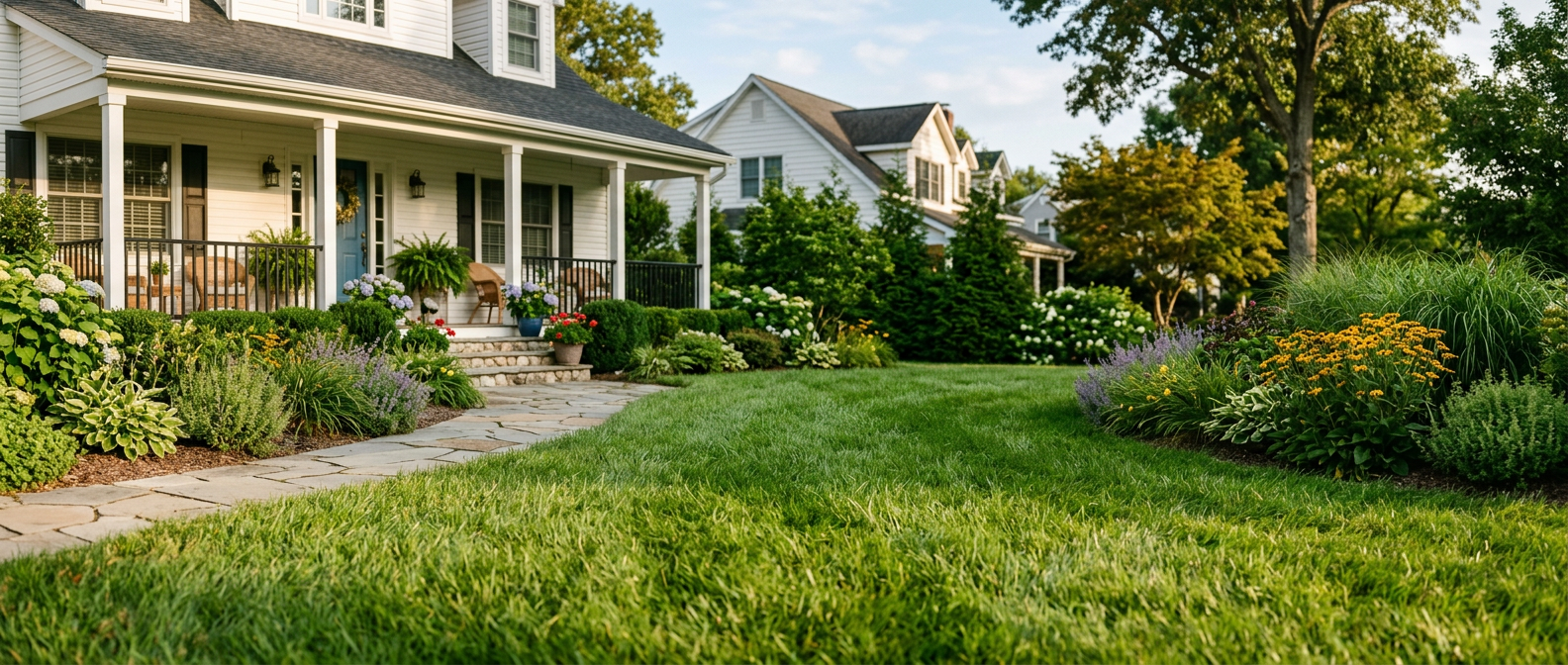
Welcome to Delaware, the First State, where your lawn has to be tough enough to handle four distinct seasons. We’re not dealing with the easy-bake north or the scorching south. Nope, you’re in the infamous “transition zone.” This means picking the right grass for your Delaware home, whether you're in Wilmington, Dover, or down by the beaches, isn't just a suggestion—it's a requirement for a lawn that doesn't quit.
Here at Dirt Cheap Genius, we've seen folks waste time and money throwing down the wrong seed. Let's cut through the noise and get you the green lawn you deserve without the gatekeeping and bad advice.
Why Delaware Lawns Are a Special Challenge
Delaware sits squarely in USDA Hardiness Zones 7a and 7b. This is the heart of the transition zone, a slice of the country where it’s a little too hot for cool-season grasses to be truly happy in summer, and a little too cold for warm-season grasses to survive the winter without a fight. You get hot, humid summers that stress out grasses like Kentucky Bluegrass and chilly winters that can kill off Bermuda grass.
This means compromise. The best-performing grasses here are cool-season varieties that have been bred for better heat and disease tolerance. You can’t just set it and forget it. You have to be strategic.
1. Tall Fescue: The Workhorse for Delaware
If you want one single grass type to bet on in Delaware, this is it. Modern Turf-Type Tall Fescues are the undisputed champions of the transition zone. Why?
- Deep Roots: This is the key. Tall Fescue can send roots down 2-3 feet, tapping into deeper soil moisture. This makes it significantly more drought and heat-tolerant than its cool-season cousins.
- Good Traffic Tolerance: It holds up reasonably well to kids, pets, and backyard parties.
- Shade Tolerance: While it loves sun, it performs better in moderate shade than Kentucky Bluegrass. Check out our guide to the best grass seed for shade for more on that.
Downsides: It's a bunch-type grass, meaning it doesn't spread and self-repair like Kentucky Bluegrass. If you get a bare spot, you'll need to reseed it. That's why learning how to overseed a lawn is a crucial skill for Tall Fescue owners.
Product Pick: We’ve had great success with Jonathan Green Black Beauty Ultra Grass Seed. A 25 lb bag runs about $115 and covers up to 5,000 sq ft for overseeding. It's a mix of Tall Fescue, Kentucky Bluegrass, and Perennial Ryegrass that's become a gold standard.
2. Kentucky Bluegrass (KBG): The Classic Beauty
When you picture a perfect, dark green, dense lawn, you're probably picturing Kentucky Bluegrass. It’s the supermodel of the grass world. In Delaware, you almost never plant it alone.
- It Spreads: KBG grows via rhizomes (underground stems), allowing it to spread and fill in bare spots on its own. This gives it fantastic recovery ability.
- Great Color & Density: It provides that lush, premium look everyone wants.
Downsides: KBG has a shallow root system, making it thirsty and prone to stress during Delaware's hot, humid summers. It can go dormant (brown) in a hurry without consistent water. It's also slower to germinate, taking up to 21 days. It's best used as a 10-20% component in a seed mix with Tall Fescue.
3. Perennial Ryegrass: The Fast Starter
Perennial Ryegrass is the sprinter. It germinates incredibly fast, often in just 5-7 days. We call it "nurse grass" because it pops up quickly to prevent erosion and weeds while the slower-growing Fescue and KBG get established.
- Quick Germination: Provides fast color and ground cover.
- Good Traffic Tolerance: Excellent for high-wear areas.
Downsides: It's the least heat-tolerant of the three main cool-season grasses. It will struggle the most in July and August and is susceptible to diseases like brown patch. Like KBG, it's a team player, not a solo act. A good mix will have 5-10% Perennial Ryegrass.
4. Zoysia Grass: A Warm-Season Choice for Southern Delaware
If you live south of the C&D Canal, particularly in Sussex County, you can consider Zoysia. This is a warm-season grass, meaning it thrives in the summer heat. It creates a dense, carpet-like turf that chokes out weeds.
- Heat & Drought King: It barely breaks a sweat in August.
- Low Maintenance: Once established, it requires less water and fertilizer than cool-season grasses during the summer.
Downsides: This is a big one: Zoysia goes completely dormant and turns a straw-brown color after the first hard frost, and it stays that way until late spring. You'll have a brown lawn for about 5-6 months of the year. It's also very slow to establish from seed and is best installed as expensive sod.
Key Lawn Care Considerations for Delaware
Having the right grass is only half the battle. Your success in Delaware depends on a few local factors.
- Soil: Much of Delaware has sandy or silty loam soil, especially near the coast. While this provides good drainage, it doesn't hold nutrients well. Amending your soil with compost is a game-changer. Getting a soil test from the University of Delaware Soil Testing Program (costs about $20) is the smartest money you'll ever spend on your lawn.
- Watering: Delaware gets about 45 inches of rain per year, but it never seems to come when you need it. Deep, infrequent watering is the rule. We wrote a whole guide on the best time to water grass, but the short version is: early in the morning, before the sun gets high.
- Fertilizer Regulations: Delaware has a Nutrient Management Law to protect the Chesapeake and Delaware Bays. This means you can't apply fertilizer containing phosphorus without a soil test that shows a deficiency. You also can't apply fertilizer between December 7th and February 15th or on frozen or impervious surfaces. Always follow the law and the bag rates.
We were just talking to a client in Lewes who was fighting yellowing grass. His soil test came back showing he just needed a bit of iron, not a full-blown fertilizer application. His grass greened up in a week. Don't guess, test! And if your grass is turning yellow, there could be other reasons, which we cover in our guide, 'Why Is My Grass Turning Yellow?'.
The Verdict: The Best Grass Seed for Delaware
For 95% of Delaware lawns, the answer is not a single grass type, but a high-quality blend of Turf-Type Tall Fescue, Kentucky Bluegrass, and Perennial Ryegrass.
This gives you the best of all worlds:
- The Tall Fescue provides the durable, heat-tolerant base.
- The Kentucky Bluegrass fills in bare spots and adds deep color.
- The Perennial Ryegrass provides rapid germination for quick green-up.
You can find these mixes at local nurseries like Gateway Garden Center in Hockessin or big box stores. Look for blends with a high percentage (80-90%) of named Tall Fescue varieties and low amounts of "weed" or "crop seed." Expect to pay between $4-$6 per pound for premium seed. A 50lb bag of Pennington The Rebels Tall Fescue an at a Delaware Home Depot costs around $140, covering up to 12,500 sq ft for overseeding. It's an investment that pays off.
Frequently asked
What is the most low-maintenance grass for Delaware?+
For a green lawn most of the year, a Tall Fescue dominant blend is the most low-maintenance option due to its deep roots and drought tolerance. If you can tolerate a brown winter lawn, Zoysia grass is extremely low-maintenance during its summer growing season in Southern Delaware.
When is the best time to plant grass seed in Delaware?+
The absolute best time to plant cool-season grass seed (Fescue, KBG, Rye) in Delaware is late summer to early fall, from mid-August through mid-October. This allows the grass to establish before winter without the stress of summer heat and weed competition.
Will Bermuda Grass grow in Delaware?+
While some aggressive Bermuda grass varieties might survive in the warmest parts of southern Delaware, it's generally not recommended. It will have a very long winter dormancy period (brown color) and may suffer from winterkill in colder years. Tall Fescue is a much safer and more reliable choice.
How do I care for my Delaware lawn in the summer?+
Mow high, at least 3.5-4 inches, to shade the soil and keep roots cool. Water deeply but infrequently (1-1.5 inches per week) in the early morning. Avoid heavy nitrogen fertilization during peak heat, as this can promote disease and stress the grass.
What kind of grass do they use on the University of Delaware football field?+
Delaware Stadium uses a natural grass surface. Like many high-performance fields in the transition zone, it's typically a base of Bermuda grass that is heavily overseeded with Perennial Ryegrass in the fall to provide a green, durable surface throughout the football season.