
Best Grass for Delaware: 5 Top Picks for First State Lawns
Stop guessing what seed to throw down. We're cutting through the noise to show you exactly which grass types thrive in Delaware's unique climate, from Wilmington to Rehoboth Beach.
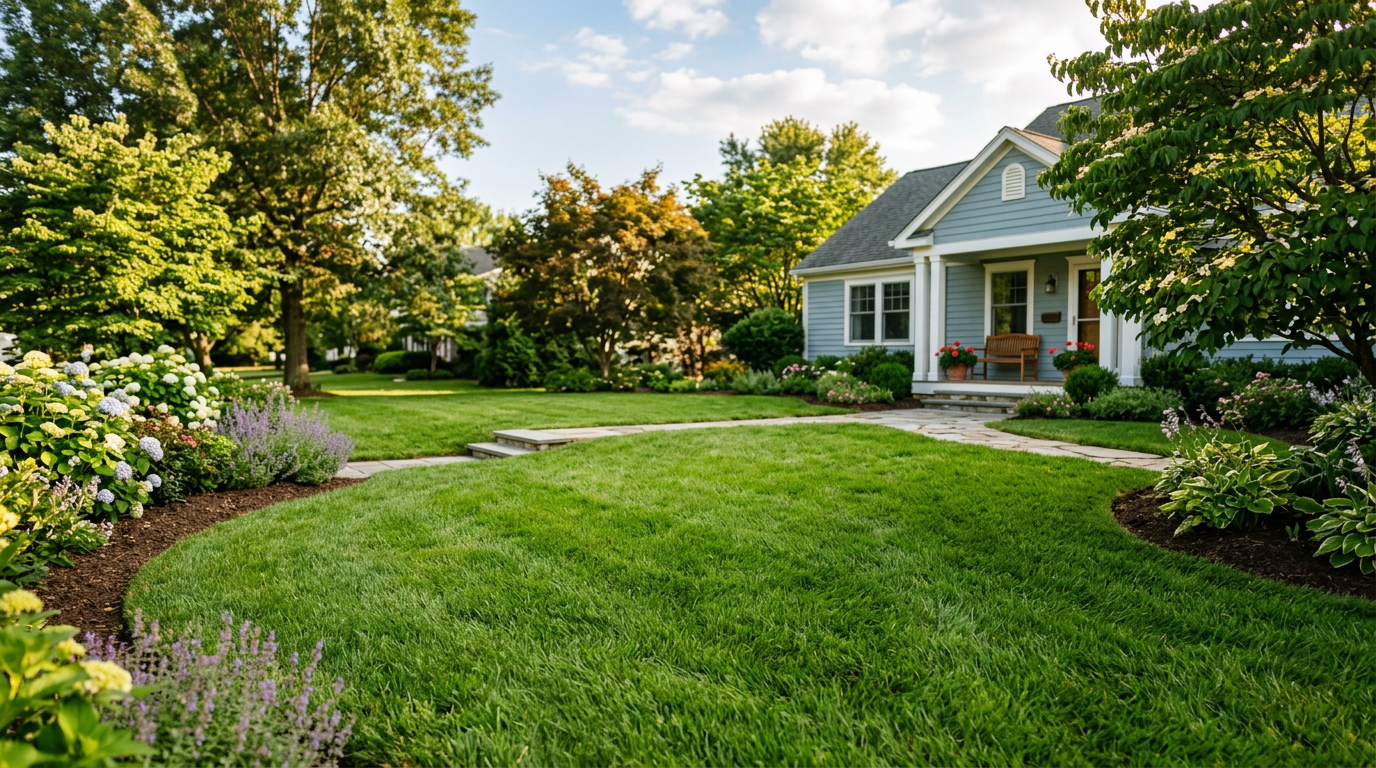
Let's get straight to it: growing a great lawn in Delaware can feel like a part-time job you never applied for. One minute you're fighting summer heat and humidity that suffocates your turf, the next you're dealing with a winter freeze. This isn't Florida or Alaska; this is Delaware, the heart of the infamous 'transition zone.' That means your lawn has to be tough enough to handle both the hot and the cold. The good news? It's not impossible. You just need the right grass.
We've laid a lot of sod and spread a lot of seed in our day, and here's a hard lesson learned: trying to force the wrong grass type is a losing battle against nature, your wallet, and your weekend. Forget the generic advice from big-box stores. We're going to break down the actual best grass types for a Delaware lawn, whether you're in the clay soils up north or the sandy stretches down south.
Understanding Delaware's Tricky Lawn Climate
Before you buy a single seed, you have to understand the battlefield. Most of Delaware falls into USDA Hardiness Zones 7a and 7b. This is the core of the transition zone, an area where cool-season grasses from the north get stressed by summer heat, and warm-season grasses from the south get hammered by winter cold.
This means your grass needs to be a versatile athlete, not a specialist. The winners in Delaware are almost always cool-season grasses that have been bred for better heat and drought tolerance. Trying to grow a warm-season grass like Bermuda is possible near the coast, but you'll be looking at a brown lawn from about October through May. For most homeowners, that's a trade-off that isn't worth it. Stick with the cool-season champs.
The 5 Best Grass Types for Delaware Lawns
Here they are. No fluff, just the top performers for the First State. We'll give you the pros, the cons, and when to use each.
1. Tall Fescue (The Workhorse)
If you want one grass that does it all, this is your pick. Modern Turf-Type Tall Fescues (TTTF) are the undisputed kings of Delaware lawns. They've been bred to have deep root systems (some reaching 2-3 feet deep!), making them the most drought- and heat-tolerant of the cool-season grasses. They have a nice medium-to-dark green color and can handle a decent amount of foot traffic.
- Pros: Best heat and drought tolerance of the cool-season grasses, good disease resistance, tolerates moderate shade, handles foot traffic.
- Cons: Doesn't spread or self-repair (it's a bunch-type grass), so you'll need to overseed bare spots.
- Best For: All-purpose lawns, families with kids and pets, areas with a mix of sun and moderate shade.
- Recommended Cultivars: Look for blends like Jonathan Green Black Beauty Ultra or Pennington The Rebels. A 40 lb bag of Black Beauty runs about $140 and covers up to 10,000 sq ft for overseeding.
2. Kentucky Bluegrass (The Beauty Queen)
Kentucky Bluegrass (KBG) is the grass you see on golf course fairways and immaculate suburban carpets. It has a beautiful, rich dark-green-to-blue color and, most importantly, it spreads via rhizomes. This means it can self-repair small bare patches, creating a dense, thick turf. The catch? It's a bit of a diva.
- Pros: Beautiful color, dense growth, self-repairing ability.
- Cons: Needs full sun, requires more water and fertilizer than Tall Fescue, slow to germinate, lower drought tolerance.
- Best For: High-visibility front lawns that get at least 6-8 hours of direct sun. It's fantastic when mixed with Tall Fescue (80-90% fescue, 10-20% KBG) to get the benefits of both.
- Recommended Cultivars: 'Midnight', 'Bewitched', 'BlueNote'. You'll often find them sold in premium blends.
3. Fine Fescues (The Shade Specialists)
Got a yard with mature trees? Live in a wooded area? Fine Fescues are your best friends. This is a group of grasses—including Creeping Red, Chewings, and Hard Fescue—that thrive in shady, low-fertility conditions where other grasses fail. They have a very fine, almost wispy texture and are relatively low-maintenance.
- Pros: The best shade tolerance of any cool-season grass, low water and fertilizer needs, grow well in poor soil.
- Cons: Don't handle heat or foot traffic well, can get stressed in full sun.
- Best For: Shady areas under trees, low-traffic parts of the yard. Check out our full guide on the best grass seed for shade.
- Recommended Cultivars: Look for a blend that contains a mix of all three types for maximum adaptability, like Scotts Turf Builder Dense Shade Mix.
4. Perennial Ryegrass (The Sprinter)
Perennial Ryegrass is the fast-food of the grass world: it's quick, easy, and satisfying in the short term. It germinates faster than any other cool-season grass (5-7 days), making it fantastic for getting quick green cover. It's often included in seed mixes to provide erosion control and quick color while the slower Fescues and KBG establish.
- Pros: Extremely fast germination, good traffic tolerance, nice dark green color.
- Cons: It's a bunch-type grass (like fescue), has the lowest heat and drought tolerance of the bunch, and is more susceptible to summer diseases like brown patch.
- Best For: Overseeding existing lawns for a quick boost, mixing with KBG and fescue, or temporary winter color on dormant warm-season lawns (though that's less common in DE).
5. Zoysia Grass (The Warm-Season Contender)
We're including Zoysia as an honorable mention, particularly for those in southern Delaware right on the coast. This is a warm-season grass, meaning it thrives in the heat of summer. It forms an incredibly dense, carpet-like turf that chokes out weeds and is very drought-tolerant once established. The major downside is that it will be completely dormant and tan-colored from the first frost in fall until late spring.
- Pros: Excellent heat and drought tolerance, very dense, low maintenance in summer, great for sandy soil.
- Cons: Goes dormant and brown for 6-7 months in Delaware, slow to establish, expensive to install (usually requires sod or plugs).
- Best For: Vacation homes in Sussex County where a green summer lawn is the priority and winter color isn't a concern.
Soil Prep for a Great Delaware Lawn
Throwing the right seed on the wrong soil is like putting premium gas in a car with a clogged fuel filter. It won't work. Delaware soils can be a challenge, ranging from heavy clay in New Castle County to sandy loam and sand in Kent and Sussex Counties.
Your first step should always be a soil test. The University of Delaware Soil Testing Program offers this service for a small fee (around $20). It will tell you your soil's pH and nutrient levels. Most Delaware soils are acidic and will need lime to raise the pH to the 6.2-6.8 range that turfgrass loves.
- For Clay Soil (Northern DE): Amend with compost or peat moss to improve drainage and reduce compaction. Aerating is crucial.
- For Sandy Soil (Southern DE): Amend with compost or other organic matter to improve water and nutrient retention. It will help your lawn survive summer dry spells.
Planting and Maintenance Calendar for Delaware
Timing is everything. Here's how to manage your lawn through a Delaware year.
According to the University of Delaware Extension, the state's average last spring frost is around April 15-25, and the first fall frost is October 20-30. This gives you a solid six-month window for active growth, but the sweet spot for seeding cool-season grass is a much tighter window in the fall when soil temperatures are between 50°F and 65°F, which is typically from late August to early October. (Source: https://www.udel.edu/academics/colleges/canr/cooperative-extension/fact-sheets/recommended-vegetable-varieties-for-delaware/)
-
Fall (Late August - October): This is the prime season. The soil is warm, the air is cool, and weed pressure is low. This is the absolute best time to overseed, aerate, and fertilize. If you do one thing for your lawn all year, make it a fall overseed and fertilization.
-
Spring (March - May): The second-best time for seeding, but you'll be racing against crabgrass and other weeds. If you're not seeding, apply a pre-emergent herbicide (like Scotts Turf Builder with Halts) in early-to-mid April to prevent crabgrass. This is also when you'll start getting serious about how often you mow and might need to tackle some early dandelions.
-
Summer (June - August): Survival mode. Raise your mower height to 3-4 inches to shade the soil and conserve water. Water deeply and infrequently in the early morning; check out our guide on the best time to water grass. Watch for signs of fungal disease like brown patch.
-
Winter (November - February): The lawn is dormant. Keep leaves off the turf to prevent it from smothering. Clean your mower and get ready for spring.
Local Delaware Lawn Challenges (and Solutions)
Every location has its quirks. In Delaware, you'll likely face two big ones: disease and pests.
-
Fungal Diseases: Brown Patch and Dollar Spot are rampant in Delaware's humid summers. They thrive when grass stays wet for long periods. The best defense is watering correctly (early morning, deeply) and not over-fertilizing with nitrogen in the summer. If you have a persistent problem, a preventative application of a fungicide like Scotts DiseaseEx Lawn Fungicide (around $25 for 5,000 sq. ft.) in late May can save you a lot of headaches.
-
Grubs: Japanese Beetles and other grubs are a major issue. Their larvae feed on grass roots in late summer and fall, causing large, irregular dead patches. Apply a preventative grub control product like Scotts GrubEx in May or June. It's far easier to prevent them than to kill them once they've started feeding.
Frequently asked
What is the most low-maintenance grass for Delaware?+
A Turf-Type Tall Fescue blend is the most low-maintenance choice for a typical Delaware lawn. It has good drought and heat tolerance, requires less fertilizer than Kentucky Bluegrass, and holds up well to traffic. For very shady, low-traffic areas, Fine Fescues are even lower maintenance.
Can I grow Bermuda grass in Delaware?+
While you can technically grow Bermuda grass in the warmest parts of southern Delaware, it's generally not recommended. It will be dormant and brown for a long portion of the year (October to May) and can be very invasive, creeping into garden beds. Cool-season grasses are a better choice.
When is the best time to plant grass seed in Delaware?+
The ideal time to plant grass seed in Delaware is late summer to early fall, from late August to early October. Soil temperatures are warm enough for germination, but the cooling air temperatures reduce stress on new seedlings and there's less competition from aggressive summer weeds.
How much does it cost to seed a lawn in Delaware?+
For a DIY project, a 40 lb bag of quality Tall Fescue seed costs about $140-$180 and covers up to 10,000 sq ft for overseeding. For a new lawn, you'd need more. Professional hydroseeding can range from $0.15 to $0.25 per square foot, making a 5,000 sq ft lawn cost $750-$1,250.