
The 5 Best Grass Types for Your Delaware Lawn
Picking the right grass seed for Delaware's transition zone climate can feel like a gamble. We'll show you the five sure-fire winners that thrive from Wilmington to Rehoboth.
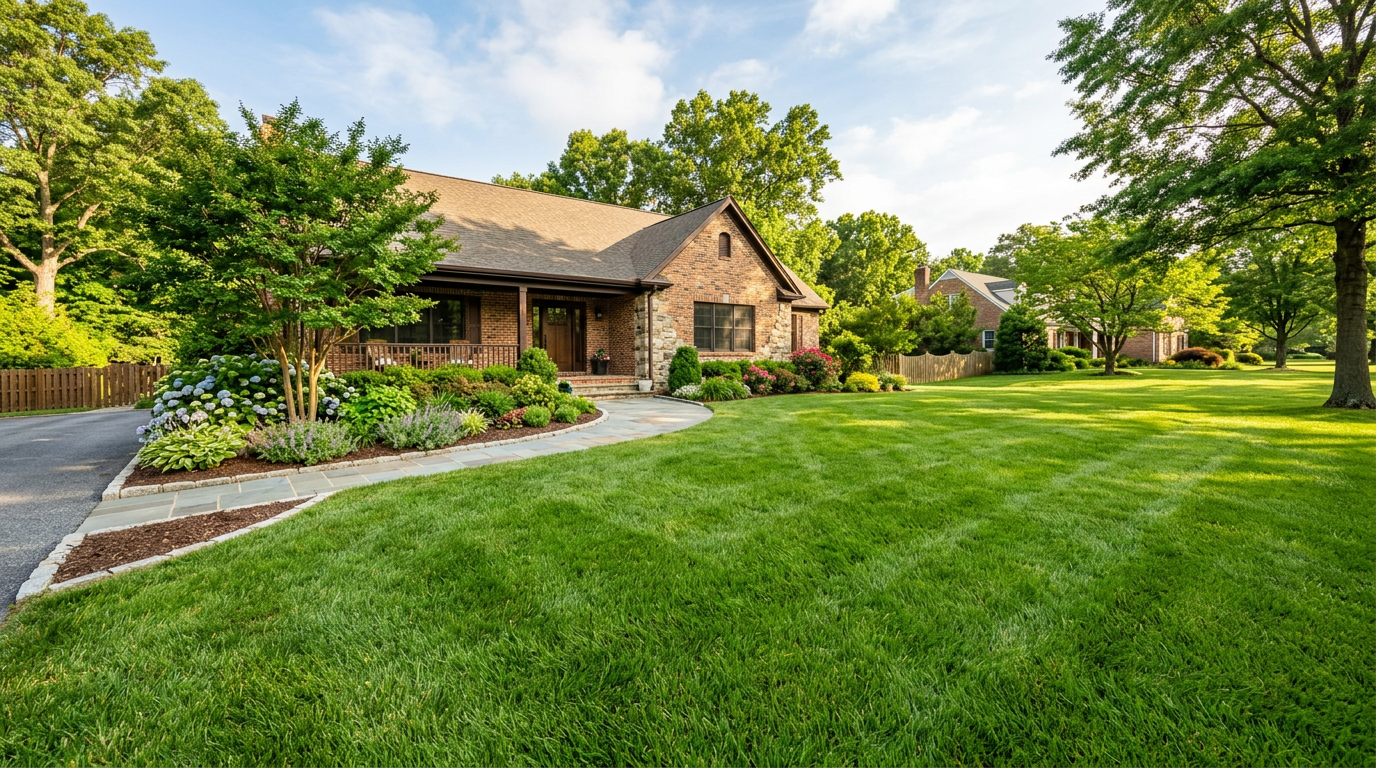
Let's get one thing straight: growing a great lawn in Delaware is totally achievable, but you can't just throw down any old bag of seed from the big box store. The First State sits squarely in the infamous 'transition zone,' a brutal climate belt where cool-season grasses get scorched by summer heat and warm-season grasses get zapped by winter cold. It’s the worst of both worlds. But don't worry. We've seen it all, and we're here to give you the no-nonsense guide to the absolute best grass for your Delaware yard, whether you're in the rolling hills of New Castle County or dealing with sandy soil down in Sussex.
Understanding Delaware's Tricky 'Transition Zone' Climate
Before you pick a seed, you have to respect the battlefield. Delaware is zoned as USDA Hardiness Zones 7a and 7b. This means hot, humid summers where temps regularly push into the high 80s and 90s, and cold winters that will kill off less-hardy grasses. This is the definition of the transition zone.
What does this mean for your lawn?
- Cool-Season Grasses Rule: You need grasses that can handle the cold. This immediately puts cool-season grasses like Fescue and Bluegrass at the top of the list.
- ...But They Must Be Tough: Your cool-season grass also needs to survive July and August without completely checking out. This means selecting modern, heat-tolerant cultivars. The cheap stuff won't cut it.
Your goal is to find a grass that can green up early in the spring, power through the summer without dying, and stay green deep into the fall. Lucky for you, breeders have developed some fantastic options.
The 5 Best Grass Types for Delaware Lawns
Forget the marketing fluff. Here are the grasses that actually perform in Delaware's climate. We've ranked them based on a combination of durability, appearance, and maintenance needs.
1. Turf-Type Tall Fescue (TTTF)
The All-Around Champion. If you want one grass that does it all in Delaware, this is it. Modern Turf-Type Tall Fescues are lightyears ahead of the old, clumpy 'Kentucky 31' your grandpa used. TTTF varieties have deep root systems—sometimes reaching 2-3 feet down—that make them incredibly drought and heat tolerant. They stay greener longer in the summer with less water than other cool-season grasses.
- Pros: Excellent heat/drought tolerance, good shade tolerance, wear-resistant, relatively low maintenance.
- Cons: Doesn't self-repair well (it's a bunch-type grass), so you may need to overseed bare spots every few years.
- Our Pick: Jonathan Green Black Beauty Ultra. It's a mix of TTTF, Kentucky Bluegrass, and Perennial Ryegrass that gives you the best of all worlds. Expect to pay around $115 for a 25 lb. bag, which covers about 6,250 sq. ft. for overseeding.
2. Kentucky Bluegrass (KBG)
The Beauty Queen. When you picture a perfect, dark green, dense lawn, you're probably picturing Kentucky Bluegrass. It has a beautiful color and texture, and its best feature is its ability to spread via underground stems called rhizomes. This means it can self-repair small damaged areas, which is a huge plus.
- Pros: Excellent color, dense growth, self-repairing, great winter hardiness.
- Cons: Needs more water and fertilizer than Tall Fescue, can struggle in peak summer heat, slow to establish from seed.
- Best Use: We rarely recommend a pure KBG lawn in Delaware. Instead, use it as part of a blend, typically 10-20% of a mix with Tall Fescue. Its self-repairing nature perfectly complements the bunch-type growth of Fescue.
3. Perennial Ryegrass
The Sprinter. Perennial Ryegrass is the workhorse of the grass world. Its superpower is speed. It germinates faster than any other common cool-season grass, often sprouting in just 5-7 days. This makes it fantastic for getting quick ground cover to prevent erosion and weeds. It also has great wear tolerance.
- Pros: Very fast germination, good traffic tolerance, fine-bladed texture.
- Cons: Least heat and drought tolerant of the big three, can be susceptible to fungal diseases in Delaware's humid summers.
- Best Use: Like KBG, it's best used as a minority player in a seed mix (10-15%). It provides the initial green-up while the Fescue and Bluegrass take their time getting established. It's the key ingredient in most "quick repair" patch kits.
4. Fine Fescues
The Shade Specialist. Got big, mature trees casting a lot of shade? This is your secret weapon. Fine Fescues (a group that includes Creeping Red, Chewings, and Hard Fescue) are the most shade-tolerant of all cool-season grasses. They also require less water and fertilizer than the others, making them a great low-maintenance choice for the right spot.
- Pros: The best shade tolerance, low fertilizer/water needs, fine texture.
- Cons: Don't hold up well to heavy foot traffic, can get stressed in full, direct sun.
- Best Use: Use a dedicated shade mix like Scotts Turf Builder Dense Shade Mix (around $35 for a 7 lb. bag) for those problem areas under trees or on the north side of your house. For more ideas, check out our guide to the best grass seed for shade.
5. Zoysia Grass (Honorable Mention)
The Warm-Season Gambler. Okay, we said cool-season grasses rule, but we have to mention Zoysia. It's a warm-season grass that creates an incredibly thick, carpet-like lawn that chokes out weeds. In the summer, it's a thing of beauty. But—and this is a big but—it goes completely dormant and tan-colored from the first hard frost in the fall until late spring. You're looking at a brown lawn from roughly November to May. It's a popular choice in southern Delaware beach communities where the aesthetic is different, but for most of the state, the long dormancy period is a deal-breaker.
- Pros: Thrives in heat, extremely drought tolerant once established, very dense, chokes out weeds.
- Cons: Dormant (brown) for 6+ months of the year, very slow to establish, aggressive spreader.
Seeding vs. Sodding Your Delaware Lawn
Once you've picked your grass, you need to decide how to plant it. Your two options are seed or sod.
-
Seeding: This is the Dirt Cheap Genius way. It's way more affordable but requires more patience and effort. The cost of a high-quality TTTF seed is around $0.02 per square foot. The best time to seed in Delaware is late August through mid-October. This gives the grass time to establish before winter without the stress of summer heat. A spring seeding is a distant second-best option.
-
Sodding: This gives you an "instant lawn." A pallet of sod can be laid in a day and looks great immediately. However, the cost is significantly higher. You can expect to pay $0.85 to $1.50 per square foot for sod from a local supplier like East Coast Sod & Seed in Milford, DE, not including delivery or installation. Sodding is a great option for small areas or if you have a big budget and no patience.
How to Establish Your New Delaware Lawn
Doing it right the first time saves you years of headaches. Don't skip these steps.
- Get a Soil Test: This is not optional. The University of Delaware's Soil Testing Program is a fantastic resource. For about $15, they'll tell you your soil's pH, nutrient levels, and exactly what you need to add. Most Delaware soil is acidic and will need lime.
- Prep the Site: Kill all existing weeds and grass. Rent a tiller or power rake to loosen the top 2-3 inches of soil.
- Amend the Soil: Add the lime or fertilizer recommended by your soil test. Spreading a half-inch layer of quality compost is always a good idea to improve soil structure and water retention.
- Seed and Fertilize: Use a broadcast spreader to apply your chosen seed. Apply a starter fertilizer at the same time. This type of fertilizer is high in phosphorus, which is crucial for root development.
- Water, Water, Water: A new lawn needs consistent moisture. Water lightly 2-3 times a day to keep the top inch of soil damp until the grass is established. This is the most important step. Find out the best time to water grass to maximize efficiency.
- The First Mow: When the new grass reaches about 3.5-4 inches, it's time for its first haircut. Make sure your mower blade is sharp and only cut off the top third of the grass blade. Learn how often to mow your lawn to keep it healthy.
According to the National Weather Service, the average summer high temperature in Wilmington, DE is 86.4°F, and the state sees over 100 days a year with some precipitation. However, summer dry spells can last for weeks, stressing lawns. The state's average annual precipitation of about 45 inches is enough to support cool-season grasses, but the deep roots of Tall Fescue are what provide the insurance policy you need for those hot, dry weeks in July and August when a shallow-rooted grass would turn into a yellow, crispy mess.
Common Lawn Problems in Delaware
Because of our humidity, fungal diseases are the main enemy. Be on the lookout for:
- Brown Patch: Large, irregular brown circles that appear in hot, humid weather. Improve air circulation and avoid over-fertilizing with nitrogen in the summer.
- Dollar Spot: Small, silver-dollar-sized bleached spots on the lawn. Often a sign of low nitrogen fertility and dry soil.
- Red Thread: Pinkish or reddish threads appear on grass blades. Like Dollar Spot, it's often a sign of low nitrogen.
- Crabgrass: This annual weed thrives in the summer heat, especially in thin areas of your lawn. The best defense is a thick, healthy lawn that crowds it out. Pre-emergent herbicides applied in the spring are your best friend.
Ultimately, choosing the right grass seed is the most important decision you'll make for your lawn. For 90% of Delaware homeowners, a high-quality Turf-Type Tall Fescue or a TTTF-dominant blend is the clear winner. It gives you the best combination of beauty, durability, and resilience to our state's challenging climate. Put in the work upfront, and you'll have a lawn that's the envy of the neighborhood.
Frequently asked
What is the single best grass for Delaware?+
Turf-Type Tall Fescue is the single best and most recommended grass for Delaware. Its deep root system makes it exceptionally tolerant of the state's hot summers and potential droughts, while still being cold-hardy enough for our winters. It offers the best all-around performance.
When is the best time to plant grass seed in Delaware?+
The ideal window to plant cool-season grass seed in Delaware is from late August to mid-October. Planting in the fall allows the grass to establish its root system during cooler temperatures without the stress of summer heat and weed competition.
Should I use warm-season or cool-season grass in Delaware?+
You should almost always use cool-season grass in Delaware. The state's transition zone climate, with its cold winters, is much better suited for cool-season varieties like Tall Fescue and Kentucky Bluegrass. Warm-season grasses like Zoysia will be brown and dormant for over half the year.
How do I deal with the sandy soil in southern Delaware?+
For sandy soils common in Sussex County, you must amend the soil heavily with organic matter. Topdressing with a half-inch to a full inch of compost before seeding will dramatically improve water and nutrient retention, giving your grass a much better chance to thrive.
What's a good low-maintenance grass for Delaware?+
Turf-Type Tall Fescue is the best low-maintenance option for sunny areas in Delaware due to its lower water and fertilizer needs compared to Kentucky Bluegrass. For shady areas, Fine Fescues are an excellent low-maintenance choice, as they thrive with less water, fertilizer, and sun.