
The 5 Best Grass Types for Delaware Lawns (2024 Guide)
Stop guessing what seed to throw down. We're breaking down the five best grass types that actually thrive in Delaware's unique transition zone climate.
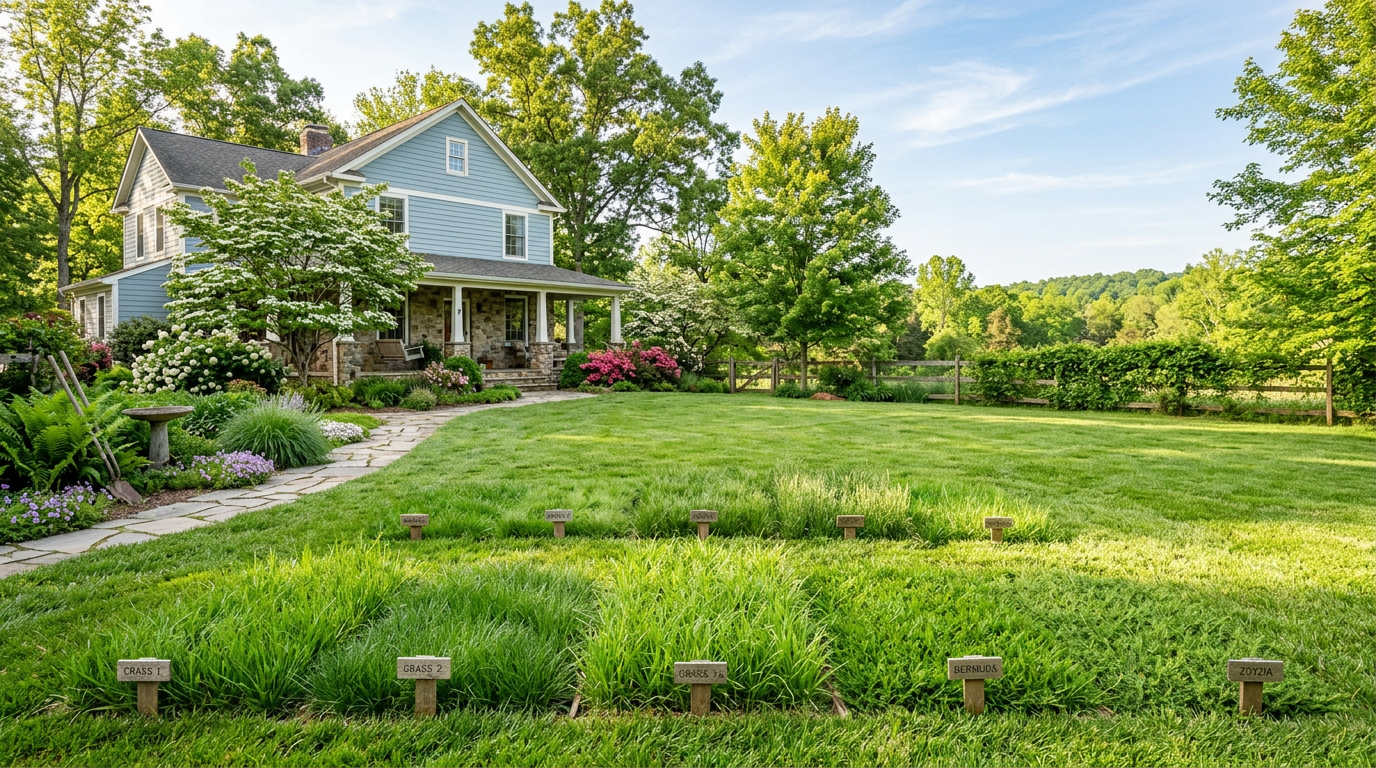
Let's get straight to it: growing a great lawn in Delaware can feel like a game rigged against you. You've got hot, humid summers that beat down on your turf and cold winters that can freeze it out. Welcome to the infamous 'transition zone,' the Bermuda Triangle of lawn care. Homeowners from Hockessin to Rehoboth Beach struggle with this, but it doesn't have to be a losing battle. The secret isn't some miracle tonic; it's choosing the right tool for the job. And in this case, the tool is the grass seed itself.
We're not here to sell you on a single 'magic' seed. We're here to give you the no-nonsense breakdown of the best grass for Delaware so you can build a lawn that can take a punch from a Delmarva summer and still look green. Forget the vague advice. We're talking specific species, blends, and a strategy that works.
Understanding Delaware’s Tricky Climate
Before you rip open a bag of seed, you need to know what you're up against. Most of Delaware falls into USDA Hardiness Zones 7a and 7b. This is the heart of the transition zone, which means it’s a little too hot for cool-season grasses to be perfectly happy in July, and a little too cold for warm-season grasses (like Bermuda or Zoysia) to stay green in the winter.
So, can you grow Zoysia? Technically, yes, but get ready for a tan-colored, dormant lawn from roughly October through May. For a green lawn most of the year, you have to go with cool-season grasses. The trick is picking the ones beefy enough to survive our summers.
Most university turfgrass programs agree. According to the University of Delaware Cooperative Extension, the ideal time for seeding cool-season grasses in Delaware is from August 15th to September 30th. This window provides optimal soil temperatures (50-65°F) for germination while minimizing competition from summer annual weeds like crabgrass. Trying to seed in the summer heat is a recipe for failure.
The 5 Best Grass Types for Your Delaware Lawn
We’ve laid down a lot of turf in our day, and here’s the honest truth for Delaware homeowners: a single grass type is rarely the answer. A smart blend or mix is your best defense. Here are the players you need to know.
1. Turf-Type Tall Fescue (The All-Around Champion)
If you could only choose one grass for Delaware, this is it. Modern Turf-Type Tall Fescues (TTTF) are not the clumpy, wide-bladed pasture grass your grandpa complained about. These are deep-rooted, relatively drought-tolerant workhorses that maintain good color through summer stress. Their deep roots can access moisture that other grasses can't reach, which is a huge plus in a dry August.
- Pros: Great wear tolerance (kids, pets), good drought and heat tolerance, decent shade tolerance, good disease resistance.
- Cons: It’s a bunch-type grass, so it doesn't self-repair. Bare spots will need to be reseeded.
- Our Pick: Look for blends containing top-performing cultivars. A bag of Jonathan Green Black Beauty Ultra Grass Seed is a fantastic choice readily available at big box stores or local spots like Gateway Garden Center in Hockessin. It's a mix of TTTF, Kentucky Bluegrass, and Perennial Ryegrass. A 7 lb. bag will run you about $45 and cover around 2,800 sq. ft. for new lawns.
2. Kentucky Bluegrass (The Premium Pick)
Kentucky Bluegrass (KBG) is what most people picture when they think of a perfect lawn. It has that classic, rich, dark green color and a soft feel. Its biggest superpower is its ability to spread and self-repair via underground stems called rhizomes. This means it can fill in minor bare spots on its own.
- Pros: Excellent color and density, self-repairing, great cold tolerance.
- Cons: Needs more sun, water, and fertilizer than Tall Fescue. Slower to germinate and establish. Can be susceptible to disease in the summer. Why is my grass turning yellow? Often, it's a stressed-out KBG lawn in July.
- Strategy: We almost never recommend a 100% KBG lawn in Delaware. Instead, use it as a role player. A mix of 90% TTTF and 10% KBG gives you the durability of the fescue with the color and repairability of the bluegrass. It's the best of both worlds.
3. Perennial Ryegrass (The Fast Starter)
Perennial Ryegrass is the sprinter of the grass world. It germinates incredibly fast, often in just 5-7 days. This makes it a critical component in seed mixes for quick green-up and erosion control. It provides cover while the slower-growing Fescue and Bluegrass get established.
- Pros: Very fast germination, good traffic tolerance, fine texture.
- Cons: Least heat and drought tolerant of the bunch. Can struggle badly in Delaware summers if planted alone. Doesn't live forever (it's a perennial, but often acts like a short-lived one in our climate).
- Strategy: Use it as part of a mix, typically no more than 10-15%. It's also the MVP for a fall how-to-overseed-a-lawn project to thicken up a tired-looking yard before winter.
4. Fine Fescues (The Shade Specialist)
Got a lot of mature trees creating shady spots where other grasses fail? Fine Fescues are your answer. This category includes Creeping Red, Chewings, Hard, and Sheep Fescue. They have very fine, needle-like blades and are the most shade-tolerant of the common cool-season grasses. They also require less water and fertilizer than the others.
- Pros: Best shade tolerance, low water and fertilizer needs, good drought tolerance once established.
- Cons: Don't handle heavy foot traffic well. Can get beat up in full, direct sun.
- Strategy: Use a dedicated Fine Fescue mix for those heavily shaded parts of your yard. Don't expect it to perform like Tall Fescue in a sunny, high-traffic area. Check out our full guide to the best-grass-seed-for-shade for more.
5. The Delaware Defensive Mix (The Smartest Strategy)
As you can see, the best approach is not to rely on a single species. We call it the Delaware Defensive Mix. By combining species, you create a lawn with genetic diversity that is more resilient to whatever the year throws at it. One part of the lawn might be shadier, another sunnier; one patch of soil might be clay, another loam. A mix can handle it all.
A top-tier mix for a mostly sunny Delaware lawn would be:
- 85-90% Turf-Type Tall Fescue
- 10-15% Kentucky Bluegrass
A mix for a yard with varied sun and shade might be:
- 70% Turf-Type Tall Fescue
- 15% Kentucky Bluegrass
- 15% Fine Fescue
Seeding vs. Sodding in Delaware
Seeding is the most cost-effective way to establish a lawn. A 50-lb bag of a quality Tall Fescue blend might cost you $180-$250 and cover about 10,000 sq. ft. for seeding a new lawn. The downside is the time it takes to establish and the constant battle with weeds in the first year. You must get the timing right—fall is king.
Sodding gives you an instant lawn. It's mature grass, ready to go. The downside is the cost. Sod from a Delaware supplier will run you $0.75 to $1.25 per square foot, plus delivery and installation. That same 10,000 sq. ft. lawn would be a $7,500 to $12,500+ investment. Sod is great for small areas, erosion control on slopes, or when you just can't wait.
Your Basic Delaware Lawn Care Calendar
Having the right grass is only half the battle. You have to maintain it.
- Early Spring (March-April): Apply a crabgrass pre-emergent herbicide when soil temps hit 55°F. Clean up any winter debris.
- Late Spring (May-June): Mow high (3.5-4 inches) to shade the soil and conserve moisture. Spot-treat for weeds like dandelions.
- Summer (July-August): Survive. Your cool-season lawn is stressed. Water deeply and infrequently in the early morning. Find the best-time-to-water-grass to maximize efficiency and minimize disease. Do not fertilize.
- Early Fall (September-October): This is GO TIME. The single most important season for your lawn. If needed, core aerate and overseed. Fertilize with a balanced, slow-release fertilizer to promote root growth.
- Late Fall (November): Apply a final 'winterizer' fertilizer application before the ground freezes. Continue mowing as needed. Clean up leaves to prevent them from smothering the grass.
Choose the right seed, plant it at the right time, and follow a simple maintenance plan. Do that, and you'll have one of the best lawns on your Delaware block without breaking the bank or your back.
Frequently asked
What is the most low-maintenance grass for Delaware?+
For low-maintenance needs, especially in shadier spots, Fine Fescues are the best choice. They require less water, fertilizer, and mowing than Tall Fescue or Kentucky Bluegrass. For sunny areas, Turf-Type Tall Fescue is the most durable, low-effort option.
Can Zoysia grass grow in Delaware?+
Zoysia grass can survive in Delaware, but as a warm-season grass, it will be dormant and brown from the first frost in fall until late spring (roughly October to May). Cool-season grasses like Tall Fescue provide a much longer season of green color.
When is the best time to fertilize my lawn in Delaware?+
The most important times to fertilize cool-season grass in Delaware are in the fall, specifically around Labor Day and again in mid-October to November. This fuels root growth for the following year. A light spring feeding is optional, but avoid heavy summer fertilization.
What is the best grass seed blend for Delaware?+
For most sunny to partly-sunny lawns in Delaware, a blend of 85-90% Turf-Type Tall Fescue and 10-15% Kentucky Bluegrass is an excellent choice. This mix provides the durability of Fescue with the color and self-repairing ability of Bluegrass.
Should I put lime on my Delaware lawn?+
It's very likely. Delaware soils tend to be acidic, and lime helps raise the soil pH to a level where grass can better absorb nutrients. However, you should never apply lime without a soil test. Contact the UD Soil Testing Program for an inexpensive and accurate analysis.