
The 5 Best Grass Types for Delaware Lawns (2024 Guide)
Don't guess what grass to plant in your Delaware yard. We break down the top 5 types that can handle the state's tricky transition zone climate, from the sandy coast to north of the canal.
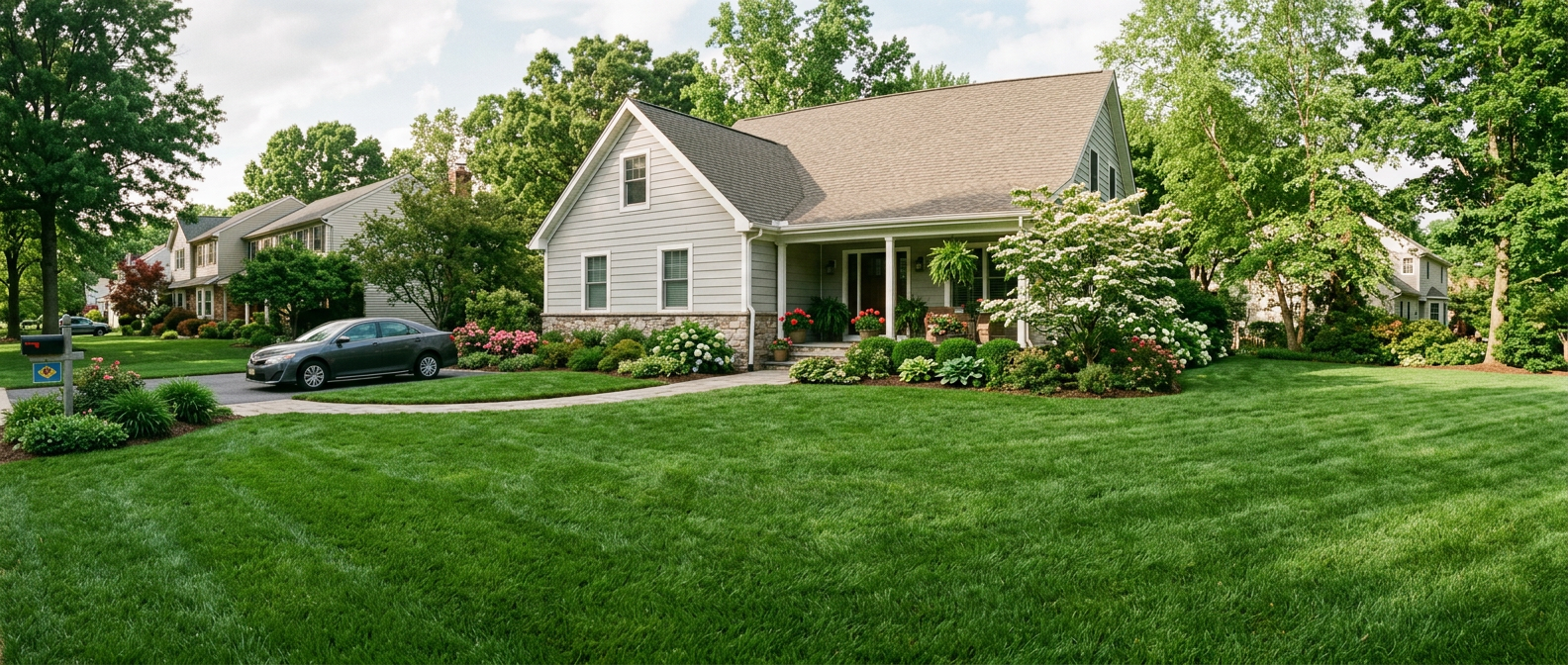
Let's be direct: growing a great lawn in Delaware can feel like a fool's errand. One minute it's a humid summer that chokes out your cool-season grass, the next it's a winter cold enough to kill off the warm-season stuff. Welcome to the 'Transition Zone,' the horticultural middle ground where no grass is perfectly happy. But that’s why we’re here. We aren't going to give you vague advice. We're going to tell you exactly what grass to plant for a killer Delaware lawn, whether you're in Wilmington, Dover, or down by the beaches.
Getting this right means less frustration, less wasted money, and more time enjoying your yard. Forget the confusing advice from big-box stores. We've managed lawns in these tricky zones for years, and we know what works.
Understanding Delaware's Unique Lawn-Growing Climate
Before you rip open a bag of seed, you need to understand the battlefield. Delaware is firmly in the USDA Plant Hardiness Zones 7a and 7b. This 'Transition Zone' means our summers are too hot for many cool-season grasses, and our winters are too cold for most warm-season grasses.
This climate throws curveballs:
- High Humidity: Especially in summer, high humidity creates a breeding ground for fungal diseases like brown patch and dollar spot.
- Variable Soil: Northern New Castle County often has heavier, clay-based soils, while Kent and Sussex counties trend towards sandy loam or straight-up sand near the coast. Sandy soil drains quickly, stressing grass during dry spells.
- Seasonal Extremes: We get everything from scorching July days to freezing January nights. Your grass needs to be a tough survivor.
Because of these factors, cool-season grasses are overwhelmingly the best choice for Delaware. They do most of their growing in the fall and spring and can survive the summer with proper care. You can grow some warm-season grasses (more on that later), but you'll be looking at a brown, dormant lawn from about October through May.
The Top 5 Best Grass Types for a Delaware Lawn
Alright, let's get to the main event. After years of testing, seeding, and fixing lawns, these are the five types of grass we recommend for Delaware.
- Turf-Type Tall Fescue: The undisputed champion.
- Kentucky Bluegrass (KBG): The high-end, beautiful choice.
- Perennial Ryegrass: The fast-growing team player.
- Fine Fescues: The shady lawn specialist.
- Zoysia Grass: The warm-season outlier.
#1 Pick for Delaware: Turf-Type Tall Fescue
If you want one grass that does it all in Delaware, this is it. Forget the old, wide-bladed 'Kentucky 31' pasture grass. Modern Turf-Type Tall Fescues (TTTF) have a much finer texture, good color, and are bred for one thing: survival.
Why it works for Delaware:
- Deep Roots: This is its superpower. Tall Fescue can send roots 2-3 feet deep, allowing it to find water during summer dry spells and anchor itself in sandy southern Delaware soils.
- Heat & Drought Tolerant: Of all the cool-season grasses, it handles summer heat the best. It won't love 95°F with 90% humidity, but it will survive where others fail.
- Good Disease Resistance: It holds up well against the fungal diseases that plague Delaware lawns in the summer.
In our experience, a lawn planted with high-quality Tall Fescue is the most likely to stay green through July and August with minimal fuss. It's tough enough for kids and pets and doesn't require the constant babying of other types.
Recommended Cultivars: Look for blends containing names like 'Black Beauty' (from Jonathan Green), 'Rhizing Moon', or 'Titanium.' A 25 lb. bag of Jonathan Green Black Beauty Ultra, which includes some KBG and Perennial Rye, runs about $129 at the Lowe's in Millsboro. This is an investment that pays off.
For a truly robust lawn, we always recommend you how-to-overseed-a-lawn in the fall to keep it thick and choke out weeds.
Kentucky Bluegrass & Perennial Ryegrass: The Power Duo
Kentucky Bluegrass (KBG) is the grass you see on golf course fairways and pristine suburban yards. It has a beautiful, dark green color, a fine texture, and the ability to spread and self-repair via underground rhizomes. The catch? It's a bit of a diva.
KBG hates heat and drought. It requires more fertilizer and water than Tall Fescue and is susceptible to summer patch disease. So why use it in Delaware?
Because it's unbeatable when blended. This is where Perennial Ryegrass comes in.
- Perennial Ryegrass: Germinates incredibly fast (5-7 days), providing quick color and stabilizing the soil. It has great wear tolerance.
- Kentucky Bluegrass: Takes longer to establish (how-long-does-grass-seed-take-to-grow, often 14-30 days), but once it does, it fills in any gaps with its spreading growth habit, creating that dense, carpet-like feel.
A seed mix with about 80% Tall Fescue, 10% KBG, and 10% Perennial Ryegrass is a fantastic, all-purpose blend for Delaware. The Fescue provides the durable base, the Ryegrass provides the quick start, and the KBG provides the premium density and repair.
Just be prepared to give it a little more TLC, especially when it comes to irrigation. Knowing the best-time-to-water-grass (early morning) is critical to keeping KBG alive through a Delaware summer.
Fine Fescues for Shady Delaware Yards
Have a yard with big, mature trees like those in the neighborhoods around Brandywine Creek State Park? You've probably struggled to grow grass in the shade. That's a job for the Fine Fescue family.
This group includes Creeping Red, Chewings, and Hard Fescue. They are the most shade-tolerant cool-season grasses, period. If you have an area that gets less than 4-5 hours of direct sun, you need Fine Fescue in the mix. You can find some excellent specialty options in our guide to the best-grass-seed-for-shade.
The Trade-Offs:
- Low Traffic Tolerance: They don't hold up well to heavy foot traffic.
- Slower Growth: They aren't as vigorous as Tall Fescue or Ryegrass.
They are, however, very low-maintenance, requiring less water and fertilizer than other grasses. Many shade mixes will blend Fine Fescues with more durable grasses for a good balance.
Planting Your Delaware Lawn: Best Practices
Here’s where the anti-gatekeeping part comes in. You can't just throw seed down and hope for the best. The when and how are more important than the what. And in Delaware, the window for success is specific.
The absolute best time to plant cool-season grass in Delaware is from late August to early October.
Why? The soil is still warm from the summer, which speeds up germination. But the air is getting cooler, which is exactly what these grasses love. There's also less competition from weeds like crabgrass. Seeding in the spring is a distant, and we mean distant, second place. Spring-seeded lawns often don't have a mature enough root system to survive the ensuing summer.
A key statistic from the experts backs this up. According to the University of Delaware's Cooperative Extension, the ideal window for seeding cool-season grasses is from August 15 to September 15 in New Castle County and from September 1 to October 1 in Kent and Sussex Counties. This timing ensures the grass has at least two months of good growing weather before winter dormancy sets in. (Source: https://www.udel.edu/academics/colleges/canr/cooperative-extension/fact-sheets/lawn-establishment-in-delaware/)
Your Seeding Checklist:
- Soil Test: Before you do anything, get a soil test. The University of Delaware offers this service for about $20. It will tell you your soil's pH and what nutrients it's missing. It's the smartest money you'll ever spend on your lawn.
- Kill Weeds: Get rid of anything you don't want. If you're dealing with dandelions, check our guide on how-to-get-rid-of-dandelions-in-lawn.
- Aerate & Dethatch: If your soil is compacted, rent an aerator. It's worth it. This allows water, air, and nutrients to reach the roots.
- Amend & Fertilize: Add whatever your soil test recommended (likely lime and a starter fertilizer).
- Seed and Water: Spread the seed, rake it in lightly, and water, water, water. The top inch of soil needs to stay moist until the grass is established.
The Zoysia Grass Option for Delaware
We have to mention Zoysia. It's a warm-season grass that can grow and even thrive in the southern half of Delaware. It spreads via runners, creating a very dense, traffic-tolerant turf that chokes out weeds. It's incredibly drought and heat-tolerant, laughing at a Delaware summer.
The Giant Caveat: Zoysia will be straw-brown and dormant from the first hard frost (usually late October) until late May. You will have a brown lawn for about 6 months of the year. For some, the low maintenance in summer is worth it. For others, it's a deal-breaker. It's a personal choice, but we generally steer Delaware homeowners toward cool-season grasses for more consistent green color.
Frequently asked
What is the best low-maintenance grass for Delaware?+
Turf-Type Tall Fescue is the best low-maintenance choice for most Delaware lawns. It requires less water and fertilizer than Kentucky Bluegrass and its deep roots give it great drought tolerance. Fine fescues are excellent for low-maintenance, shady areas with less foot traffic.
Can I plant Zoysia grass in Delaware?+
Yes, Zoysia grass can be grown in Delaware, especially in the warmer Kent and Sussex counties. However, as a warm-season grass, it will go dormant and turn brown from the first frost (around October) until late spring (May), which is a deal-breaker for many homeowners.
When is the absolute best time to seed a new lawn in Delaware?+
The best time to seed a lawn in Delaware is from late August to early October. The warm soil promotes fast germination while the cooling air temperatures reduce stress on the new seedlings. Seeding during this window gives the grass time to mature before winter.
How can I improve the sandy soil in southern Delaware for growing grass?+
To improve sandy soil, amend it with several inches of organic matter like compost. This improves water and nutrient retention. Also, choose deep-rooted grasses like Turf-Type Tall Fescue, which are better adapted to finding moisture in sandy profiles.
Is Kentucky 31 a good grass for Delaware?+
While Kentucky 31 (K-31) is a type of Tall Fescue, it's an older, pasture-variety grass. It's coarse, grows in clumps, and has a lighter color. Modern Turf-Type Tall Fescues (TTTF) are far superior, offering a softer texture, better color, and improved density for a home lawn.