
The 5 Best Grass Types for Delaware Lawns (2024 Guide)
Tired of a struggling yard? We're cutting through the noise to give you the straight scoop on the best grass types that actually thrive in Delaware's tricky climate.
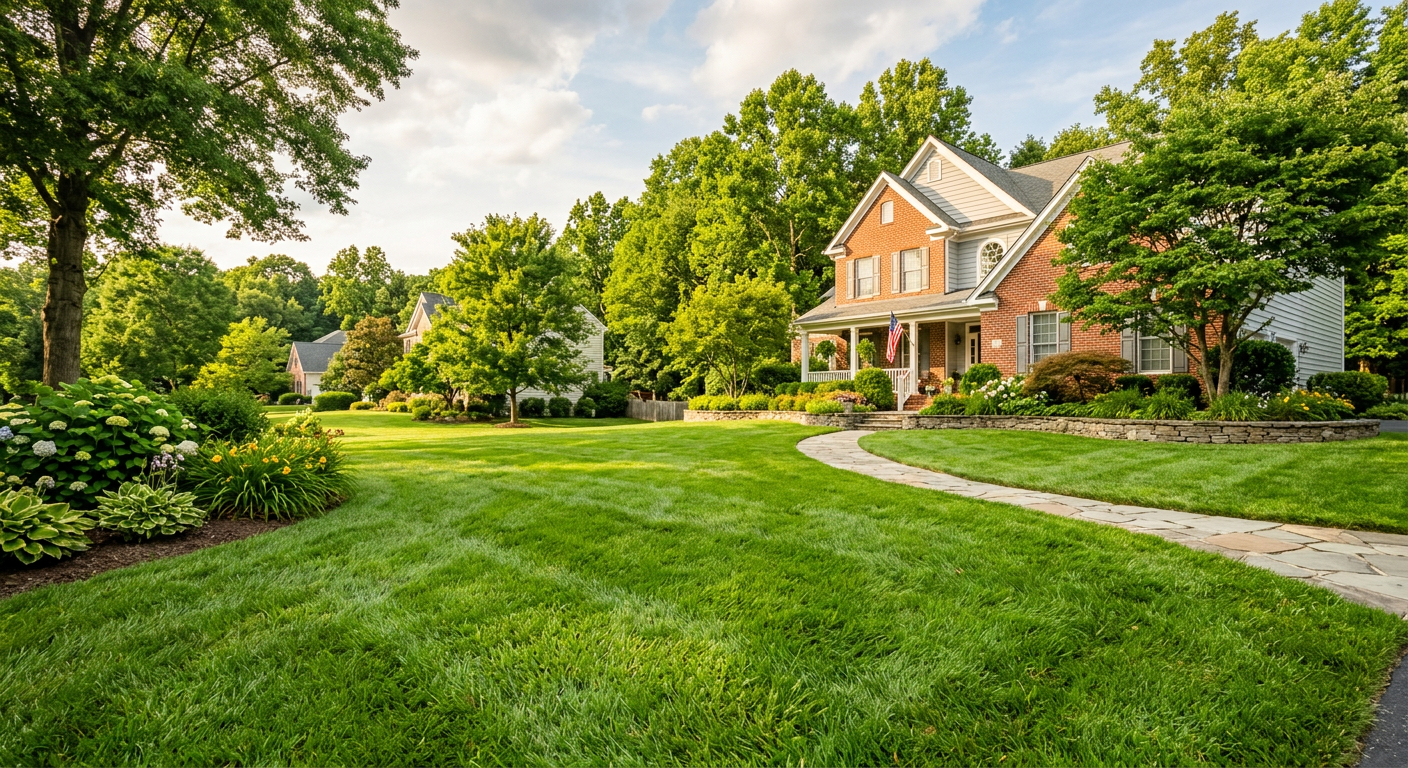
Let's get one thing straight: having a great lawn in Delaware is a battle. We've talked to homeowners from the Wilmington suburbs to the Sussex County coast, and the story is the same. Your lawn gets cooked in the summer, frozen in the winter, and hammered by humidity in between. It's frustrating. Why? Because Delaware sits squarely in the notoriously difficult "transition zone" for turfgrass. This means it’s a little too hot for cool-season grasses to be truly happy, and a little too cold for warm-season grasses to make any sense.
But that doesn't mean you're doomed to a patchy, weedy mess. It just means you have to be smarter than your lawn. You need to pick the right team. We’re not here to sell you on some miracle seed or snake oil tonic. We're here to give you the no-nonsense list of the best grass types that will actually survive and thrive in The First State.
Understanding Delaware's Unique Lawn Climate
To win the game, you have to know the field. Delaware's climate is the definition of “tricky.” We're mostly in USDA Hardiness Zone 7a and 7b. This means our winters get cold enough to send warm-season grasses like Bermuda into a long, brown dormancy, but our summers are hot and humid enough to stress the heck out of traditional cool-season grasses like you'd find in New England.
This transition zone reality dictates our entire strategy. While folks at the beach in southern Delaware might be tempted by a heat-loving grass like Zoysia (more on that later), for 95% of Delaware homeowners, the winning move is to build a lawn with elite cool-season grasses that have been bred for better heat and drought tolerance.
Your specific location matters, too. A lawn in Hockessin in New Castle County faces different winter pressures than a lawn in Rehoboth Beach, which has the moderating influence of the Atlantic and more salt spray. But the core principles and grass choices remain remarkably consistent across the state.
The Best Grass Varieties for a Delaware Lawn
Forget the generic cheap stuff. You need specific tools for the job. These are our top picks for a resilient, beautiful Delaware lawn.
1. Turf-Type Tall Fescue (The Workhorse)
If you can only choose one grass for Delaware, this is it. Modern Turf-Type Tall Fescues (TTTF) are the undisputed champions of the transition zone. Don't confuse these with the old, wide-bladed 'Kentucky 31' that your grandpa had. New cultivars have a much finer blade, darker color, and phenomenal resilience.
- Pros: Deepest root system of any cool-season grass (great for drought tolerance), good heat and wear tolerance, disease resistant, stays green longer than other options.
- Cons: It’s a bunch-type grass, meaning it doesn't spread and self-repair. Damaged spots will need to be re-seeded. Can get clumpy if not seeded densely.
- Our Pick: Look for blends containing top-rated cultivars. Jonathan Green's Black Beauty Ultra Grass Seed is a fantastic option available at most hardware stores and garden centers like Dilworth's Custom Design in Wilmington. A 25 lb bag costs about $95 and covers 6,250 sq ft for overseeding.
2. Kentucky Bluegrass (The Beauty Queen)
Kentucky Bluegrass (KBG) is what most people picture when they think of a perfect, lush, dark green lawn. It has a beautiful color and a soft texture.
- Pros: Spreads via rhizomes, so it self-repairs damage from pets or foot traffic. Creates a very dense, carpet-like turf.
- Cons: Not very drought or heat tolerant on its own. It's slower to germinate and requires more water and fertilizer than Tall Fescue to look its best. It's a diva.
- The Strategy for Delaware: Never plant a 100% KBG lawn. It will check out during the first July heatwave. The secret is to use it as part of a blend, typically 5-10% KBG with 90-95% Tall Fescue. The KBG will fill in any gaps and add that premium color and feel, while the Fescue does the heavy lifting.
3. Perennial Ryegrass (The Quick Fix)
Perennial Ryegrass is the sprinter on the team. It is known for one thing above all else: speed.
- Pros: Germinates incredibly fast, often in just 5-7 days. It's great for how-long-does-grass-seed-take-to-grow a quick green cover on bare spots or for temporary winter color when overseeding a warm-season lawn (which we don't recommend here). It has a nice, fine texture.
- Cons: It's the least heat and drought tolerant of the bunch. It's highly susceptible to diseases like Brown Patch and Gray Leaf Spot in Delaware's humid summers. It's a short-term player.
- The Strategy for Delaware: Use it sparingly in a mix (no more than 10-15%) for its fast germination, or use it for emergency repairs. It will establish cover quickly, preventing erosion and weeds while the slower Fescue and KBG fill in.
4. Fine Fescues (The Shade Specialists)
Got big, mature trees in your yard? Fine fescues are your best friend. This category includes varieties like Creeping Red, Chewings, and Hard Fescue.
- Pros: The most shade-tolerant of all cool-season grasses. They are also very low-maintenance, requiring less water and fertilizer than other grasses.
- Cons: They do not tolerate heat, drought, or foot traffic well. They'll go dormant and look rough in a sunny, high-traffic spot.
- The Strategy for Delaware: Use a dedicated best-grass-seed-for-shade mix containing fine fescues for those specific low-sun areas of your lawn. Don't use it for the whole yard unless your entire property is a shaded woodland.
A Note on Zoysia and Bermuda Grass in Delaware
Can you grow warm-season grasses in Delaware? Yes, particularly Zoysia in the southern, coastal parts of the state. Should you? Probably not. While it will look incredible in July and August, it will be a dormant, straw-brown color from roughly October through mid-May. That’s over half the year with a brown lawn. It’s also aggressive and can invade flower beds. For most people, the trade-off just isn't worth it.
Your Winning Strategy for a Delaware Lawn
Okay, enough theory. Here's the game plan.
The University of Delaware's Cooperative Extension is a goldmine of local data. Their turfgrass trials consistently show that modern Turf-Type Tall Fescues (TTTF) are the top performers for the state. According to their latest recommendations, a blend consisting of 90-95% TTTF and 5-10% Kentucky Bluegrass provides the best combination of disease resistance, drought tolerance, and recoverability for Delaware lawns. (Source: udel.edu) This is the mix we recommend for sunny to moderately sunny Delaware yards.
Seeding and Overseeding: Timing is Everything
This is the most important piece of advice we can give you: The absolute best time to plant grass seed in Delaware is late summer/early fall, from August 15th to October 15th.
Seeding during this window allows the grass to germinate in warm soil and establish a strong root system through the cool, moist fall. It faces much less competition from weeds like crabgrass. By the time the next brutal summer rolls around, your lawn will be mature and ready for a fight.
Spring seeding is a distant second-best. Yes, it will grow, but your tender new grass will immediately face a battle with surging weeds and the onset of summer heat and disease pressure. If you must seed in spring, do it as early as possible (late March/early April).
When you're ready, follow a solid process. Don't just toss seed on the ground. A good how-to-overseed-a-lawn plan involves renting a core aerator, spreading quality seed, applying a starter fertilizer, and watering correctly.
Tackling Common Delaware Lawn Problems
Choosing the right grass is half the battle; knowing the enemy is the other half. Here are common issues in Delaware and how to beat them:
- Acidic Soil: Much of Delaware's soil is naturally acidic. Grass struggles in acidic soil. The only way to know your soil's pH is to test it. The University of Delaware Soil Testing Program offers an excellent, affordable service for about $20. It's the best money you'll ever spend on your lawn. Most lawns will need an application of pelletized lime in the fall to raise the pH.
- Summer Fungus: Brown Patch and Dollar Spot are rampant in our humid summers. The best defense is a good offense: water deeply and infrequently in the early morning (see our guide on the best-time-to-water-grass), mow with sharp blades, and don't over-fertilize with nitrogen in the summer.
- Dandelions and Clover: These weeds are a sign of other issues, often thin turf and soil compaction. The long-term fix is a thick, healthy lawn that crowds them out. For the short term, you can learn how-to-get-rid-of-dandelions-in-lawn with targeted sprays in the fall, when they are most effective.
- Crabgrass: This annual weed is the bane of every Delaware summer. The key is a pre-emergent herbicide applied in the spring when soil temperatures reach 55 degrees for a few consecutive days (a good rule of thumb is when the forsythia bushes start blooming).
Stop fighting your lawn. Stop throwing down generic seed and wondering why it dies. Choose a high-quality, modern grass seed blend designed for the transition zone, plant it at the right time of year, and you'll finally have a lawn that doesn't just survive in Delaware—it'll actually thrive.
Frequently asked
What is the best low-maintenance grass for Delaware?+
Turf-Type Tall Fescue is the best all-around low-maintenance choice. For deeply shaded, low-traffic areas, Fine Fescues are even less demanding, requiring minimal water and fertilizer. However, they don't hold up well to sun or foot traffic.
Can I grow Bermuda grass in Delaware?+
While it might survive in the hottest parts of Sussex County, it's not recommended. Bermuda grass will be dormant and brown for more than half the year (October to May) and its aggressive nature can make it a nuisance in garden beds.
When is the absolute best time to plant grass seed in Delaware?+
Late summer to early fall, specifically from mid-August through mid-October. This window provides warm soil for germination and cool weather for root establishment with less weed competition, setting your lawn up for success next summer.
What's the best grass mix for a sunny Delaware lawn?+
The gold standard is a mix of 90-95% Turf-Type Tall Fescue and 5-10% Kentucky Bluegrass. The Fescue provides durability and drought resistance, while the Bluegrass adds color, density, and the ability to self-repair minor damage.
How much does it cost to seed a lawn in Delaware?+
A high-quality 25 lb bag of seed, like Jonathan Green Black Beauty Ultra, costs about $95 and covers roughly 3,000 sq ft for a new lawn. Remember to budget for a soil test (~$20 from UD), and potentially equipment rental like an aerator (~$70/day).