
The 5 Best Grass Types for Colorado Lawns (2024 Guide)
Tired of a dead lawn? Here's our no-fluff guide to picking the right grass seed for Colorado's wild climate, from Kentucky Bluegrass to native alternatives.
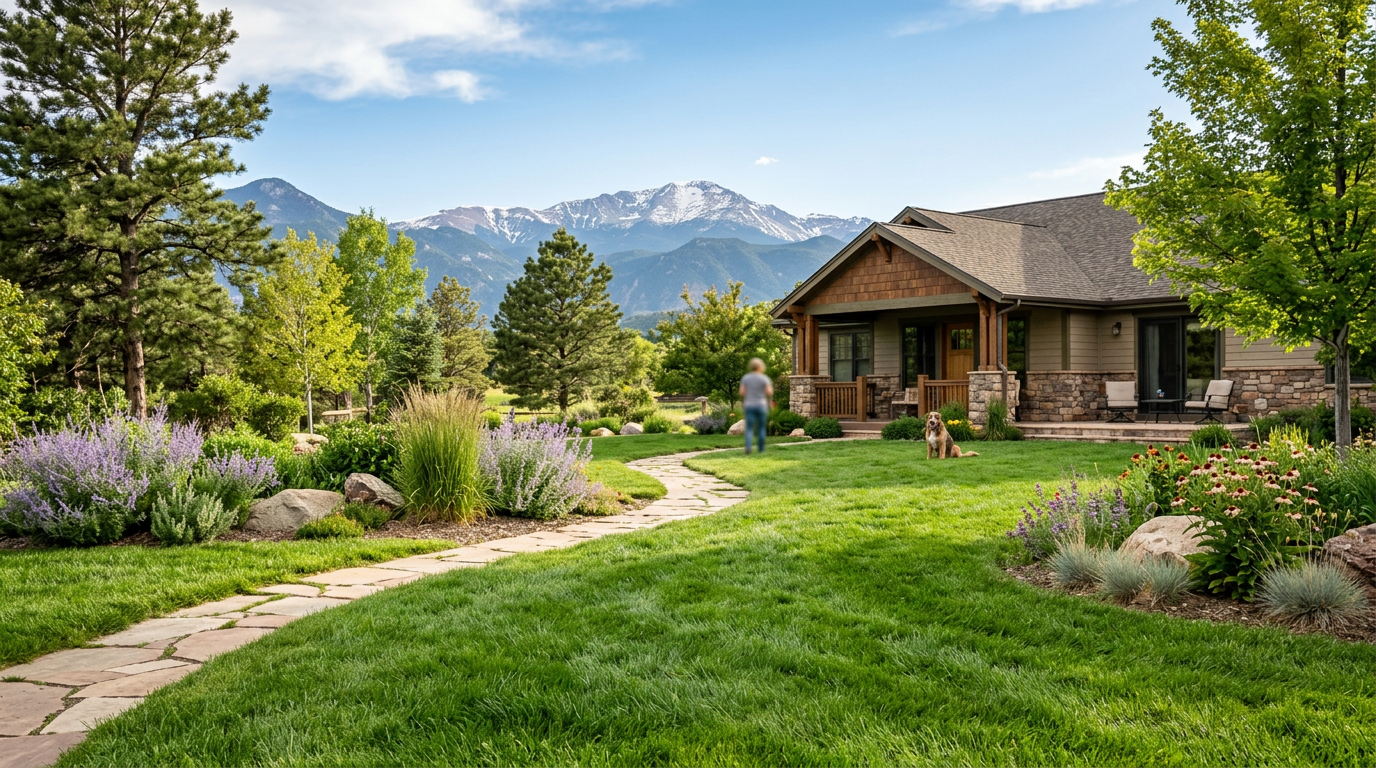
Let's be honest: trying to grow a lush, green lawn in Colorado can feel like a high-altitude fool's errand. Between the intense sun, low humidity, wild temperature swings, and perpetual threat of water restrictions, our state is uniquely challenging for turfgrass. But we're here to tell you it's not impossible. You just have to be smarter than the grass.
We've seen it a hundred times here at Dirt Cheap Genius: someone moves to Denver from the Midwest, throws down the same seed they used back home, and wonders why their grass is turning yellow by July. What works at sea level in a humid climate will fail spectacularly at 5,280 feet. Choosing the right species of grass for your specific slice of Colorado is the most important step toward a lawn you can actually enjoy, not just constantly fight with.
This is your no-nonsense guide to the best grass for Colorado. No gatekeeping, just a straight-up breakdown of what works, what doesn't, and why.
Understanding Colorado's Unique Lawn Challenges
Before we even talk about seed, let's get real about what we're up against in Colorado. Your lawn isn't just grass; it's a tiny ecosystem fighting a battle on multiple fronts.
- Semi-Arid Climate: Most of populated Colorado gets 15-20 inches of precipitation a year. A traditional lawn wants about double that. This means you will be irrigating. The question is how much.
- High-Altitude Sun: The sun here is no joke. At a mile high, the atmosphere is thinner, and the UV radiation is about 25% more intense than at sea level. This stresses grass, bleaches it out, and evaporates water in a hurry.
- Low Humidity: Dry air pulls moisture out of everything, including your soil and grass blades. This is why a simple watering schedule often isn't enough; you need grass types that are built to conserve water.
- Alkaline & Clay Soil: Much of the Front Range features heavy, alkaline clay soil. It can be fertile, but it compacts easily, drains poorly, and can lock up essential nutrients. You'll likely need to amend it.
- Water Regulations: This is the big one. Most cities along the Front Range, from Fort Collins to Pueblo, have permanent watering rules. Entities like Denver Water and Colorado Springs Utilities typically limit residents to watering 2-3 days a week. Choosing a thirsty grass type when you can only water twice a week is a recipe for failure. Violations can cost you, with fines starting around $50-$100 and escalating quickly.
The Cool-Season Kings of Colorado
Because of our cold winters and relatively mild summers (by national standards, anyway), Colorado is firmly cool-season grass territory. These grasses have their active growth periods in the spring and fall and tend to go dormant during the hottest parts of summer. These are your best bets.
1. Kentucky Bluegrass (KBG)
The reigning champion of the American lawn ideal. KBG is what most people picture when they think of grass: a dense, dark green, self-repairing carpet. It spreads via underground stems called rhizomes, which allows it to fill in bare spots on its own.
- Pros: Beautiful color and texture, excellent cold tolerance, repairs itself from damage, feels great underfoot.
- Cons: It is a WATER HOG. This is the thirstiest grass on our list, by a long shot. It's also prone to heavy thatch buildup, which means you'll need to learn how to dethatch a lawn. Its root system is relatively shallow, making it one of the first to brown out in a drought.
- Best For: People who are willing to commit to a high-maintenance, high-water-use lawn to achieve that perfect, uniform look. It's still the top choice for high-traffic sports fields for a reason.
- Cost: A 5lb bag of a quality seed like Scott's Turf Builder Kentucky Bluegrass Mix will run you about $35-$45 at a Home Depot in Thornton or a Lowe's in Grand Junction.
2. Turf-Type Tall Fescue (TTTF)
This is our editorial favorite for a modern, realistic Colorado lawn. Don't confuse this with the ugly, wide-bladed 'Kentucky 31' Tall Fescue of yesteryear. Modern TTTF varieties have a finer texture and better color, closely resembling KBG but with a secret weapon: deep roots. Some varieties can grow roots 3-6 feet deep!
- Pros: Excellent drought tolerance once established, good heat tolerance, deep root system, handles traffic well, less prone to disease than KBG.
- Cons: It's a bunch-type grass, meaning it doesn't spread and self-repair. If you get a bare spot, you'll need to re-seed it. Learning how to overseed a lawn is essential for a TTTF owner.
- Best For: The vast majority of Colorado homeowners on the Front Range who want a durable, green lawn without an outrageous water bill.
- Cost: Expect to pay around $80-$100 for a high-quality 25lb bag of TTTF seed, like Jonathan Green Black Beauty Ultra, which covers about 6,250 sq. ft. for overseeding.
3. Fine Fescues (Creeping Red, Chewings, Hard)
If you have shady areas, pine trees, or just hate fertilizing, the Fine Fescues are your friends. This group of grasses is known for its fine, almost wispy blades, and its incredible tolerance for shade and low- fertility soils.
- Pros: The most shade-tolerant cool-season grasses, very low water and fertilizer needs, stay green even in moderate drought.
- Cons: Do not handle traffic well at all. They can get matted and look clumpy if walked on too much. Not the classic 'carpet' lawn.
- Best For: North-facing lawns, areas under large trees, or anyone trying to create a low-input, more natural-looking lawn. They are the absolute best grass seed for shade.
- Cost: A good Fine Fescue blend like Outsidepride's No-Mow Fine Fescue Grass Seed costs about $40-$50 for a 5lb bag.
The Native Warm-Season Option for Colorado
4. Buffalo Grass
For the truly water-wise, there's Buffalo Grass. This is a warm-season grass native to the Great Plains. It's the only native turfgrass we can realistically use here. It requires drastically less water and mowing than any of the cool-season options.
- Pros: Extremely drought tolerant (can survive on natural rainfall in some years), requires very little mowing (maybe once a month), low fertilizer needs.
- Cons: It's a warm-season grass, so it has a very short green season in Colorado. It greens up late (May/June) and goes dormant and brown at the first frost (September). It doesn't tolerate shade or heavy traffic and is best established from plugs, not seed.
- Best For: Lower elevations (below 6,500 ft) on the Eastern Plains and Front Range. Perfect for that 'hell strip' between the sidewalk and street, or for a homeowner who values water conservation above a year-round green lawn.
- Cost: More expensive to establish. Plugs from a supplier like High Country Gardens can run $100+ to cover just a few hundred square feet.
Our Top Recommended Grass Seed Blends for Colorado
The real pro-move for Colorado is not to plant a single type of grass (a monoculture), but to use a blend that leverages the strengths of multiple species. You can buy pre-made mixes or create your own.
5. The Front Range All-Star Blend
This is the mix we recommend most often. It's typically 80-90% Turf-Type Tall Fescue and 10-20% Kentucky Bluegrass. You get the deep-rooted drought tolerance of the TTTF, while the KBG provides its self-repairing magic to fill in any gaps. This gives you the best of both worlds: a tough, beautiful lawn that's more forgiving than a pure stand of either grass. You can find mixes like this at local nurseries like Nick's Garden Center in Aurora or Tagawa Gardens in Centennial. Just look at the seed label!
According to Colorado State University Extension, a typical Kentucky Bluegrass lawn in the Front Range requires about 24 inches of supplemental irrigation per season to stay green. A well-managed Tall Fescue lawn might only need 18-20 inches. That 20% reduction in water use adds up quickly across thousands of square feet all summer. Considering that outdoor landscape irrigation can account for about 55 percent of residential water use in our semi-arid region (Source: EPA WaterSense), choosing a TTTF-dominant blend is a responsible and cost-effective choice for any Coloradoan.
When you're fighting for every drop of water, it's crucial to apply it wisely. That means watering deeply and infrequently in the early morning. Check our guide on the best time to water grass to make sure not a drop goes to waste.
Frequently asked
What is the most drought-tolerant grass for Colorado?+
For a traditional lawn look, Turf-Type Tall Fescue (TTTF) is the most drought-tolerant cool-season grass due to its deep roots. If you prioritize water conservation above all else, native Buffalo Grass is the champion, often surviving on rainfall alone once established at lower elevations.
When is the best time to plant grass seed in Colorado?+
The ideal time to plant cool-season grass seed in Colorado is from mid-August to mid-September. The soil is still warm from summer, which aids germination, but the cooling air temperatures and reduced weed pressure give the new grass a chance to establish before winter.
Can I have a green lawn in Colorado with watering restrictions?+
Absolutely. The key is choosing a drought-tolerant species like Turf-Type Tall Fescue and using efficient watering practices. Water deeply but infrequently (2-3 times per week) in the early morning hours to encourage deep root growth and minimize evaporation. A healthy lawn can easily handle standard restrictions.
What is the lowest maintenance grass for Colorado?+
Buffalo Grass is the lowest maintenance option, requiring very little water, fertilizer, or mowing. For a more conventional lawn look, a Fine Fescue blend is the lowest maintenance cool-season choice, offering good drought and shade tolerance with minimal fertilizer needs.
Is clover a good alternative to grass in Colorado?+
Yes! We love clover. A clover or a grass-clover mix is an excellent low-water, low-maintenance alternative. It stays green during summer heat, naturally fertilizes the soil by fixing nitrogen, and is great for pollinators. It's a fantastic, eco-friendly choice for a functional Colorado yard.