
The 5 Best Grass Types for California Lawns (2024)
Don't just throw down any old seed. Choosing the best grass for your specific California climate is the single most important factor for a successful, low-water lawn.
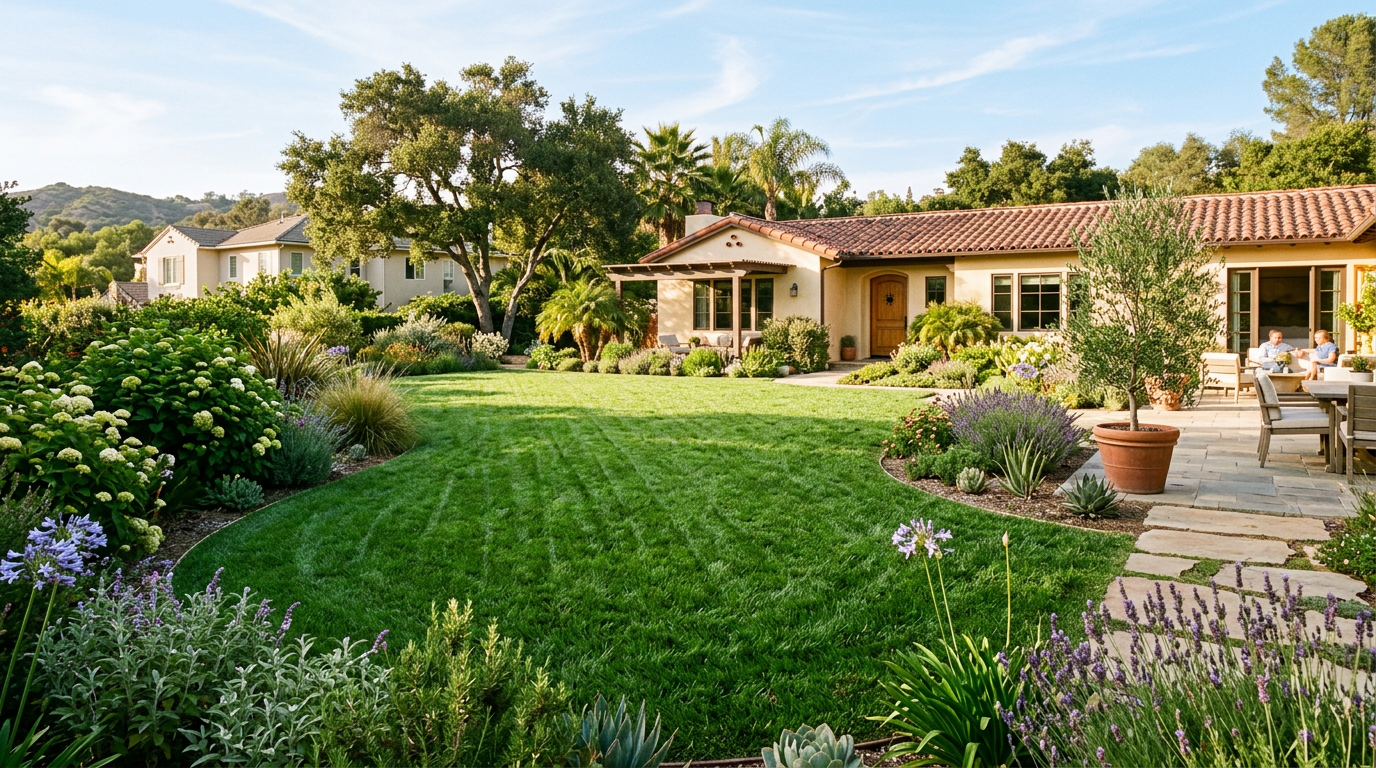
Let's be blunt: keeping a lawn alive in California is a whole different ballgame. Between scorching Inland Empire summers, misty San Francisco mornings, and statewide water cops, you can't just follow the same advice as someone in Ohio. Picking the best grass for California isn't just about aesthetics; it's about survival, water bills, and frankly, your sanity.
We're here to cut through the marketing fluff and give you the real dirt on what actually works in the Golden State, from San Diego to Sacramento. This isn't a theoretical guide. We've seen these grasses thrive and die under the California sun, and we know which ones stand a fighting chance.
California Isn't One Climate: Know Your Zone
First, forget everything you think you know about grass from other states. California is a state of microclimates. The grass that thrives in coastal Santa Monica will get fried to a crisp in Palm Springs. The number one mistake we see is people planting the wrong type of grass for their specific location within California.
- Southern California (LA, San Diego, Orange County): This is warm-season grass territory. You need something that loves heat and can handle periods of drought. Winters are mild, so dormancy isn't as much of a concern, though some browning is normal.
- Northern California (Bay Area, Sacramento): This is a transition zone. Coastal areas (San Francisco, Oakland) can support cool-season grasses year-round thanks to milder temps and marine layer. Inland areas like Sacramento get hot enough for warm-season grasses, but cool-season types like fescue are still the most popular choice.
- Central Valley (Fresno, Bakersfield): Think hot, dry, and intense. This area demands the most drought-tolerant, heat-loving grasses you can find. Water is precious and expensive here.
- High Desert & Mountains (Palmdale, Lake Tahoe): These areas have extreme temperature swings. Hot days, cold nights, and snow in the winter. You'll need hardy, cool-season grasses that can handle the cold.
1. Bermuda Grass: The King of Southern California
If you live anywhere from Los Angeles south to the border, Bermuda grass is your workhorse. It's a warm-season grass that spreads via rhizomes and stolons, meaning it's aggressive and self-repairing. It loves full sun and heat, and once established, it's remarkably drought-tolerant.
- Pros: Unmatched heat and drought tolerance, stands up to heavy foot traffic, repairs itself quickly.
- Cons: Goes dormant and turns brown in the winter. It's aggressive and can invade flower beds if not edged properly.
- Best For: Sun-drenched yards in Southern California and the Central Valley.
- Recommended Cultivars & Cost: Look for improved varieties like TifTuf Bermuda, known for using even less water. Sod from a reputable California grower like Southland Sod Farms will run you about $0.95 - $1.30 per square foot for TifTuf. It's an investment that pays off in water savings.
2. Tall Fescue: The Northern California Standard
Drive through a suburban neighborhood in San Jose or Sacramento, and you're likely looking at Tall Fescue. Specifically, turf-type tall fescue (TTTF). This cool-season grass has deeper roots than many others, giving it a leg up on drought tolerance compared to its cool-season cousins. Its biggest selling point in California? It stays green year-round.
- Pros: Stays green all year, relatively good drought tolerance for a cool-season grass, available as seed or sod.
- Cons: Requires more water than Bermuda in the summer. Can struggle in the extreme heat of the Central Valley or Southern California deserts. May thin out, requiring you to overseed a lawn every few years.
- Best For: Northern California, coastal areas, and yards with some partial shade.
- Recommended Cultivars & Cost: Look for blends specifically designed for a sun/shade mix. A 20 lb. bag of Scott's Turf Builder Tall Fescue Mix, which covers about 5,000 sq. ft., costs around $85 at California Home Depot locations.
3. UC Verde Buffalograss: The California-Native Solution
This isn't your granddad's prairie grass. UC Verde® Buffalograss was developed specifically by the University of California for our climate. It's a warm-season grass that uses up to 75% less water than traditional turf. It's a game-changer for the water-conscious Californian.
We love it, but you need to know what you're getting into. It has a very fine, unique texture. It's also a summer grower, meaning it will be completely dormant and tan-colored from roughly November to April. It's also only available as plugs, not seed, as it's a sterile female clone.
- Pros: Extremely low water use, low maintenance (less mowing), chokes out weeds once established, native genetics.
- Cons: Goes fully dormant (brown) in winter, slower to establish, must be planted from plugs, lower foot traffic tolerance than Bermuda.
- Best For: The eco-conscious homeowner in the Central Valley or inland Southern California who prioritizes water savings over a year-round green carpet.
According to the California Department of Water Resources, outdoor water use accounts for, on average, 50% of residential water consumption, with that number climbing much higher in hotter inland areas. (source: https://water.ca.gov/Water-Basics/Conservation-Tips/Landscape-and-Garden) Choosing a grass like UC Verde Buffalograss can turn that statistic on its head, drastically reducing your home's water footprint.
4. Kurapia: The Grass-Free Alternative
Okay, you caught us. This isn't grass. But if you're searching for the 'best grass for California,' what you might really be searching for is a 'low-water, green groundcover that I can mow.' Meet Kurapia. It's a sterile, low-growing plant from the verbena family that has become the darling of drought-tolerant landscapes.
It establishes quickly, has deep roots, and once established, needs watering only once or twice a month in many areas. It's also covered in small white or pink flowers for part of the year, which is great for pollinators but might be a dealbreaker if you have bee allergies.
- Pros: Insanely drought tolerant, chokes out weeds, very low-mow (or no-mow), pollinator-friendly.
- Cons: Not a traditional turf feel, can be damaged by heavy, concentrated foot traffic, attracts bees when flowering.
- Best For: Lawn replacement projects, slopes, and anyone tired of the endless mow-and-water cycle.
5. St. Augustine Grass: The Shade Choice for a California Lawn
For those tricky spots under California's majestic oak trees, St. Augustine might be your answer. It's a coarse-textured, warm-season grass with the best shade tolerance of the bunch. It spreads with thick, above-ground stolons.
It's a bit of a water hog compared to Bermuda or Buffalograss, so we only recommend it for specific, shady situations where other grasses fail. If you've been fighting a losing battle with thin, yellowing grass in a shady spot, this could be the ticket. It's more common in older Southern California neighborhoods.
- Pros: The most shade-tolerant warm-season grass.
- Cons: Needs more water, susceptible to pests like the chinch bug, doesn't handle cold winters well.
- Best For: Shady areas in Southern California. Consider it a problem-solver, not a first choice for a whole lawn. Check out our guide to the best grass seed for shade for more options.
Water Wars: California Regulations & Your Lawn
It's impossible to talk about lawns in California without talking about water regulations. Many water districts, like the Los Angeles Department of Water & Power (LADWP) or the East Bay Municipal Utility District (EBMUD), offer significant turf replacement rebates. We're talking several dollars per square foot to tear out your water-guzzling lawn and replace it with something drought-tolerant.
Before you plant a single seed, check your local water district's website. You might get paid to install that UC Verde Buffalograss or Kurapia lawn. At the very least, you need to be aware of the watering-day restrictions. This directly impacts how you establish and maintain your lawn. Knowing the best time to water grass (early morning) is not just a best practice here; it's often the law.
We've laid our fair share of sod in the blistering Fresno sun, and trust us, choosing a water-wise grass from day one is infinitely easier than trying to save a thirsty lawn on a restricted watering schedule. The right choice makes all the difference.
Frequently asked
What is the most drought-tolerant grass for California?+
Bermuda grass, especially improved cultivars like TifTuf, is the most drought-tolerant traditional turf. For maximum water savings, UC Verde Buffalograss and the lawn alternative Kurapia use up to 75% less water than conventional lawns.
What grass stays green all year in California?+
Turf-type Tall Fescue is the most popular grass for year-round green color, thriving in Northern California and coastal areas. Perennial Ryegrass is also used, often to overseed dormant Bermuda lawns in the winter for temporary green.
Is it illegal to have a lawn in California?+
No, it is not illegal to have a lawn. However, many local water districts have strict watering restrictions and offer substantial financial rebates to encourage residents to replace traditional turf with low-water landscapes, making drought-tolerant grasses the smartest choice.
How much does a new lawn cost in California?+
Sod installation costs vary by grass type and location, typically ranging from $1.50 to $3.00 per square foot installed. Seeding is much cheaper for materials (around $0.20/sq ft) but requires significantly more labor, water, and time to establish.
Should I use sod or seed for my California lawn?+
Sod provides an instant lawn and is great for erosion control, but it's more expensive. Seeding is cheaper and offers more variety, but requires careful watering and a long germination period. For water-wise options like UC Verde Buffalograss, plugs are the only option.