
The 5 Best Grass Types for California Lawns (2024)
Forget what works in Georgia. California's unique mix of coastal fog, desert heat, and strict water rules demands a smarter choice of turf. We'll show you the best grass types to thrive, from NorCal to SoCal.
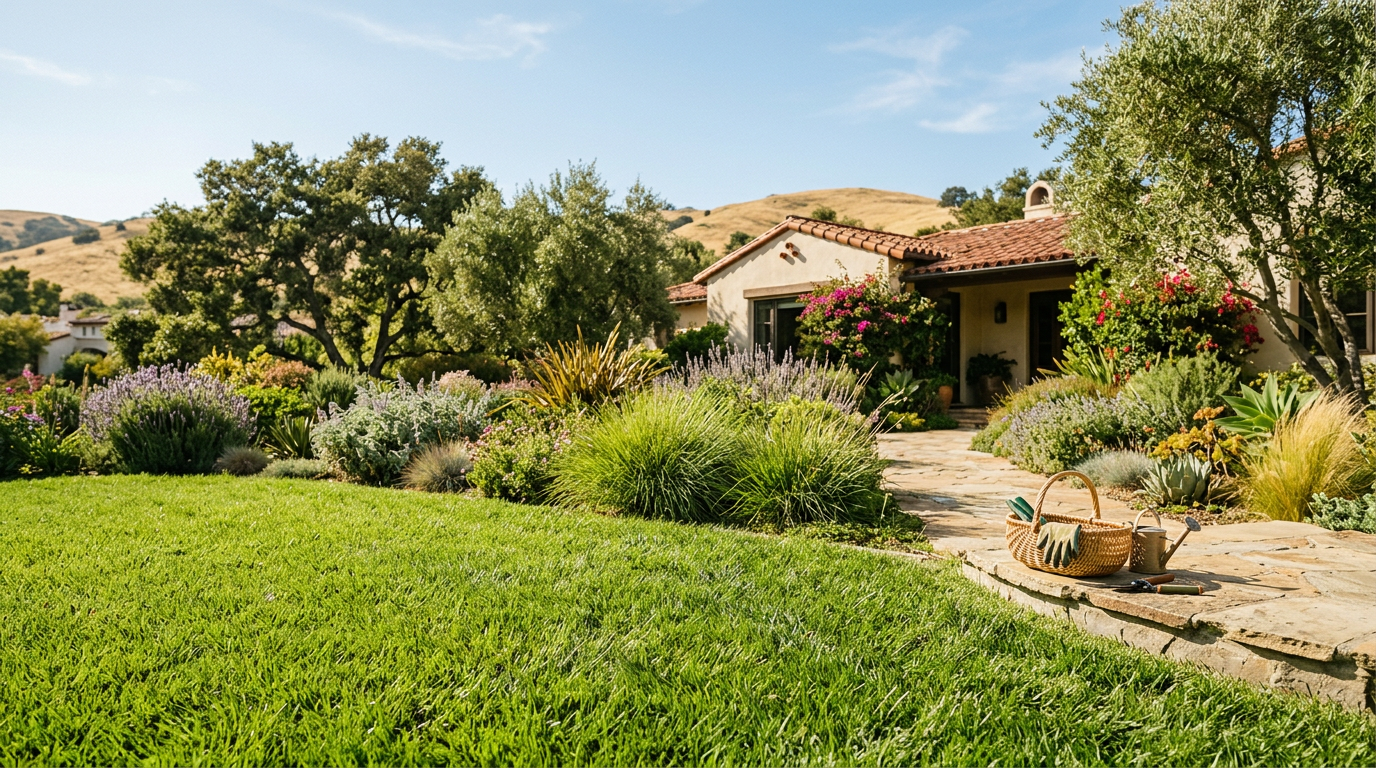
Let's be blunt: growing a traditional lawn in California can feel like trying to ski uphill in flip-flops. Between the legendary droughts, the patchwork of local water restrictions, and a climate that swings from coastal mist to desert inferno in the span of a 50-mile drive, it’s a tough gig. That beautiful, emerald-green lawn you see on TV? It was probably filmed in Atlanta. But that doesn't mean you're doomed to a yard of gravel and cacti. You absolutely can have a great-looking lawn in the Golden State. You just have to be smarter about it.
We’re not here to sell you a fantasy. We're here to give you the no-nonsense guide to the best grass for California—the stuff that actually survives, and even thrives, without requiring a second mortgage to pay your water bill. We'll cover the right choices for Southern California, Northern California, and everywhere in between, so you can make a choice that works for your yard and your wallet.
Understanding California's Bonkers Climate Zones
First thing's first: California isn't one place. The grass that loves the cool, foggy summers of San Francisco will shrivel and die by July in Palm Springs. The biggest mistake we see people make is buying a generic bag of “Sun & Shade Mix” from a big box store and expecting it to work everywhere. It won’t.
The state is broadly split into two turfgrass worlds:
-
Warm-Season Grasses: These are the tough guys. They love heat, handle drought like champs, and do most of their growing in the summer. They typically go dormant (turn a straw-like brown) in the winter when soil temperatures drop. This category, including Bermuda and Zoysia, is your best bet for most of Southern California, the Inland Empire, the Central Valley, and desert regions.
-
Cool-Season Grasses: These grasses, like Tall Fescue and Ryegrass, prefer milder temperatures. They stay green year-round in many parts of California, doing most of their growing in the spring and fall. They struggle in extreme heat and require more water in the summer. This category is the go-to for Northern California, the Bay Area, and the Central Coast. Some newer varieties have pushed their way into Southern California, too, but they come with a higher water budget.
Forget USDA zones. For California landscaping, the bible is the Sunset Western Garden Book's climate zones. The Bay Area might be Zones 15-17, while just inland in Walnut Creek you hit Zone 14, and over in the Central Valley you're in Zones 8-9. Down in Los Angeles, you could be in coastal Zone 24 or inland Zone 22. Knowing your specific microclimate is step one.
The Best Warm-Season Grasses for Southern California & Deserts
If you live south of the Grapevine or deep in the Central Valley, these are your champions. They sip water, shrug off heat, and can handle a backyard soccer game.
1. Bermuda Grass
Bermuda is the undisputed king of drought tolerance. It's tough, spreads aggressively with above-ground stolons and below-ground rhizomes (which is both a pro and a con), and recovers from damage quickly. If you have full sun and lots of traffic from kids or dogs, this is your grass.
- Pros: Unbeatable heat and drought tolerance, fast-repairing, stands up to heavy use.
- Cons: Goes dormant and brown in winter. It's an escape artist and will creep into flower beds if not edged properly.
- Our Pick: TifTuf™ Bermuda. It's the gold standard and one of the most rigorously tested drought-tolerant grasses on the market. Sod is your best bet for establishing a pure stand. Local California suppliers like West Coast Turf or Southland Sod sell it for around $1.10 - $1.60 per square foot.
2. Zoysia Grass
Think of Zoysia as Bermuda's more refined cousin. It has excellent heat and drought tolerance but is generally slower growing, meaning less mowing. It forms a very dense, carpet-like turf that feels amazing under bare feet. It also has better shade tolerance than Bermuda.
- Pros: Dense and soft, good drought tolerance, less mowing, decent shade tolerance.
- Cons: Very slow to establish and recover from wear and tear. Can be expensive.
- Our Pick: Zeon® Zoysia. It's a fine-bladed variety that looks incredible. Because it's a slow grower, you're almost always buying this as sod. Expect to pay a premium price, from $1.50 to $2.50 per square foot.
3. St. Augustine Grass
St. Augustine is the shade champion of the warm-season world. If you have a SoCal yard with large, mature trees, this is often the only warm-season grass that will work. It has wide, coarse blades and a distinctive blue-green color.
- Pros: The best shade tolerance of any warm-season grass. Stays green a bit longer into winter than Bermuda.
- Cons: Needs more water than an old pickup needs oil. It is highly susceptible to pests like the chinch bug, which can decimate a lawn quickly.
- Our Pick: Palmetto® St. Augustine is a popular variety known for its slightly better cold and drought tolerance. Only available as sod, typically costing $1.20 - $1.80 per square foot.
The Top Cool-Season Grasses for Northern California & Coastal Areas
For those in the Bay Area, Sacramento, or along the coast, a cool-season grass will give you that year-round green color you're looking for. The key is choosing one with deep roots to handle our dry summers.
4. Turf-Type Tall Fescue (TTTF)
This is, without a doubt, the most popular and versatile grass for a huge chunk of California. Don't confuse it with the ugly, clumpy pasture grass of yesteryear (Kentucky 31). Modern TTTF varieties have deeper roots than any other cool-season grass, giving them respectable drought tolerance. They stay green all year and have good shade tolerance. In fact, many people in Southern California opt for TTTF for the year-round green, but they accept the higher water bill that comes with it.
- Pros: Stays green year-round, good drought tolerance for a cool-season grass, good shade tolerance, widely available.
- Cons: Needs more water than Bermuda in summer, can get clumpy if not seeded or overseeded properly.
- Our Pick: In California, the Marathon® brand of fescue sod (Marathon I, II, and III) is iconic. It's sold at every nursery. If seeding, we love Jonathan Green Black Beauty Ultra. A 25 lb bag costs about $110 and covers a whopping 5,000 sq ft for overseeding. This grass is also a great choice if you're looking for the best grass seed for shade.
5. Perennial Ryegrass
Perennial Ryegrass is the sprinter. It germinates in as little as 5-7 days, providing unbelievably fast color. It's often used as a nurse grass in seed mixes to provide quick cover while slower grasses establish. In Southern California, it's the grass of choice to overseed a dormant Bermuda lawn for winter green.
- Pros: Germinates lightning-fast, beautiful fine texture, great for winter color.
- Cons: Doesn't handle heat or drought well. It's a short-term solution in most of California, not a permanent lawn.
- Our Pick: Scott's Turf Builder Perennial Ryegrass Mix is easy to find and effective for quick repairs or overseeding. A 7 lb bag will run you about $30.
Navigating California's Water Maze: Restrictions & Rebates
Choosing the right grass type is only half the battle. You have to play by California's water rules. These change constantly and vary wildly by location. Before you buy a single bag of seed, you MUST visit the website for your local water provider (like LADWP, EBMUD, MWD, or your city's water department).
Many of these agencies have a carrot and a stick. The stick is punishingly high water rates for overuse. The carrot is a rebate program.
According to the Public Policy Institute of California, landscape irrigation accounts for roughly half of all residential water use in the state. (Source: https://www.ppic.org/publication/water-use-in-california/) This is why water districts are so aggressive about outdoor use. Many, like the Metropolitan Water District of Southern California, offer turf replacement programs—literally paying you to tear out your water-guzzling lawn. Rates have been as high as $5 per square foot in some areas. If you're considering a new lawn, you should first see if they'll pay you to install drought-tolerant turf or a different type of landscape altogether.
Even with a drought-tolerant lawn, your watering schedule is critical. The mantra is deep and infrequent. This encourages deep root growth, which is the key to drought survival. For a detailed breakdown, check out our guide on the best time to water grass.
The "Just Do This" Plan for a Winning California Lawn
Feeling overwhelmed? Don't be. Here's your simple, four-step plan.
-
Identify Your Zone & Check Restrictions: Are you coastal, inland, NorCal, or SoCal? Go to your local water district's website. Write down the current watering days and look up turf replacement rebates. This 15-minute task will save you hundreds of dollars and a world of headaches.
-
Choose Your Champion: Based on your location and tolerance for a winter-brown lawn, pick your grass. For most of SoCal and the Central Valley, TifTuf Bermuda is the best all-arounder. For most of NorCal and coastal areas (or SoCal if you can afford the water), a quality Turf-Type Tall Fescue is the winner.
-
Prep is Everything: Don't just throw seed on hard, dead soil. Rent a tiller. Work in 2-3 inches of quality compost to improve soil structure and water retention. A healthy soil is a sponge that holds moisture for your grass roots. If your lawn struggles every year, it's probably not the grass—it's the compacted, lifeless soil underneath. You could be wondering why your grass is turning yellow when the real problem is 6 inches down.
-
Seed or Sod & Water Smart: Sod gives you an instant lawn but costs more. Seeding is cheaper but requires patience and diligence. Check out our guide on how long grass seed takes to grow to set your expectations. Once established, water deeply only when the grass tells you it's thirsty (fading color, footprints remaining after you walk on it).
Having a lawn in California isn't about defying nature; it's about working with it. By picking the right variety and ditching the bad habits of the past, you can have a functional, beautiful patch of green without being a water hog. You've got this.
Frequently asked
What is the most drought tolerant grass for California?+
Bermuda grass, specifically a variety like TifTuf™, is the most drought-tolerant grass widely available for California. It thrives in high heat and uses significantly less water than cool-season grasses, making it ideal for Southern California, the Inland Empire, and other arid regions.
Can I have a green lawn in California with the water restrictions?+
Yes, but you must be strategic. Choosing a Turf-Type Tall Fescue will keep a year-round green color but requires more water in summer. A warm-season grass like Bermuda will go dormant in winter but requires far less water overall to stay green during the hottest months.
What's the cheapest way to establish a new lawn in California?+
Planting from seed is significantly cheaper than laying sod. A bag of quality fescue or Bermuda seed can cost under $100 to cover thousands of square feet, whereas sod for the same area can cost thousands of dollars. However, seeding requires more time and effort to establish.
When is the best time to plant grass seed in California?+
For cool-season grasses like Fescue, the best time is fall, which allows roots to establish over the mild, wet winter. For warm-season grasses like Bermuda, plant in late spring when soil temperatures are consistently above 65°F, giving it the whole summer to grow.
Is Kentucky Bluegrass a good choice for California?+
Generally, no. Kentucky Bluegrass has very high water requirements and poor heat tolerance, making it a bad choice for almost all of California except for some high-elevation mountain communities. Tall Fescue is a much more realistic option for a year-round green lawn in the state.