
Best Grass for Arkansas: 5 Expert Picks for 2024
Don't gamble on your lawn. We're cutting through the noise to give you the definitive guide on the best grass types to thrive in Arkansas's unique climate.
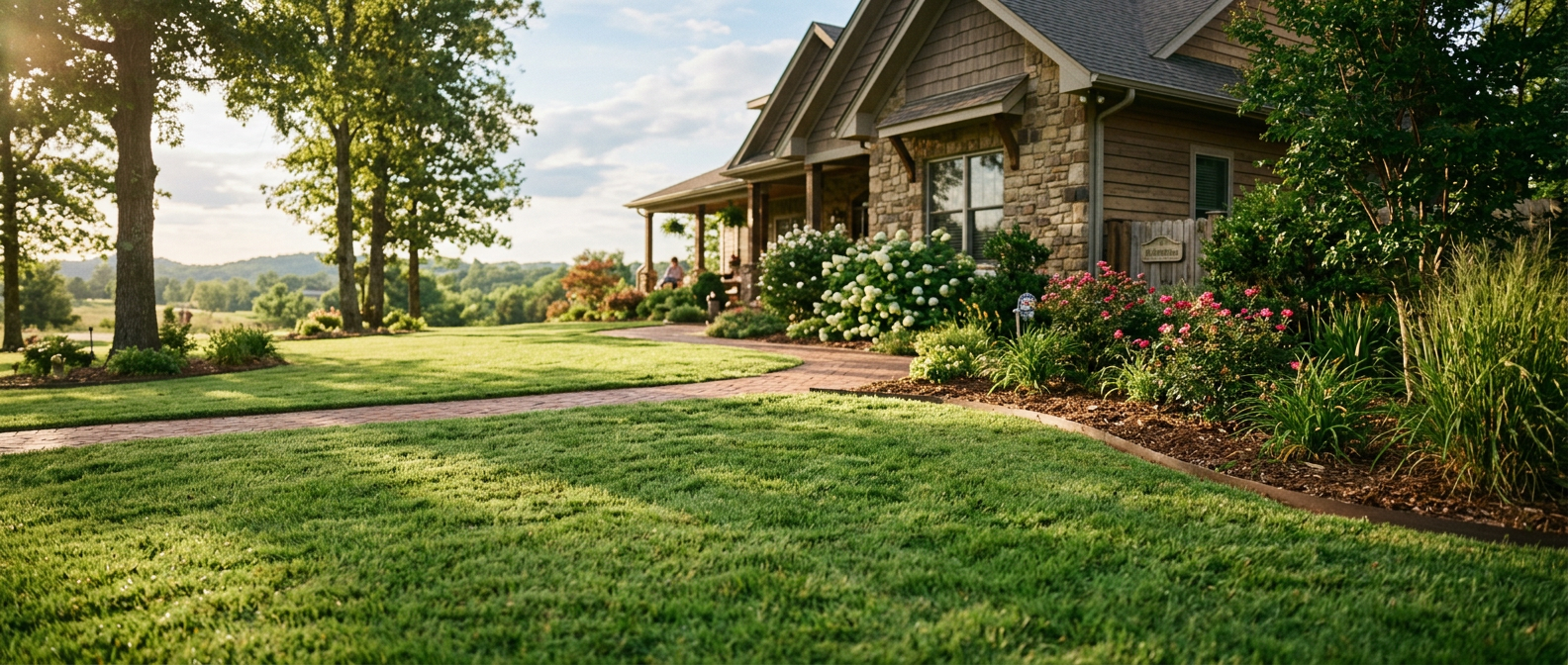
Let's be blunt: growing a gorgeous lawn in Arkansas can feel like a fool's errand. One minute you're dealing with scorching July heat that turns your yard into a crispy, brown mess, and the next you're staring down a January frost in the Ozarks. Welcome to the "transition zone," the horticultural equivalent of being stuck in the middle seat on a long flight. It’s not quite the Deep South, not quite the Midwest. But getting a great lawn here isn't impossible—it just requires picking the right tool for the job. And the most important tool is the grass itself.
We’re here to give you the straight scoop on the best grass for your Arkansas lawn. No fluff, no gatekeeping, just a clear-eyed look at what works, what doesn't, and why.
Understanding Arkansas's Tricky "Transition Zone" Climate
Before you throw a single seed, you need to understand the battlefield. Arkansas's climate is the primary reason lawn care can be so challenging. Our hot, humid summers are perfect for warm-season grasses like Bermudagrass. They love the heat. But our winters, especially in the northern half of the state from Fayetteville to Jonesboro, can get cold enough to injure or even kill those same heat-loving grasses.
Conversely, cool-season grasses like Fescue look fantastic in the spring and fall but can get absolutely hammered by the blistering heat and drought conditions of a typical Arkansas summer. They require a lot more water and attention to survive July and August.
This climatic tug-of-war means there's no single, perfect grass for the entire state. The best choice for a yard in Little Rock might not be the best for one in Bentonville. Your decision will depend on your specific location, sun exposure, and how much time you're willing to spend on your lawn.
The Best Warm-Season Grasses for an Arkansas Lawn
For most of Arkansas, especially the central and southern regions, warm-season grasses are the way to go. They're built for the heat and will thrive during the longest part of our growing season. They go dormant and turn brown after the first hard frost, but that's a small price to pay for a turf that can actually survive the summer.
1. Bermudagrass
If you want the undisputed champion of sun-drenched, high-traffic Arkansas lawns, you want Bermudagrass. It's tough, aggressive, and repairs itself quickly. It’s what you’ll find on nearly every golf course and athletic field in the state for a reason.
- Pros: Incredible heat and drought tolerance, stands up to heavy foot traffic, spreads quickly to fill in bare spots.
- Cons: Must have full sun (at least 6-8 hours daily), will not tolerate shade. It's an aggressive spreader and can easily invade flower beds. It's dormant (brown) all winter.
- Best For: Big, sunny yards with kids and pets.
- Product Pick: For establishing a new lawn from seed, look for improved varieties. A bag of Scotts Turf Builder Bermudagrass Seed will run you about $45 for 5 lbs, which covers up to 5,000 sq. ft. For sod, 'Tifway 419' is a classic, widely available from local growers like Central Arkansas Sod Farms.
2. Zoysia Grass
Think of Zoysia as Bermuda's more refined, well-dressed cousin. It forms an incredibly dense, carpet-like turf that feels amazing underfoot and is fantastic at choking out weeds. It has good heat and drought tolerance, and it handles shade better than Bermuda.
- Pros: Very dense growth, good drought/heat tolerance, moderate shade tolerance, less aggressive spread than Bermuda.
- Cons: Very slow to establish from seed or plugs. It's expensive, especially for sod (expect to pay $0.70-$1.20 per square foot). Prone to building up thatch.
- Best For: Homeowners who want a premium, high-end lawn and are willing to be patient (or pay for sod).
- Maintenance Tip: The dense growth can lead to a thick layer of thatch. You'll likely need a plan for how to dethatch a lawn every couple of years to keep it healthy.
3. Centipede Grass
Often called the "lazy man's grass," Centipede is a low-maintenance option best suited for the southern third of Arkansas. It requires less mowing, less fertilizer, and is generally happy to be left alone.
- Pros: Low maintenance needs (less fertilizer, less mowing), fairly good heat tolerance.
- Cons: Does not tolerate heavy traffic, wear, or soil compaction. It's not very cold-tolerant, making it a risky choice for northern Arkansas. It can develop a pale, yellow-green color if the soil pH is too high.
- Best For: Low-traffic yards in southern Arkansas where you want a lawn, not a career.
- Troubleshooting: If your Centipede lawn is looking pale, it's likely an iron deficiency. This is a classic symptom you can read about in our guide on why grass is turning yellow.
The Go-To Cool-Season Grass for Arkansas
If you live in the Ozarks or have a yard dominated by large oak and pine trees, a warm-season grass will just lead to heartache. You need a cool-season variety, and in Arkansas, that really means one thing: Tall Fescue.
4. Tall Fescue (Turf-Type)
Forget the clumpy, wide-bladed fescue you see on roadsides. Modern Turf-Type Tall Fescues (TTTF) have a much finer texture and better color. Their main advantage is that they stay green through the winter and have significantly better shade tolerance than any warm-season grass.
- Pros: Stays green year-round (with proper care), best shade tolerance of any suitable Arkansas grass, deep root system can help with drought.
- Cons: Struggles in extreme summer heat and drought, requires more water than Bermuda or Zoysia in July/August. It's a bunch-type grass, so it doesn't spread to fill in bare spots.
- Best For: Shady lawns across the state and full-sun lawns in cooler, northern Arkansas.
- Product Pick: You'll want a quality blend with multiple TTTF cultivars. Pennington's The Rebels Tall Fescue Grass Seed Blend is a solid choice, costing around $80 for a 20 lb bag. Because it doesn't spread, you'll need a plan for how to overseed a lawn every fall to keep it thick and lush.
Grasses to Generally Avoid in Arkansas
It's just as important to know what not to plant. You can save yourself a lot of money and frustration by avoiding grasses that just aren't suited for the Natural State.
- St. Augustine: While popular on the Gulf Coast, it's not cold-hardy enough for most of Arkansas. A harsh winter will wipe it out.
- Kentucky Bluegrass: The gold standard up north, but it simply can't handle our summer heat without an enormous amount of water and babying. It's sometimes included in fescue blends but shouldn't be planted on its own.
- Ryegrass: Perennial ryegrass is great for overseeding dormant Bermuda for winter color, but it will die off in the summer heat. It's a temporary solution, not a permanent lawn.
According to the University of Arkansas System Division of Agriculture, our state's average summer highs are consistently in the 90s Fahrenheit, with frequent periods of low rainfall. This climate data underscores why drought-tolerant warm-season grasses are often the most sustainable choice for sunny lawns. For Tall Fescue to survive, supplemental irrigation is not just a suggestion; it's a requirement. (Source: https://www.uaex.uada.edu/environment-nature/weather-climate/arkansas-climate.aspx)
Seeding vs. Sodding in Arkansas: A Cost Breakdown
Once you've picked your grass, you need to decide how to plant it. Your two choices are seeding or sodding.
-
Seeding: This is the budget-friendly route. You get more variety in cultivars, and the upfront cost is low. A 5,000 sq. ft. lawn might cost you $150-$250 for top-shelf seed like a good TTTF blend. The downside is the timing and patience required. The best time to plant Tall Fescue is early fall (September-October). The best time for Bermudagrass or Zoysia is late spring/early summer (May-June) when soil temps are consistently above 65°F.
-
Sodding: This is your instant lawn. It's expensive, but you go from dirt to green in a single afternoon. Sod is great for erosion control on slopes and gives you an immediate, usable lawn. We've laid a lot of sod in our day, and while the upfront cost makes you gulp, the instant gratification is hard to beat. That same 5,000 sq. ft. lawn could cost anywhere from $3,500 to $6,000 for Zoysia sod, installed. It's a major investment.
A Simple Arkansas Lawn Care Calendar
You've got the right grass. Now keep it healthy.
- Spring (March-May): Apply pre-emergent herbicides to prevent crabgrass. This is also when you'll be fighting spring weeds, so get your strategy for how to get rid of dandelions ready. Start mowing as the grass greens up.
- Summer (June-August): This is all about survival. Mow high to shade the soil and conserve water. Water deeply but infrequently to encourage deep roots. Not sure when? Our guide on the best time to water grass breaks it down.
- Fall (September-November): The most important season for cool-season lawns. This is the prime time to aerate and overseed Tall Fescue. For warm-season lawns, it's their last chance to store energy before going dormant.
- Winter (December-February): Your warm-season lawn is dormant and brown. Your fescue lawn is still green but growing slowly. The main job is to stay off the dormant turf, especially when it's frosty, to avoid damaging the crowns.
Frequently asked
What is the most low-maintenance grass for Arkansas?+
For southern and central Arkansas, Centipede grass is the most low-maintenance option, requiring less fertilizer and mowing. For shady or northern areas, a well-established Tall Fescue lawn can be relatively low-maintenance outside of the summer water requirements.
Can I have a green lawn year-round in Arkansas?+
Yes, but it takes work. Planting a cool-season grass like Tall Fescue will keep your lawn green year-round, but it requires extra watering in summer. Alternatively, you can overseed a dormant Bermudagrass lawn with annual ryegrass for temporary winter color.
When is the best time to plant grass seed in Arkansas?+
For warm-season grasses like Bermuda and Zoysia, plant seed in late spring or early summer (May to early July). For cool-season Tall Fescue, the absolute best time to plant is early fall (September through mid-October) to allow roots to establish before winter.
What is the best grass for dogs in Arkansas?+
Bermudagrass is the best choice for dogs in a sunny yard. Its rapid, creeping growth habit allows it to quickly repair damage from digging and foot traffic. It's tough and resilient. Tall Fescue is a second choice if you have more shade.
How much does sod cost in Arkansas?+
Sod prices vary by grass type and supplier. On average, you can expect to pay between $0.50-$0.80 per square foot for Bermudagrass sod and $0.70-$1.20 per square foot for Zoysia. Tall Fescue sod is less common but falls in a similar range.