
The 5 Best Grass Types for Arkansas Lawns (2024 Guide)
Choosing the right grass for Arkansas's wild climate swings doesn't have to be a headache. We've got the definitive list of turf that can handle the heat, humidity, and occasional cold snap.
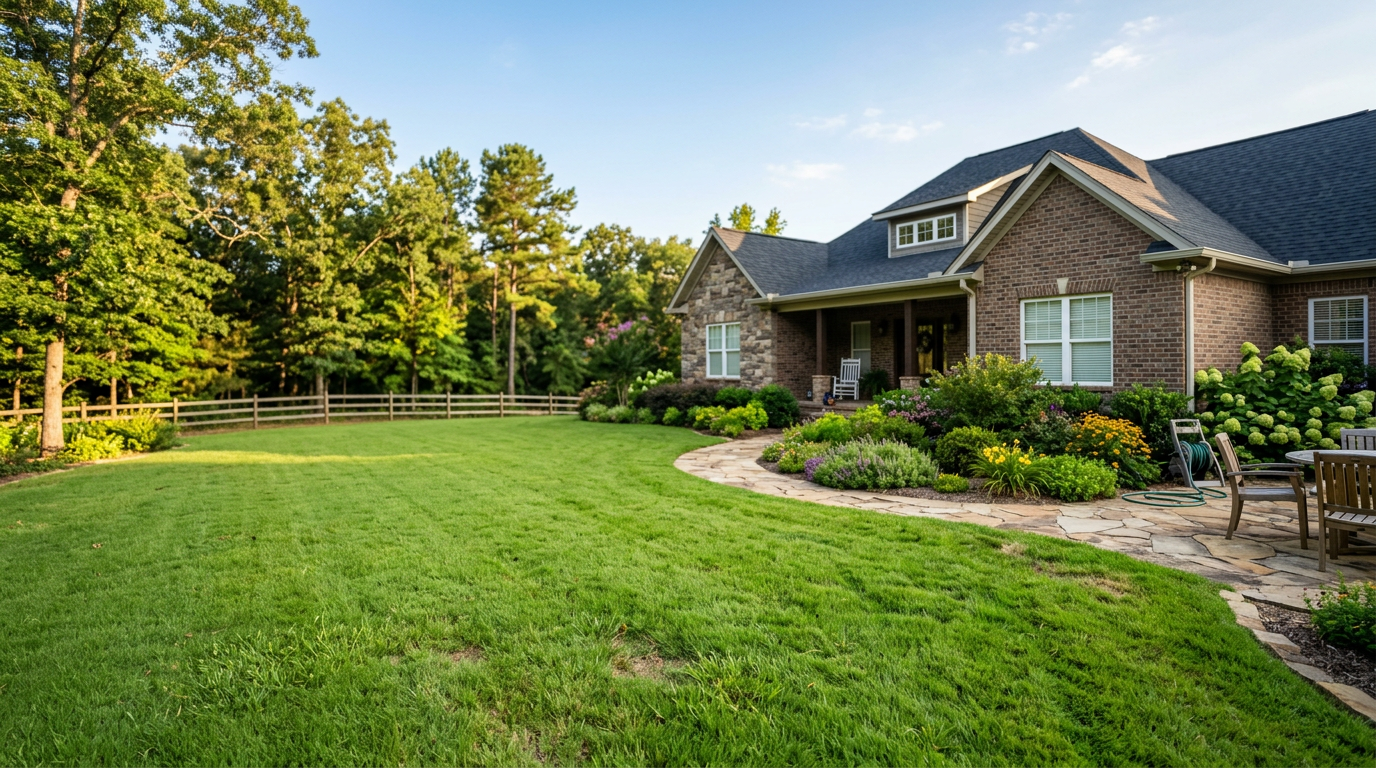
Let's be direct: growing a great lawn in Arkansas is a special kind of challenge. One day it’s 95°F with humidity you could swim through, and a few months later you're dealing with a legitimate winter freeze. The Natural State sits squarely in the dreaded "transition zone," a climatic battlefield where warm-season and cool-season grasses fight for dominance. Pick the wrong one, and you’re just funding a weed sanctuary.
But we’re here to cut through the noise. Choosing the best grass for your Arkansas home isn't about finding some magical, mythical seed. It's about making a smart choice based on your location, your soil, your sunlight, and how much time you actually want to spend on lawn care. We'll walk you through the top contenders that can handle everything Arkansas throws at them.
Understanding the Arkansas 'Transition Zone' Climate
Before you spend a dime, you need to understand why Arkansas lawns can be so finicky. The transition zone is this awkward middle ground on the map—too hot in the summer for cool-season grasses like Kentucky Bluegrass to thrive without constant life support, and too cold in the winter for some warm-season grasses to reliably survive.
Your specific location in Arkansas matters. A yard in Fayetteville (USDA Zone 7a) has different needs than one in Texarkana (Zone 8a). Northern Arkansas leans cooler, making Tall Fescue a viable, popular option. Southern Arkansas is classic warm-season grass territory, where something that loves heat is non-negotiable.
The first, best, and cheapest thing you can do is get a soil test. Don't guess, test. Your local University of Arkansas County Extension office is your best friend here. According to the University of Arkansas System Division of Agriculture, a routine soil test is your most important tool for a healthy lawn. For a nominal fee, usually around $10-$15 per sample, their labs will give you a detailed breakdown of your soil's pH and nutrient levels, with specific recommendations for your grass type. (https://www.uaex.uada.edu/yard-garden/home-landscape/soil-testing.aspx). Sending them a soil sample is the single most effective way to stop wasting money on the wrong fertilizer.
Our Top 5 Picks for the Best Grass in Arkansas
Alright, let's get to the contenders. We’ve seen these grasses perform firsthand across the state, from the Ozarks to the Delta.
1. Bermudagrass
If you have sun and lots of it, Bermudagrass is your champion. This is the tough, fast-growing turf you see on golf courses and sports fields across the South. It loves the Arkansas heat, is incredibly drought-tolerant once established, and stands up to heavy foot traffic from kids and pets like a champ.
- Sun Needs: Full Sun (8+ hours)
- Pros: Very durable, heat/drought resistant, spreads quickly.
- Cons: Aggressive spreader (will invade flower beds), goes completely dormant and brown in winter, poor shade tolerance.
- Best For: Large, sunny yards with lots of activity.
- Recommended Cultivars: For new lawns, consider improved varieties like 'TifTuf' or 'Celebration' for better drought tolerance and color. Common Bermuda is cheaper but can be more invasive.
2. Zoysiagrass
Think of Zoysia as Bermuda's more refined cousin. It forms a dense, luxurious, carpet-like lawn that feels amazing underfoot. Its main claim to fame is that its density naturally chokes out weeds, including an impressive ability to fight off crabgrass. It’s a warm-season grass but has better cold tolerance than Bermuda and can handle a little more shade.
We've laid a lot of sod in our day, and there's nothing more frustrating than watching your investment turn yellow because you picked the wrong grass for your light conditions. Zoysia gives you a bit more flexibility than Bermuda.
- Sun Needs: Full sun to light shade (5-6 hours)
- Pros: Extremely dense, great weed resistance, good drought/heat tolerance, feels great.
- Cons: Very slow to establish (sod is highly recommended), expensive, slow to recover from damage.
- Best For: Homeowners who want a premium, low-weed lawn and are patient.
- Recommended Cultivars: 'Meyer' is a proven classic. 'Emerald' is finer-textured but a little less cold-hardy. 'Zeon' is a newer variety with great shade tolerance.
3. Tall Fescue
For anyone in Northern Arkansas or with a yard dominated by mature oak and pine trees, Tall Fescue is your answer. As a cool-season grass, it stays green nearly year-round, going dormant only during the peak heat of summer if not irrigated. Modern Turf-Type Tall Fescues (TTTF) are much finer and more attractive than the old, coarse 'Kentucky 31' variety your grandpa planted.
- Sun Needs: Full sun to moderate shade (4-5 hours)
- Pros: The best grass seed for shade in Arkansas, stays green longer, deep roots provide some drought tolerance.
- Cons: Struggles in extreme summer heat and humidity (especially in South Arkansas), requires more water in summer, may need annual overseeding to stay thick.
- Best For: Shady yards and the northern half of the state.
- Recommended Cultivars: Look for blends of TTTF varieties sold by brands like Pennington or Scott's at your local Lowe's or Home Depot. Expect to pay about $30 for a 7lb bag that covers ~2,300 sq. ft.
4. Centipedegrass
Often called the "lazy man's grass," Centipede is a low-maintenance, warm-season grass popular in the southern half of Arkansas. It requires less mowing and significantly less fertilizer than Bermuda. It spreads via stolons (above-ground runners) to create a fairly dense, light green turf.
- Sun Needs: Full sun to light shade (6+ hours)
- Pros: Very low maintenance, low fertilizer needs, fairly drought tolerant.
- Cons: Not very traffic tolerant, slow to recover, susceptible to 'centipede decline' in high-pH soils, sensitive to cold (not for North AR).
- Best For: Southern Arkansas homeowners wanting a low-input, decent-looking lawn.
5. St. Augustinegrass
We include St. Augustine with a major disclaimer: it's really only suitable for the most southern tier of counties in Arkansas. It is the least cold-tolerant of the major warm-season grasses. However, it excels in shade tolerance (second only to Fescue) and loves hot, humid weather. It creates a coarse, broad-leafed, dense turf.
- Sun Needs: Sun to shade (4-5 hours)
- Pros: Excellent shade tolerance for a warm-season grass, beautiful blue-green color.
- Cons: Poor cold tolerance, requires significant water, susceptible to chinch bugs and diseases like brown patch.
- Best For: Shaded yards in the very southernmost parts of Arkansas (e.g., El Dorado, Texarkana).
How to Choose the Right Grass for Your Arkansas Yard
Still not sure? Let's break it down.
- If you have 8+ hours of sun: Bermudagrass is your toughest option. Zoysia is your premium, lower-maintenance choice.
- If you have a shady yard: Tall Fescue is your best bet, especially in central and northern AR. Zoysia and St. Augustine are options for shade in southern AR.
- If you hate yard work: Centipedegrass is the winner (in southern AR). Zoysia is also relatively low-maintenance once established.
- If you have kids and dogs: Bermudagrass can't be beaten for wear and tear. Zoysia is a close second.
Getting Started: Seeding vs. Sodding in Arkansas
Once you've chosen your champion, you have to get it in the ground. You have two options: seed or sod.
Sodding gives you an instant lawn. It's basically a pre-grown carpet of grass. It's great for erosion control and gives you immediate results. The downside is cost. A 450 sq. ft. pallet of Bermuda or Zoysia sod from a local Arkansas grower like River Valley Turf in Cabot might cost anywhere from $200 to $450, plus delivery. You'll lay it in late spring or early summer for warm-season grasses.
Seeding is much cheaper but requires more work and patience. You have to prepare the soil, spread the seed, and keep it consistently moist for weeks. The best time to water grass is early morning to prevent evaporation and fungal growth. It takes time, and you need to know how long grass seed takes to grow, which can be weeks. Plant warm-season grasses in late spring an cool-season grasses (Tall Fescue) in early fall.
Basic Arkansas Lawn Care Tips
A successful lawn isn't just about planting. It's about smart maintenance.
- Mowing: Follow the one-third rule—never remove more than one-third of the grass blade at a time. This means more frequent mowing in the spring. Check our guide on how often to mow your lawn to dial it in.
- Watering: Water deeply and infrequently to encourage deep root growth. An inch of water per week is a good rule of thumb.
- Fertilizing: Base your plan on your soil test results! Warm-season grasses want fertilizer during their summer growing season. Cool-season fescue prefers it in the fall.
- Weed Control: A healthy, dense lawn is the best weed defense. Use pre-emergent herbicides in the spring to prevent things like crabgrass and dandelions before they start. Our guide on how to get rid of dandelions can help with any that break through.
Frequently asked
What is the most low-maintenance grass for Arkansas?+
For southern Arkansas, Centipedegrass is the most low-maintenance option due to its minimal fertilizer and mowing needs. For the whole state, Zoysiagrass is a great choice once established, as its density crowds out weeds and it has good drought tolerance, requiring less overall input than Bermuda.
What grass stays green all year in Arkansas?+
No grass stays perfectly green year-round in Arkansas without effort. Tall Fescue, a cool-season grass, stays green for most of the year but can go dormant in extreme summer heat. Warm-season grasses like Bermuda and Zoysia are green all summer but go completely brown and dormant after the first frost.
When is the best time to plant grass seed in Arkansas?+
It depends on the grass type. Plant warm-season grasses like Bermuda or Zoysia from seed in late spring to early summer (May-June). Plant cool-season grasses like Tall Fescue in the early fall (September-October), which allows it to establish before winter and avoid summer heat stress.
Can I mix grass types in my Arkansas lawn?+
Yes, but be strategic. It's common to overseed a dormant Bermuda lawn with annual ryegrass for winter color, though it's temporary. Mixing Tall Fescue and Zoysia is generally not recommended as they have different maintenance needs. A better approach is using fescue in shady areas and Bermuda in sunny zones.
How much does sod cost in Arkansas?+
Sod prices in Arkansas vary by grass type and supplier. Expect to pay between $200 and $500 for a 450 sq. ft. pallet. Bermudagrass is typically the cheapest, while Zoysiagrass varieties like 'Zeon' or 'Emerald' will be at the higher end of that range.