
The 5 Best Grass Types for Arizona Lawns (2024 Guide)
Having a lush, green lawn in the Arizona desert isn't a myth. It just takes picking the right grass and understanding the unique demands of our sun-baked climate.
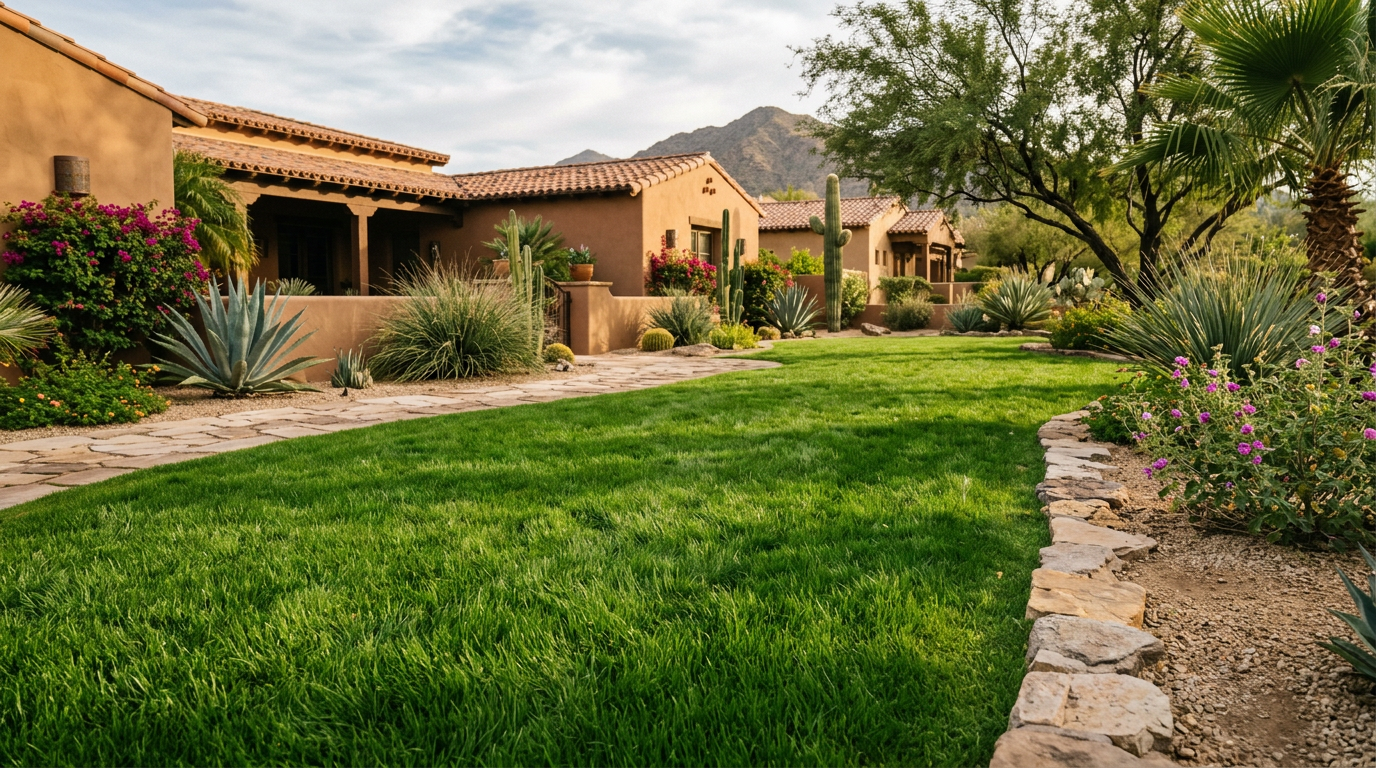
Let's be direct: maintaining a classic green lawn in Arizona feels like an act of defiance against the sun. From the scorching lows of the Sonoran Desert around Phoenix and Tucson to the sun-drenched plains, our state is engineered for cacti, not Kentucky Bluegrass. But we're not gatekeepers here. If you want a patch of green for the kids and the dog, we get it. And the good news is, it's entirely possible without bankrupting yourself on the water bill. You just have to pick the right grass for Arizona.
We've planted, mowed, and stressed every type of grass that stands a chance in this climate. This is our no-nonsense guide to what actually works.
Understanding Arizona’s Unique Lawn Demands
Before you throw down a single seed, you need to respect the opponent: the Arizona environment. We're dealing with a trifecta of challenges:
- Extreme Heat: We're talking sustained temperatures over 100°F, sometimes hitting 115°F or more. The grass needs to be able to handle this without immediately crisping up. If you find your current grass is turning yellow, the heat might be the primary culprit.
- Intense Sun & Low Humidity: The relentless, dry sun sucks moisture out of everything, including soil and grass blades.
- Alkaline & Salty Soil: Much of Arizona's soil is naturally alkaline (high pH) and can have high salt content, which is toxic to many grass types.
- Water Scarcity: This is the big one. Water is a precious resource. Picking a drought-tolerant grass isn't just a suggestion; it's a responsibility. Many municipalities have watering guidelines, so a thirsty grass is a bad investment.
Any grass that makes our list has to be a champion in these categories. So, let's get to the contenders.
1. Bermuda Grass (The Undisputed King of Arizona)
If there's one grass that defines Arizona lawns, it's Bermuda. Walk through any established neighborhood in the Valley, and this is what you'll find. There's a reason for that: it thrives in the heat that kills other grasses.
- Pros: Unmatched heat and drought tolerance, rapid growth (repairs itself quickly from pet spots or traffic), handles salty soil well.
- Cons: Aggressive spreader (can invade flower beds), goes dormant and turns a tan/brown color in the winter when temperatures drop below 50°F.
- Best For: Full sun areas, high-traffic lawns, and anyone wanting the most durable, classic Arizona lawn.
- Recommended Cultivars: 'Midiron' is the workhorse you see everywhere, often sold as sod. 'Tifway 419' is another classic. For premium drought tolerance, 'TifTuf' is the new champion, proven to use up to 38% less water than other Bermuda varieties. 'Celebration' offers a unique blue-green color.
- Where to Buy: You can find sod for these at local growers like Evergreen Turf in the Phoenix area or seed like Scotts Pro Bermuda Grass Seed at any big box store.
2. The Art of Overseeding: Perennial Ryegrass for Winter
This isn't a standalone grass for Arizona, but a critical partner to Bermuda. That brown winter dormancy of Bermuda grass is a non-starter for many. The solution? Overseeding.
This is the process of spreading a cool-season grass seed over your existing warm-season lawn in the fall. In Arizona, that means Perennial Ryegrass.
You essentially rent a green lawn for the winter. As soil temps cool in October, you scalp your Bermuda, spread the rye seed, and water it in. It germinates quickly, giving you a lush, green lawn from November through April. When the blowtorch heat of May and June returns, the ryegrass dies off just as your Bermuda grass is waking up and ready to take over for the summer. It's a beautiful, symbiotic cycle. For a complete walkthrough, check out our guide on how to overseed a lawn.
- Pro Tip: Don't cheap out on seed. A high-quality perennial ryegrass blend, like those from Barenbrug or a local mix from a nursery like Whitfill Nursery, will have better color and disease resistance. Expect to pay about $80-$100 for a 25 lb bag, which covers about 2,500 sq. ft. for overseeding.
3. Paspalum (The Salt-Tolerant Specialist)
Seashore Paspalum is a fantastic, though less common, alternative to Bermuda. Its superpower is its incredible tolerance for salinity, both in the soil and in irrigation water. If you live in an area with reclaimed water or notoriously salty soil (ahem, parts of the West Valley), Paspalum is your best friend.
- Pros: Incredible salt tolerance, good heat and drought tolerance, beautiful dark green color, can be mowed very low like a putting green.
- Cons: Can be more expensive and harder to find than Bermuda, doesn't like being overseeded as much as Bermuda does.
- Best For: Properties using reclaimed water, areas with high soil salinity, or homeowners wanting a premium, manicured look.
- Recommended Cultivars: 'Platinum TE' is a popular choice for its fine texture and color. 'SeaDwarf' is another excellent option.
4. Zoysia Grass (The Low-Mowing Luxury Choice)
Zoysia is the luxury sedan of the grass world. It’s not as aggressive as Bermuda, but it forms an incredibly dense, soft, carpet-like turf that feels amazing underfoot. It has good heat and drought tolerance, though it will go dormant a bit quicker than Bermuda in a drought as a self-preservation mechanism.
- Pros: Very dense growth (chokes out weeds), good drought tolerance, requires less frequent mowing than Bermuda. Check our guide on how often to mow your lawn for general tips.
- Cons: Slow to establish and recover from damage, more susceptible to thatch buildup.
- Best For: Homeowners who prioritize a lush, barefoot feel and are willing to be patient with its slower growth.
- Recommended Cultivars: 'Zeon' and 'Emerald' are popular fine-bladed varieties. 'Palisades' is a more robust, medium-bladed option.
5. A Word on Cool-Season Grass for High-Elevation Arizona
What if you live in Flagstaff, Prescott, or Payson? The rules are different up there. The intense summer heat is tempered by elevation, and you get actual snow in the winter. In these northern Arizona regions, a cool-season grass like Tall Fescue is the dominant choice.
- Tall Fescue: This grass stays green year-round in higher elevations. It has deep roots, giving it decent drought tolerance for a cool-season grass. It will struggle and need a lot of water in the low desert (Phoenix/Tucson) but is the king up north. Varieties like 'Marathon' or Black Beauty mixes are excellent choices.
Real-World Costs for an Arizona Lawn
Let's talk dollars. Establishing a lawn is an investment. Sod is the fastest way to an instant lawn. Expect to pay between $0.70 to $1.20 per square foot for Midiron Bermuda sod delivered from a farm like those in the Casa Grande or Scottsdale area. For a 1,000 sq. ft. lawn, that's $700 to $1,200. Seeding is far cheaper. A 5 lb. bag of quality Bermuda seed costs about $50 and can cover up to 5,000 sq. ft. for a new lawn. The trade-off is time and effort. Remember, water costs are the biggest long-term expense. According to the EPA's WaterSense program, outdoor water use can account for up to 70% of a home's total water consumption, making a drought-tolerant turf choice non-negotiable for keeping your bills manageable. Making sure you know the best time to water grass (early morning!) is your best financial defense.
Ultimately, the best grass for Arizona is almost certainly a warm-season variety. Embrace the Bermuda, master the art of the ryegrass overseed, and you'll have a lawn that not only survives but thrives in the desert sun.
Frequently asked
What is the most common grass in Arizona?+
Bermuda grass is, by far, the most common grass in Arizona, especially in the low desert areas like Phoenix and Tucson. Its exceptional heat tolerance, drought resistance, and ability to recover quickly make it the default choice for homes, parks, and golf courses.
What grass stays green all year in Arizona?+
No single grass stays green year-round in the Phoenix area. The common method is to have a Bermuda grass lawn for summer, which goes dormant (brown) in winter, and overseed it with Perennial Ryegrass in the fall for a green winter lawn. In high-elevation areas like Flagstaff, Tall Fescue can stay green all year.
What is the lowest maintenance grass for Arizona?+
Bermuda grass is arguably the lowest maintenance for Arizona's climate once established, as it is very drought-tolerant and resilient. If you're willing to let it go dormant in the winter and skip overseeding, it requires very little care during those months. Zoysia is also low-maintenance due to its slow growth.
Can you grow fescue in Phoenix?+
While you can technically grow Tall Fescue in Phoenix, it is not recommended. It's a cool-season grass that requires massive amounts of water to survive the extreme summer heat. This makes it an expensive, unsustainable, and irresponsible choice for the desert environment.
When should I overseed my lawn in Arizona?+
The ideal time to overseed your Bermuda lawn with ryegrass in Arizona is during the month of October. You want to wait until the evening temperatures consistently drop into the low 60s. This provides the perfect germination conditions for the rye seed before the Bermuda goes fully dormant.