
The 5 Best Grass Types for Arizona Lawns (2024 Guide)
Don't fight the desert—work with it. We'll show you the toughest, most water-wise grasses that actually thrive in Arizona's extreme climate.
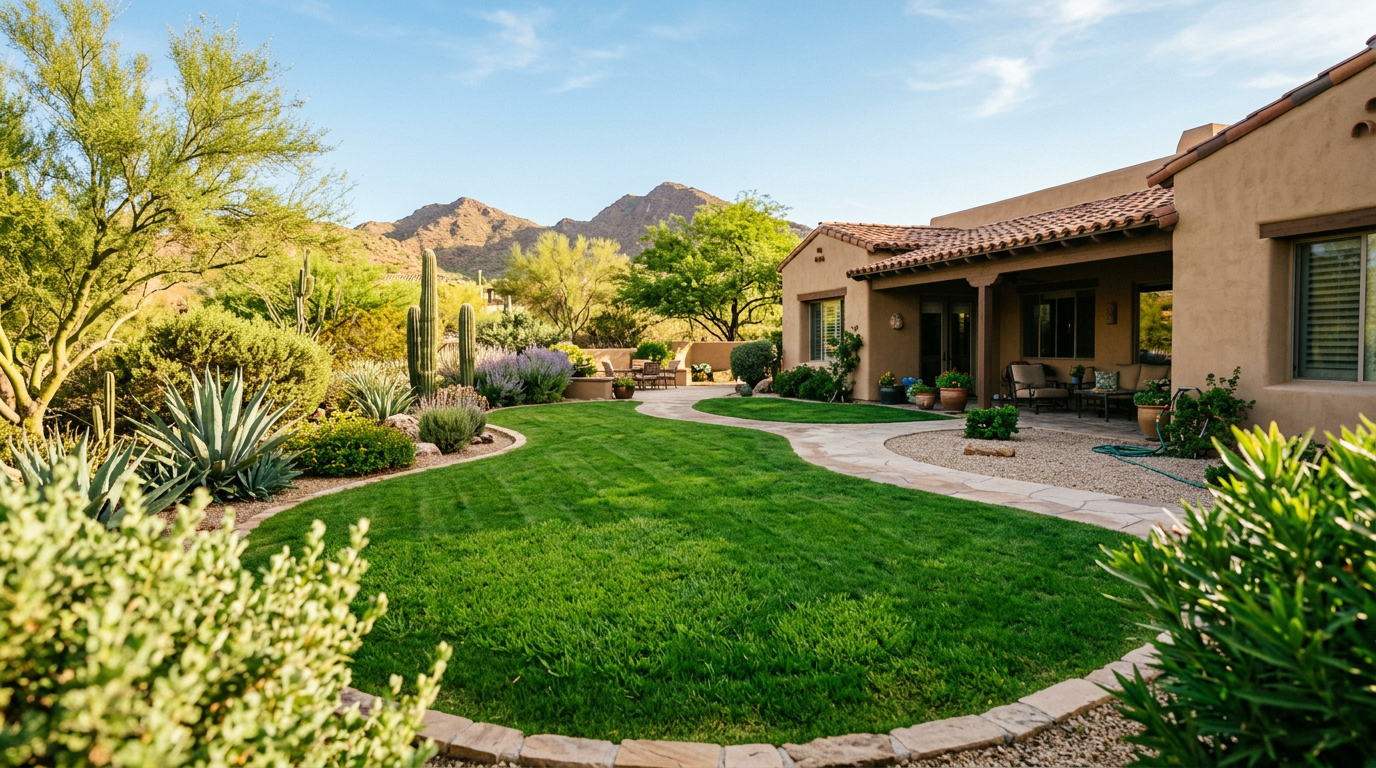
Let's be direct: growing a lush, green lawn in most of Arizona is an act of defiance against nature. The sun is relentless, the water is precious, and the soil can be as hospitable as a parking lot in July. But we're not ones to back down from a challenge. The secret isn't to use more water or more fertilizer; it's to choose the right warrior for the battle. And in Arizona, that means picking the perfect grass type for your specific corner of the state.
Whether you're in the low desert oven of Phoenix and Tucson or the cooler high country of Flagstaff, there's a grass that will work for you. You just can't treat it like you're in Ohio. We're here to cut through the noise and give you the real-world guide to the best grass for Arizona.
Understanding Arizona's Unique Lawn Challenges
Arizona isn't one monolithic climate. You have two primary zones to consider:
-
The Low Desert: This is Phoenix, Scottsdale, Tucson, Yuma, and everything in between. Here, you're dealing with extreme summer heat (110°F+), low humidity, and alkaline soils. Water is often high in salts, which can be tough on many plants. Your grass choice must be a warm-season variety that can handle this abuse.
-
The High Country: This includes Flagstaff, Prescott, Payson, and the White Mountains. At elevations from 4,500 to 7,000+ feet, you get four distinct seasons, including cold winters with snow. A Bermuda grass lawn that thrives in Phoenix would die a quick death here. You need cool-season grasses that can handle the cold.
No matter where you are, water is the great equalizer. Choosing a thirsty grass is not only expensive but increasingly irresponsible as water restrictions become more common.
The Kings of the Desert: Best Warm-Season Grasses for Arizona
For the vast majority of Arizona's population in the low desert, a warm-season grass is your only real option. These grasses thrive in the heat and go dormant (turn a tan color) in the winter when soil temperatures drop below 65°F.
1. Bermuda Grass (The Undisputed Champion)
If there's one grass that defines Arizona lawns, it's Bermuda. It's tough, repairs itself quickly, and sips water compared to other options. It's the reason golf courses in Scottsdale look so good in 115-degree heat.
- Best Varieties: Midiron is the workhorse of the Phoenix area—durable and widely available. TifTuf is a newer variety with exceptional drought tolerance (using up to 38% less water than other Bermudas). Tifway 419 is another classic, popular on sports fields.
- Pros: Incredible heat and drought tolerance, stands up to heavy foot traffic, recovers quickly from damage, low water use.
- Cons: Goes dormant and brown in winter (unless you overseed), can be very aggressive and creep into flower beds.
- First-person cue: We've seen too many Phoenix homeowners try to coddle a thirsty Fescue lawn through a July heatwave, and it's just a tragic waste of water and money. That's a classic reason why grass turns yellow and dies. Stick with Bermuda.
2. Palmetto St. Augustine (The Shade Solution)
Bermuda grass needs full sun, at least 6-8 hours a day. If your yard has mature Palo Verde or Mesquite trees that create significant shade, St. Augustine is your best bet. Palmetto is a specific variety known for better-than-average heat tolerance.
- Pros: The most shade-tolerant warm-season grass, beautiful dark green color, less aggressive than Bermuda.
- Cons: Needs more water than Bermuda, doesn’t handle heavy traffic well, susceptible to chinch bugs.
3. Paspalum (The Salt Specialist)
This is a more niche choice, but it's a lifesaver in certain situations. Paspalum is extremely tolerant of salt in both the soil and irrigation water. If you're on a well with salty water or using recycled water, Paspalum (like an older variety called SeaDwarf) is a fantastic option.
- Pros: Best-in-class salt tolerance, fine texture, good wear tolerance.
- Cons: Can be more expensive and harder to find, requires specific mowing practices.
For the High Country: Best Cool-Season Grasses for Arizona
If you live in Flagstaff, Prescott, or anywhere with real winter, you need a cool-season grass. These stay green year-round (though growth slows in winter) and would fry in the Phoenix summer.
4. Tall Fescue
Tall Fescue is the most popular choice for the "transition zones" like Prescott. Newer turf-type tall fescues have deeper root systems that make them more drought-tolerant than other cool-season grasses. It's a good all-around choice for yards with kids and pets.
- Pros: Stays green year-round, good shade tolerance, durable.
- Cons: Needs more water than warm-season grasses, can get clumpy if not properly maintained.
5. Kentucky Bluegrass
This is the picture-perfect, deep blue-green lawn you see in commercials. It's best suited for the highest, coolest parts of Arizona, like Flagstaff. It has a beautiful texture but is not for the faint of heart.
- Pros: Beautiful color and texture, repairs itself via rhizomes.
- Cons: High water requirement, not very heat tolerant, takes a while to establish.
The Two-Lawn Solution: Winter Overseeding in Arizona
In the low desert, a Bermuda lawn turning tan from November to April is normal. But if you want that year-round green, you need to master the art of the winter lawn. This involves overseeding a lawn with a temporary cool-season grass, almost always Perennial Ryegrass.
Around mid-October, when nighttime temperatures consistently dip into the 60s, you scalp your dormant Bermuda lawn, removing the thatch. Then you spread a heavy layer of ryegrass seed. With proper watering, you'll have a vibrant green lawn in a couple of weeks that lasts until the heat returns in May, at which point the Bermuda will wake up and take over again.
Water, Rules, and Reality in Arizona
Let's talk numbers. According to the University of Arizona Cooperative Extension, a typical Bermuda grass lawn in the low desert requires about 55 inches of water annually, and 70% of that is needed between May and September. (Source: extension.arizona.edu) Choosing a water-hog grass can easily add $100+ to your monthly water bill in the summer.
Many cities like Scottsdale, Tempe, and Phoenix have tiered water rates, meaning the more you use, the more you pay per gallon. Some HOAs also have rules about landscaping and water use. By choosing a drought-tolerant variety like TifTuf Bermuda and learning the best time to water grass (deeply and infrequently in the early morning), you can have a beautiful lawn without getting nasty letters from the city.
Sod vs. Seed: What's the Real Cost in Arizona?
For warm-season grasses in Arizona, sod is king. It provides an instant lawn, prevents erosion, and outcompetes weeds from the start. Seed for hybrid Bermudas is often unavailable or difficult to grow for a homeowner.
- Sod: Expect to pay $0.60 to $1.10 per square foot for varieties like Midiron or Palmetto St. Augustine from a local supplier like Evergreen Turf or Sod Solutions. A 500 sq. ft. pallet will run you about $275 - $400. Installation is extra.
- Seed: This is primarily for cool-season lawns up north or for overseeding with ryegrass in the winter. A bag of perennial ryegrass seed to cover 1,000 sq. ft. might cost $40-$60. While cheaper, you have to weigh the time and effort it takes. Remember, how long grass seed takes to grow can feel like an eternity when all you see is dirt.
Ultimately, the best grass for your Arizona home is the one that matches your location, lifestyle, and budget. Choose wisely, and you'll have a patch of green that's the envy of the neighborhood—without defying nature too much.
Frequently asked
What is the most common grass in Phoenix, AZ?+
The most common and best-adapted grass for Phoenix is Bermuda grass, specifically hybrid varieties like Midiron. Its exceptional tolerance for extreme heat, sun, and drought makes it the default choice for the majority of residential lawns, golf courses, and parks in the Valley.
Can you have a green lawn year-round in Arizona?+
Yes. In the low desert (Phoenix/Tucson), this is achieved by overseeding a dormant warm-season Bermuda grass lawn with Perennial Ryegrass in the fall. This provides a temporary green lawn through the winter. In the high country, cool-season grasses like Tall Fescue stay green year-round naturally.
What is the lowest maintenance grass for Arizona?+
For the low desert, a hybrid Bermuda grass like Midiron or TifTuf is the lowest maintenance option. Once established, it requires minimal water compared to other turf types, stands up well to traffic, and aggressively repairs itself, reducing the need for constant patching and care.
How much does water for a lawn cost in Arizona?+
Costs vary significantly by city and water usage. For a 1,000 sq. ft. lawn in summer, you could expect your water bill to increase by $50 to $150+ per month. Using a drought-tolerant grass and watering efficiently can keep you in the lower end of that range.
What grass can grow in Arizona shade?+
Palmetto St. Augustine is the best choice for shady areas in the low desert of Arizona. While no grass loves deep shade in the desert, it can handle filtered sunlight from trees better than Bermuda grass, which requires full sun to thrive.