
Best Grass for Alaska: 4 Tough Types for the North
Don't let the long winters and short growing season fool you. With the right cold-hardy grass seed, you can grow a surprisingly lush lawn in Alaska.
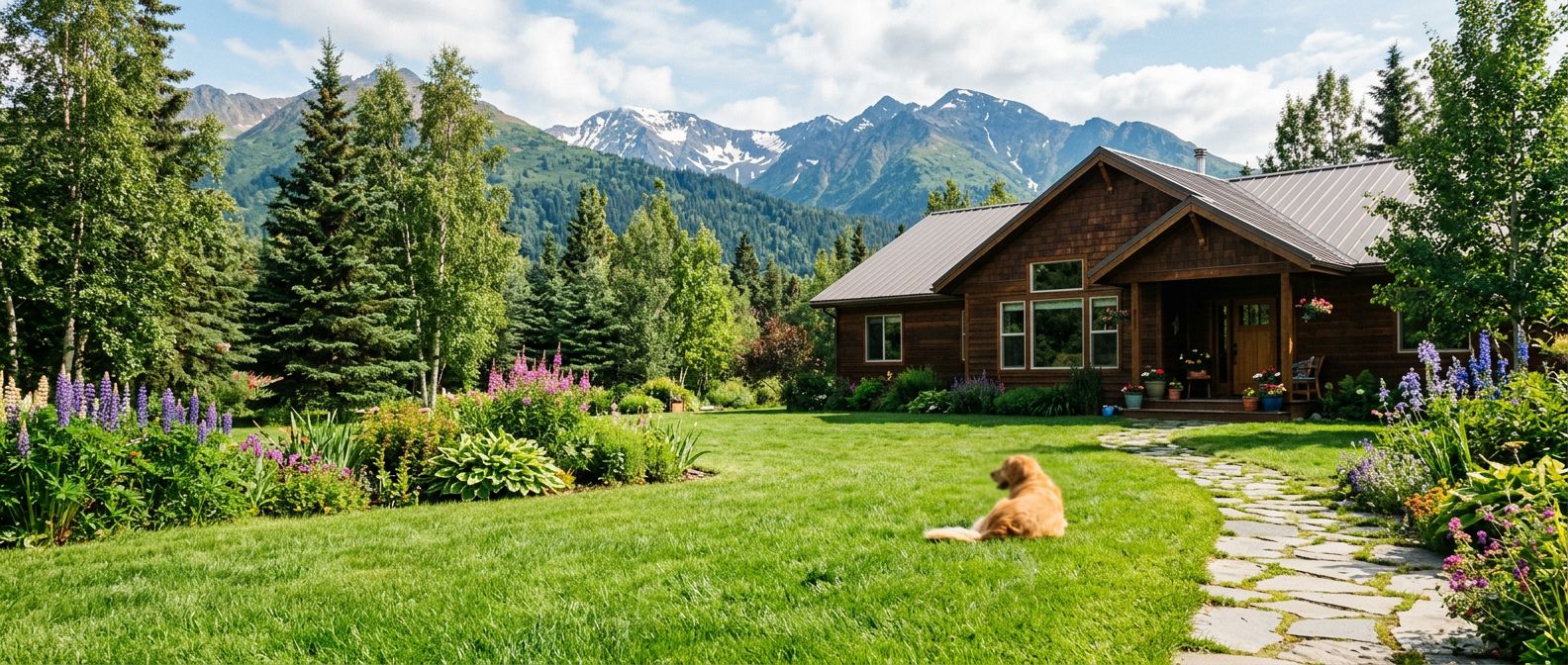
Let’s get one thing straight: growing a lawn in Alaska isn't for the faint of heart. But it’s also not the impossible task some folks make it out to be. We’re talking about a place with a growing season you can measure with a stopwatch and soil that’s often more rock than loam. Forget everything you've heard about growing grass in the Lower 48. This is Alaska, and the rules are different.
The good news? The same Midnight Sun that messes with your sleep schedule can be a superpower for your lawn, fueling incredible growth in a short period. You just need the right team of grasses for the job. We're here to cut through the noise and give you the no-nonsense guide to establishing a lawn that can not only survive but thrive in the Last Frontier.
Understanding Alaska's Unique Lawn Challenges
Before you rip open a bag of seed, you need to respect the opponent. In Alaska, the environment is the final boss. We're talking about a climate that chews up and spits out weak grass varieties. Most of the state falls into USDA Plant Hardiness Zones 1 through 5, which means long, severe winters and short, cool summers.
Your primary challenges are:
- Extreme Cold: Temperatures can plunge low enough to kill grass roots if they aren't protected by a consistent snowpack. Some grass varieties just can't handle it.
- A Short Growing Season: You have a tight window, typically from late May to early September, to get things done. Germination and establishment need to happen fast.
- Acidic, Nutrient-Poor Soil: Much of Alaska's soil is a souvenir from the last Ice Age—glacial silt, sand, and rock. It's often acidic and low in the organic matter and nutrients grass craves. According to the University of Alaska Fairbanks Cooperative Extension Service, many Alaskan soils are naturally acidic with a pH often below 6.0. Amending the soil with lime is a common and necessary step to raise the pH to the 6.0-7.0 range where cool-season grasses thrive best. (Source: uaf.edu/ces/)
- Variable Sun: While the summer sun is relentless, many properties have dense stands of birch and spruce, creating deep shade right next to sun-drenched clearings.
Any grass you plant needs to be tough enough to handle this gauntlet.
The "Big 3" Grass Types for Any Alaskan Yard
Warm-season grasses like Bermuda or Zoysia? Don’t even think about it. They’ll be dead by the first hard frost. In Alaska, we are exclusively in the cool-season grass club. Your entire lawn strategy will revolve around three key players, almost always used in a specific combination.
1. Kentucky Bluegrass (Poa pratensis)
Despite the name, Kentucky Bluegrass (KBG) is the undisputed king of cold-climate lawns. It has excellent winter hardiness and, once established, forms a dense, beautiful carpet that can repair itself thanks to its spreading rhizomes. It's the ideal "base" for a classic Alaskan lawn.
- Pros: Extremely cold hardy, spreads to fill in bare spots, beautiful dark green color, good traffic tolerance.
- Cons: Very slow to germinate and establish (can take up to 30 days), requires decent sun, can be prone to melting out disease in wet conditions.
2. Fine Fescues (Creeping Red, Hard, Chewings)
Fine Fescues are the shade-tolerant, low-maintenance members of the team. If you have any trees on your property (and in Alaska, who doesn't?), a fescue is non-negotiable. Creeping Red Fescue is the most common one found in Alaskan blends.
- Pros: Best shade tolerance of all cold-season grasses, low fertilizer and water needs, germinates relatively quickly.
- Cons: Doesn't handle heavy foot traffic well, can get clumpy if not part of a blend.
3. Perennial Ryegrass (Lolium perenne)
Think of Perennial Ryegrass as the sprinter on the team. It germinates incredibly fast, often sprouting in just 5-7 days. This quick growth provides erosion control, chokes out early weeds, and acts as a "nurse grass" that protects the slower-growing KBG while it gets started.
- Pros: Fastest germination, good traffic tolerance, bright green color.
- Cons: Least cold-hardy of the three (though modern varieties are much better), can be outcompeted by KBG and fescue over time, which is often by design.
Why a Grass Seed Blend is Non-Negotiable in Alaska
Here's where we get real. Don't go looking for a bag of 100% Kentucky Bluegrass. Planting a single type of grass (a monoculture) in Alaska is just asking for trouble. One patch of shade, one area with slightly more acidic soil, one bout of disease, and a whole section of your lawn is toast. And if your grass is turning yellow, diagnosing the problem is much harder with a monoculture.
A blend is your insurance policy. The Perennial Ryegrass pops up first, stabilizing the soil. The Fine Fescue takes over in the shady spots under the birch trees. The Kentucky Bluegrass fills in the sunny areas, creating a durable, dense turf. Together, they create a resilient and adaptable lawn that looks good everywhere. The different species cover each other's weaknesses.
Our Top Recommended Grass Seed Products for Alaska
Instead of getting hung up on national brands, your best bet is often a local or regional blend designed specifically for northern climates. These companies have already done the work of figuring out the perfect ratios.
For our money, we've seen fantastic results with local blends. We recently helped a friend in Anchorage prep their yard, and the local mix they bought sprouted in under ten days, creating a solid green carpet before the fall chill set in.
Here are a couple of excellent options:
-
Alaska Mill and Feed 'Alaska Lawn Seed': This is the go-to for so many Alaskans for a reason. It's a proven mix of Kentucky Bluegrass, Creeping Red Fescue, and Perennial Ryegrass. It's formulated for the local environment. You can walk into their stores in Anchorage or Fairbanks and pick it up. A 5lb bag, covering about 1,000 sq. ft. for new lawns, will run you about $30-$35. They also sell a 'Shade Blend' with more fescue and a 'Fairways Blend' that's heavy on the bluegrass for those perfect sunny spots.
-
Outsidepride Combat Extreme Northern Zone Grass Seed: If you're ordering online, this is a fantastic choice. It contains multiple types of self-repairing bluegrass, fescue, and ryegrass. It's bred for extreme climates and has excellent disease resistance. Expect to pay a bit more, around $40-$50 for a 5lb bag.
Your Alaskan Lawn Care Calendar: Seeding and Maintenance
Timing is everything in Alaska. You can't just throw seed down and hope for the best. Follow this general timeline for success.
-
Best Time to Plant (Late May - Early July): This is your window. The soil has warmed up, the danger of hard frost has passed, and you have maximum daylight to fuel growth. Seeding after mid-July is a gamble; the young grass may not be mature enough to survive the first winter.
-
Soil Prep: Get a soil test from the UAF Cooperative Extension. It’s the single best investment you can make. Based on the results, amend your soil. This almost always means adding high-quality compost for nutrients and pelleted lime to raise the pH. Rake the soil smooth before seeding.
-
Seeding & Watering: Spread the seed according to the bag's directions (usually around 5 lbs per 1,000 sq. ft. for a new lawn). Rake it in lightly. Water is critical. You need to keep the top inch of soil consistently moist until the grass is established. This may mean watering lightly 2-3 times a day. For tips, see our guide on the best time to water grass.
-
Mowing: Let the new grass grow to about 4 inches before its first mow. Then, set your mower high. We recommend a mowing height of 3 inches for Alaskan lawns. Taller grass shades the soil, retains moisture, and is more resilient. Trying to scalp your lawn short is a recipe for disaster. Check our guide on how often to mow your lawn for more details.
-
Weed Control: Dandelions are public enemy number one in many Alaskan yards. A healthy, dense lawn is your best defense, but if they break through, you'll need a strategy. We've got a whole guide on how to get rid of dandelions in your lawn.
-
Fertilizing: Go easy. Alaskan lawns do not need the heavy nitrogen applications common down south. A slow-release fertilizer with a lower first number (Nitrogen) is best. A single application in the spring (late May) and another in the early fall (late August) is plenty.
Building a beautiful lawn in Alaska is a rewarding challenge. By choosing the right blend of tough, cold-hardy grasses and paying close attention to your soil and a tight timeline, you can create a green oasis that will be the envy of the neighborhood—all 12 weeks of summer.
Frequently asked
Can you actually grow grass in Alaska?+
Yes, absolutely. While the climate is challenging, choosing the right blend of cool-season grasses like Kentucky Bluegrass, Fine Fescues, and Perennial Ryegrass allows for a lush, durable lawn. Success depends on proper timing for planting (late May to early July) and soil preparation.
What is the best grass seed mix for Alaska?+
The best mix for Alaska is a blend that contains Kentucky Bluegrass for durability, Fine Fescue for shade tolerance, and Perennial Ryegrass for fast germination. Locally-formulated products like 'Alaska Lawn Seed' from Alaska Mill and Feed are specifically designed for the state's unique conditions.
When should I plant grass seed in Alaska?+
The ideal window for planting grass seed in Alaska is from late May, after the last frost, until early July. This timeframe provides enough warmth and daylight for the grass to germinate and become established enough to survive the following winter. Seeding later than mid-July is very risky.
How do I fix my acidic soil in Alaska?+
Most Alaskan soils are acidic. The best way to fix this is by applying pelleted lime or wood ash. First, get a soil test to determine your exact pH level. Then, apply the recommended amount of lime in the spring or fall, working it into the top few inches of soil.
How do I get rid of moss in my Alaskan lawn?+
Moss is common in Alaska and usually indicates underlying issues like too much shade, acidic soil, or poor drainage. Rake out the moss, improve aeration, and apply lime if a soil test shows high acidity. Overseeding with a shade-tolerant fescue blend can also help choke out moss.