
The 5 Best Grass Types for Your Alabama Lawn
Don't gamble on your Alabama lawn. We're cutting through the noise to give you the definitive guide on the best grass types that thrive in our state's unique climate.
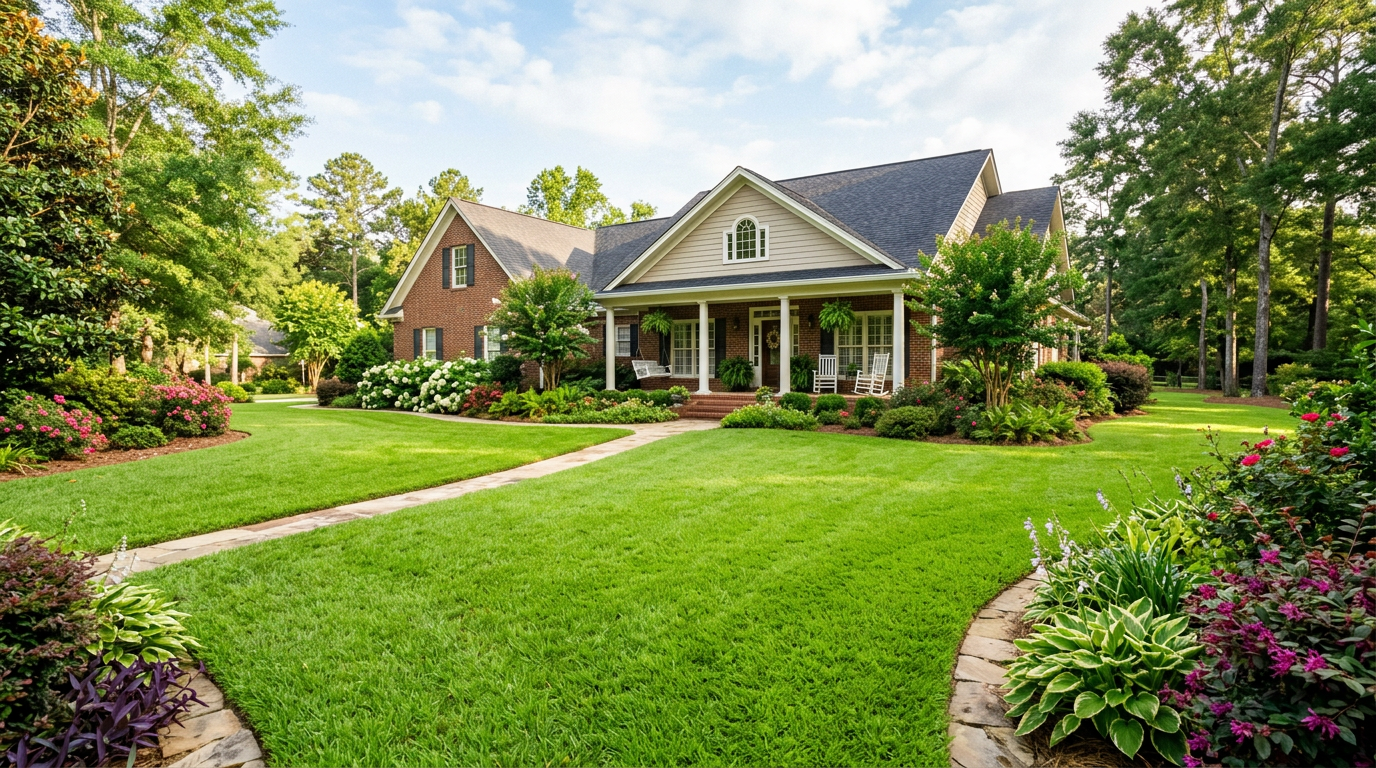
Let's be direct. Growing a great lawn in Alabama is a battle. It’s a fight against blast-furnace humidity, legendary red clay that can bake into brick, and summer heat that sends lesser grasses into permanent retirement. From the Tennessee Valley down to the Gulf Coast, you need a grass that’s as tough as a Crimson Tide goal-line stand. Forget what works up north; this is the SEC of lawn care, and you need a winner.
We’re not here to sell you a fantasy. We're here to give you the unvarnished truth about what actually grows, survives, and thrives in Alabama so you can spend less time worrying about your lawn and more time enjoying it.
Why Your Alabama Lawn Is a Special Kind of Challenge
First, understand the battlefield. Alabama sits squarely in USDA hardiness zones 7b, 8a, 8b, and a sliver of 9a along the coast. This means one thing above all else: you need a warm-season grass. These are grasses that actively grow from late spring through early fall and go dormant (turn brown) after the first hard frost. Planting a cool-season grass like Kentucky Bluegrass is a recipe for heartbreak and a dirt patch by July.
The second enemy is our soil. That famous Alabama red clay is soil, yes, but it's often acidic, compacted, and low in organic matter. It holds water, which sounds good, but it doesn't let it drain, which leads to root rot. Before you lay a single piece of sod or cast a single seed, you must know what you're working with. Do yourself a favor and get a soil test. The Auburn University Soil, Forage, & Water Testing Laboratory is the absolute best resource for this. For about $7, they’ll give you a detailed report that tells you exactly what your soil needs. Don't skip this; it's the cheapest, most valuable thing you'll do for your lawn. You can learn more here about how to read a soil test.
The King: Bermudagrass for a Full-Sun Alabama Yard
If you have at least 8 hours of direct, unfiltered sun, stop reading and go get Bermudagrass. It is, without a doubt, the toughest, most drought-tolerant, and traffic-ready grass for the state of Alabama.
- Pros: Unmatched heat and drought tolerance, rapid growth and self-repair, stands up to kids, pets, and backyard parties. It's the standard for athletic fields for a reason.
- Cons: Absolutely must have full sun. It has zero shade tolerance. It’s also an aggressive grower, so it will invade flower beds if not edged properly. It also requires regular mowing, sometimes twice a week during peak season.
Our Pick: For new lawns, we recommend TifTuf Bermuda sod. It's a modern cultivar with exceptional drought resistance. For seeding, a good quality hulled and coated seed like Pennington Bermuda will establish well.
Local Cost: Expect to pay between $250 - $400 for a 500 sq. ft. pallet of Bermuda sod from a local supplier like Super-Sod, with locations in Birmingham and Huntsville. A 5 lb. bag of seed, covering up to 5,000 sq. ft., will run you about $40 at a big box store.
The Luxury Pick: Zoysia Grass in Alabama
If Bermuda is the workhorse, Zoysia is the show horse. It forms an incredibly dense, soft, dark green carpet that feels amazing under bare feet. It’s the grass you choose when you want the best-looking lawn on the block and are willing to pay for it. See our full breakdown in the Bermuda vs. Zoysia Smackdown.
- Pros: Excellent density (chokes out weeds), good drought tolerance once established, and significantly better shade tolerance than Bermuda (it can handle 4-5 hours of sun). Soft texture.
- Cons: It's a slow grower. This means it takes longer to establish and recovers from damage slowly. It is also more expensive than Bermuda and can be prone to a thatch buildup that requires dethatching every few years.
Our Pick: We’ve laid a ton of Zeon Zoysia over the years. It has a fine blade, great color, and is the most popular choice for upscale residential lawns. Meyer Zoysia is an older, still-reliable variety.
Local Cost: Zoysia is a premium product. A pallet of Zeon Zoysia from a place like Woerner Farms (with locations in Mobile and throughout the state) will likely cost $400 - $600. Zoysia is typically established by sod or plugs, as seeding can be very difficult.
The Low-Maintenance Alabama Champ: Centipede Grass
Let’s call Centipede the “lazy man’s grass,” and we say that with respect. If your lawn care philosophy is “less is more,” this is your turf. It's known for its low fertility requirements and slow growth.
- Pros: Thrives in the acidic, sandy soils of Central and South Alabama. Requires very little fertilizer—in fact, too much will harm it. It grows slowly, which means less mowing.
- Cons: It has a very light green, almost apple-green color, which some people don't like. It does not tolerate heavy foot traffic and is slow to repair. It is also sensitive to high pH soils and certain herbicides.
Our Pick: There aren't many fancy cultivars; common Centipede is the standard. It's readily available as both seed and sod.
Local Cost: This is a budget-friendly option. A pallet of sod can be as low as $200-$300. A 5 lb. bag of seed costs around $50-$60 and covers a significant area.
Stats and Cents: Seeding vs. Sodding in Alabama
Let's talk numbers. Sod gives you an instant lawn, but you pay for the privilege. According to the Auburn University Extension, sodding provides immediate soil erosion control and a usable lawn in 2-3 weeks. Seeding is vastly cheaper but requires patience and vigilance against weeds and washout for an entire season. Consider a typical 5,000 sq. ft. lawn. Sodding with TifTuf Bermuda (10 pallets) could cost $3,000 - $4,000 before labor. Seeding that same area might only cost $100 in seed, plus some wheat straw to cover it. The trade-off is time and effort. Your budget and patience level are the deciding factors here. For most warm-season grasses, the best planting window is late spring to early summer, once soil temperatures are consistently above 65°F.
Don't Forget About St. Augustine & Tall Fescue
Two other grasses deserve a mention for specific situations in Alabama.
St. Augustine: This is the shade king of South and Central Alabama. If you have large oak trees and live south of Birmingham, this is a top contender. It has a coarse, broad blade and a beautiful blue-green color. However, it's the least cold-tolerant of the main warm-season grasses and is a thirsty variety. It's also susceptible to chinch bugs and St. Augustine Decline (SAD) virus. Floratam is a common, robust cultivar.
Tall Fescue: We need to be very clear about this one. Tall Fescue is a cool-season grass. It will struggle and likely die in the summer heat across most of Alabama. However, in the northernmost counties (think Huntsville and north), a blend of newer, heat-tolerant tall fescue varieties can survive in shady areas where Bermuda won't grow. Consider this a high-maintenance, expert-level choice. You will be babying it through the summer, watering frequently, and fighting off brown patch fungus. We generally recommend a shade-tolerant Zoysia before attempting fescue.
Ultimately, choosing the right grass is about matching the turf to your specific conditions: sun exposure, budget, soil type, and how much time you want to spend on general lawn maintenance tasks and using your lawn fertilizer correctly. Take a clear-eyed look at your yard and your lifestyle, and the right choice will be obvious. Now go build a lawn that can take the heat.
Frequently asked
What is the best low-maintenance grass for Alabama?+
Centipede grass is the best low-maintenance option for Alabama. It requires significantly less fertilizer and mowing than other warm-season grasses like Bermuda or Zoysia. It's particularly well-suited for the acidic, sandy soils found in the southern half of the state.
What is the best grass for full sun in Alabama?+
Bermudagrass is unequivocally the best choice for full sun areas in Alabama. It thrives in 8+ hours of direct sun, offering superior heat, drought, and traffic tolerance. Modern cultivars like TifTuf Bermuda are especially resilient to Alabama's hot summers.
Can you grow Fescue grass in Alabama?+
Yes, but only in specific situations. Tall Fescue, a cool-season grass, can be grown in shady areas in the northernmost parts of Alabama (USDA Zone 7). However, it will struggle in the summer heat, require extra water and care, and is not recommended for most of the state.
When is the best time to plant grass in Alabama?+
The best time to plant warm-season grasses like Bermuda, Zoysia, or Centipede in Alabama is from late spring to early summer (May to July). This allows the grass to establish its root system during the peak growing season before it goes dormant in the fall.
What's the best shade-tolerant grass seed for Alabama?+
For shady areas in Alabama, a shade-tolerant Zoysia (like Zeon) or St. Augustine grass are the best options. These warm-season grasses can handle partial sun (4-5 hours), unlike Bermuda. St. Augustine is more common in Central and South Alabama due to its lower cold tolerance.