
Landscaper Cost Georgia: 2026 Prices, Local Hiring Tips
What landscapers really cost in Georgia in 2026—by service, region, and season. We cover red clay realities, permits, and how to save without getting burned.
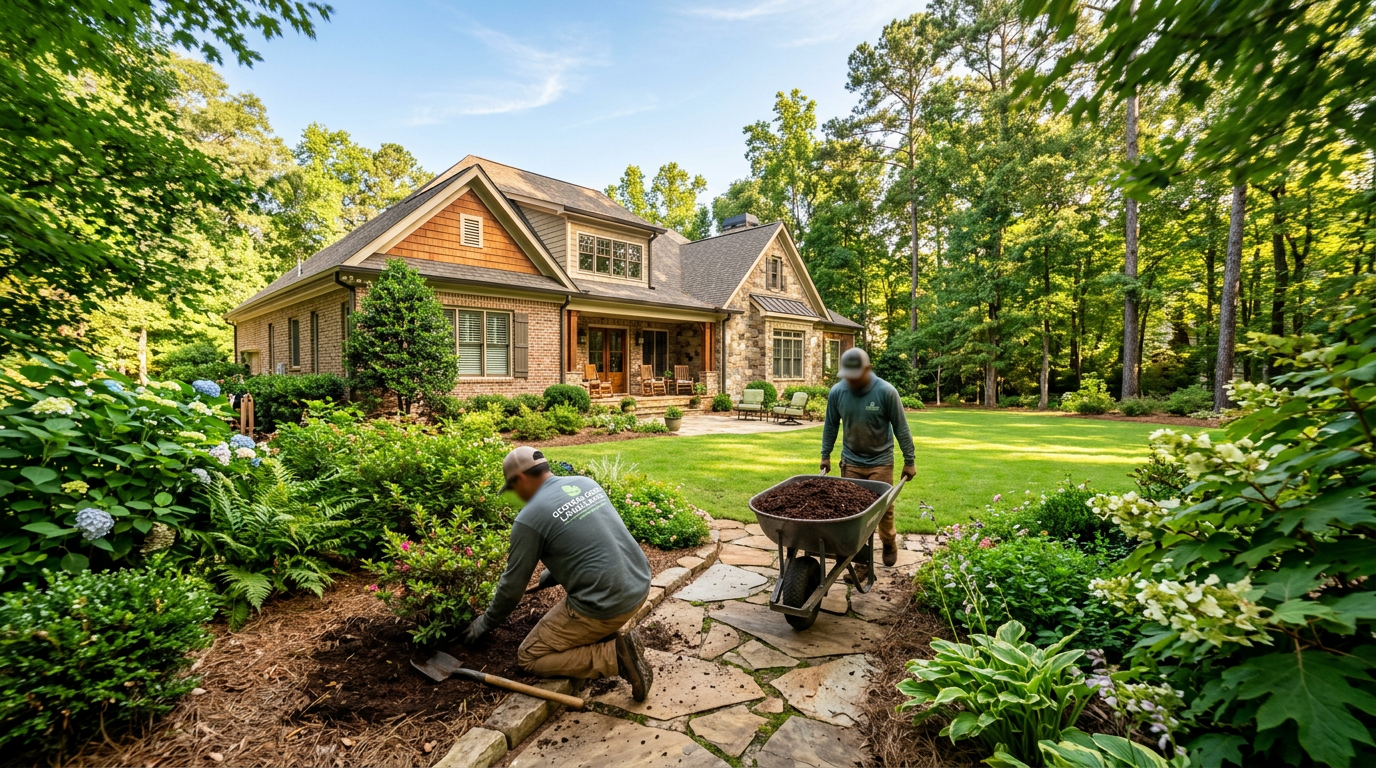
Georgia homeowners don’t need guesswork—they need numbers. Here’s what landscapers really cost in Georgia in 2026, from Atlanta traffic pricing to Savannah salt air. We’ve hired crews in Decatur, spread pine straw in Athens, and laid Zoysia under that famous red clay. Let’s keep it simple and local.
Georgia landscaper cost: 2026 price ranges
- One-time cleanup: $250–$800 for a small intown lot; $800–$1,800 for 1/3–1/2 acre with brush. Green waste haul-away often $75–$150 per load.
- Weekly mowing: $40–$70 per cut (≈1/4 acre), $60–$110 (≈1/2 acre). Monthly service typically $160–$320 with edging/blowing.
- Mulch & pine straw installed: $45–$70 per cubic yard for dyed hardwood; pine straw $7–$10 per bale installed (longleaf: $9–$12).
- Planting: 3-gallon shrubs $40–$120 each installed; 15-gallon small trees (e.g., crape myrtle) $250–$600 installed.
- Sod (Bermuda/Zoysia/St. Augustine coast): material $0.35–$0.85/sq ft; installed $1.50–$2.75/sq ft depending on grading/access.
- Aeration (core): $75–$180 typical suburban lawn; add $20–$60 for overseeding Tall Fescue up north. See our Lawn Aeration Service Cost.
- Irrigation: $2,700–$5,800 for 4–6 zones; smart controller +$120–$300; backflow test $50–$85; permits $50–$150 where required.
- Hardscapes: paver patio $18–$30/sq ft; flagstone $25–$40; broom-finish concrete $8–$12. Retaining walls (block): $28–$55/sq ft face; natural stone $45–$80.
- Drainage: French drain $25–$40/linear ft; downspout extensions $12–$20/lf.
- Design: $400–$1,800 for 2D plans; full-service design-build often 8%–12% of build cost; 3D renders $300–$900.
For hourly math and how crews actually bill, read How Much Do Landscapers Charge per Hour: Price Guide.
What drives landscaper cost in Georgia
- Red clay reality: Compacted clay = more labor for grading/drainage, heavier equipment, and more frequent aeration in Atlanta, Athens, and Macon.
- Heat + humidity: Summer starts early; crews slow slightly in July/August, and watering windows matter (see rules below).
- Turf zones: Bermuda/Zoysia dominate most of GA (Zones 7b–9a); Tall Fescue up in Rome/Gainesville; St. Augustine near the coast. Different sod = different price.
- Access + traffic: Intown Atlanta jobs (narrow driveways, street parking) cost more than wide-open lots in Henry or Coweta counties.
- Seasonality: Hardscapes and major installs are cheapest December–February; pine straw and mulch spike in spring.
Georgia rules and permits that affect price
- Watering schedule: Georgia law generally prohibits most outdoor watering from 10 a.m.–4 p.m.; new plantings usually get a 30‑day exemption. (Georgia EPD: https://epd.georgia.gov/watershed-protection/water-conservation/outdoor-water-use)
- Retaining walls: Many jurisdictions (e.g., Gwinnett County) require permits and engineered drawings for walls over 4 ft, adding $300–$1,500 in fees/design. (https://www.gwinnettcounty.com/web/gwinnett/departments/planningdevelopment/permitsandinspections/residentialpermits/retainingwalls)
- Tree rules: Cities like Atlanta often require permits, fees, and replacement for removing larger trees—factor $100–$300+ in admin on top of arborist costs.
- Sales tax: Services are generally not taxed in GA, but materials are—either you pay them at retail, or your contractor does and rolls it into the bid.
Regional price snapshots in Georgia
- Atlanta metro (Fulton/Cobb/DeKalb/Gwinnett): Highest labor and traffic overhead. Expect +10%–20% vs. state averages, especially ITP.
- Savannah/Coastal: Salt air + sandy soils; St. Augustine/Zoysia common. Sod on the coast leans to the high end; drainage is non-negotiable.
- North Georgia (Hall, Forsyth, Cherokee): Fescue aeration/overseeding in fall bumps seasonal costs; wall/grade work common on slopes.
- Augusta/Athens/Macon/Columbus: More competitive bids; materials sometimes cheaper, but specialty hardscape crews can book out in spring.
If you’re collecting bids, use our no-fluff screeners: What to Look For in Landscaping Near Me: The Real Deal and 14 Key Questions to Ask a Landscaper Before Hiring.
Who to hire in Georgia (and when)
- Lawn care service: Mowing, edging, fertilization, aeration. Best for maintenance contracts. See Monthly Lawn Care Cost.
- Landscaper/installer: Planting, sod, drainage, irrigation, patios, walls.
- Landscape designer: Worth it for bigger projects, slopes, or HOA scrutiny. DIY-friendly? Read our guide: Should I Hire a Landscape Designer? A No-BS Guide.
Local examples to price-check (not endorsements): Gibbs Landscape Company (Atlanta), Plants Creative Landscapes (Decatur), Super‑Sod (statewide sod farms/retail), North Georgia Turf (Whitesburg), SiteOne Landscape Supply (multiple GA locations).
What we’d actually buy in Georgia (products + prices)
- Sod: TifTuf Bermuda from Super‑Sod or North Georgia Turf, typically $0.49–$0.79/sq ft pallet pricing; installed $1.50–$2.50/sq ft.
- Pine straw: Longleaf bales for shady beds—$7–$10 installed per bale; refresh 2x/year under oaks.
- Smart irrigation: Rain Bird ESP‑TM2 8‑zone controller (~$129) with WiFi module; Hunter MP Rotator nozzles ($9–$12 each at SiteOne) to cut water use.
- Tools we like: Toro TimeMaster 30" mower (~$1,599) for larger intown lots; ECHO PB‑580T backpack blower (~$269). Southern lawn fertilizer: Scotts Turf Builder Southern ($30–$40/bag, watch for spring promos).
We’ve run these combos across Atlanta clay and Savannah sand. Pay for drainage first; pretty plants second.
Quick Georgia pricing math (with sources)
- Labor: Expect $45–$85 per labor‑hour or $90–$160 per crew‑hour in Georgia. A two‑person crew mowing 1/3 acre in 35 minutes = roughly $60–$80.
- Benchmark wage data: Landscaping and groundskeeping workers in Georgia average around the mid‑$16/hour range in wages (May 2023), which maps to the crew rates above once you add payroll, trucks, insurance, and profit. (U.S. BLS OES: https://www.bls.gov/oes/current/oes_ga.htm)
Pro tip: Ask for line‑item bids, not lump sums. If a wall or drain blows up during dig, you’ll know what you’re paying per extra crew‑hour.
How to save on Georgia landscaping (without getting burned)
- Schedule hardscapes in winter (Dec–Feb) when crews are hungry—10%–15% discounts aren’t unusual.
- Group pine straw/mulch with neighbors to beat delivery/haul fees.
- Choose Georgia‑tough plants (Itea, Osmanthus, Camellia, Muhly grass) so you’re not replacing $600 of “gardenias that hate you” every July.
- For lawns north of ATL, overseed Fescue in fall, not spring—half the water, double the take.
Frequently asked
What’s the average cost to hire a landscaper in Georgia?+
Most homeowners spend $500–$2,500 per visit for projects (mulch, planting, small drainage), $1.50–$2.75/sq ft for sod installed, and $18–$30/sq ft for paver patios. Maintenance runs $160–$320 per month for mowing/edging on a typical suburban lawn.
How much do Georgia landscapers charge per hour?+
Expect roughly $45–$85 per labor-hour, or $90–$160 per crew-hour, depending on season, location, and scope. Intown Atlanta and complex access tend to push toward the high end; winter projects and east/south suburbs trend lower.
Do I need permits for landscaping in Georgia?+
Often yes for retaining walls over 4 feet (permit and engineer), sometimes for tree removals in cities like Atlanta, and typically a simple permit/backflow sign-off for irrigation. Always ask your city/county permitting office before signing a contract.
What grass type is best for my Georgia yard?+
Bermuda and Zoysia do great in most of Georgia. Tall Fescue is best in cooler north GA (overseed in fall). Coastal areas often use St. Augustine. Shade matters: pick shade-tolerant Zoysia or Fescue under heavy canopy, and plan on core aeration annually.
How can I cut landscaping costs without DIYing everything?+
Bundle services (mulch + cleanup + pruning), buy plants during fall sales, schedule hardscapes in winter, and ask for line-item pricing with a not-to-exceed labor cap. Have a designer draw the plan once, then install in phases as budget allows.