
How Often to Water New Plants: A Simple Schedule
You just brought home new plants. Now what? Watering is the #1 way people kill them, but our no-nonsense guide gives you a simple schedule that works.
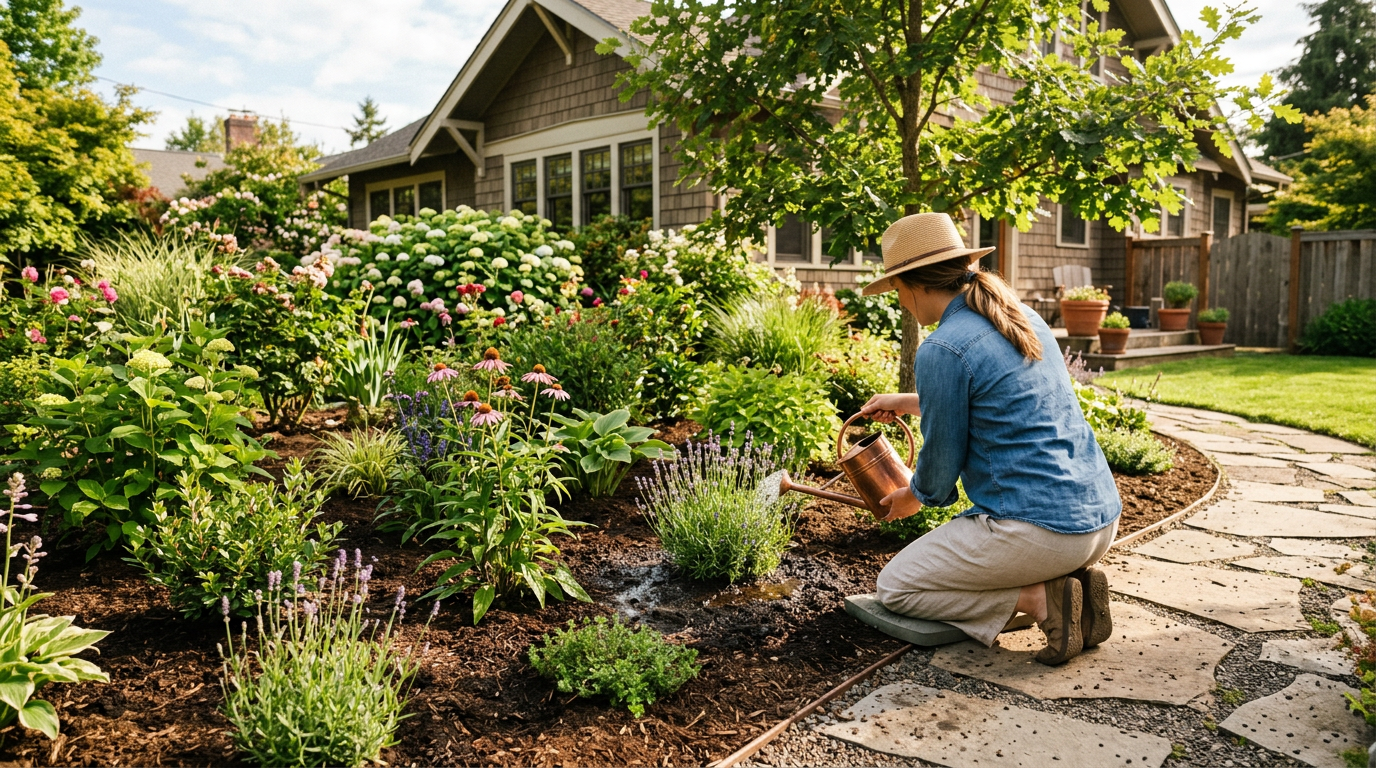
You did it. You went to the nursery, spent a small fortune that you justified as an 'investment,' and now your car is full of green, leafy potential. The single biggest threat to that investment between now and next season? You, holding a hose.
Watering is the number one way people kill new plants. Too much, and the roots rot in a sad, silent scream. Too little, and they crisp up like a forgotten potato chip. The internet is full of vague advice like 'keep moist.' What does that even mean? Is it dewy-meadow moist or forgotten-gym-towel moist?
Let's cut the nonsense. We're going to give you a simple schedule, the logic behind it, and the exact signs to look for so you can stop guessing and start growing.
The Golden Rule: Deep and Infrequent
Forget everything else for a second and memorize this: the goal of watering is to encourage deep roots.
New plants arrive with a comfy, compact root ball from their nursery pot. Your job is to convince those roots to venture out into the surrounding, sometimes-scary native soil. How? By making them work for it.
- Shallow, frequent watering (a little sprinkle every day) is like giving your plant a sugar addiction. The roots stay right near the surface waiting for their daily fix. This creates a weak, needy plant that will keel over the second a heatwave hits.
- Deep, infrequent watering forces moisture further down into the soil profile. To get that water, the roots have no choice but to grow downwards. This builds a robust, resilient root system that can find its own water during dry spells and anchor the plant for life. This is how you create a tough, low-maintenance landscape.
Everything that follows is based on this one principle.
Your First Month Watering Schedule (The Critical Period)
This is when your plants are most vulnerable. They're recovering from the shock of being dug up, driven across town, and shoved into a new home. Be a good host.
Here is a baseline schedule. It is a starting point, not a holy text. You MUST adjust based on rain, heat, and the 'finger test' we'll cover next.
-
Week 1 (The Welcome Wagon): Water thoroughly right after planting. Then, water every day or every other day. The goal is to keep the original root ball consistently moist as it acclimates. Don't sprinkle; let the hose run slowly at the base of the plant for several minutes.
-
Weeks 2-3 (Tough Love Begins): Taper back to watering every 2-3 days. This is the crucial transition where you start encouraging those roots to explore. Before you water, always check the soil first. Stick your index finger about 2 inches into the ground near the plant's base. Is it cool and damp? Wait another day. Is it dry and dusty? Water deeply.
-
Week 4 and Beyond (The New Normal): By now, you should be settling into a rhythm. For most perennials and shrubs, this might mean a deep watering once or twice a week. Again, let the soil and the weather be your guide. A week of 95°F heat and high winds may require more frequent watering. A cool, rainy week means you can take a vacation from the hose.
How Much Water is "Enough"? (The Gallon Guide)
'Water deeply' is still a bit vague. Let's put some numbers on it. The goal is to saturate not just the root ball but the soil around it to a depth of at least 6-12 inches.
Here’s a practical guide based on the size of the plant you bought:
- Small Perennials & Annuals (from a 6-pack or 1-gallon pot): Plan on giving each plant about 1 gallon of water per session.
- Shrubs (from a 3 to 5-gallon pot): These need more. Aim for 3-5 gallons of water, applied slowly around the base.
- Trees (from a 15-gallon pot or Balled-and-Burlapped): This is a major investment. Use at least 10-15 gallons of water. The best way to do this is to turn your hose on a slow, pencil-thin trickle and leave it at the base for 20-30 minutes. Or, even better, use a product like a Treegator Original Slow Release Watering Bag ($29.99), which you fill up once and it slowly drips water over several hours, ensuring deep saturation.
We've found a high-quality watering wand like the Dramm 12804 Touch-N-Flow ($32) is worth its weight in gold. It lets you apply a large volume of water gently right where you need it, without blasting away soil or damaging tender stems.
Adjusting for Reality: Soil, Sun, and Season
Your yard is not a laboratory. You need to adapt the rules to your specific conditions.
- Soil Type: If you're working with heavy, dense clay, it holds water like a sponge. You'll need to water less frequently and be extra vigilant for signs of rot. We have a whole guide to the best plants for clay soil that thrive in these conditions. Sandy soil is the opposite; water drains right through, so you'll need to water more often.
- Sun Exposure: A Hydrangea planted in the shade needs far less water than a Coneflower baking in the afternoon sun. Plants in hot, windy spots lose moisture faster. If you're planting a sun-drenched border, choose from our list of the best perennials for full sun that can handle the heat once established.
- Plant Choice: Not all plants are created equal. A new vegetable garden needs consistent moisture to produce well. Our guide on how to start a vegetable garden gets into the specifics. Conversely, if you've wisely chosen drought-tolerant plants for landscaping, they still need this initial period of regular watering to establish their deep root systems. After that first season, you can pretty much ignore them.
- Big Plants, Big Thirst: Fast-growing plants are working hard, and that requires fuel. Those fast growing privacy trees you planted need a ton of water in their first 1-2 years to support that rapid growth.
Signs of Watering Trouble: Over vs. Under
Your plants will tell you when they're unhappy. You just need to learn their language.
Signs of Under-watering:
- Wilting leaves that perk up within an hour of watering.
- Dry, crispy leaf edges.
- Blossoms and young leaves dropping prematurely.
- Soil pulling away from the root ball.
Signs of Over-watering (This is the more common killer!):
- Yellowing leaves, especially older, lower ones.
- Wilting leaves that do not perk up after watering (because the roots are rotten and can't absorb water).
- Mushy, soft stems at the base of the plant.
- A green, mossy film or mushrooms growing on the soil surface.
- A generally sad, droopy look.
We've killed more plants with kindness (over-watering) than with neglect. When in doubt, do the finger test. If you're still not sure, wait one more day.
Tools of the Trade That Don't Suck
Having the right gear makes the job easier and more effective. You don't need much, but the right tool is a force multiplier.
- Watering Wand: As mentioned, a Dramm wand lets you water the base of the plant without bending over and provides a gentle shower that doesn't erode soil.
- Soaker Hoses: For long rows of plants like a new hedge or a vegetable garden, a flat soaker hose from a brand like Melnor is incredibly efficient. It weeps water directly into the soil, minimizing waste. According to the EPA, as much as 50 percent of the water we use outdoors is wasted from inefficient methods like runoff and evaporation. Soaker hoses all but eliminate that. (Source: https://www.epa.gov/watersense/watering-tips)
- Watering Bag for Trees: The Treegator is the industry standard for a reason. It ensures deep watering for your most expensive plants with minimal effort.
- A Good Nozzle: For hand-watering, nothing beats a classic Gilmour Full Size Zinc Pistol Grip Nozzle (~$12). It's durable and gives you everything from a fine mist to a powerful jet.
Ultimately, learning how to water new plants is about paying attention. Start with our schedule, but always trust the finger test and the look of the plants themselves. Be consistent for that first month, and you'll set your new plants up for a long, healthy, and low-maintenance life.
Frequently asked
Should I water new plants every day?+
For the first week, yes, watering new plants every day or every other day is a good idea to help them recover from transplant shock and keep the root ball moist. After that, you must reduce frequency to encourage deeper root growth.
How do I know if I'm overwatering a new plant?+
Signs of overwatering include yellowing leaves (especially lower ones), wilting that doesn't improve with more water, and soil that feels constantly soggy or has a sour smell. Root rot is the deadly result, so when in doubt, let the soil dry out.
Is it better to water in the morning or evening?+
Morning is the best time to water. It allows the plant to use the moisture throughout the day and lets foliage dry before nightfall, which dramatically reduces the risk of fungal diseases. Evening is the second-best choice; midday is the worst due to evaporation.
How long does it take for a new plant to establish?+
It varies by plant type and size. Perennials and small shrubs are typically established after one full growing season. For trees, the general rule of thumb is one year of establishment time for every one inch of trunk diameter.
Should I fertilize new plants when I plant them?+
No, you should not. New plants are under stress, and adding fertilizer can burn their tender, developing roots. Wait at least a month or two, or until you see clear signs of new growth, before applying a balanced, slow-release fertilizer.