
How Often to Water New Plants: The Real Answer
You just spent a small fortune on new plants. Don't let them die of thirst (or drown them). Here's our no-nonsense guide to watering new additions so they establish strong roots and thrive for years.
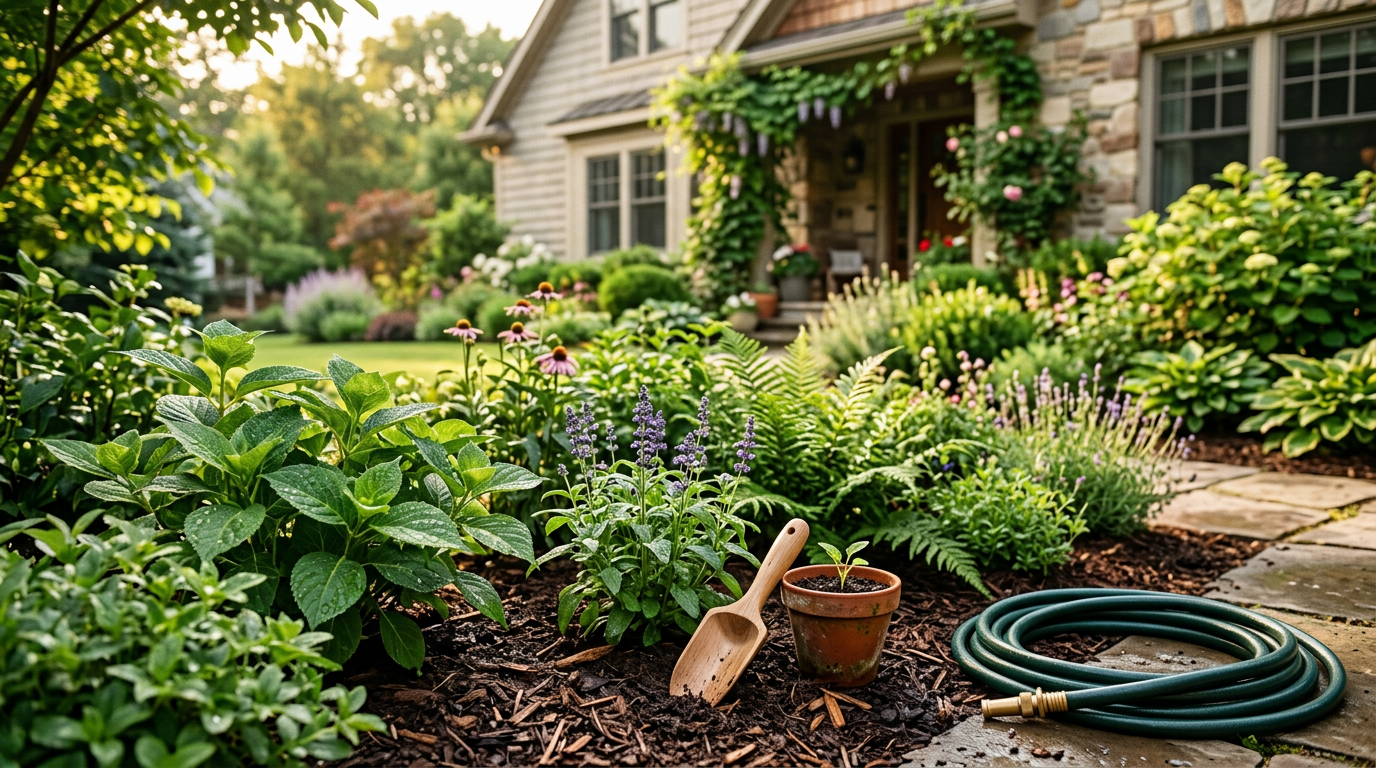
You did it. You went to the nursery, filled your cart with beautiful plants, and spent the weekend digging, amending, and planting. Your landscape looks amazing. Now comes the hard part: keeping them alive. The single biggest question we get is, "How often should I water my new plants?"
It’s the million-dollar question because getting it wrong is a costly mistake. Both too much and too little water can send your brand-new investments straight to the compost pile. Forget the vague advice and gatekeeping. We're here to give you the real, actionable answers that work.
The Golden Rule: Check the Soil, Don't Watch the Calendar
If you remember one thing, make it this: a rigid watering schedule is a recipe for disaster. Your plant's thirst changes daily based on weather, soil, and its own growth. The only way to know if it needs a drink is to check.
This is what we call the "Finger Test," and it's dead simple:
- Stick your index finger into the soil near the base of the plant, up to your second knuckle (about 2-3 inches deep).
- If the soil feels dry at your fingertip, it's time to water.
- If the soil feels moist or cool, hold off. Check again tomorrow.
That's it. This one technique prevents both overwatering (the #1 killer of container and garden plants) and underwatering. Here at Dirt Cheap Genius, we've killed more plants by overwatering than any other cause. We learned the hard way so you don't have to: trust your finger, not the calendar.
If you're not a fan of getting your hands dirty or want a more techy approach, a soil moisture meter is a great tool. A simple probe-style meter like the XLUX Soil Moisture Meter (around $13 on Amazon) gives you an instant read. Just stick it in the soil and check the dial. For new plants, you're looking for a reading in the "moist" range, not "wet."
A General Watering Schedule for New Plants (That You Should Adapt)
Okay, we know you still want a schedule. The finger test is your guide, but this template is your starting point. It's designed to help the plant's roots transition from their cozy nursery pot into the surrounding native soil.
-
First 1-2 Weeks: Water daily or every other day. The tiny root ball from the pot can dry out incredibly fast, even if the surrounding soil is damp. Your goal here is to keep that original root ball consistently moist to prevent transplant shock.
-
Weeks 3 to Month 3: Taper off to watering 2-3 times per week. Your finger test is crucial here. As roots begin to venture out into the new soil, you want to encourage them to go deeper in search of water. This means letting the top inch or two of soil dry out between waterings.
-
Month 3 to the End of the First Season: Water deeply once or twice a week, depending heavily on rainfall and temperature. By now, the plant is starting to establish. Your job is to provide supplemental water during dry spells to ensure it builds a robust, resilient root system before winter.
Remember, this is a template. A tiny annual in a sandy, full-sun spot will need more frequent water than a large shrub in heavy clay soil.
How Much Water is Enough? Think Deep, Not Wide
Frequency is only half the battle; volume is the other. The goal of watering is to moisten the entire root zone, from top to bottom. This encourages roots to grow down deep, making the plant stronger and more drought-tolerant in the long run.
This is called deep watering. The opposite is shallow watering—a quick, light sprinkle with the hose every day. This is one of the worst things you can do. It encourages a weak, shallow mat of roots right at the surface that's vulnerable to heat and drought.
So how much is a "deep" watering? A good rule of thumb is to apply the equivalent of 1 inch of rainfall per week, delivered in one to three watering sessions. For a new plant, concentrate that water over the root ball and the immediate surrounding area.
Apply water slowly so it has time to soak in rather than run off. Let a hose trickle at the base of the plant for 10-20 minutes. A soaker hose (like a Melnor Flat Soaker Hose, about $20 for 50ft) snaked around your new plants is a genius, water-efficient method. A high-quality watering wand like the Dramm One Touch Rain Wand (~$30) is also perfect, as it allows you to deliver a large volume of water gently right where it's needed—at the soil level.
Watering Different Types of New Plants
Not all plants are created equal. Here's how to adjust your technique for different types.
-
New Trees & Shrubs: Their root systems are much larger. They need more water, but less often. A slow, deep soak is mandatory. A 5-gallon bucket with a few small holes drilled in the bottom is a great DIY slow-drip irrigator. For a ready-made solution, a Treegator Jr. Pro (~$25) releases 15 gallons of water over 5-9 hours, ensuring it gets deep into the root zone.
-
New Perennials: These have smaller root systems and establish faster than trees. Check them frequently, especially if they're in full sun. They'll follow the general schedule closely. Plants in heavy shade might need less water, so be sure to check those shade perennials with the finger test.
-
New Vegetable Starts: Consistent moisture is non-negotiable for a good harvest. Don't let your soil dry out completely, but don't keep it swampy either. This is especially true for thirsty plants like tomatoes and squash. If you're just starting out, our guide on how to start a vegetable garden can help.
-
New Seeds: Before seeds germinate, the soil surface must be kept constantly moist. This is the one time when light, frequent watering is the right call. Once they sprout and develop true leaves, switch to the less frequent, deep watering method.
Factors That Change Your Watering Game
Your garden is a unique ecosystem. You must adapt your watering based on these four key factors:
- Soil Type: Sandy soil drains like a sieve and needs more frequent watering. Heavy clay soil holds onto water for a long time and needs less frequent, but very slow, deep watering to avoid runoff. Get to know your soil—it's the foundation of your garden's success. If you're struggling with clay, we've got a list of plants that thrive in it.
- Weather: This is obvious. A week of 95°F days with high winds will require much more water than a cool, cloudy, humid week. Pay attention to the forecast and be prepared to give your new plants extra support during heat waves.
- Sun Exposure: A plant in baking afternoon sun will use far more water than one in dappled morning sun or full shade.
- Plant Choice: A hydrangea is naturally thirsty. A lavender or sedum is naturally drought-tolerant. Even when new, a drought-tolerant plant will be more forgiving of dry conditions than a water-lover.
Common Watering Mistakes (and How to Fix Them)
Let's end by tackling the most common errors. Avoid these, and you're 90% of the way to success.
-
Overwatering: Signs include yellowing leaves (especially lower ones), wilting even when the soil is wet, and stunted growth. The fix? Stop watering! Let the soil dry out to the proper depth before watering again. Always use the finger test.
-
Underwatering: The signs are more obvious: wilting, drooping leaves that perk up after watering, brown or crispy leaf edges, and leaf drop. The fix? A long, slow, deep soak to rehydrate the entire root zone.
-
Watering at the Wrong Time: Watering in the middle of a hot, sunny day is incredibly inefficient. Much of the water evaporates before it even reaches the roots. According to the EPA, as much as 50 percent of the water we use outdoors is wasted from inefficient watering methods and systems. (Source: https://www.epa.gov/watersense/statistics-and-facts) The best time to water is early morning (6-10 AM). This minimizes evaporation and allows the foliage to dry before nightfall, which helps prevent fungal diseases.
-
Watering the Leaves: Splashing water all over the plant's foliage can promote diseases like powdery mildew. Always aim your water at the soil, directly over the root zone. Your watering wand and soaker hoses are your best friends here.
Watering isn't complicated, but it does require you to pay attention. By learning to read your plants and your soil, you can ditch the guesswork and give your new plants the perfect amount of water to not just survive, but thrive.
Frequently asked
Should I water new plants every day?+
For the first 1-2 weeks, yes, watering daily or every other day is recommended. This keeps the original root ball from drying out while the plant acclimates. After that initial period, gradually reduce the frequency to encourage the roots to grow deeper into the surrounding garden soil.
How do I know if I'm overwatering a new plant?+
The most common signs of overwatering are yellowing leaves, wilting despite the soil being wet, and a mushy or rotten smell at the plant's base. The soil will feel constantly soggy. To prevent this, always check that the soil is dry 2-3 inches deep before watering again.
What is the best time of day to water new plants?+
The best time to water is early morning, between 6 AM and 10 AM. This allows water to soak deep into the soil and be absorbed by roots before the day's heat causes it to evaporate. It also lets foliage dry before nightfall, which helps reduce the risk of fungal diseases.
How long does it take for a new plant to establish?+
Establishment time varies widely. Annuals and small perennials may establish in a few weeks to a couple of months. Larger shrubs and trees can take a full growing season, or even one year per inch of trunk diameter, to develop a root system that makes them independent of frequent watering.