
How Often to Water New Plants: A No-BS Watering Guide
You just spent a small fortune on new plants. Here’s the dead-simple guide to watering them correctly so they actually live to see next season.
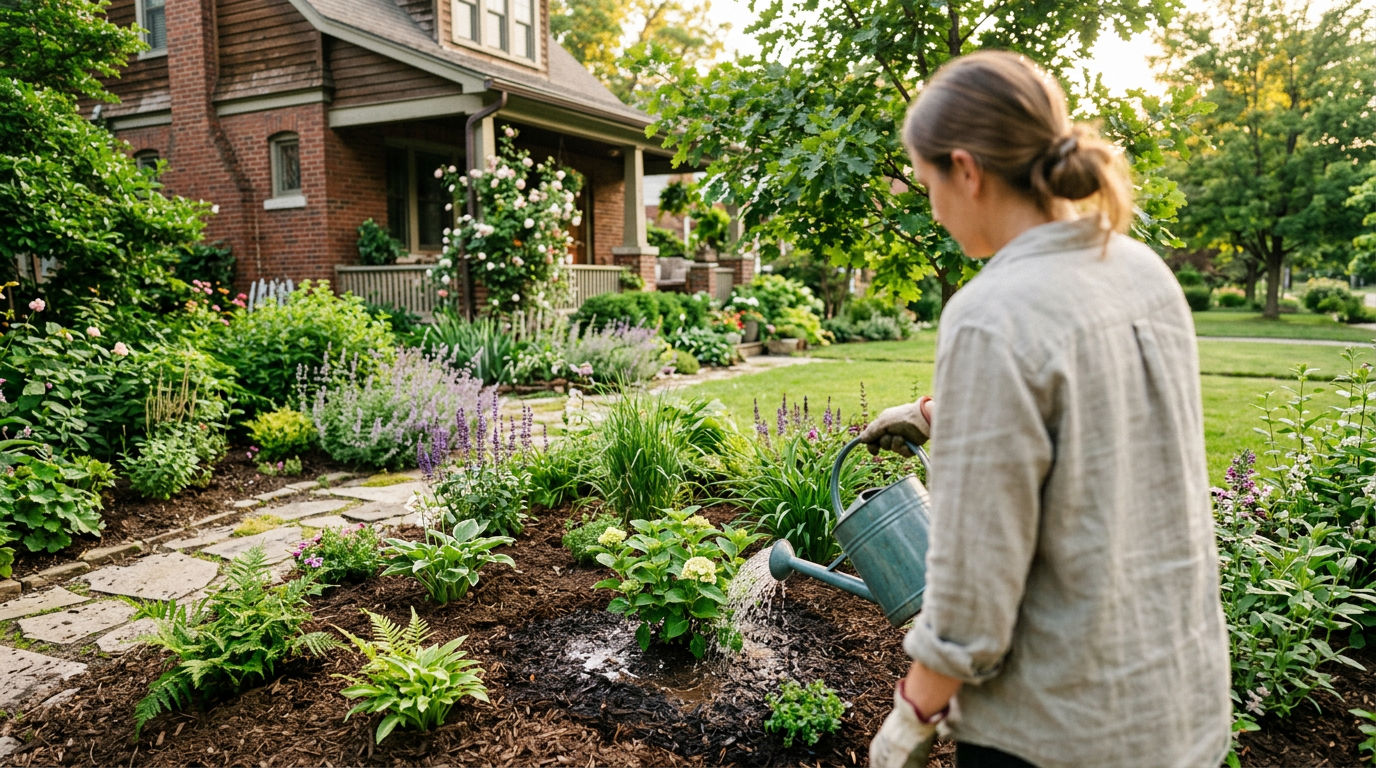
You did it. You went to the nursery, filled a cart with beautiful, promising green things, and spent way more than you planned. Now they're in the ground, and a quiet panic is setting in. How do you keep them alive? The single most common question we get—and the easiest way to kill a new plant—is about watering.
Let's cut through the noise. Watering isn't some mystical art. It's about giving the plant what it needs to recover from the trauma of being dug up, plopped in a pot, and replanted in your yard. This is your no-nonsense, anti-gatekeeping guide to watering new plants so they don't just survive, but thrive.
The Golden Rule: The First Two Weeks are Critical
Think of a new plant like a patient fresh out of surgery. It's weak, it's stressed, and it's in shock. This is called transplant shock. Its root system, which was its lifeline for water and nutrients, has been disturbed or even cut down. It can't seek out water efficiently yet.
Your job for the first 7 to 14 days is simple: keep the original root ball consistently moist.
Notice we didn't say "soaking wet" or "soggy." We said moist. Like a well-wrung-out sponge. During this period, you should water your new plants every single day, unless you get a solid, soaking rain. A light sprinkle doesn't count.
Why daily? Because the plant's roots are confined to that small ball of soil it came with. The surrounding soil might be moist, but the plant can't access it yet. Daily watering ensures that tiny, vulnerable root ball doesn't dry out, which would be a death sentence.
Beyond the Honeymoon Phase: The First Growing Season
After about two weeks, your plant has started to stabilize. It's sending out tiny new feeder roots into the surrounding soil. Now, your watering strategy needs to change. Continuing to water daily will create a shallow, dependent root system and can lead to root rot.
It's time to switch to deep, infrequent watering.
Aim to water thoroughly 2-3 times per week. The goal is to apply enough water to soak the soil not just around the root ball, but deeper and wider into the surrounding area. This encourages the roots to grow down and out in search of moisture, building a strong, resilient foundation that will help the plant withstand drought and heat later on.
How do you know when to water? Forget a rigid schedule. Use the best tool you have: your finger.
The Finger Test: Shove your index finger into the soil about 2-3 inches deep, near the base of the plant but not right on the stem.
- If the soil feels dry, it's time to water.
- If it feels moist, check again tomorrow.
- If it feels wet, you're overdoing it. Back off.
We've killed more plants by overwatering than underwatering. It's an easy mistake to make. You see a sad-looking plant and think 'More water!' when the roots are actually drowning. That's why we swear by the finger test—it tells you the reality of the situation below the surface.
Not All Plants Are Created Equal: Tailoring Your Watering
A one-size-fits-all approach is lazy and ineffective. A giant oak tree has different needs than a delicate tomato seedling. Here’s a basic breakdown:
-
Trees & Shrubs: These big investments need deep, slow soaks to reach their entire root zone. A 5-minute blast with a hose won't do it. Use a hose on a slow trickle at the base for 20-30 minutes, or use a soaker hose. For new Fast Growing Privacy Trees: Get a Living Fence Fast, this deep watering is non-negotiable for establishing a strong anchor.
-
Perennials: This varies wildly. A moisture-loving Astilbe in the shade needs more water than a rock-solid Sedum. Know your plant. For collections of sun lovers, like those in our list of the Best Perennials for Full Sun, you'll find most become quite drought-tolerant once established. But for their first year, they need that consistent 2-3 times per week schedule. The same goes for plants in low light; our guide to the Best Shade Perennials for Low-Maintenance Gardens highlights plants that like it moist but not soggy.
-
Annuals & Vegetables: These are the sprinters of the plant world. They grow fast, bloom or fruit heavily, and die in a single season. They often have shallower root systems and need more consistent moisture to fuel that growth. This is especially true for plants in containers or raised beds. If you're just starting out, our guide on How to Start a Vegetable Garden emphasizes consistent watering as a key to success.
-
Drought-Tolerant Plants: Yes, even they need regular water to get established! Plants labeled "drought-tolerant" can withstand dry periods after they have a deep, extensive root system. For their first full growing season, treat them like any other new plant. Check out our list of Drought Tolerant Plants for Landscaping but remember to baby them for the first year.
The Right Tools for the Job (That Don't Cost a Fortune)
You don't need a fancy irrigation system. You just need a few basic, durable tools.
- A Solid Hose: Don't cheap out here. A hose that kinks every three feet will make you want to abandon gardening forever. The Flexzilla Garden Hose (50ft for ~$45) is a popular choice for its durability and lack of kinking.
- A Watering Wand: This saves your back and provides a gentle "shower" for your plants, preventing soil erosion. The Melnor RelaxGrip 33-inch Watering Wand costs about $25 and is worth every penny.
- A Soaker Hose: For straight-line plantings like a new hedge or a vegetable row, nothing is more efficient. The Element SoakerPro (50ft for ~$20) snakes through your garden and delivers water directly to the roots with minimal evaporation.
- Your Finger: We've said it before, and we'll say it again. It's free, it's accurate, and it's always with you. Use it.
The Numbers Don't Lie: Water is Heavy (and Expensive)
It's easy to underestimate how much water you're using. According to the EPA, a standard garden hose can use 10 gallons of water per minute. Letting it run for 15 minutes while you check your phone means you just used 150 gallons. For a new 15-gallon tree, the common rule is to apply 10-15 gallons of water per session to saturate the root ball. This adds up on your water bill. A study from the University of Maryland Extension suggests that using soaker hoses or drip irrigation can cut water use by 30-50% compared to sprinklers by applying it directly to the root zone. (Source: https://extension.umd.edu/resource/efficient-watering)
How to Tell if You're Doing It Wrong
Your plants will tell you when you're messing up. You just need to learn their language.
Signs of Overwatering:
- Leaves turn yellow or light green, often starting with the lower, older leaves.
- The plant is wilting, but the soil is wet to the touch. The roots are drowning and can't function.
- Stunted growth with yellowing leaves.
- The soil smells sour or swampy. This is the smell of root rot, which is often fatal.
Signs of Underwatering:
- The plant wilts, but perks up quickly after you water it.
- Leaves, especially new growth, look limp.
- Leaf edges turn brown and crispy.
- Flowers or new leaf buds dry up and fall off.
Watering isn't complicated. It's a conversation. Pay attention, use your finger, and adjust based on what the plant and the weather are telling you. Do that, and your new green investments will pay you back for years to come.
Frequently asked
How long should I water a new plant each time?+
Aim for a slow, deep soak. For a new perennial or annual, 30-60 seconds with a watering wand may be enough. For a new tree or large shrub, let a hose trickle at the base for 15-30 minutes or apply 10-15 gallons of water to ensure the entire root ball is saturated.
Is it better to water new plants in the morning or evening?+
Morning is best. It allows the plant to hydrate before the heat of the day and lets foliage dry completely, reducing the risk of fungal diseases. Evening is the second-best option. Avoid watering in the midday sun, as more water is lost to evaporation.
Should I water new plants if it rains?+
It depends on the rain. A light, 15-minute shower won't be enough to soak the root ball of a new plant. A good rule is if you receive less than an inch of slow, soaking rain, you should still perform the 'finger test' and likely water your new plants anyway.
Can you overwater a new plant?+
Absolutely, and it's a common way to kill them. Overwatering suffocates the roots, preventing them from absorbing oxygen and leading to root rot. Consistently soggy soil is a red flag. Always check that the top 2-3 inches of soil are dry before watering again.
How do I know if my new plant is established?+
A plant is generally considered established when its root system has grown out into the surrounding soil, making it more resilient. You'll see signs of vigorous new growth, like new leaves and stems. For most perennials this takes one full growing season; for trees and shrubs, it can take 1-2 years.