
How Often to Water New Plants: A No-Nonsense Guide
You just spent a small fortune on new plants. Don't let them die of thirst (or drown). Here's exactly how often to water them so they actually survive and thrive.
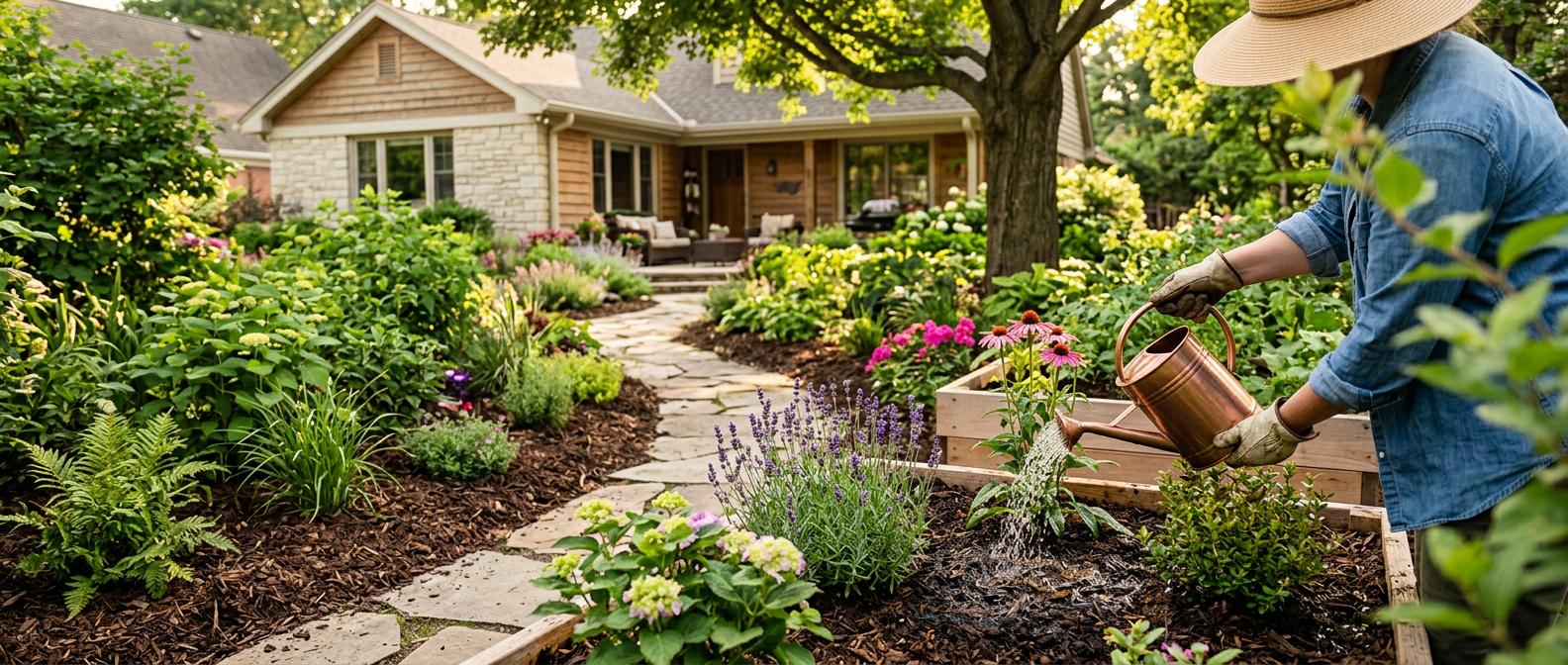
You did it. You went to the nursery, filled a cart with botanical potential, and spent way more than you planned. Now those new plants are in the ground, looking a little stunned. The single biggest question looming over your investment is: "How often do I water this thing?"
Ask ten different "gurus" and you'll get ten different answers. Water every day. Water once a week. Use a special wand. Sing to them. It's a classic case of gatekeeping and overcomplication.
We're here to cut through the noise. Watering new plants isn't a mystical art; it's a straightforward science. Forget the rigid schedules and listen to what the plant and the soil are telling you. Here's the Dirt Cheap Genius guide to keeping your new plants alive.
The Golden Rule: It's Not About the Calendar, It's About the Soil
If you remember one thing, make it this: a watering schedule is a recipe for disaster. Your garden isn't a factory. Conditions change daily. The single most reliable way to know if your new plant needs water is to check the soil.
This is the highly technical, super-secret method we use: The Finger Test.
Stick your index finger into the soil about 2-3 inches deep, near the base of the new plant but not right against the stem.
- Is the soil dry and crumbly? It's time to water.
- Is the soil cool and moist? Hold off. Check again tomorrow.
- Is the soil soggy or muddy? You're overwatering. Back off for a few days.
This simple test prevents both underwatering and the much more common plant-killer: overwatering. Drowning a plant is easier than you think, because waterlogged roots can't absorb oxygen, and they begin to rot. Trust your finger, not the calendar.
The First Two Weeks: The Critical "Settling In" Period
Okay, we just said to forget rigid schedules, but the first 7-14 days are the one exception. When you move a plant from its cozy nursery pot to the big, scary world of your garden, it undergoes transplant shock. Its delicate root hairs—the ones that do most of the water absorption—are damaged. Your job is to keep the root ball consistently moist (but not swimming) while it recovers and starts growing new roots into the surrounding soil.
For the first 1-2 weeks, water your new plants thoroughly every day, unless you get a good soaking rain.
The key word here is thoroughly. Don't just sprinkle the leaves. Apply water directly to the base of the plant, letting it soak in slowly and deeply. The goal is to saturate the original root ball and the soil immediately around it.
Months 1-3: Tapering Off to Build Tough Roots
After the initial two-week honeymoon period, it's time to practice some tough love. Continuing to water daily will create a lazy, shallow root system that's completely dependent on you. To encourage your plant to become self-sufficient, you need to wean it off the daily drinks.
Start tapering your watering schedule to 2-3 times per week. Now, the amount of water you provide per session becomes critical. You want to water deeply and infrequently. This forces the roots to grow downward in search of moisture, creating a strong, resilient anchor for the plant. A shallow sip every day just keeps the roots near the surface, where they'll bake on the first hot, dry day.
This is where tools like soaker hoses or drip irrigation are your best friends. They deliver water slowly and directly to the root zone with minimal evaporation. You can snake a product like the Melnor 65086-AMZ Soaker Hose (around $20 for 50 feet) through your new garden bed, turn it on low for 30-60 minutes, and ensure a deep, thorough soaking.
Watering Different Plant Types: Not All Newbies Are the Same
"Plant" is a broad category. A new oak tree has wildly different needs than a new petunia. You have to tailor your approach to what you're growing.
New Trees and Shrubs
These are long-term investments, and their first year is crucial. They need deep, slow watering to encourage roots to spread beyond the initial planting hole. For the first few months, a slow trickle from a hose at the base for 20-30 minutes is better than a 5-minute blast. For a truly hands-off method, we love tree watering bags like the Treegator Jr. Pro (about $25). You fill the bag, and it releases 15 gallons of water directly to the roots over 5-8 hours. It's foolproof. Water new trees and fast growing privacy trees like this once or twice a week after the initial daily period.
New Perennials
This is a huge group, from sun-loving behemoths to delicate shade-dwellers. For best perennials for full sun, their water needs might be higher initially due to heat and sun exposure. In contrast, many of the best shade perennials prefer consistently moist soil and may stress if they dry out completely. The finger test is your best guide here.
New Annuals and Vegetables
These guys are the sprinters of the plant world. They have one season to do their thing, and they generally have shallower, less extensive root systems. They often require more frequent watering than perennials or shrubs, especially when they are setting flowers or fruit. If you're following our guide on how to start a vegetable garden, you know that consistent moisture is key for things like tomatoes and cucumbers. Plants in containers and raised beds also dry out much faster than those in the ground, so you may need to water them daily even after the first few weeks, especially in hot weather. Just make sure you understand how deep a raised bed should be to provide an adequate reservoir.
The X-Factors: Adjusting for Weather and Soil
Your finger tells you the current situation, but your eyes can help you anticipate future needs. Two major factors will change your watering routine: weather and soil type.
- Weather: A week of 95°F days with high winds will suck moisture from the soil much faster than a week of cool, cloudy 70°F days. Be more vigilant with the finger test during hot, dry spells. Don't assume a rain shower was enough—use a simple rain gauge to see if you received a half-inch or more. If not, you'll likely still need to water.
- Soil Type: Sandy soil drains like a sieve. It's light and airy, but water passes through it quickly, so you'll need to water more frequently. On the other end of the spectrum is heavy clay. As our list of the best plants for clay soil shows, this soil holds onto water for a long time. It's easy to overwater in clay, so be sure it's truly starting to dry out before adding more.
How Much Water is "Enough"? Getting Specific
Most established landscape plants need about 1 inch of water per week, either from rainfall or irrigation. This is a great benchmark for your new plants once you're past the initial daily watering phase. But what does "1 inch of water" even look like?
Here's the easiest way to measure it: the Tuna Can Test. Place a few empty, clean tuna cans (or any small, straight-sided container) around your new plants. Turn on your sprinkler or soaker hose. Time how long it takes to fill the cans to the 1-inch mark. Now you know exactly how long you need to run your irrigation system to deliver the right amount of water.
To put it in perspective, providing 1 inch of water to a 100-square-foot garden bed requires about 62 gallons of water. According to the University of Minnesota Extension, this amount is vital for saturating the top 6-8 inches of soil where most new roots are forming. (Source: https://extension.umn.edu/planting-and-growing-guides/watering-newly-planted-trees-and-shrubs). This deep watering is what builds strong, drought-tolerant plants.
Signs You're Screwing It Up (Overwatering vs. Underwatering)
Plants will tell you when they're unhappy. You just need to learn their language.
Signs of Underwatering:
- Wilting or drooping leaves that don't perk up in the evening.
- Dry, brittle, or brown leaf edges.
- Slowed or stunted growth.
- Flowers or leaves dropping prematurely.
Signs of Overwatering (The More Common Killer):
- Yellowing leaves, especially starting with the lower, older ones.
- Wilting or drooping leaves, even when the soil is wet (the roots are drowning and can't function).
- Mushy or black stems at the soil line.
- Fungus or algae growing on the soil surface.
- A general look of being "unwell" or sickly.
We've personally killed more plants from "caring" too much and overwatering than from neglect. A classic rookie mistake is seeing a wilted plant on a hot afternoon and immediately drowning it, when it might just be experiencing temporary heat stress. Check the soil first! If it's wet and the plant is wilting, the last thing it needs is more water.
Watering new plants isn't complicated. It's a simple conversation. For the first two weeks, give them a daily drink. After that, let the soil guide you. Check it every day or two, water deeply when it's dry, and watch your plants grow from fragile newbies into established members of your landscape.
Frequently asked
How do I know if I'm overwatering a new plant?+
Look for yellowing leaves, especially on the bottom of the plant. The soil will feel soggy or muddy even hours after watering. You might see fungus on the soil or smell a rotten odor from the roots, and the plant may even wilt because its roots can't get oxygen.
Should I water new plants every day?+
Yes, for the first one to two weeks after planting, you should water new plants daily. This helps them recover from transplant shock and keeps the root ball moist while it establishes. After that initial period, reduce watering to 2-3 times per week.
What's the best time of day to water new plants?+
The best time to water is early in the morning, between 5 AM and 9 AM. Watering early minimizes evaporation from sun and wind and allows the leaves to dry completely before nightfall, which is the best way to prevent common fungal diseases like powdery mildew.
How long does it take for a new plant to get established?+
It varies by plant type. Annuals and vegetables establish within a few weeks. Perennials typically take one full growing season. Shrubs may need one to two years, and trees can take two or more years to become fully established and self-sufficient.
Is it better to water deep or a little bit every day?+
It is much better to water deeply and infrequently than a little bit every day (after the first two weeks). Deep watering encourages roots to grow downward, creating a stronger, more drought-tolerant plant. Shallow sips create a weak, dependent root system near the surface.