
How Often to Water New Plants: The Definitive Guide
You just spent a fortune on new plants. Here’s the no-nonsense guide to keeping them alive with the right watering schedule, because 'water deeply and infrequently' is terrible advice for newbies.
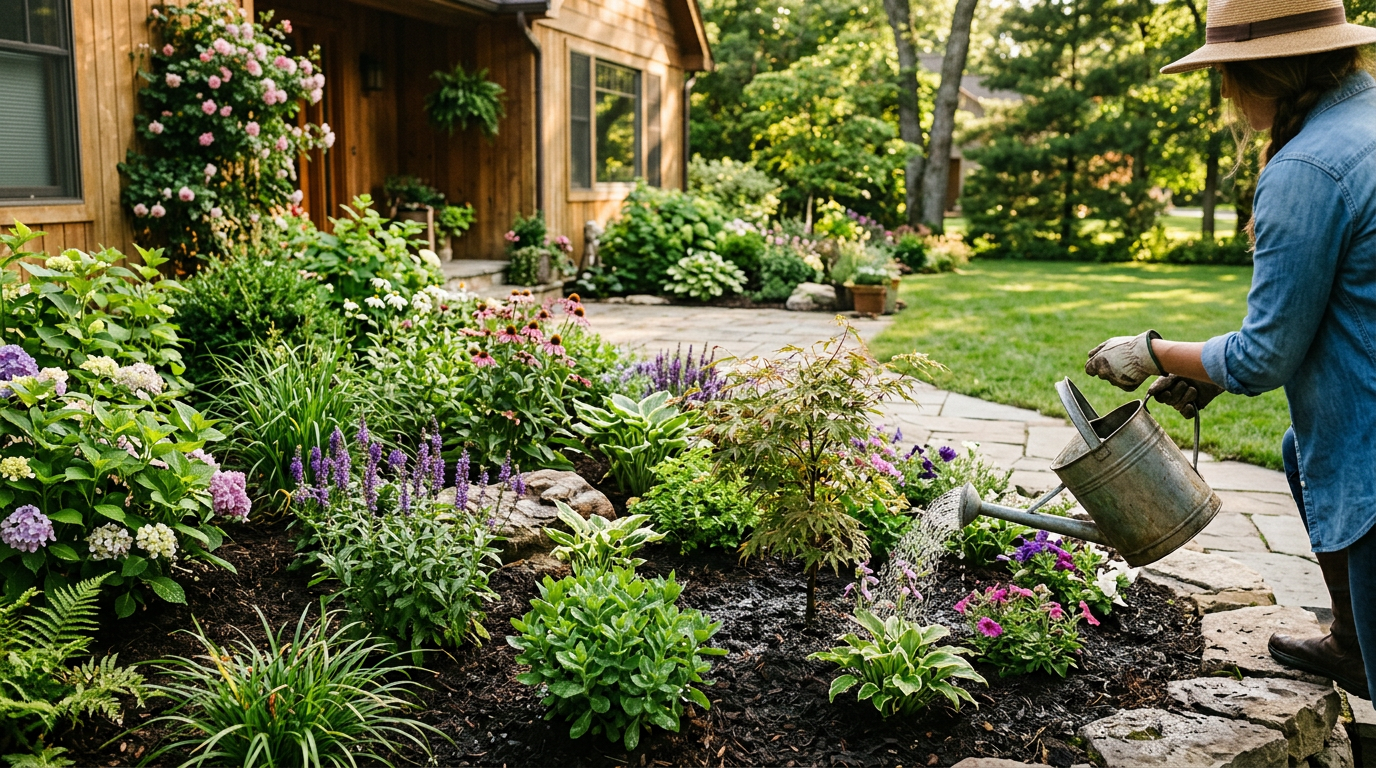
You did it. You went to the nursery, you dropped a few hundred bucks, and now your car is full of botanical potential. You spent the weekend digging, amending, and planting. It looks great. But now a quiet panic sets in. How do you keep these things alive?
The number one killer of new plants isn't pests, disease, or bad soil. It's improper watering. And the advice you always hear—"water deeply and infrequently"—is fantastic advice for established plants, but it's downright lethal for new ones.
We're here to cut through the noise and give you a concrete, actionable plan. This is the exact schedule we use to make sure our new green investments don't become expensive brown compost.
The "Why": Understanding Transplant Shock
When you move a plant from its cozy nursery pot into the big, scary world of your garden, it gets stressed. This is called transplant shock. During this process, its delicate root hairs—the ones responsible for absorbing the most water—are inevitably damaged or disturbed.
Think of it this way: the plant just had major surgery. Its ability to drink is severely limited, even when water is available. It wilts, it looks sad, and it's incredibly vulnerable. Your job, for the first few weeks, is to be a plant paramedic. The goal of frequent watering isn't just to hydrate the plant, but to keep the original root ball from drying out while the roots slowly begin to venture into their new home.
Constant moisture during this critical period is the life support that allows the plant to recover and start growing new roots.
The Golden Rule: The Finger Test
Before we give you a schedule, you need to learn the single most important skill in gardening. Forget apps, forget calendars. Learn the finger test.
It’s this simple:
- Stick your index finger into the soil near the base of the new plant.
- Push it down to your second knuckle (that's about 2 inches deep).
- Feel the soil. Is it dry? Time to water. Is it moist or damp? Check again tomorrow.
That's it. That's the secret. This one technique accounts for sunny days, rainy days, different soil types, and plant needs. It stops you from overwatering (the other leading cause of plant death) and from underwatering.
If you're allergic to dirt or just want a gadget, a soil moisture meter like the popular XLUX Soil Moisture Meter (about $13 on Amazon) does the same job. Just stick the probe in the soil and read the dial. But honestly, your finger is free and you always have it with you.
A Concrete Watering Schedule for New Plants
Okay, you know the why and the master technique. Now for the schedule. This is your baseline. You'll adjust it using the finger test, but this framework will get you through the crucial establishment period.
The First Two Weeks: The Critical Care Unit
For the first 10-14 days after planting, water your new plants every single day.
The only exception is if you get a full day of heavy, soaking rain. A light sprinkle doesn't count. The goal here is to keep that original root ball consistently moist—not soggy, but never letting it dry out completely. A daily watering ensures the plant has everything it needs to recover from the shock of being planted.
Weeks 3 through 12: The Rehab Phase
After two weeks, the plant is stabilizing. It's starting to push out new roots into the surrounding soil. Now, you can start to taper off the watering to every 2-3 days.
This is where the finger test becomes your best friend. The goal is no longer to just keep the root ball wet; it's to encourage the roots to grow outward in search of moisture. Watering a little less frequently forces them to explore. A deep watering every few days is perfect. During a heatwave, you might need to water every other day. If it's cool and cloudy, you might stretch it to every four days. Let the soil be your guide.
After 3 Months: Graduation Day
Congratulations! After about 12 weeks, most perennials, annuals, and small shrubs are considered "established." Their root systems have grown out of the original planting hole and into the native soil. They are now much more resilient.
Now you can switch to a "normal" watering schedule. For most plants, this means a deep watering of about 1 inch once or twice a week, depending on the weather. This is when the classic advice—"water deeply and infrequently"—finally applies. This is especially true if you've chosen tough plants, like some of our favorite drought tolerant plants for landscaping.
Larger shrubs and trees may take 6 months to a full year (or more) to become fully established.
How to Water: Technique Matters More Than You Think
How you apply the water is just as important as how often. A quick blast with a spray nozzle does more harm than good.
Your goal is deep watering. You want the water to soak down 6-8 inches into the soil to encourage deep, strong roots. Shallow watering creates shallow, weak roots that are susceptible to drought.
To do this, you need to apply water slowly, at low pressure, directly at the base of the plant. Avoid wetting the leaves, which can promote fungal diseases.
Our favorite tools for this are:
- A Watering Wand: A wand like the Dramm One Touch Rain Wand (around $30) lets you reach the base of plants easily and provides a gentle, rain-like shower that doesn't displace soil.
- Soaker Hoses: For a new hedge or a long border, a Gilmour Flat Soaker Hose (a 50-foot roll is about $20) is a game-changer. Weave it around your new plants, turn the spigot on low for 30-60 minutes, and you've provided a perfect deep watering with zero effort.
Let's talk numbers. To apply 1 inch of water to a 100-square-foot area, you need about 62 gallons. According to the University of Minnesota Extension, this single inch of water will penetrate about 6 inches deep in loam soil, but only 4 inches in heavy clay. A slow, thorough application is the only way to get the water where it needs to go: the root zone.
Adjusting for Plant Type, Soil, and Weather
Your watering strategy isn't one-size-fits-all. You have to be a smart gardener and adjust your approach.
-
Plant Type: A new oak tree needs a much larger volume of water than a new petunia. As a rule of thumb, apply about 5-10 gallons of water for a new tree, 3-5 gallons for a shrub, and 1 gallon for a perennial each time you water. If you're putting in a new vegetable patch, check out our guide on how to start a vegetable garden, as their needs are very specific. New fast growing privacy trees are especially thirsty and need consistent moisture to live up to their name.
-
Sun vs. Shade: Plants in the baking afternoon sun will need more water than those in the cool morning light. Our lists of the best perennials for full sun and the best shade perennials have different water needs even when established, so pay close attention when they're new.
-
Soil Type: Sandy soil drains like a sieve and needs more frequent watering. Clay soil holds onto water for dear life and needs less frequent, but slower, longer watering to avoid runoff. Amending your soil with compost at planting time helps buffer both extremes.
-
Weather: This is the obvious one. If you're in a week-long 95°F heatwave, you'll be watering more. If it's been cool and rainy, you'll back off. Don't be a slave to the schedule; be a partner to your plants.
The Secret Weapon: Mulch
If you do one thing after planting and watering, make it this: apply a 2-3 inch layer of organic mulch.
We learned this the hard way after losing a row of expensive 'Emerald Green' Arborvitae one hot July. We thought we were watering them enough, but a quick daily spray wasn't penetrating the baked soil. The real problem was massive moisture evaporation. Now, we lay a soaker hose under a 3-inch layer of shredded hardwood mulch. The mulch acts like a sponge, prevents the soil from crusting over, keeps the roots cool, and dramatically reduces how much we need to water. We haven't lost a new tree or shrub since.
Watering a new plant isn't complicated, but it requires attention. For the first three months, you're the primary caretaker. By following a simple schedule and using the finger test, you can guide your new plants through their most vulnerable period and set them up for a long, healthy life in your garden. You've got this.
Frequently asked
How do I know if I'm overwatering a new plant?+
Look for yellowing leaves (especially lower ones), wilting despite moist soil, and a mushy or rotten smell at the base. Overwatering suffocates roots, preventing them from absorbing water and nutrients, which ironically makes the plant look thirsty. Always check soil moisture before watering.
Should I water new plants in the rain?+
It depends. A light, brief shower might not be enough to reach the root ball. A heavy, soaking rain of an inch or more means you can definitely skip watering for a day or two. Use the finger test; if the soil is soaked 2 inches down, let nature do the work.
What is the best time of day to water new plants?+
Early morning is the best time. This allows the water to soak into the soil and be available to the plant throughout the day. It also minimizes evaporation and allows leaves to dry quickly, reducing the risk of fungal diseases. Avoid watering in the hot midday sun.
How much water does a new plant need per watering?+
It varies by plant size. A new perennial or annual may only need a half-gallon to a gallon to saturate its root zone. A new 5-gallon shrub might need 3-5 gallons, while a new tree could require 10 gallons or more to be watered deeply and effectively.
Do new drought-tolerant plants need to be watered a lot?+
Yes, absolutely. Even plants marketed as drought-tolerant need regular, frequent watering to get established. For the first few months, treat them like any other new plant. Their drought-tolerant nature only kicks in once their root system is fully developed and has grown deep into the soil.