
How Often to Water New Plants: A Simple Schedule
Stop killing your new plants with kindness (or neglect). Here's the no-nonsense schedule for watering everything you just put in the ground.
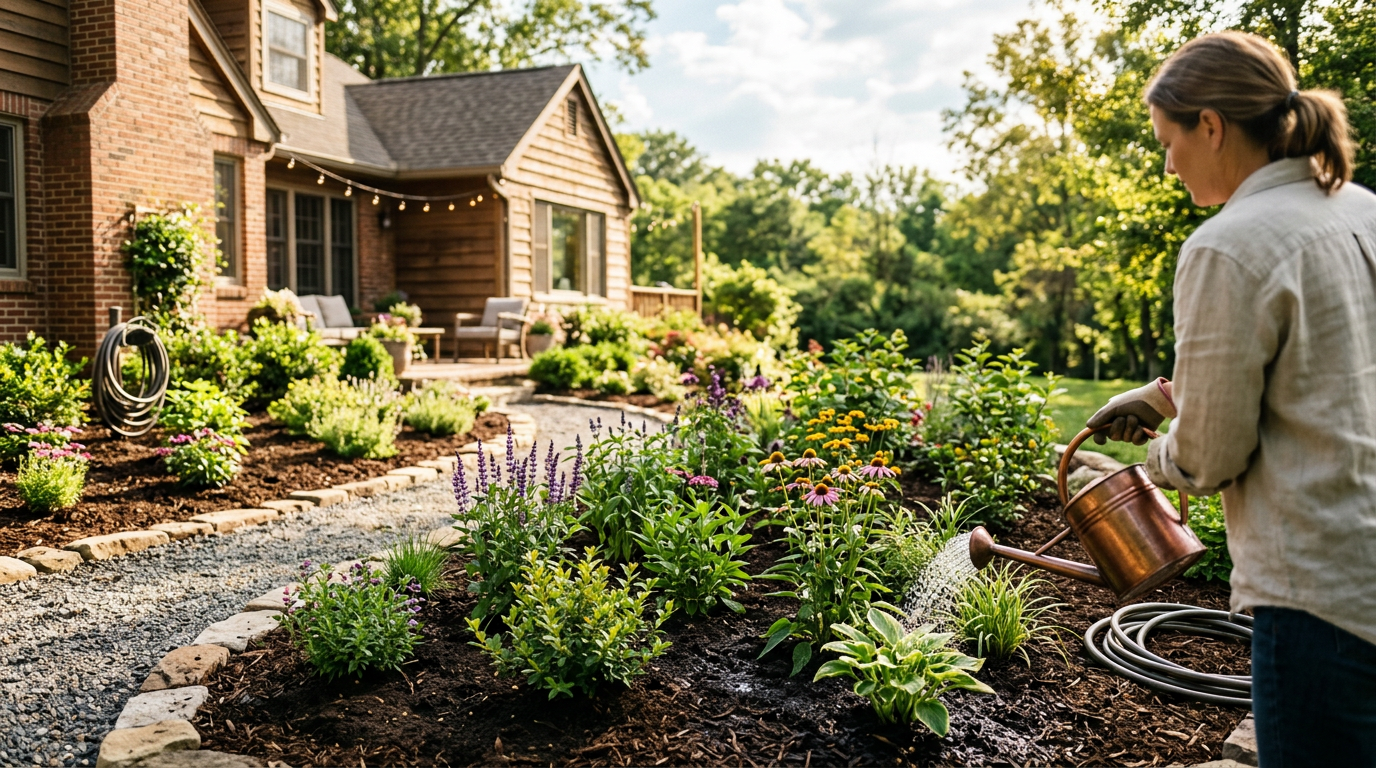
You just spent a weekend and a wad of cash at the garden center. Your new plants look amazing. Now comes the hard part: keeping them alive. The number one question we get, and the number one way people accidentally kill their new investments, is about watering. Too much? Too little? It feels like a guessing game.
It’s not. There’s a science to it, but it’s a dirt-simple one. Let's break down exactly how often to water new plants so they don't just survive, but thrive.
The Golden Rule: The First Two Weeks are Critical
When you move a plant from its cozy nursery pot into the big, scary world of your garden bed, it goes into what's called "transplant shock." Its tiny root system, all balled up, is suddenly responsible for finding moisture in a whole new environment. Your job is to make that transition as easy as possible.
For the first 1-2 weeks, you need to water your new plants every single day, unless you get a really good soaking rain.
This isn't to spoil them. It's to keep the original root ball consistently moist while encouraging new roots to venture out into the surrounding soil. If that root ball dries out even once during this critical period, the plant can be stressed to the point of no return. Don't panic, just be consistent.
How to Water: Deep, Not Shallow
The how is just as important as the how often. A quick, shallow spray with the hose does more harm than good. It only wets the top inch of soil, encouraging weak, shallow roots that will be the first to suffer in a drought. We want deep, resilient roots.
Deep watering means letting water soak slowly into the ground, reaching a depth of 6-12 inches. This is how you do it:
- Use a Soaker Hose: This is our favorite method. A product like the Melnor 50' Flat Soaker Hose (around $20 on Amazon) weeps water directly into the soil over a long period. Just snake it around your new plants and let it run for 30-60 minutes.
- Trickle from a Garden Hose: No fancy gear needed. Just turn your hose on to a slow trickle and place the end at the base of each new plant. Let it run for 15-20 minutes for perennials and annuals, and 30+ minutes for shrubs and trees.
- Use a Watering Can: For a few plants, a watering can works fine. Just pour slowly and deliberately around the base of the plant, go do something else for 10 minutes, then come back and do it again. This allows the first application to soak in so the second one can go deeper.
Your goal is to deliver about 1 inch of water across the root zone.
Beyond the Honeymoon Phase: Tapering Your Watering Schedule
After those initial 1-2 weeks of daily attention, your plant's roots have started to settle in. Now you can begin to back off.
- Weeks 3-6: Reduce watering to 2-3 times per week. Continue to water deeply each time. The goal is to let the top layer of soil dry out a bit between waterings, which forces the roots to grow deeper in search of moisture.
- After 6 Weeks (for most perennials/annuals): Your plant is becoming established. You can likely switch to a schedule of one deep watering per week, or whenever it looks thirsty. For large shrubs and trees, this establishment period can take a full year or more.
This is a general guide. The real secret weapon is observation.
It's Not One-Size-Fits-All: Adjusting for Your Reality
A watering schedule is a starting point, not a religious text. You have to adjust for your specific conditions.
- Plant Type: A brand new tomato plant from your first vegetable garden will need more consistent water than a tough-as-nails Black-Eyed Susan. Plants known to be drought-tolerant will establish faster and require less water sooner than water-loving plants like ferns or astilbe.
- Soil Type: Sandy soil drains like a sieve and will need more frequent watering. Heavy clay soil holds onto water for dear life; you'll water less often but need to ensure it's not staying soggy, which drowns roots. If you have that tough soil, check out our guide to the best plants for clay soil.
- Sun & Wind: Is your plant baking in the afternoon sun? It's going to need more water than one in the shade. The plants on our best perennials for full sun list are tough, but they'll need more water when new. Wind also acts like a giant hairdryer on your garden, wicking moisture from leaves and soil.
- Weather: This is the obvious one. A 95°F heatwave might mean you have to go back to daily watering, even for established plants. A week of steady rain means you can take a vacation from the hose.
Your Best Tool is Your Finger
Forget moisture meters and complicated gadgets. The best tool for checking soil moisture is free and always with you. Stick your index finger into the soil about 2-3 inches deep, right near the plant's base.
- If it feels dry: Time to water.
- If it feels moist: You're good. Check again tomorrow.
We've learned this lesson the hard way. A new hydrangea we planted was drooping, so we gave it more water. It drooped more. We gave it even more water. It wasn't until the leaves started turning black that we realized the problem: root rot. The soil was a swamp. The finger test could have saved us from killing that plant with kindness. Wilting can be a sign of both too little and too much water—your finger is the tie-breaker.
Signs of Trouble & Hard Numbers
According to the University of Minnesota Extension, a slow, deep soaking that applies 1 inch of water is the gold standard. To measure this, you can place a few empty tuna cans (which are about 1 inch deep) in the watering zone. When they're full, you're done. This single, deep application can penetrate 6 to 12 inches into loam or clay soil, delivering water right where the roots need it. (Source: https://extension.umn.edu/planting-and-growing-guides/watering-newly-planted-trees-and-shrubs)
Keep an eye out for these distress signals:
- Underwatered: Leaves are wilted and crispy, maybe brown on the edges. They'll usually perk right back up an hour after a good drink. The soil will be visibly dry and may pull away from the base of the plant.
- Overwatered: Leaves are wilted but soft and limp. Lower leaves may turn yellow and drop off. The soil is soggy, may grow algae on top, and might even smell sour. This is a much harder problem to fix than underwatering.
Frequently asked
How long does it take for a new plant to establish?+
For most perennials and annuals, the establishment period is about 6-8 weeks. For shrubs, it's a full growing season. For large trees, it can take 2-3 years for the root system to become fully established and self-sufficient.
Is it better to overwater or underwater a new plant?+
It is always better to underwater than to overwater. An underwatered plant will often wilt dramatically but can be revived with a deep soak. Overwatering suffocates roots, leads to rot, and is much more difficult for a plant to recover from.
What is the best time of day to water new plants?+
The best time to water is early in the morning (between 6 AM and 10 AM). This gives the water time to soak into the soil and be absorbed by the roots before the heat of the day causes evaporation. It also allows leaves to dry, preventing fungal diseases.
Can you water new plants too much?+
Absolutely. Overwatering is one of the most common ways to kill new plants. It suffocates the roots by filling all the air pockets in the soil with water, leading to root rot. Always check the soil moisture with your finger before watering again.
Should I water new plants after it rains?+
It depends on how much it rained. A light, brief shower may only wet the top layer of soil. Use the finger test: if the soil is moist 2-3 inches down, you can skip watering. If it's still dry, the rain wasn't enough and you should provide a deep watering.