
Best Companion Plants for Tomatoes: A Genius Guide
Stop letting your tomatoes struggle alone. We're breaking down exactly which companion plants will fight pests, boost growth, and improve flavor for your best harvest ever.
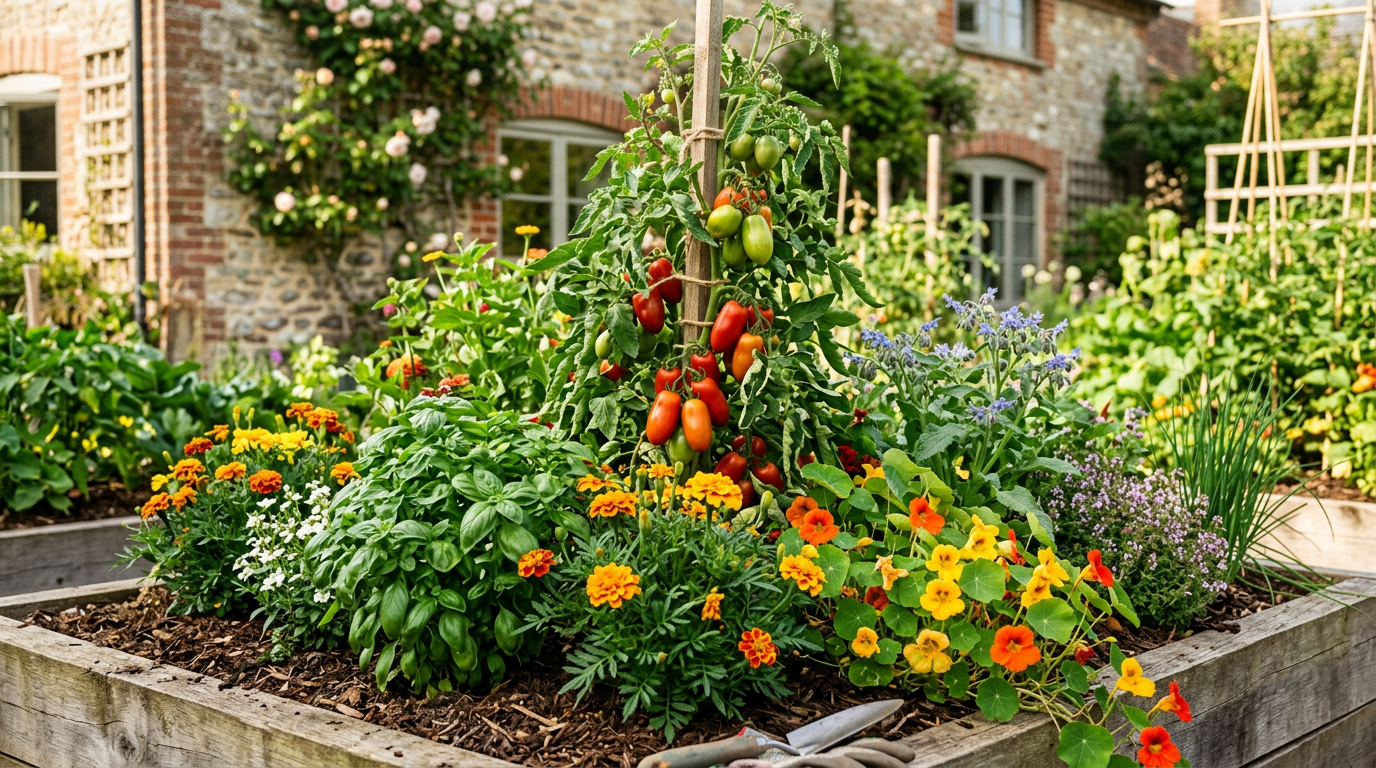
Let's be honest: tomatoes are the star of the summer garden, but they can be high-maintenance drama queens. One day they're thriving, the next they're covered in aphids or being devoured by a hornworm the size of your thumb. It's frustrating. But what if we told you there's a way to hire bodyguards, nurses, and personal chefs for your tomatoes—and that they work for free?
That's companion planting. It's the ultimate garden hack for getting a bigger, healthier harvest with less work. It's not just folklore; it's about creating a tiny, bustling ecosystem where plants help each other out. If you're just getting started with your own plot, this is a principle you need to learn. For a full primer, check out our guide on how to start a vegetable garden.
What Exactly IS Companion Planting?
Companion planting is the strategic placement of different plants near each other for a mutual benefit. Think of it as arranging a good dinner party. You don't seat the two relatives who always argue next to each other. Instead, you seat them next to people they get along with, and the whole evening is better for it.
For tomatoes, the benefits generally fall into three categories:
- Pest Control: Some plants release scents that confuse or repel pests. Others act as "trap crops," luring pests away from your precious tomatoes.
- Improved Health & Soil: Certain plants can improve soil structure or, in the case of legumes, add essential nitrogen right where your tomatoes need it.
- Attracting Beneficials: Many flowers and herbs attract pollinators (for more fruit) and predatory insects (like ladybugs and lacewings) that eat the bad guys.
The Best Companions for Pest Control
This is the big one. Pests are the number one enemy of a perfect tomato. Planting these allies is like setting up a botanical security system.
- Basil: The classic Italian pairing is as good in the garden as it is on the plate. The strong scent of basil is believed to repel tomato hornworms and whiteflies. We plant a basil plant for every two tomato plants, right in the same bed.
- Borage: This fuzzy-leafed herb is a powerhouse. Its flowers attract beneficial bees and tiny predatory wasps, but its main benefit is deterring the dreaded tomato hornworm. The worms just seem to hate it. As a bonus, the young leaves have a cool cucumber flavor for salads.
- Marigolds (Specifically French Marigolds): This isn't an old wives' tale; it's backed by science. French Marigolds (Tagetes patula) release a substance called alpha-terthienyl from their roots, which is toxic to root-knot nematodes—microscopic worms that create galls on tomato roots and stunt their growth. Don't just take our word for it. Research from Clemson University confirms that interplanting with certain French Marigold cultivars can reduce root-knot nematode populations by over 80%. (Source: clemson.edu). We like the 'Bonanza Bolero' variety, and a packet of seeds from Burpee will only set you back about $5.
- Nasturtiums: These are the ultimate sacrificial lambs. Aphids love nasturtiums. Plant them a foot or so away from your tomatoes, and aphids will flock to them, leaving your main crop alone. You can then blast the aphids off the nasturtiums with a sharp spray of water or treat them with a product like Bonide Neem Oil (a 32 oz ready-to-use bottle is about $13). Plus, the flowers and leaves are edible with a nice peppery bite.
Companions for Healthier Soil & Growth
A healthy plant starts with healthy soil. These companions act as a living support system under the ground.
- Bush Beans: Tomatoes are heavy feeders, meaning they suck a lot of nitrogen from the soil. Beans and other legumes are "nitrogen fixers." They host bacteria on their roots that pull nitrogen from the air and convert it into a form plants can use. It's a free, slow-release fertilizer factory right in your garden bed. We recommend a bush variety like 'Provider' so it doesn't vine up and overwhelm your tomatoes.
- Carrots & Parsnips: Planting a few carrots around the base of your tomato plants (but not too close) helps loosen and aerate the soil. As the taproots grow, they create channels for water and air to penetrate deeper, which benefits the tomato's root system. Just be sure to give them enough sun to develop properly.
- Lettuce & Spinach: Use these leafy greens as a "living mulch." Planting them around the base of your established tomato plants shades the soil, keeping it cool and moist, which reduces your watering chores. It also helps suppress weeds that would otherwise compete for nutrients and water. Many of these are also some of the easiest vegetables to grow for beginners.
Plants to Attract Pollinators & Good Predators
Creating a welcome environment for the right kind of bugs is just as important as repelling the wrong ones. A garden buzzing with life is a healthy garden.
- Sweet Alyssum: This low-growing annual is covered in tiny, fragrant flowers that are an absolute magnet for hoverflies. Why do you want hoverflies? Because their larvae are voracious predators of aphids. One hoverfly larva can eat hundreds of aphids before it pupates.
- Herbs that Flower (Dill, Cilantro, Parsley): Let some of your culinary herbs go to flower. The small, clustered flowers (called umbels) are the perfect shape and size for attracting ladybugs, lacewings, and parasitic wasps—all of which are expert assassins of common garden pests.
- Pollinator-Friendly Natives: Don't forget the bigger picture. Planting a border of flowers that bees and butterflies love will increase pollination for your entire vegetable patch, leading to more fruit. For a list of hardworking native plants, check out our guide to native plants for pollinators.
What NOT to Plant Near Tomatoes (The Bad Neighbors)
Just as important as knowing what to plant is knowing what to avoid. Planting these next to tomatoes is asking for a season of disappointment.
- Brassicas (Broccoli, Cabbage, Cauliflower, Kale): These are all very heavy feeders and will compete directly with your tomatoes for essential nutrients, often stunting the growth of both plants.
- Fennel: Fennel is the garden bully. It releases an allelopathic chemical that inhibits the growth of most other plants, especially tomatoes. Keep it in its own pot, far away.
- Corn: A terrible idea. Both corn and tomatoes are susceptible to the exact same pest: the corn earworm, which is also called the tomato fruitworm. Planting them together is like rolling out a welcome mat for it.
- Potatoes: This is the #1 rule. Potatoes and tomatoes are both in the nightshade family and are susceptible to the same devastating fungal diseases, particularly early and late blight. Planting them near each other allows the disease to spread like wildfire and can ruin both crops in a matter of weeks.
- Walnut Trees: Black walnut trees produce a chemical called juglone, which is highly toxic to tomatoes and many other vegetables. Never plant a vegetable garden within the drip line of a walnut tree.
A Sample Tomato Companion Planting Layout
Theory is great, but let's get practical. Here's a simple layout we've used in a 4'x8' raised bed that has worked wonders for us. If you're building a new bed, make sure you know how deep a raised bed should be to give these plants plenty of room.
Our 4' x 8' Tomato Fortress Layout:
- Center Line (Lengthwise): Plant 4 indeterminate tomato plants, spaced about 2' apart. Stake them well.
- Between Tomatoes: Plant one basil plant directly between each tomato plant (3 basil plants total).
- Front Edge: Plant a row of French Marigolds along the entire 8' front edge. Behind them, tuck in a row of bush beans.
- Back Edge: Plant a row of carrots along the back. In one corner, plant a borage plant—it gets big, so give it space.
- The Corners: Fill the four corners of the bed with a low-growing plant like Sweet Alyssum to attract those beneficial hoverflies.
This layout creates multiple layers of defense and support. The marigolds guard the roots, the basil and borage protect the foliage, the beans feed the soil, and the flowers call in air support. It’s a self-sustaining system that lets you spend less time worrying and more time planning what you'll do with all those delicious tomatoes.
Frequently asked
How far apart should I plant companion plants from tomatoes?+
For most companions like basil and marigolds, planting them 6-12 inches away is ideal. This is close enough for their scents and root secretions to be effective but gives both plants room to grow. For trap crops like nasturtiums, plant them a foot or two away.
Can I plant peppers and tomatoes together?+
Yes, but with caution. Peppers and tomatoes are in the same nightshade family and enjoy similar conditions. However, they are also susceptible to some of the same diseases. If you have healthy soil and good air circulation, they can be fine neighbors, but avoid it if you've had disease issues.
What's the single best companion plant for a tomato in a pot?+
Basil is the undisputed champion for container tomatoes. It's compact, shares the same light and water needs, and its scent helps repel pests like whiteflies and hornworms. Marigolds are a close second, especially if you can tuck one into a large pot to fight nematodes.
Do companion plants really improve tomato flavor?+
This is mostly anecdotal, but many gardeners swear that planting basil near tomatoes improves their flavor. There isn't hard scientific proof for this, but the theory is that shared soil chemistry and volatile organic compounds might have a subtle effect. At worst, you just get a bunch of fresh basil!