
Companion Plants for Tomatoes: A Genius Guide
Tired of lackluster tomatoes? The secret isn't more fertilizer; it's a better neighborhood. We're diving deep into the science and strategy of companion plants for tomatoes.
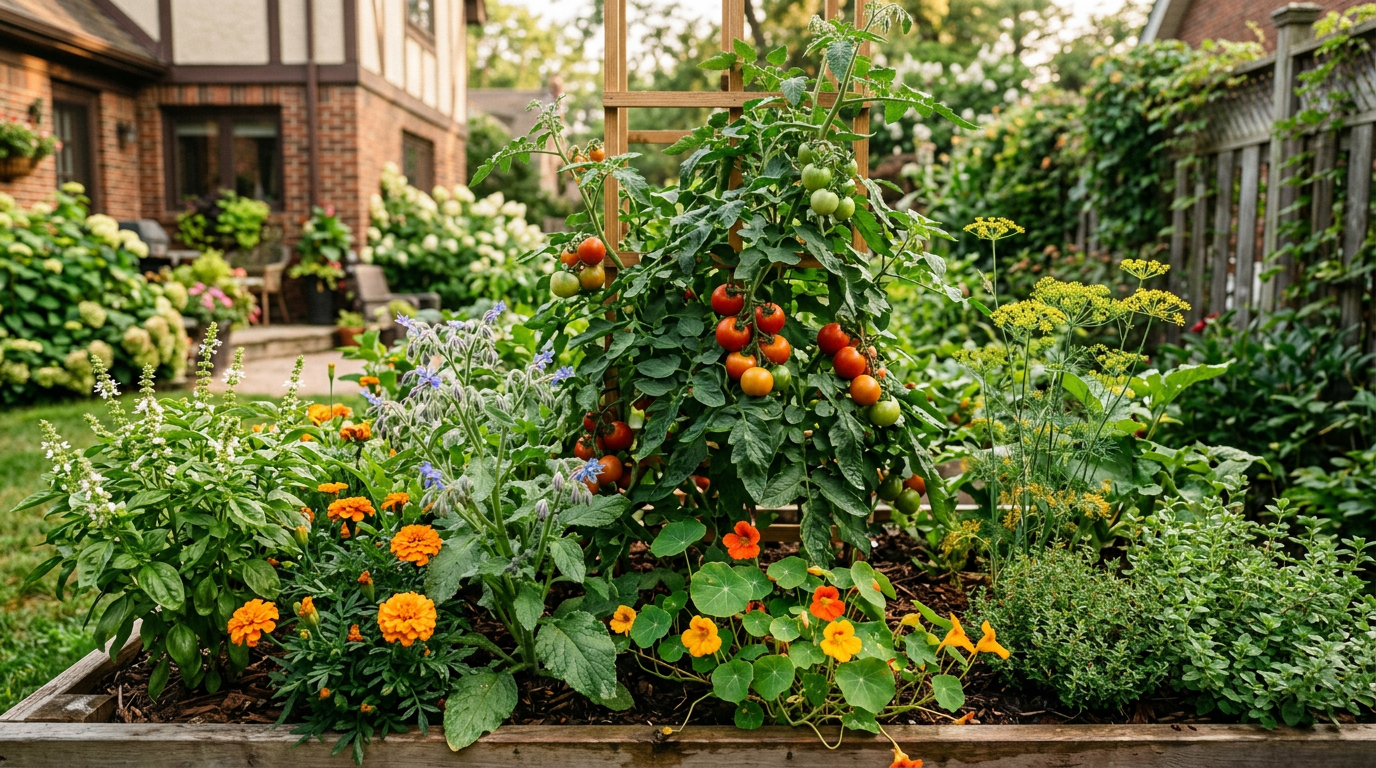
Look, we all dream of that perfect, sun-warmed, homegrown tomato. But reality often involves a frustrating battle with bugs, blight, and plants that just... sit there. Before you douse your garden in another mystery spray, let's talk about a smarter, cheaper, and more effective strategy: companion planting.
This isn't some garden-hippie myth whispered over the fence. It's about creating a small, bustling ecosystem where plants help each other out. Think of it as building a team for your star player, the tomato. A good team will run interference on pests, attract the right kind of support crew (pollinators!), and even help keep the soil in top shape. It's a cornerstone of starting a successful vegetable garden, and we're going to show you exactly how to do it right.
So What Is Companion Planting, Really?
Companion planting is the strategic placement of different plants in close proximity to maximize their mutual benefits. It’s a centuries-old practice that modern science is finally catching up with. Instead of a sterile monoculture where one pest can wipe you out, you're creating a diverse and resilient plant community. The benefits are legit:
- Pest Control: Some plants release scents that repel or confuse pests looking for your tomatoes. Others act as "trap crops," luring pests to sacrifice themselves so your tomatoes can live.
- Attracting Beneficals: Certain flowers and herbs are magnets for pollinators (better fruit set!) and predatory insects like ladybugs and lacewings, which devour aphids for breakfast.
- Improved Soil Health: Some companions, like carrots, help loosen compacted soil. Others, like borage, are "dynamic accumulators" that pull up nutrients from deep in the soil and make them available to their neighbors when their leaves decompose.
- Weed & Moisture Control: Low-growing plants can act as a "living mulch," shading the soil to keep it cool, retain moisture, and suppress weeds.
The Best Friends: Herbs to Plant with Tomatoes
Herbs are the easiest and most effective companions to start with. They're compact, useful in the kitchen, and work hard for your tomatoes.
- Basil: This is the classic, no-brainer pairing. The strong scent of basil is believed to confuse and repel two of the tomato's biggest enemies: the tomato hornworm and whiteflies. We plant a basil plant about a foot away from every tomato. Does it improve the tomato's flavor as some claim? The jury's out, but it definitely doesn't hurt.
- Borage: An absolute powerhouse. Its fuzzy blue, star-shaped flowers are an all-you-can-eat buffet for bees and other pollinators. More importantly, it's one of the best deterrents for the dreaded tomato hornworm. Borage is also an excellent soil builder, adding trace minerals as it grows.
- Mint (IN A POT!): We have to shout this part. Mint is fantastic at repelling aphids with its strong scent. It's also an aggressive, unstoppable thug that will take over your entire garden if planted in the ground. Plant it in a 2-gallon nursery pot (about $2.50 at any hardware store) and sink the pot into the ground near your tomatoes. All the benefits, none of the hostile takeover.
- Chives & Parsley: These kitchen staples attract beneficial insects, including hoverflies, whose larvae are voracious aphid eaters. They're small and won't compete for space.
Top Vegetable Companions for Your 'Maters
Pairing veggies requires a bit more thought about timing and spacing, but the payoff is a bigger, healthier harvest from the same square footage.
- Carrots: Plant a row of carrots near your tomatoes. As the carrots grow, their taproots help aerate and loosen the soil, which the tomato roots appreciate. Plan to harvest them before your indeterminate tomato varieties get truly massive and block out all the sun.
- Lettuce & Spinach: These are perfect living mulches. Plant them around the base of young tomato plants. They'll shade the soil, keeping it cool and moist while you wait for the tomatoes to size up. By the time the tomatoes are big enough to cast their own shade, you'll have already harvested your salad greens. This is a great strategy for beginners growing some of the easiest vegetables.
- Onions & Garlic: The entire allium family is a gift. Their pungent odor is a broad-spectrum pest repellent, confusing aphids, spider mites, and even some small mammals. They take up very little space and help protect the entire bed.
- Asparagus: This is a long-term partnership. Asparagus plants release a chemical that repels root-knot nematodes, and in return, tomatoes repel the asparagus beetle. They won't interfere with each other's growth, making them excellent perennial bedfellows.
Flowers Aren't Just for Looks
Don't sleep on flowers. They're some of the hardest-working plants in a vegetable garden, pulling double duty as pest control and a beacon for pollinators. They are a key part of boosting your garden's ecosystem, just like native plants for pollinators.
- French Marigolds (Tagetes patula): If you plant only one companion, make it this one. Forget the big, floppy American marigolds. You want the stinky French ones. Their scent deters pests above ground, but the real magic happens in the soil. The roots produce a chemical (alpha-terthienyl) that is toxic to root-knot nematodes, microscopic worms that create galls on tomato roots and cripple the plant. This isn't just folklore; it's proven science. University of Florida Extension research confirms that certain French Marigold varieties can suppress specific root-knot nematode species, with some studies showing a reduction of over 80% in nematode populations when marigolds are used as a cover crop before planting. (Source: edis.ifas.ufl.edu/publication/NG045)
- Nasturtiums: These are the ultimate team players. Nasturtiums act as a "trap crop" for aphids. The aphids will flock to the nasturtiums, leaving your precious tomatoes alone. You can then snip off the infested leaves and dispose of them. Bonus: the flowers, leaves, and seed pods are all edible with a nice peppery kick.
- Calendula (Pot Marigold): Not a true marigold, but just as useful. Calendula repels the tomato hornworm and asparagus beetle. Its sticky resin can also trap pests like whiteflies. Plus, the petals are edible and can be used to make healing salves.
The Bad Neighbors: What NOT to Plant Near Tomatoes
Just as important as good companions are the bad ones. Planting these next to your tomatoes is asking for a summer of disappointment.
- Brassicas (Broccoli, Cabbage, Kohlrabi, Cauliflower): These are heavy feeders that will compete directly with your tomatoes for essential nutrients, often stunting the growth of both plants.
- Fennel: Do not plant fennel anywhere near your tomatoes (or most other garden plants). It secretes a substance from its roots that inhibits the growth of its neighbors. It's a garden bully.
- Corn: A terrible idea. Both corn and tomatoes are heavy feeders, and worse, they are both susceptible to the exact same pest: the corn earworm, which is also known as the tomato fruitworm. You're basically creating a concentrated feast for your enemy.
- Potatoes: While they are cousins in the nightshade family, this is one family reunion you want to prevent. They are both highly susceptible to the same devastating fungal diseases, early and late blight. Planting them together ensures that if one gets sick, the other will follow, and the disease will spread twice as fast.
- Walnut Trees: Black walnut trees produce a chemical called juglone in their roots, leaves, and nuts, which is highly toxic to tomatoes and many other plants.
Our Pro Setup: A Genius Tomato Guild
Here’s a peek at how we set up our tomato stations for maximum success, especially in raised beds. We've found this combination to be nearly foolproof.
First, we give our tomatoes a proper support system from day one. We swear by our Texas Tomato Cages, which are a buy-it-for-life investment at around $45 each. They're incredibly sturdy and give the plant room to breathe. When setting up your own bed, make sure you understand how deep your raised bed should be to accommodate deep-rooted tomatoes.
- Centerpiece: Plant your tomato seedling in the middle of the cage.
- Pest Defense: On one side of the tomato (about 8-10 inches away), plant a 'Nema-gone' or 'Bonanza' French marigold seedling. On the other side, plant a Genovese basil seedling.
- Soil Loosener: In front of the cage, plant a short row of 'Danvers' carrots.
- Living Mulch: In the early season (May/June), we'll scatter some 'Black Seed Simpson' lettuce seeds around the base. It sprouts quickly, keeps the soil cool, and we harvest it before the tomato gets big enough to care.
This "guild" creates a fortress. The marigold protects the roots, the basil and the marigold's scent confuse flying pests, the carrots aerate the soil, and the lettuce conserves water. It's a simple, elegant system that works.
Frequently asked
What is the absolute best companion plant for tomatoes?+
Basil is the classic choice, repelling hornworms and whiteflies. For pest control below ground, French Marigolds are unmatched, as they release a substance that kills root-knot nematodes. Combining these two gives you protection from multiple angles, making them a top-tier duo for any tomato patch.
Can I plant cucumbers next to tomatoes?+
Yes, you can. Cucumbers and tomatoes are decent neighbors. They have similar needs for sun, water, and rich soil. Just ensure good air circulation by using trellises for both to climb. This prevents fungal diseases that thrive in damp, stagnant conditions and makes harvesting much easier.
What should you not plant with tomatoes?+
Avoid planting cabbage family members (broccoli, cauliflower), corn, fennel, and potatoes near tomatoes. Brassicas and corn are heavy feeders that compete for nutrients, while fennel can inhibit tomato growth. Potatoes are in the same family and share devastating pests and diseases like blight.
How close should I plant marigolds to tomatoes?+
Plant marigolds about 6 to 12 inches away from your tomato plants. This is close enough for the marigolds' scent to deter pests above ground and for their root secretions to protect the tomato's root zone from nematodes, without overcrowding the tomato plant and competing for water.
Do companion plants really improve tomato flavor?+
While many gardeners swear that basil improves tomato flavor, scientific evidence is anecdotal at best. The primary, proven benefits of companion planting are pest deterrence, attracting beneficial insects, and improving soil health. Any perceived flavor boost is a welcome, if unproven, bonus!