
Best Plants for Clay Soil: 30+ Picks That Won't Die
Stop fighting your heavy clay soil and start working with it. We've rounded up over 30 bulletproof plants that will turn your muddy mess into a thriving garden.
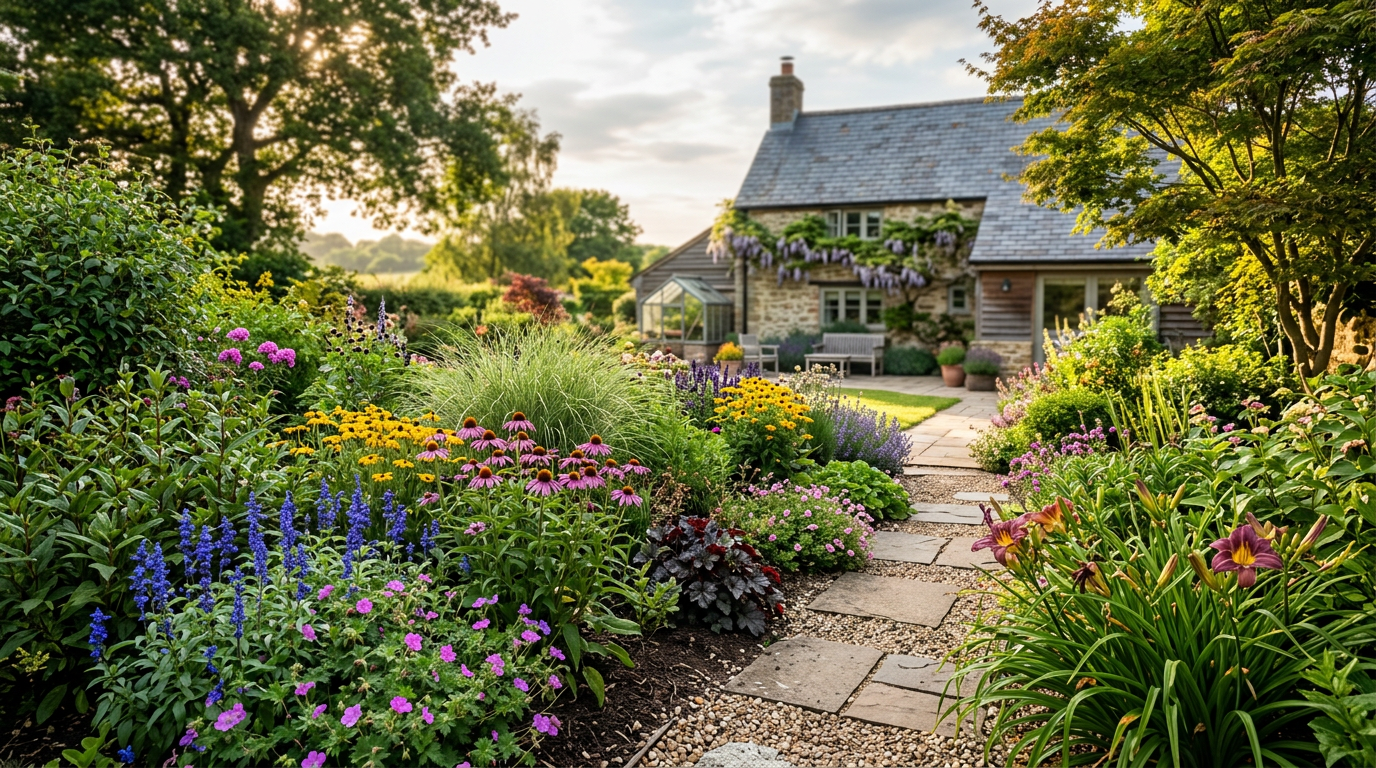
Let's be honest: gardening in clay soil can feel like a cosmic joke. In the spring, it's a sticky, waterlogged mess that pulls the boots right off your feet. By August, it's cracked, concreted ground that could seemingly repel a jackhammer. We've all been there, staring at a sad, wilted plant in a hole filled with what can only be described as primordial goo.
But here's the secret the gatekeepers don't want you to know: clay soil isn't a death sentence. It's actually packed with nutrients. The problem isn't the soil itself, but our approach to it. Stop trying to force delicate, sandy-soil lovers into a home they hate. The key to success is choosing plants that are tough enough to thrive in it.
We're here to give you the ultimate list of plants that don't just tolerate clay, they laugh in its face. Let's turn that problem patch into the most resilient part of your yard.
What Even Is Clay Soil? (And Why It's Not All Bad)
First, let's get on the same page. Soil is made of particles: sand (the biggest), silt (medium), and clay (the smallest). Clay soil is defined as having a high percentage of these tiny clay particles. You know you have it if you can grab a moist handful, squeeze it, and form a smooth, shiny ribbon that doesn't crumble. Congrats, you've got clay.
Because the particles are so small and tightly packed, water and air have a tough time moving through. This leads to the classic "wet feet" in winter and spring, where water sits around the roots, and the baked-earth effect in summer.
But the upside? That tight structure is fantastic at holding onto water and nutrients. While your neighbor's sandy-soil garden needs constant feeding and watering, your clay is a slow-release buffet of goodness, if you can just unlock it.
According to the USDA's Natural Resources Conservation Service, an ideal loam soil is about 40% sand, 40% silt, and 20% clay. Heavy clay soils can have a clay content of 50% or more, dramatically changing how water and air move through the profile. (https://www.nrcs.usda.gov/wps/portal/nrcs/detail/soils/survey/) This is why plant selection is so critical.
The Golden Rule: Amend, Don't Replace
Here is the single biggest mistake we see people make: they dig a big hole in their clay, throw the clay away, and fill the hole with expensive bagged garden soil. This creates what landscapers call the "bathtub effect." You've basically made a perfectly sealed clay bowl. Water pours into the nice soil, hits the impermeable clay walls, and just sits there, drowning your new plant's roots. It's a plant-killer.
The rule is: amend, don't replace.
You want to improve the structure of the entire bed, not just one hole. The best amendment for clay, hands down, is organic matter. Compost is king. It forces the tiny clay particles apart, creating channels for air and water.
Our process is simple: spread a 2- to 3-inch layer of good quality compost over the entire planting area. You can use bagged stuff like Black Kow Composted Manure (usually about $8 for a 1 cu. ft. bag) or get a truckload of a local blend delivered for a bigger project. Then, gently work it into the top 6-8 inches of your existing soil. Do this once, and then just top-dress with more compost each year. The worms and microbes will do the rest.
Bulletproof Perennials for Clay Soil
Perennials are the backbone of a low-maintenance garden. Plant them once, and they'll come back year after year, getting bigger and better. These picks are workhorses that will thrive in your heavy soil.
For Full Sun
- Black-Eyed Susan (Rudbeckia): A classic for a reason. These sunny yellow flowers are tough, spread politely, and bloom for months. 'Goldsturm' is a bulletproof variety we swear by.
- Coneflower (Echinacea): Their deep taproots are perfect for slicing through clay. Modern cultivars come in every color from pink and purple to orange and white. A must-have for any native plants for pollinators garden upgrade.
- Daylily (Hemerocallis): The ultimate "plant it and forget it" perennial. Daylilies will grow in a ditch. Their thick, fleshy roots store water and power through compacted soil. 'Stella de Oro' is a classic rebloomer.
- Russian Sage (Perovskia): If your clay gets bone-dry and baked in the summer, Russian Sage is your plant. Its silvery foliage and purple spires look amazing from mid-summer until frost. It's also one of our favorite drought tolerant plants for landscaping: our top picks.
- For more sun-loving ideas, check out our list of the best perennials for full sun.
For Shade and Part-Shade
- Hosta: The undisputed king of the shade garden. While they love moisture, they are surprisingly tolerant of heavy soil. The bigger the leaves, the better they seem to do. Try 'Sum and Substance' for a massive chartreuse statement.
- Astilbe: Known for their feathery plumes in shades of pink, white, and red. Astilbe loves the moisture-retentive nature of clay, as long as it doesn't stay a complete bog. Perfect for that shady, damp spot.
- Coral Bells (Heuchera): Grown more for their stunning foliage than their small flowers, Heucheras offer color from spring to fall. They need good drainage, so planting them on a slight slope or in an amended bed is ideal. 'Citronelle' is a stunning chartreuse that brightens any dark corner.
- Find more shade-lovers on our list of the best shade perennials.
Tough-as-Nails Shrubs for Clay
Shrubs provide structure and year-round interest. These selections will anchor your garden beds and won't flinch at your soil type.
- Viburnum: There's a Viburnum for every situation. From the fragrant 'Korean Spice' (V. carlesii) to the tough-as-nails Arrowwood (V. dentatum), these shrubs offer flowers, berries for birds, and great fall color.
- Weigela: An easy-to-grow, sun-loving shrub with trumpet-shaped flowers that hummingbirds adore. Newer varieties like 'Wine & Roses' have stunning dark foliage that contrasts beautifully with their pink flowers.
- Red Twig Dogwood (Cornus sericea): A multi-season star. It has nice foliage and flowers in summer, but its real show is in winter when its bare stems glow bright red against the snow. It loves wet feet and is perfect for a low, soggy spot in the yard.
- Serviceberry (Amelanchier): A large shrub or small tree that offers something in every season: early spring flowers, edible berries in June (if you can beat the birds), and brilliant orange-red fall color. It's a North American native that's well-adapted to clay.
Trees That Laugh at Clay Soil
Planting a tree is a long-term investment, so you want to get it right. These trees have root systems that can handle the density and moisture fluctuations of heavy clay.
- River Birch (Betula nigra): As the name implies, this tree is happy in wet conditions. It's fast-growing and known for its beautiful, peeling bark. 'Heritage' is a popular cultivar with exceptional vigor.
- Red Maple (Acer rubrum): A powerhouse tree that tolerates a huge range of conditions, including the wet-then-dry cycle of clay. It's known for its spectacular fall color. Go for cultivars like 'October Glory' or 'Red Sunset'.
- Bald Cypress (Taxodium distichum): Don't let the "swamp" association fool you. While it can grow in standing water, it's also incredibly adaptable to regular garden soil, including heavy clay. It's a deciduous conifer, meaning its soft needles turn a beautiful russet color before dropping in the fall.
Frequently asked
Should I add sand to clay soil?+
No. This is a common myth that actually creates a concrete-like substance, making compaction worse. The best amendment for breaking up clay is always organic matter like compost, which improves soil structure, drainage, and aeration without turning your garden into a brick.
What is the fastest way to improve clay soil?+
The fastest way is to build on top of it. Creating raised beds and filling them with a quality garden loam/compost mix bypasses the problem entirely. For in-ground planting, the most effective method is top-dressing with 2-3 inches of compost every spring and fall.
Can vegetables grow in clay soil?+
Yes, many can thrive. Leafy greens (lettuce, chard), brassicas (broccoli, cabbage), and beans do very well. Root vegetables can struggle, but amending the top 8-10 inches with compost can make it workable for them as well. The nutrients in clay are great for hungry veggies.
Do I need to water plants in clay soil often?+
Less often, but more deeply. Clay holds water for a long time. Over-watering is a major risk. Check the soil moisture 3-4 inches down before watering. When you do water, do it slowly and deeply to encourage strong, resilient roots.