
Best Perennials for Full Sun: Our 20+ Unkillable Picks
Stop gambling on plants for that hot, sunny spot in your yard. Here are our field-tested, unkillable perennials that thrive on 6+ hours of sun a day.
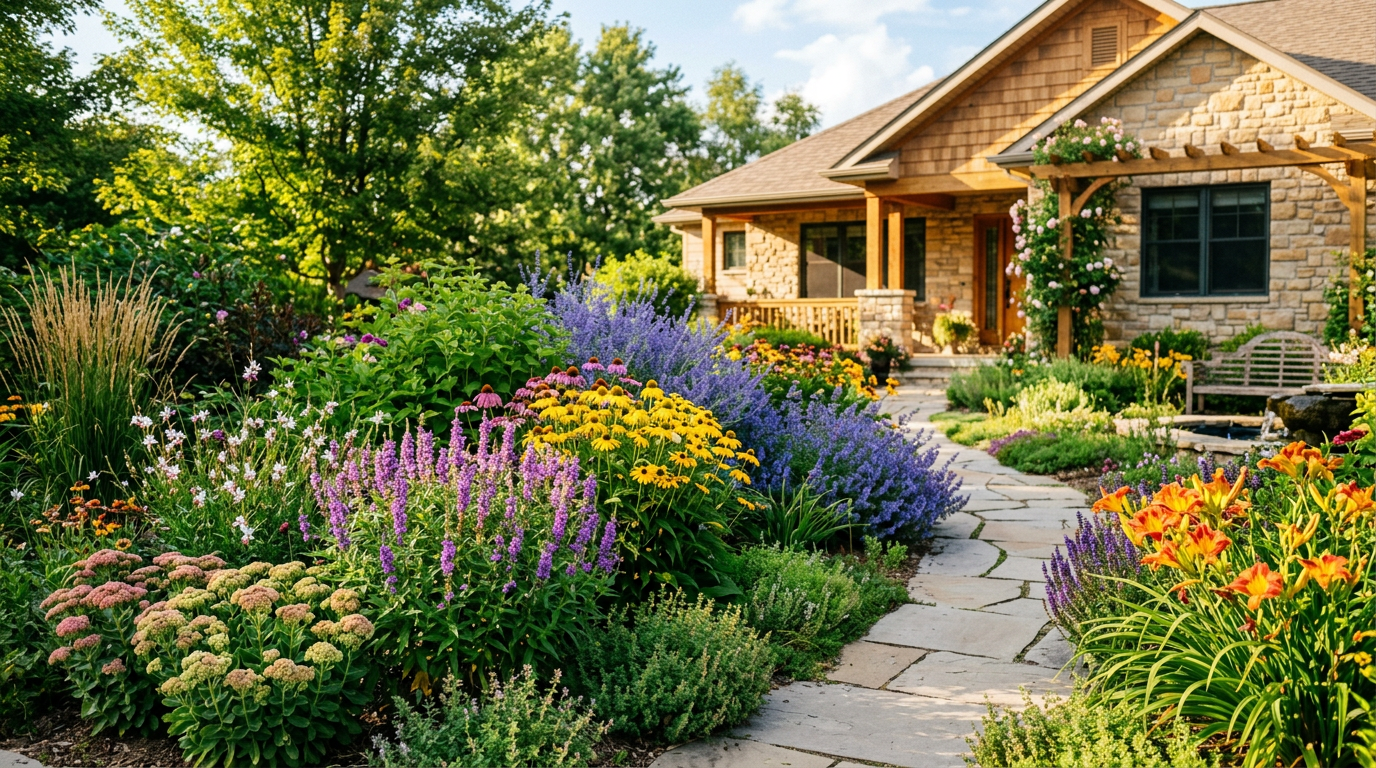
Let's be direct. That scorching hot strip along your driveway or the middle of your yard that gets blasted by the sun all day isn't a lost cause. It's a prime opportunity. But you have to stop buying delicate, thirsty plants from the garden center clearance rack and hoping for the best. You need perennials that are built for the job.
We're talking about plants that laugh at 6, 8, or even 10 hours of direct sun. Plants that, once established, don't need to be babied with the hose every day. After years of designing, installing, and sometimes accidentally killing plants in our clients' yards, we’ve built a go-to list of the absolute best perennials for full sun. These are the ones that work.
What Does "Full Sun" Actually Mean?
This is the most important part, and where most people go wrong. "Full Sun" isn't a vague vibe. It's a specific measurement: at least 6 hours of direct, unfiltered sunlight per day.
- Direct: The sun's rays are hitting the plant leaves without being blocked by a tree, a roofline, or a fence.
- 6+ Hours: Midday sun (from about 10 a.m. to 4 p.m.) is the most intense. If your spot gets sun from noon to 6 p.m., that's full sun. If it gets sun from 7 a.m. to noon, that's still full sun. Add up the hours.
Don't guess. Watch the spot for a day. Note when it first gets sun and when it's finally in shade. If the total is less than six hours, you're in part-sun territory, and you should be looking at different plants. If you've got those shady spots, don't worry, we have a list for that too: check out our guide to the best shade perennials.
The Unkillable All-Stars: Low to Medium Height
These are the workhorses for the front or middle of your garden bed. They provide color and texture from late spring through fall and don't get so tall they flop over.
- Coneflower (Echinacea purpurea): The undisputed champion. Modern cultivars come in every color from the classic purple to orange, yellow, and white. They bloom for months, bees and butterflies love them, and they are ridiculously tough. We love the classic 'Magnus' for its huge, purple-pink flowers. It's a backbone of any sunny garden.
- Black-Eyed Susan (Rudbeckia hirta/fulgida): That classic golden-yellow daisy with a dark center is a sign of summer. 'Goldsturm' is the industry standard for a reason—it's a reliable, spreading powerhouse of color from July until frost. They're some of the best native plants for pollinators you can plant.
- Salvia (Salvia nemorosa): If you want spikes of intense color, look no further. 'May Night' Salvia, with its deep indigo-blue flowers, was Perennial Plant of the Year for a reason. It blooms in early summer, and if you shear it back after flowering, it will often re-bloom in the fall. It's a plant we've put in hundreds of gardens, and it never fails.
- Yarrow (Achillea millefolium): The flat-topped flower clusters of Yarrow are a beautiful contrast to spiky or daisy-shaped flowers. They come in yellows, pinks, reds, and whites. They thrive on neglect and poor soil and are incredibly drought tolerant plants for landscaping.
- Coreopsis (Coreopsis verticillata): Also called Tickseed, 'Zagreb' and 'Moonbeam' are two of our favorites. They create a cloud of fine, airy foliage topped with hundreds of small, bright yellow flowers. They are cheerful, long-blooming, and ask for absolutely nothing.
Go Big or Go Home: Tall Sun-Lovers
For the back of the border, you need some height and drama. These plants create a backdrop and make a statement.
- Russian Sage (Perovskia atriplicifolia): Don't let the name fool you; it's not a sage. It's a cloud of silvery foliage and hazy purple flowers from mid-summer to fall. It loves heat, sun, and dry feet. The only thing it hates is being wet. A must-have for a low-water garden.
- Joe Pye Weed (Eutrochium purpureum): A native giant that can reach 5-7 feet tall. It's topped with huge, dusty-rose flower heads in late summer that are a magnet for every butterfly in a five-mile radius. Don't plant this if you have a tiny space, but if you have room, it's a showstopper.
- Switchgrass (Panicum virgatum): Ornamental grasses provide texture, movement, and winter interest. 'Northwind' is a fantastic cultivar that stays strictly upright, reaching about 5 feet. Its blue-green summer foliage turns golden-yellow in the fall. It's a perfect vertical accent.
Ground Huggers & Border Edgers
Finish the look with tough plants that will cover the ground, suppress weeds, and soften the edges of your garden bed.
- Stonecrop (Sedum): There are hundreds of varieties, from upright types like the classic 'Autumn Joy' to low-growing groundcovers like 'Angelina' or 'Dragon's Blood'. All of them are succulents, meaning they store water in their leaves and are basically camel-like in their ability to withstand drought. They are perfect for hot, dry, rocky areas.
- Creeping Phlox (Phlox subulata): For a few weeks in spring, nothing beats a carpet of creeping phlox. It covers the ground in a dense mat of electric pink, purple, or white flowers. For the rest of the year, it's a tidy, green, weed-suppressing groundcover.
A Quick Word on Soil & Planting
Even the toughest plants on this list need a fighting chance to get established. The number one mistake is digging a hole in compacted, sad soil and just dropping the plant in.
Before you plant, amend your soil. This just means mixing in a few inches of compost or other organic matter. This improves drainage and gives the roots something to eat. A good all-purpose fertilizer like Espoma Plant-tone (a 4-lb bag is about $12.99) at planting time helps, too. We’ve found this step makes a huge difference, especially if you're dealing with heavy clay. If your yard is mostly pottery-grade mud, you'll want to read our full guide on the best plants for clay soil.
Water new perennials consistently for the first few months. The goal is to encourage deep root growth. Once they've made it through their first full season, you can back off significantly. An established Coneflower or Russian Sage can handle weeks of hot, dry weather without blinking.
Frequently asked
What is the best time of year to plant full sun perennials?+
Fall is the ideal time to plant perennials. The soil is still warm, which encourages root growth, but the cooler air temperatures reduce stress on the plant. Spring is the second-best option. Avoid planting in the heat of mid-summer, as it's much harder for them to get established.
Do I need to fertilize my full sun perennials every year?+
Generally, no. Most of the toughest sun perennials thrive in average or even lean soil. A top-dressing of compost each spring is usually all they need. Over-fertilizing can lead to weak, leggy growth and fewer flowers, especially for native varieties like Coneflower and Yarrow.
What are the longest blooming perennials for a sunny spot?+
For non-stop color, look to 'May Night' Salvia (which re-blooms if sheared), Black-Eyed Susan, and Threadleaf Coreopsis. Many modern Coneflower varieties also have incredibly long bloom times, often flowering from June until the first frost with proper deadheading. These give you the most bang for your buck.
How much should I water perennials in full sun?+
Water them deeply and regularly (every few days) for their first season to establish strong roots. After that, most of the plants on this list are drought-tolerant. Water them deeply once every week or two during prolonged dry spells, but let the soil dry out between waterings.
What's the difference between an annual and a perennial for full sun?+
A perennial is a plant that lives for more than two years, coming back from its roots each spring. An annual (like a petunia or marigold) completes its entire life cycle—from seed to flower to seed—in a single growing season and then dies. Perennials are a better long-term investment.