
Best Perennials for Full Sun: Our 20+ Unkillable Picks
Stop wasting money on plants that can't handle the heat. We've compiled the ultimate list of bulletproof perennials that thrive in full, baking sun and come back every year.
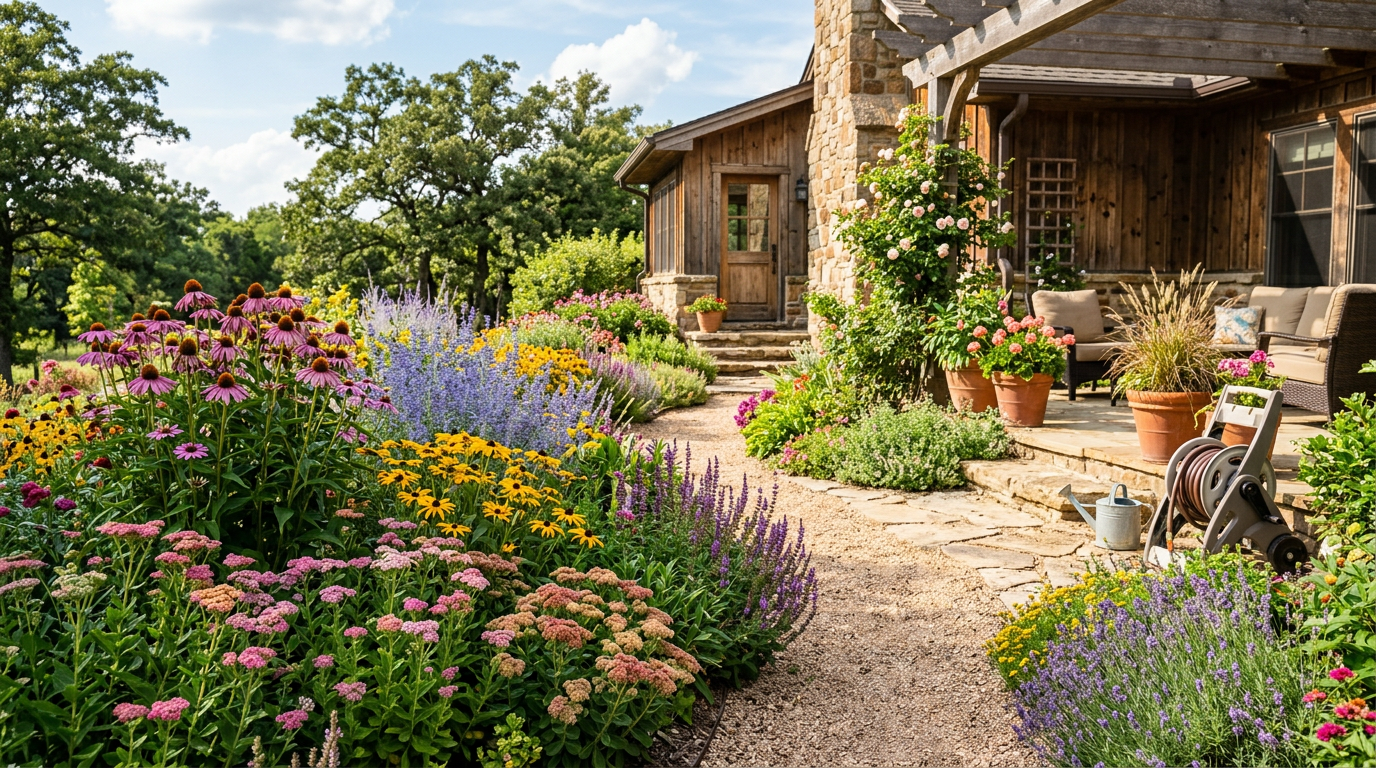
Let's be honest: that scorching, sun-baked strip of your yard is a plant graveyard. You've tried annuals that crisp up by July and hopeful shrubs that just give up the ghost. You're not a bad gardener; you just have the wrong plants.
That patch of dirt isn't a problem, it's an opportunity. It's a canvas for some of the most vibrant, tough-as-nails plants in the world: full-sun perennials. These are the workhorses that come back year after year, laugh in the face of heat waves, and pump out blooms with minimal fuss. We've planted, killed, and perfected our list of sun-lovers, and we're here to save you the time, money, and heartache. This is the definitive list of perennials that will actually thrive in your sunniest spots.
What "Full Sun" Actually Means
First, a quick reality check. In the plant world, "full sun" isn't a vague suggestion. It's a specific requirement.
Full Sun = 6+ hours of direct, unfiltered sunlight per day.
And not just any sunlight. Morning sun is gentle. The real test is afternoon sun, from about noon to 4 PM, when the intensity is at its peak. If your spot gets blasted during these hours, you have a true full-sun location. Anything less, and you might be better off looking at our guide to the best shade perennials. Don't try to cheat the system. A sun-lover planted in part-shade will be leggy, weak, and produce few, if any, flowers. Give them what they want, and they'll reward you.
The Unkillables: Our Top Perennials for Baking Sun
We've trialed hundreds of plants over the years. These are the ones that consistently perform, requiring little more than a spot in the sun and occasional water once established. These are the champions.
-
Coneflower (Echinacea purpurea): The undisputed king of the sunny garden. Modern cultivars come in a rainbow of colors beyond the classic purple—from 'Cheyenne Spirit' (reds, oranges, yellows) to 'White Swan'. They're a magnet for bees and butterflies and make excellent cut flowers. Zones 3-9.
-
Black-Eyed Susan (Rudbeckia hirta): If you want a blast of gold and sunshine from mid-summer to fall, this is your plant. 'Goldsturm' is the classic, award-winning variety for a reason: it's a blooming machine. They are incredibly easy to grow from seed and will happily self-sow to fill in an area. Zones 3-9.
-
Russian Sage (Perovskia atriplicifolia): This isn't a wimpy little flower. It's an architectural, silvery-blue cloud of texture and color. It loves heat, hates wet feet, and is completely ignored by deer and rabbits. The 'Denim 'n Lace' cultivar is a more compact version that won't flop over. Zones 4-9.
-
Stonecrop (Sedum 'Autumn Joy'): This plant looks good for three seasons. It emerges in spring as neat, succulent foliage, forms broccoli-like flower heads in summer, and explodes into dusty pink blooms in the fall that attract every late-season pollinator in a five-mile radius. The dried seed heads provide winter interest. It's one of the most drought tolerant plants for landscaping you can find. Zones 3-9.
-
Yarrow (Achillea millefolium): Don't be fooled by its delicate, ferny foliage. Yarrow is practically indestructible. It thrives on neglect and poor soil. The flat-topped flower clusters are perfect landing pads for pollinators. 'Moonshine' offers a classic pale yellow, while the 'Strawberry Seduction' variety brings a pop of rich red. Zones 3-9.
-
Salvia (Salvia nemorosa): When the purple spikes of 'May Night' or 'Caradonna' Salvia start blooming in late spring, you know summer is coming. If you shear them back after the first flush of flowers, you'll get a repeat performance later in the season. Bees go absolutely bonkers for it. Zones 4-8.
-
Catmint (Nepeta faassenii): A much better-behaved relative of catnip, Catmint forms a billowy mound of gray-green foliage topped with a haze of lavender-blue flowers for months on end. 'Walker's Low' is a famous variety, but we find it can get a bit large; 'Purrsian Blue' is a fantastic, compact alternative. Deer hate it. Zones 3-8.
The Numbers Don't Lie: Perennials are a Smart Investment
Choosing perennials isn't just an aesthetic decision; it's a financial one. The global market for perennial plants is booming precisely because homeowners are tired of replacing annuals every single year. According to market analysis, the ornamental plant sector, which heavily features sun-loving perennials like Echinacea, Rudbeckia, and Salvia, sees consistent year-over-year growth, with consumers prioritizing low-maintenance and water-wise options. Investing in a $15 gallon of Coneflower that returns for a decade is a much smarter play than spending $50 on annuals that are destined for the compost bin in October. (Source: Grand View Research).
Prepping the Bed: Don't Plant in Concrete
We've learned this the hard way: you can have the best plant in the world, but if you stick it in terrible soil, you're setting it up for failure. Most sun-loving perennials are not picky, but they do have one request: good drainage. They hate sitting in water, which can lead to root rot.
This is especially true if you have heavy clay. Before planting, you must amend the soil. We dig a hole twice as wide as the plant's pot and mix the native soil 50/50 with a good quality compost. We use Black Kow Composted Cow Manure (about $7.98 a bag at Home Depot) by the truckload. It breaks up clay, helps sandy soil retain moisture, and adds a gentle source of nutrients. This single step is the most important thing you can do for long-term success. If you're dealing with serious compaction, our guide to the best plants for clay soil has even more tips.
Designing Your Sun-Drenched Paradise
A great sunny border isn't just a random collection of plants. Think like a designer, even if it's just for a small bed. Here are the Dirt Cheap Genius rules for a pro look:
- Vary Your Heights: Put taller plants like Russian Sage or Joe Pye Weed in the back, mid-size plants like Coneflower and Black-Eyed Susan in the middle, and low-growers like Catmint or Coreopsis 'Zagreb' in the front.
- Think in Threes and Fives: Don't plant just one of anything. Plant in odd-numbered groups of 3, 5, or 7. It looks more natural and makes a bigger impact than a single, lonely specimen.
- Mix Textures and Shapes: Combine the spiky flowers of Salvia with the daisy-like blooms of Rudbeckia. Contrast the fine, airy texture of Russian Sage with the bold, succulent leaves of Sedum.
- Plan for All Seasons: Choose plants that bloom at different times. Salvia and Catmint for spring, Coneflower and Phlox for summer, Sedum and Asters for fall. This ensures you always have something interesting going on.
- Add Natives: Weaving in plants from our list of native plants for pollinators will not only guarantee they're adapted to your climate but will also turn your garden into a crucial habitat for local wildlife.
By following these simple rules, you can turn that sun-blasted problem area into the most dynamic, beautiful, and low-effort part of your entire landscape.
Frequently asked
What is the easiest perennial to grow in full sun?+
For sheer toughness and reliability, Black-Eyed Susan (Rudbeckia) or 'Autumn Joy' Sedum are top contenders. They tolerate a wide range of soils, are extremely drought-tolerant once established, and bloom for months with virtually no care. They are perfect beginner-friendly choices for any sunny spot.
What perennials bloom all summer in full sun?+
For non-stop color, look to cultivars of Coreopsis (Tickseed), Salvia, and Catmint (Nepeta). With a mid-season shearing, many of these will bloom from late spring straight through to the first frost. Coneflowers (Echinacea) also have an exceptionally long bloom time, often lasting 8 weeks or more.
Do full sun perennials need a lot of water?+
Initially, yes. All new plants need consistent watering for their first year to establish a deep root system. However, once established, most of the best full-sun perennials are remarkably drought-tolerant and thrive in hot, dry conditions. They are a perfect choice for water-wise landscaping.
How do I prepare my garden bed for full-sun perennials?+
The key is drainage. Till or dig the area to a depth of 8-12 inches. Then, amend the soil by mixing in 2-4 inches of organic compost. This improves soil structure, adds nutrients, and ensures roots don't get waterlogged, which is the number one killer of sun-loving plants.
What flowers thrive in extreme heat?+
Plants like Yarrow (Achillea), Russian Sage (Perovskia), and Stonecrop (Sedum) are built for extreme heat. Their foliage is often silver or succulent, which helps them conserve water and reflect sunlight. These are excellent choices for the hottest, most unforgiving parts of your yard.