
Best Perennials for Full Sun: Our 20+ Unkillable Picks
Stop guessing which plants can handle the heat. Here are our field-tested, top perennial picks that thrive in at least six hours of direct sun, from coneflowers to salvias.
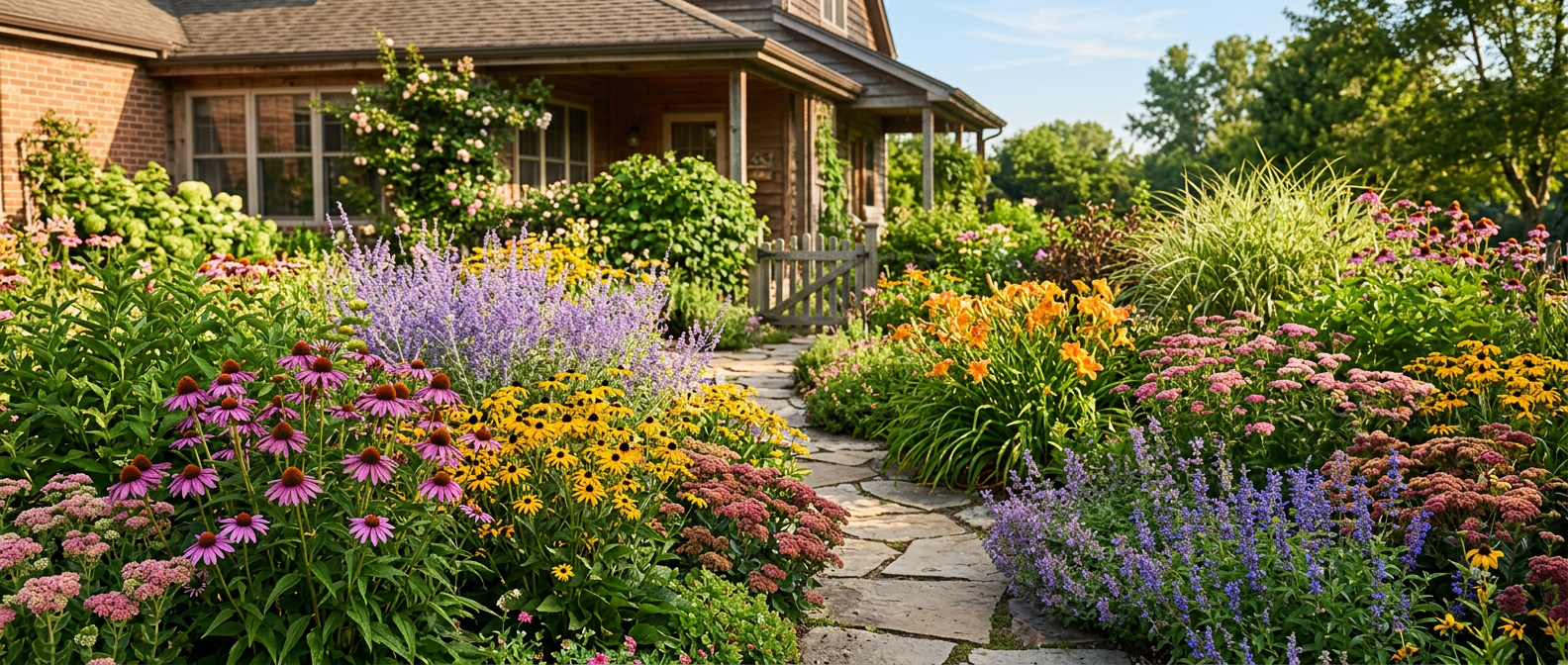
Your Full-Sun Garden Doesn't Have to Be a Plant Graveyard
Let's be honest. That blazing hot strip along the driveway or the sun-scorched patch in the middle of the lawn is a challenge. You've tried planting things there. You've watered, you've hoped, and you've watched them slowly bake into sad, brown crisps. We've all been there.
But here's the secret the fancy garden centers won't tell you: that spot isn't a death sentence, it's an opportunity. You just need the right plants. Not delicate, fussy primadonnas, but tough-as-nails perennials that see six hours of unfiltered solar radiation and say, "Is that all you've got?"
We're here to give you the ultimate list of the best perennials for full sun. These are the workhorses, the showstoppers, the plants we return to year after year in our own gardens because they just... work. They come back bigger and better every year, laugh in the face of heat waves, and look fantastic doing it. Forget gatekeeping; a gorgeous, resilient garden is for everyone.
What "Full Sun" Actually Means for Your Plants
Before you start digging, let's clear up the lingo. When a plant tag says "full sun," it's not a vague suggestion. It's a specific requirement.
Full sun means a minimum of 6 to 8 hours of direct, unfiltered sunlight per day.
- Direct: The sun's rays are hitting the plant's leaves without being blocked by trees, buildings, or awnings.
- Unfiltered: Not dappled light coming through a high-canopy tree. We're talking clear sky, straight down.
And not all sun is created equal. Afternoon sun, particularly between 2 PM and 5 PM, is far more intense and hotter than morning sun. If your spot gets blasted during these hours, you need the toughest plants on our list. A plant that's happy with 6 hours of gentle morning sun might struggle with 6 hours of scorching afternoon heat. The good news? The plants we're about to show you can handle the rough stuff.
The Unkillables: Our Top Picks for Sizzling Spots
We've trialed, killed, and finally perfected our list of sun-loving champions. These perennials deliver color, texture, and reliability without demanding your constant attention.
The Prairie Powerhouses
These are the backbone of any sunny border. They're native, tough, and magnets for pollinators.
- Coneflower (Echinacea purpurea): The undisputed king. Classic purple is great, but try 'Cheyenne Spirit' for a mix of sunset oranges, reds, and yellows. Blooms for months.
- Black-Eyed Susan (Rudbeckia hirta): A golden-yellow ball of sunshine. 'Goldsturm' is a classic for a reason—it's a reliable, uniform wall of color from mid-summer to fall.
- Blazing Star (Liatris spicata): Purple, firework-like spikes that bloom from the top down. A bizarre and beautiful addition that bees adore.
- Yarrow (Achillea millefolium): With feathery foliage and flat-topped flower clusters, yarrow thrives on neglect. 'Moonshine' offers a classic pale yellow, while 'Paprika' is a spicy red.
- Switchgrass (Panicum virgatum): Don't forget grasses! 'Northwind' is a rigidly upright variety that provides year-round structure and won't flop.
The Mediterranean Marvels
These plants love heat and well-drained, even poor, soil. They bring a silvery, aromatic vibe to the garden.
- Lavender (Lavandula angustifolia): The scent, the color, the everything. 'Munstead' and 'Hidcote' are two of the hardiest English lavenders. Drainage is non-negotiable for these guys.
- Russian Sage (Perovskia atriplicifolia): An airy cloud of silvery foliage and purple-blue flowers. It's majestic, drought-proof, and asks for nothing. 'Denim 'n Lace' is a more compact, well-behaved variety.
- Catmint (Nepeta faassenii): 'Walker's Low' is a garden designer's secret weapon. It creates billows of soft, grey-green foliage and lavender-blue flowers for the entire season.
- Lamb's Ear (Stachys byzantina): Grown more for its fuzzy, silver leaves than its flowers. 'Helen von Stein' is a popular variety that rarely flowers, keeping the focus on the foliage.
The Long-Blooming Workhorses
Want color from spring to frost? These are your guys.
- Salvia (Salvia nemorosa): If you plant one thing from this list, make it salvia. 'May Night' and 'Caradonna' have deep violet-blue spikes that bloom, get a haircut, and bloom again.
- Daylily (Hemerocallis): The ultimate easy-care perennial. For non-stop blooms, go for a rebloomer like the classic 'Stella de Oro' (yellow) or 'Pardon Me' (red).
- Coreopsis (Coreopsis verticillata): Also called Tickseed, 'Moonbeam' and 'Zagreb' are airy, fine-textured plants covered in hundreds of small, cheerful flowers for months on end.
- Shasta Daisy (Leucanthemum x superbum): A clean, classic look. 'Becky' is a famous variety for its sturdy stems and huge flowering window.
- Garden Phlox (Phlox paniculata): Provides big, fragrant heads of flowers in mid-to-late summer. Look for mildew-resistant varieties like the 'Jeana' or 'David' series.
- Stonecrop (Hylotelephium spectabile): 'Autumn Joy' Sedum is the classic, providing interest from its succulent emergence in spring to its dried seed heads in winter. A four-season plant.
The Bold & Beautiful
For when you need a focal point that commands attention.
- Peony (Paeonia lactiflora): The queen of the spring garden. The huge, fragrant blooms are legendary. 'Sarah Bernhardt' is a timeless pink. They need sun to set buds, so don't hide them.
- Bearded Iris (Iris germanica): Dramatic, intricate flowers in early summer. They look like expensive orchids but are tough as nails. They must have sun bake their rhizomes (the root structures) to flower well.
- Red Hot Poker (Kniphofia): Exotic-looking spikes of red, orange, and yellow. 'Popsicle' series offers a more compact size for smaller gardens.
- False Indigo (Baptisia australis): A shrub-like perennial with indigo-blue flower spikes in late spring. Even after blooming, the blue-green foliage looks great all season.
- Hardy Hibiscus (Hibiscus moscheutos): Also called Rose Mallow, these produce dinner-plate-sized flowers in late summer. 'Luna' series is a popular choice for huge blooms on a smaller plant.
Designing with Sun-Lovers: It’s Not Rocket Science
Creating a stunning garden bed is easier than you think. Just follow a few simple rules.
- Go Big, Then Small: Place your tallest plants in the back (or center, for an island bed). Think Russian Sage, Joe Pye Weed, or ornamental grasses. Then layer medium-sized plants like Coneflower and Phlox in front, and finish with low-growing border plants like Catmint or Coreopsis.
- Think Beyond the Bloom: A great garden has interest even when things aren't flowering. Mix textures! The feathery foliage of Yarrow next to the bold, waxy leaves of a Sedum creates instant drama. The silvery tones of Lamb's Ear make the colors of neighboring plants pop.
- Plan for All Seasons: Use our list to pick plants that bloom at different times. Iris in spring, Daylilies in summer, Sedum in fall. This "succession of bloom" ensures there's always something happening.
In our test garden last year, we paired the deep purple 'Caradonna' Salvia with the pale yellow 'Moonbeam' Coreopsis. The color contrast was electric, and they both bloomed from June until a hard frost with almost no help from us. Simple combinations often have the biggest impact.
The Dirt on Soil and Water
Here's a critical point that many people miss: for sun-loving perennials, good drainage is more important than rich soil. Most of these plants evolved in open prairies or rocky Mediterranean hillsides, not in pampered, boggy flower beds. They hate having "wet feet," which leads to root rot.
If you have heavy clay, you're not doomed. Amending it with compost or, even better, pine bark fines (soil conditioner) will work wonders to improve its structure. Ironically, many of these plants, like Yarrow and Lavender, actually perform better in less-fertile soil. Too much nitrogen just leads to weak, floppy growth. If your soil is a real challenge, we have a whole guide to the Best Plants for Clay Soil: Our Top 50+ Tough Picks.
When it comes to water, the rule is simple: water deeply and infrequently. When you first plant them, they'll need regular water to get established. But after year one, many of these are exceptionally tough. For a garden that practically waters itself, check out our guide to Drought Tolerant Plants for Landscaping: Our Top Picks.
Turn Your Sunny Spot into a Pollinator Buffet
One of the best side effects of a full-sun garden is that you're creating a five-star restaurant for bees, butterflies, and hummingbirds. Plants like Coneflower, Liatris, Salvia, and Catmint are pollinator magnets. By planting them, you're not just making your yard beautiful; you're supporting a vital part of our ecosystem.
According to the Pollinator Partnership, pollinators are responsible for 1 out of every 3 bites of food we eat. Planting a variety of flowering perennials provides a crucial food source for bees, butterflies, and other essential insects throughout the growing season. (Source: www.pollinator.org/pollinators). You can create an even bigger impact by incorporating specific host plants. Learn how with our guide, Native Plants for Pollinators: Your Garden's Upgrade.
Gear Up: You Don't Need a Lot
You can spend a fortune at the garden center, but you really only need a few key items to manage a perennial bed.
- A Great Trowel or Hori-Hori: A standard trowel works, but we swear by the DeWit Hori-Hori Knife, which runs about $35 on Amazon. It's a trowel, knife, weeder, and bulb-planter all in one indestructible package.
- Good Gloves: Don't skimp. A solid pair of leather or nitrile-coated gloves will save you from blisters and thorns. We like the Atlas NT370 Nitrile Touch gloves (about $7).
- All-Purpose Fertilizer: While most of these plants don't need much, a spring application of a balanced, slow-release granular fertilizer can give them a good start. We use Espoma Plant-tone (around $15 for a 5-lb bag) on just about everything.
Your Sunny Garden Awaits
That's it. No more excuses. That sun-blasted problem area can be the most dynamic, colorful, and life-filled part of your landscape. Armed with this list of unkillable perennials, you have the power to create a low-maintenance, high-impact garden that thrives on the heat. Pick a few favorites, get them in the ground, and watch them take off.
And if you're dealing with the opposite problem? We've got you covered there, too. Check out our list of The Best Shade Perennials for Low-Maintenance Gardens for the other side of your yard.
Frequently asked
What is the lowest maintenance perennial for full sun?+
Yarrow (Achillea) or 'Autumn Joy' Sedum are top contenders. They thrive on neglect, tolerate poor soil and drought, and require virtually no care once established. Just cut them back once a year and enjoy the show.
What perennials bloom all summer in full sun?+
For continuous summer color, look to 'Walker's Low' Catmint, Coneflowers, and reblooming daylilies like 'Stella de Oro'. Coreopsis 'Moonbeam' is another workhorse that will flower its head off from June until frost with minimal deadheading.
Can I plant full-sun perennials in containers?+
Absolutely. Just make sure the container is large enough (at least 5 gallons) and has excellent drainage. Container plants dry out faster, so you'll need to water more frequently than you would for plants in the ground, especially in peak summer heat.
How do I prepare soil for full-sun perennials?+
The key is drainage. Most sun-lovers hate 'wet feet.' Amend heavy clay with compost or pine bark fines to improve structure. For sandy soil, adding compost helps retain a bit more moisture. A simple soil test is always a smart first step.
How far apart should I plant full-sun perennials?+
Check the plant tag for its mature spread and plant accordingly. It's tempting to plant close for a full look right away, but this leads to overcrowding, poor air circulation, and disease. Give them room to grow into their full, glorious size.