
Best Perennials for Full Sun: Our 20+ Unkillable Picks
Stop fighting that sun-baked spot in your yard. We've compiled the ultimate list of tough-as-nails perennials that love full sun, from low-growing groundcovers to towering back-of-the-border beauties.
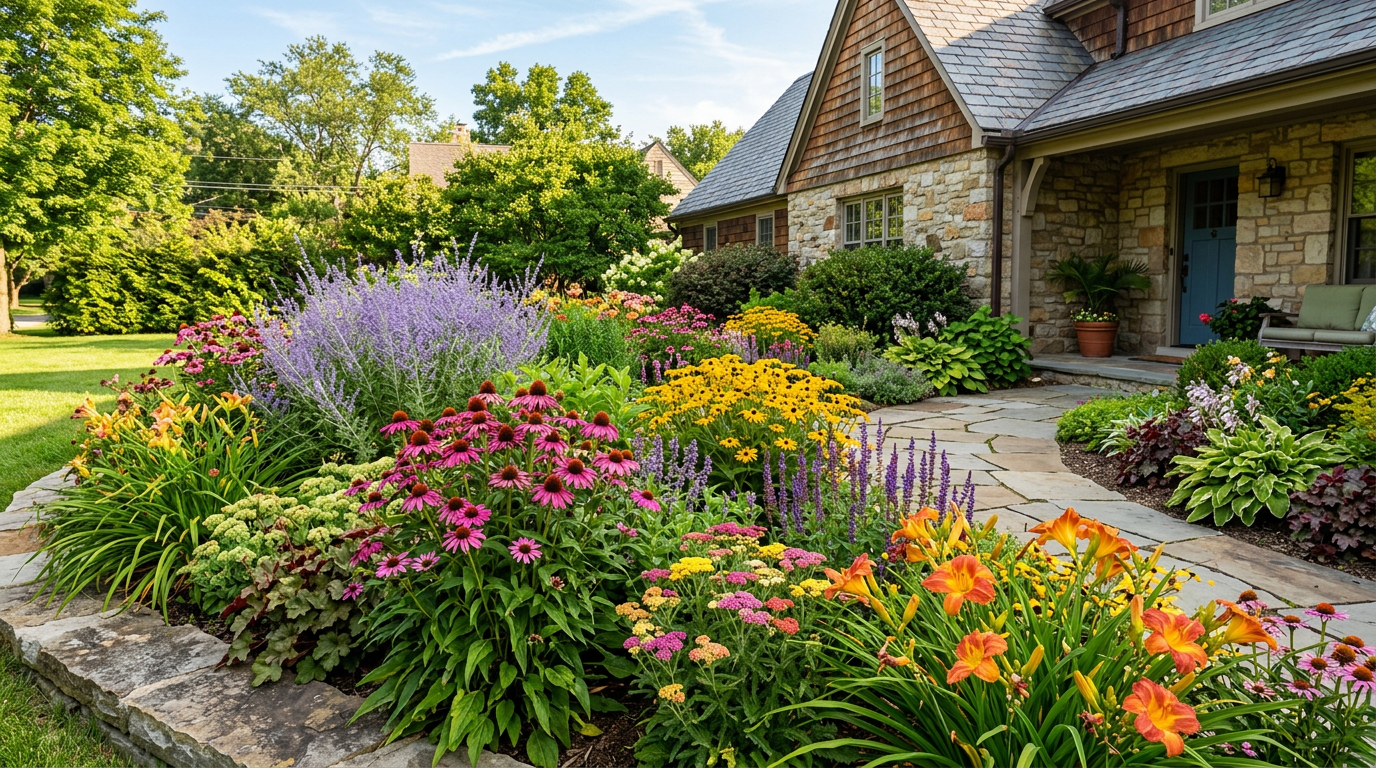
That brutal, sun-scorched patch in your yard—the one that fries every plant you put there—isn't a problem. It's an opportunity. Too many gardeners try to fight their environment, forcing shade lovers into the sun and wondering why they shrivel. We say: stop fighting and start winning.
We're here to help you embrace the sun. The key is choosing plants that evolved to thrive in exactly these conditions. We’re talking about tough, beautiful, and shockingly low-maintenance perennials that will transform that fiery spot into the most vibrant part of your landscape. Forget wimpy annuals. These are the set-it-and-forget-it powerhouses that come back stronger every year.
First, What is "Full Sun" Anyway?
Let's get this straight, because the tag on the plant isn't kidding. "Full sun" means a minimum of six hours of direct, unfiltered sunlight per day. We're not talking about the dappled light under a mature oak tree. We mean the kind of direct, overhead sun that falls between 10 a.m. and 4 p.m.
Before you spend a dime, do a simple sun audit. Take a day and note which parts of your yard get hit with direct sun and for how long. An hour of morning sun is not the same as an hour of blistering afternoon sun. Knowing your light is the single most important step to success. If you have areas that get less than six hours, check out our guide to the best shade perennials instead.
Short & Tidy Sun Lovers (Under 2 feet)
These are your front-of-the-border soldiers. They edge walkways, spill over retaining walls, and fill in gaps without hogging the spotlight. They're the definition of ground-level impact.
- Stonecrop (Sedum): If you can kill a sedum, we're almost impressed. These succulents are the champions of neglect. Creeping varieties like 'Angelina' form a lime-green mat, while upright types like 'Autumn Joy' provide sturdy, broccoli-like heads that turn from pink to a deep rusty red in the fall. They are bone-dry tolerant and look good nearly year-round.
- Lavender (Lavandula): You want fragrance and a classic look? You want Lavender. English varieties like 'Munstead' and 'Hidcote' are reliably hardy in zones 5-9 and form tidy mounds of silvery foliage topped with purple flower spikes. The key is sharp drainage—they absolutely hate wet feet.
- Coreopsis (Coreopsis verticillata): Also known as Tickseed, this is a non-stop blooming machine. The 'Zagreb' variety is a classic for a reason, producing a cloud of cheerful yellow, daisy-like flowers from June until frost. Shear it back by half mid-summer if it looks tired, and it will flush out with new growth and more blooms.
- Creeping Phlox (Phlox subulata): For a carpet of spring color, nothing beats Creeping Phlox. For a few weeks each year, it completely covers itself in pink, purple, or white flowers. It's perfect for rock walls and sunny slopes where it can cascade down. After blooming, it remains a handsome, evergreen-like mat.
Mid-Height Powerhouses (2-4 feet)
This is the core of your sunny border. These plants provide the bulk of the color and form, filling the space between the groundcovers and the tall background plants. They are the stars of the show.
- Coneflower (Echinacea purpurea): The undisputed king of the sunny garden. Modern breeding has given us a rainbow of colors beyond the classic purple—from fiery orange ('Tiki Torch') to clean white ('White Swan'). They're tough, stand up to heat and wind, and are absolute magnets for bees and butterflies, making them a must-have for any pollinator-friendly garden. We strongly recommend them in our guide to native plants for pollinators.
- Black-Eyed Susan (Rudbeckia fulgida): The 'Goldsturm' variety is so reliable it's been a garden staple for decades. These golden-yellow flowers with their signature dark brown centers bloom for weeks in late summer, providing a blast of color when other plants are starting to fade. They are also famously tolerant of heavy soil, a bonus for those of us not blessed with perfect loam. They feature prominently on our list of the best plants for clay soil.
- Salvia (Salvia nemorosa): If you want spiky, vertical texture, Salvia is your answer. 'May Night' and 'Caradonna' are two of the best, with deep violet-blue flower spikes that bloom in early summer. If you cut them back hard after the first flush of flowers, you'll get a second, smaller show in the fall. Deer tend to leave them alone, too.
- Yarrow (Achillea): Yarrow is the friend of the lazy gardener. With its feathery, fern-like foliage and flat-topped flower clusters, it adds a unique texture to the garden. 'Moonshine' is a popular variety with lemon-yellow flowers that hold their color beautifully. It thrives on poor soil and is one of the most drought tolerant plants you can find.
The Big & Bold: Tall Perennials (4+ feet)
Use these giants for the back of the border to create a living wall of color and texture. They provide a backdrop for the shorter plants and add a sense of scale and drama to the landscape.
- Russian Sage (Perovskia atriplicifolia): This isn't a true sage, but it's one of the best plants for adding an airy, cool-toned feel to a hot garden. Its silvery stems and lavender-blue flowers create a beautiful haze from mid-summer to fall. It loves heat and hates being fussed over.
- Joe Pye Weed (Eutrochium purpureum): A native giant that is a cornerstone of the late-summer pollinator garden. Its huge, mauve-pink flower heads are held aloft on sturdy stems, attracting every butterfly in a five-mile radius. It loves sun and doesn't mind moist soil, making it a versatile choice.
- Switchgrass (Panicum virgatum): Don't forget ornamental grasses! Switchgrass is a North American native that provides structure, movement, and four-season interest. Cultivars like 'Northwind' are strictly upright, while 'Shenandoah' has beautiful red-tinged foliage in the fall. They are incredibly low-maintenance.
- Hollyhock (Alcea rosea): For a touch of classic cottage-garden charm, nothing beats the towering spires of Hollyhocks. These biennials or short-lived perennials readily self-seed, ensuring you'll have them for years to come. Plant them against a fence or wall where they'll have some support from the wind.
Planting for Success: Don't Just Dig and Plop
Buying the right plant is half the battle. The other half is planting it correctly. In our test gardens, we've seen a huge difference in performance based on a few simple steps.
- Dig a Better Hole: Dig a hole twice as wide as the nursery pot, but no deeper. You want the plant to sit at the same level it was in the pot.
- Amend Sparingly: If you have compacted clay or pure sand, work a few inches of compost into the top 6-8 inches of the soil in the entire bed, not just the planting hole. This improves structure and drainage.
- Water Deeply: After planting, water thoroughly to settle the soil around the roots. For the first season, water deeply once or twice a week, rather than a light sprinkle every day. This encourages deep, drought-resistant roots.
- Mulch is Your Best Friend: Apply a 2-3 inch layer of organic mulch, like shredded bark or wood chips, around your new plants. We're partial to a basic cedar mulch; a 2 cu. ft. bag of Scotts Nature Scapes from Lowe's runs about $5 and covers 12 sq. ft. It conserves moisture, keeps roots cool, and suppresses weeds. Do not pile it against the plant stems.
Your Garden's ROI: Perennials by the Numbers
Think of this as an investment, not an expense. According to the National Gardening Association, a well-landscaped yard with mature perennials can increase a property's value by 7 to 15 percent. (Source: https://garden.org/learn/articles/view/3767/) When you consider that a single Proven Winners 'Pardon Me' Daylily costs about $19.99 online and can be divided into a dozen plants over its lifetime, the return on investment is massive. You're not just planting flowers; you're cultivating equity that literally grows over time. Stop throwing money away on annuals that die every fall and start building a permanent, beautiful, and valuable landscape.
Frequently asked
What is the lowest maintenance perennial for full sun?+
For a truly "plant it and forget it" experience, Sedum (Stonecrop) is a top contender. It tolerates poor soil, drought, and heat with virtually no complaints. Varieties like 'Autumn Joy' provide multi-season interest and require little more than being cut back once a year in late winter.
What flowers bloom all summer in full sun?+
Coreopsis (Tickseed) and many varieties of Salvia are workhorses for all-summer blooms. Deadheading (removing spent flowers) encourages plants like Salvia 'May Night' to rebloom continuously from late spring until fall, providing a constant source of color in the hottest parts of your garden.
Can I plant these perennials in clay soil?+
Yes, many sun-loving perennials are tough enough for clay. Black-Eyed Susan (Rudbeckia) and Switchgrass (Panicum) are particularly adaptable. However, amending heavy clay with compost before planting improves drainage and gives your plants a much better start. See our guide to the [best plants for clay soil](/cluster/best-plants-for-clay-soil-tough-picks).
How do I keep my full sun perennials from getting scorched?+
Consistent deep watering during the first growing season is key to establishing a strong root system. After that, a 2-3 inch layer of wood mulch is your secret weapon. It retains soil moisture, keeps the roots cool, and suppresses weeds that compete for precious water.
Are there any full sun perennials that deer won't eat?+
While no plant is 100% deer-proof, they tend to avoid plants with fuzzy or aromatic foliage. Russian Sage, Lavender, Yarrow, and Salvia are all excellent deer-resistant choices for a sunny spot. Their strong scents and textured leaves make them unpalatable to browsing deer.