
Best Perennials for Full Sun: 20+ Unkillable Picks
Stop guessing which plants can handle the heat. We've compiled the ultimate list of sun-loving perennials that come back year after year, no coddling required.
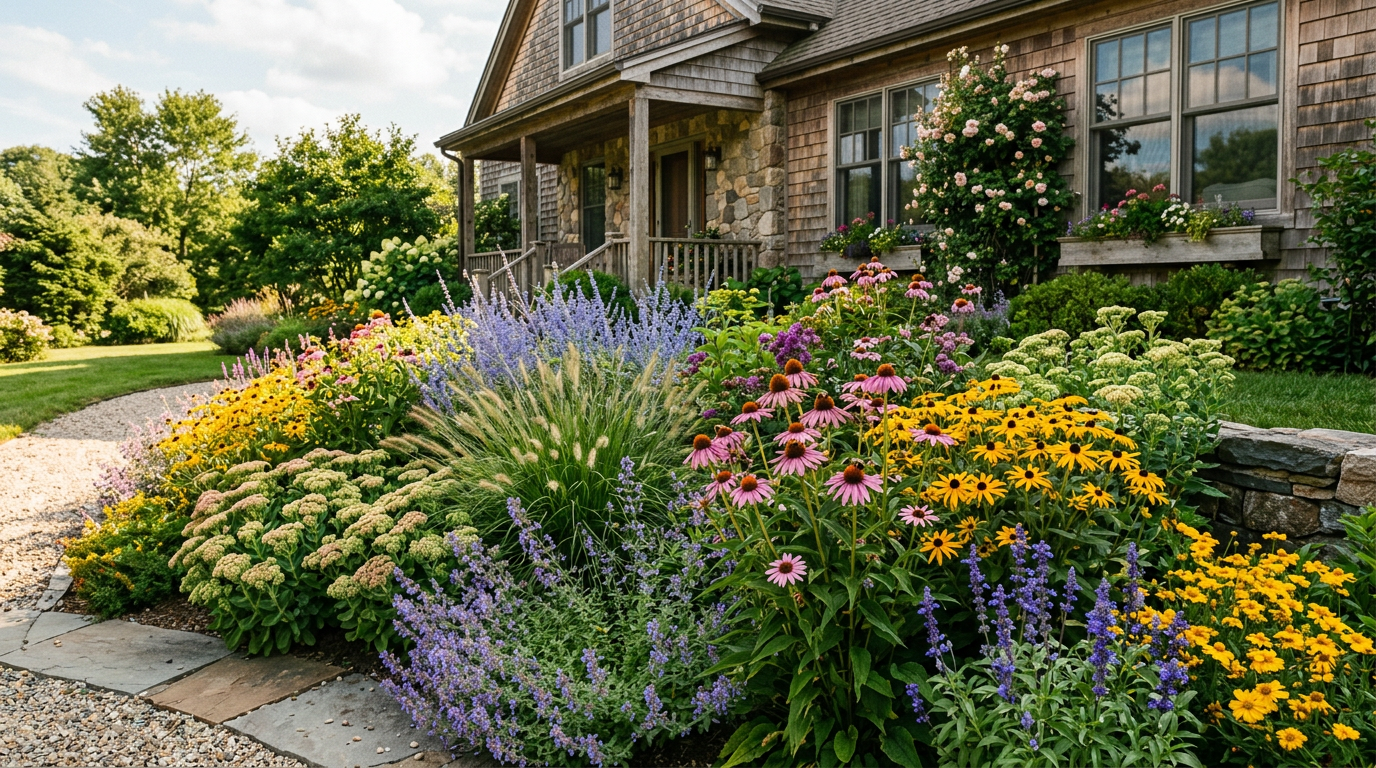
Let's be honest. You have a spot in your yard you call the "death zone." It's that patch that gets absolutely blasted by the sun from dawn till dusk, where every plant you've tried has shriveled into a crispy, sad brown memory. We've all been there.
But here's the secret: you're not a bad gardener, you're just using the wrong plants. Instead of fighting the sun, you need to recruit plants that love it. You need perennials—the kind of plants that come back every year, bigger and better, fueled by the very thing that killed their predecessors. Perennials are big business for a reason. According to the 2019 Census of Horticultural Specialties, US growers sold nearly a billion dollars ($933 million, to be exact) worth of herbaceous perennials. People want plants that last, and these sun-lovers are the best of the best. (Source: https://www.nass.usda.gov/Publications/AgCensus/2017/Online_Resources/Census_of_Horticulture/)
We're here to give you the definitive, no-nonsense list of the best perennials for full sun. These are the tough-as-nails workhorses that will turn your death zone into a riot of color.
What 'Full Sun' Actually Means (No, Really)
First, a quick vocabulary lesson, because plant tags can be liars. When we say "full sun," we aren't messing around. This isn't "bright-ish for a few hours." It's not "dappled light through that big oak tree."
Full Sun = 6 to 8+ hours of direct, unfiltered sunlight per day.
Take a day to actually observe the spot. Note when the sun first hits it and when it finally leaves. Pay special attention to afternoon sun (from noon to 4 PM), which is much more intense and hotter than morning sun. If your spot gets a full 8 hours, including the brutal afternoon rays, you have a prime location for the plants on this list.
The Foundation: Soil Prep for Sun-Lovers
Here's the second rule of sun gardening, and it's just as important as the first: drainage, drainage, drainage. Most sun-loving perennials evolved in gritty, lean soils. They hate having "wet feet," especially in the winter. Soggy, cold soil is a recipe for root rot.
Before you plant, dig a hole about a foot deep and fill it with water. If it takes more than an hour or two to drain, you have a problem. To fix it, you need to amend your soil.
- For all soil types: Mix in a generous 2-3 inches of compost. This helps break up clay and improves water retention in sandy soil.
- For heavy clay: This is where you bring in the big guns. Amending with expanded shale (like PermaTill) or pine bark fines physically creates air pockets and drainage channels. We learned the hard way that just adding sand to clay creates a concrete-like substance. If you're dealing with serious clay, check out our guide to the best plants for clay soil for more ideas.
A simple, balanced fertilizer like Espoma Plant-tone ($12.99 for a 4-lb bag) at planting time is plenty. These plants don't need to be babied with a lot of food.
Our 20+ Unkillable All-Star Picks
Alright, this is what you came for. We've planted, trialed, and tried to kill these ourselves. They just keep coming back. Here are our top picks for perennials that will thrive in your sun-baked garden.
- Black-Eyed Susan (Rudbeckia hirta): The cheeriest, most reliable flower you can plant. A North American native that blooms its head off from summer to fall. Basically indestructible.
- Coneflower (Echinacea purpurea): A pollinator magnet. Comes in classic purple, but now you can find it in red, orange, yellow, and white. They love heat and are super drought-tolerant once established.
- Salvia (Salvia nemorosa): Look for the 'May Night' or 'Caradonna' varieties. Their deep blue-purple flower spikes are stunning, and if you shear them back after the first bloom, you'll get a second show.
- Yarrow (Achillea millefolium): If you can kill Yarrow, you might have a special talent. With feathery foliage and flat-topped flowers in shades of yellow, pink, and white, it thrives on neglect.
- Sedum (Hylotelephium spectabile): 'Autumn Joy' is the classic for a reason. This succulent-like plant looks good all season, with broccoli-like heads that turn to a beautiful rosy pink in fall and provide winter interest.
- Russian Sage (Perovskia atriplicifolia): Not a true sage, but who cares? Its silvery foliage and hazy cloud of lavender-blue flowers are a showstopper from mid-summer on. Smells great, too.
- Daylily (Hemerocallis): The ultimate roadside plant. If it can survive road salt and exhaust fumes, it can survive your yard. Stella de Oro is a classic rebloomer.
- Coreopsis (Coreopsis verticillata): Also called Tickseed. The 'Moonbeam' variety with its pale yellow flowers and fine, thread-leaf foliage is a delicate-looking powerhouse.
- Shasta Daisy (Leucanthemum x superbum): For that classic, happy white-and-yellow daisy look. 'Becky' is a famous variety that stands up tall and doesn't flop.
- Catmint (Nepeta faassenii): 'Walker's Low' is a landscaper's favorite. It forms a tidy mound of gray-green foliage with spikes of lavender flowers. Tougher and less invasive than catnip.
- Bee Balm (Monarda didyma): Hummingbirds and bees go nuts for its funky, firework-like flowers. Give it good air circulation to prevent powdery mildew.
- Blanket Flower (Gaillardia aristata): These fiery red-and-yellow flowers look like a desert sunset. They bloom all summer long and perform best in poor, dry soil.
- Creeping Phlox (Phlox subulata): The perfect spring-blooming groundcover. It forms a dense mat of color that smothers weeds and cascades beautifully over walls.
- Lavender (Lavandula angustifolia): The key to lavender is sun and perfect drainage. 'Munstead' and 'Hidcote' are two reliable English varieties.
- Hollyhock (Alcea rosea): A classic cottage garden plant for dramatic vertical height. Technically a biennial, but it self-seeds so readily it acts like a perennial.
- Switchgrass (Panicum virgatum): Don't forget ornamental grasses! They provide texture, movement, and winter interest. 'Northwind' is an upright, disciplined variety.
- Liatris (Liatris spicata): Also called Blazing Star. Its purple flower spikes are unique because they bloom from the top down. A native prairie plant that's tough as nails.
- Penstemon (Penstemon digitalis): 'Husker Red' is a standout with its deep burgundy foliage and white flowers. It offers color even when not in bloom.
Drought-Tolerant Champions
Many of the plants above are drought-tolerant, but some are true champions of a dry garden. If you want to water as little as possible, double down on Yarrow, Russian Sage, Sedum, Blanket Flower, and Lavender. These plants have adaptations like silvery or fuzzy leaves that help them conserve water and reflect sunlight. Once they're established (after the first year), they require almost no supplemental water unless you're in a severe, prolonged drought. They are the backbone of any water-wise landscape. For more ideas, explore our full list of drought tolerant plants for landscaping.
Attracting Life with Pollinator Magnets
A sunny garden is the perfect place for a pollinator buffet. Bees, butterflies, and hummingbirds are most active in bright, open areas. To create a buzzing paradise, focus on planting Coneflower, Bee Balm, Liatris, Salvia, Penstemon, and Black-Eyed Susans. Planting them in groups or drifts of 3-5 plants makes it easier for pollinators to find them. A garden full of life is a healthy garden. To take it a step further, consider adding more powerhouse plants from our guide to native plants for pollinators.
Designing with Sun Perennials: Tips for a Pro Look
A great garden bed is more than just a random collection of plants. Here’s how to arrange them for maximum impact:
- Think in Layers: Use the classic "Thriller, Filler, Spiller" method. Tall plants like Hollyhocks or Switchgrass go in the back (Thrillers). Mid-size, mounding plants like Coneflower, Salvia, and Shasta Daisies go in the middle (Fillers). Low-growing, spreading plants like Creeping Phlox or Catmint go at the front edge (Spillers).
- Repeat, Repeat, Repeat: Don't just plant one of everything. Plant in drifts of 3, 5, or 7 of the same plant. Repeating colors and forms throughout the bed makes it look cohesive and intentional.
- Plan for All Seasons: Pay attention to bloom times. Creeping Phlox will give you spring color, Coneflowers and Black-Eyed Susans will carry the summer, and Sedum and Asters will close out the fall. Grasses and Sedum seed heads provide structure in the winter.
This is the complete opposite of designing for low light, where foliage texture and shape are often the main event. For tips on those darker corners, see our guide to the best shade perennials. In the sun, it's all about a succession of glorious, non-stop blooms.
Frequently asked
What is the easiest perennial to grow in full sun?+
Black-Eyed Susans (Rudbeckia) are incredibly easy. They tolerate a wide range of soils, are drought-resistant once established, and bloom profusely from mid-summer to fall with minimal care. They're a classic, reliable choice for any sunny spot, providing bright color without any fuss.
What perennials bloom all summer in full sun?+
For continuous summer color, look to 'May Night' Salvia, Coreopsis 'Moonbeam', and various Coneflower (Echinacea) varieties. By deadheading spent blooms, you can encourage these tough perennials to produce new flowers from late spring right through to the first frost, ensuring your sunny garden is never dull.
What can I plant in a very hot, sunny area?+
For extreme heat, you need truly tough plants. Yarrow (Achillea), Sedum 'Autumn Joy', and Russian Sage (Perovskia) are champions. They have low water needs and thrive in baking sun and poor soil. Their silvery foliage and sturdy structures are adapted to reflect heat and conserve water.
Do I need to fertilize my sun perennials?+
Most full-sun perennials are not heavy feeders. Over-fertilizing can lead to weak, leggy growth. A single application of a balanced, slow-release granular fertilizer like Espoma Plant-tone in the spring is usually sufficient. Amending the soil with compost annually is often even better for long-term health.