
Best Perennials for Full Sun: Our 20+ Unkillable Picks
Stop wasting money on plants that can't handle the heat. We've rounded up the toughest, most reliable full-sun perennials that will make your garden look amazing without all the fuss.
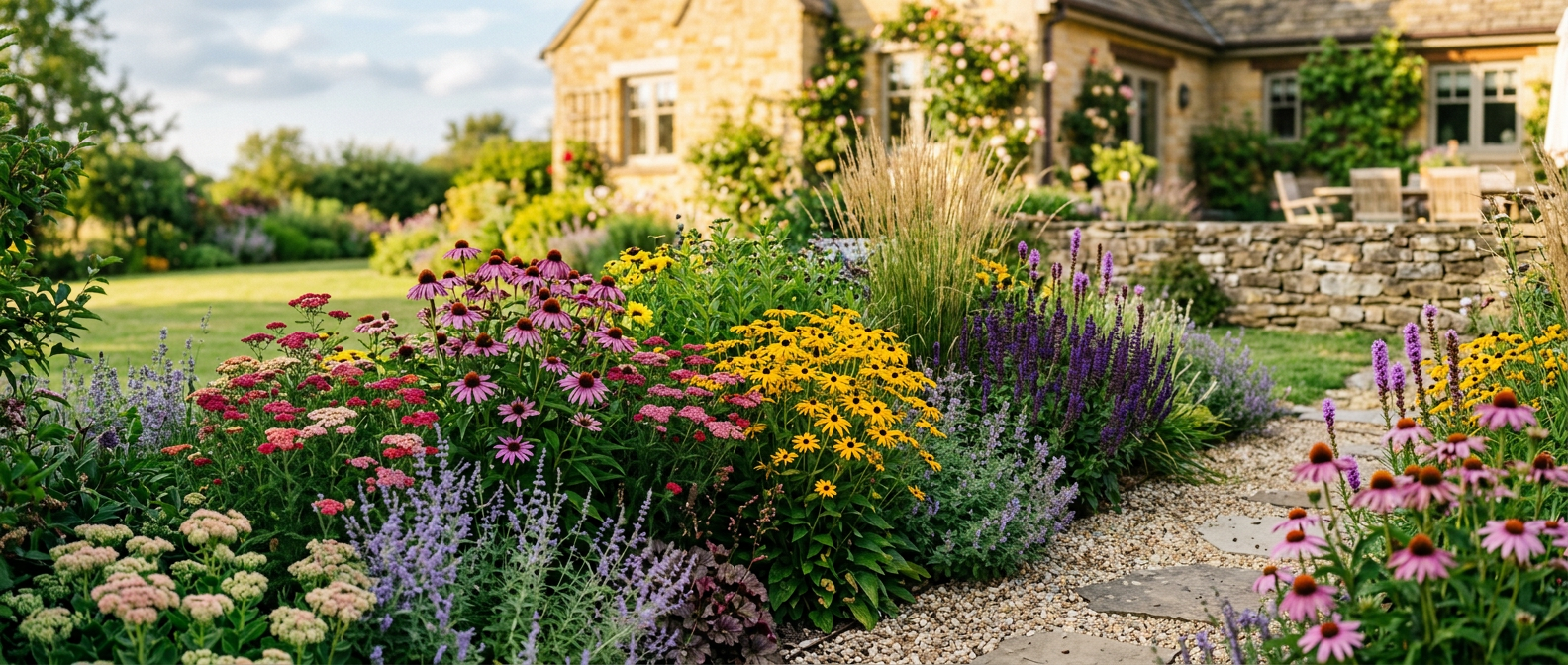
That one spot in your yard. You know the one. The one the sun bakes into a crisp from 10 AM to 4 PM. The one that reflects heat off the driveway or a south-facing wall. The one we call the "death strip," where lesser plants go to die. We've all got one.
But here's the secret the fancy garden centers won't tell you: it's not a problem spot, it's an opportunity. You're just using the wrong plants. The key to a killer garden isn't fighting your conditions—it's embracing them. You need plants that don't just tolerate the sun, but crave it. Plants that laugh in the face of a heatwave.
We're talking about perennials: the backbone of any low-maintenance garden. These are the plants that come back year after year, getting bigger and better with time. Forget planting annuals every spring. Let's get you set up with some unkillable, sun-worshipping machines.
What Does "Full Sun" Actually Mean?
Let's get this out of the way, because it's the source of 90% of gardening failures. "Full sun" isn't a vague suggestion. It's a technical specification.
Full Sun = 6 to 8+ hours of direct, unfiltered sunlight per day.
Not dappled light through a tree. Not morning-only sun. We're talking about direct, overhead, unobstructed sunlight during the hottest parts of the day. Before you buy a single plant, spend a day tracking the sun in your chosen spot. Use a notepad or your phone. When does the direct light hit? When does it leave? If the total is over six hours, congratulations, you've got a full-sun spot.
Plants that aren't adapted for this get scorched leaves, fail to bloom, and eventually give up the ghost. The plants on this list, however, have evolved for exactly these conditions.
The Hall of Fame: Top 5 Can't-Kill-'Em Picks
If you're just starting or want guaranteed success, begin with these five. They are the definition of reliable.
- Coneflower (Echinacea purpurea): This is the undisputed champ. Native, tough as nails, and a magnet for bees and butterflies. While the classic purple is fantastic, new cultivars offer a rainbow of colors from fiery orange ('Sombrero Adobe Orange') to clean white ('White Swan'). They bloom for months and their seed heads provide winter interest for birds.
- Black-Eyed Susan (Rudbeckia fulgida): The 'Goldsturm' variety is so reliable it's practically a cliché, and for good reason. It blankets the garden in golden-yellow flowers from mid-summer until frost. It's the cheerful, low-maintenance friend your garden needs. They spread to form a beautiful, weed-choking mass of color.
- Salvia (Salvia nemorosa): For a vertical splash of deep purple or blue, nothing beats perennial Salvia. The 'Caradonna' variety is famous for its dark, dramatic flower spikes and near-black stems. In our own test gardens, we've watched 'Caradonna' Salvia bloom for a solid four months with zero supplemental water after its first year. Shear it back after the first big flush of blooms, and it'll often reward you with a second show.
- Stonecrop (Sedum): Specifically, the upright variety 'Autumn Joy'. This plant is a camel. It stores water in its fleshy leaves and asks for absolutely nothing. It looks good from the moment it emerges in spring, forms nice broccoli-like heads in summer, blooms pink in the fall, and dries to a beautiful rust color for winter structure. It is the ultimate four-season perennial.
- Russian Sage (Perovskia atriplicifolia): Don't let the delicate, airy look fool you; this plant is incredibly tough. Its silvery foliage and haze of lavender-blue flowers are a perfect companion for the bold yellows of Black-Eyed Susans. It thrives in hot, dry spots and poor soil. Just give it space to grow.
For the Color Obsessed: Long-Blooming Sun Lovers
Want color from spring to fall? These perennials are workhorses that keep the flower show going for months on end.
- Coreopsis (Tickseed): Especially the threadleaf varieties like 'Moonbeam' (pale yellow) or 'Zagreb' (golden yellow). They create a fine-textured mound covered in hundreds of small, daisy-like flowers for the entire summer.
- Yarrow (Achillea millefolium): With its flat-topped flower clusters and feathery, fern-like foliage, Yarrow is a textural dream. 'Moonshine' offers a classic soft yellow, while 'Paprika' brings a spicy red that fades to pink. It's incredibly drought-tolerant once established.
- Shasta Daisy (Leucanthemum x superbum): For that timeless, happy-go-lucky daisy look, 'Becky' is the go-to cultivar. It produces a blizzard of large, white flowers on sturdy stems that don't flop over. A must-have for a classic cottage garden look.
- Daylily (Hemerocallis): The ultimate "plant it and forget it" flower. While each flower only lasts a day, they produce a succession of buds for weeks. For maximum impact, choose a reblooming variety like the iconic 'Stella de Oro', which can bloom for up to five months.
According to the 2019 Census of Horticultural Specialties from the USDA, sales of perennial plants in the U.S. topped $937 million. A huge chunk of that goes to sun-loving workhorses like Coneflowers and Sedums, proving that gardeners nationwide are voting with their wallets for plants that can take the heat and deliver results. (Source: https://www.nass.usda.gov/Publications/AgCensus/2017/Online_Resources/Census_of_Horticulture/)
Texture and Structure: It's Not Just About Flowers
A great garden bed has layers of texture and form. Flowers are the stars, but these plants are the award-winning supporting cast.
- Ornamental Grasses: They add movement and sound to the garden. Switchgrass (Panicum virgatum) is a tall, upright native that won't flop. Little Bluestem (Schizachyrium scoparium) has beautiful blue-green foliage that turns a stunning copper-orange in the fall. They are some of the best drought tolerant plants for landscaping you can find.
- Lamb's Ear (Stachys byzantina): Kids love this plant, and so do we. The leaves are thick, fuzzy, and silver-gray, like a lamb's ear. It forms a dense, spreading mat that's perfect for the front of the border. The silver foliage is a natural adaptation to reflect harsh sunlight.
- Catmint (Nepeta x faassenii): 'Walker's Low' is a perennial superstar. It forms a soft, sprawling mound of gray-green foliage topped with lavender-blue flower spikes all summer long. It's neater and less aggressive than true catnip and is a fantastic, low-effort alternative to lavender in humid climates.
Many of these plants are not only tough but also support local ecosystems, making them perfect additions to a pollinator garden. You can learn more about creating one in our guide to native plants for pollinators.
Planting for Success: The Dirt on Dirt
You can buy the best plant in the world, but if you just dig a hole and plop it in, you're rolling the dice. Set yourself up for success.
- Soil Prep: Most sun-lovers hate "wet feet." They need soil that drains well. If you have heavy clay, you'll need to amend it. Dig in a generous amount of compost or soil conditioner to improve the structure. Many of these sun-lovers are also champions in difficult soil; see our full list of the best plants for clay soil.
- Watering: For the first year, water your new perennials deeply once or twice a week (more if it's scorching hot) to encourage deep root growth. After they're established, most of the plants on this list will need very little supplemental water, if any.
- Mulch: This is the most important step. Apply a 2-3 inch layer of shredded hardwood mulch or pine bark around your plants, keeping it away from the crowns. A good bag of Scotts Nature Scapes Triple Shred Mulch runs about $3.50 and is your best friend for keeping roots cool, conserving water, and stopping weeds before they start. It's a different strategy than you'd use for the plants in our guide to the best shade perennials, which often prefer a leaf mold mulch.
Stop seeing that sunny spot as a problem. It's a canvas waiting for bold colors, textures, and life. Armed with this list of unkillable perennials, you can create a stunning, low-effort garden that thrives when the heat is on.
Frequently asked
What is the lowest maintenance perennial for full sun?+
Sedum 'Autumn Joy' is a top contender. It's incredibly drought-tolerant, thrives on neglect, offers year-round interest, and is rarely bothered by pests or diseases. Plant it in well-drained soil and it will reward you with blooms year after year with almost no intervention.
How do I keep my full sun perennials blooming?+
Consistent watering during establishment and deadheading (removing spent flowers) will encourage most perennials to rebloom. For plants like Salvia and Coreopsis, shearing them back by about a third mid-season can also promote a fresh flush of growth and more flowers.
Can I plant these perennials in containers?+
Absolutely. Most of these plants do well in pots, but use a large container (at least 5 gallons) with excellent drainage. Potted plants dry out much faster than ground plants, so be prepared to water more frequently, especially during heatwaves.
What perennials bloom all summer in full sun?+
For non-stop color, look to 'Walker's Low' Catmint, 'Caradonna' Salvia, and Coreopsis 'Moonbeam' or 'Zagreb'. These are known for exceptionally long bloom times, often starting in late spring and continuing right up until the first frost with minimal care required.
Do I need to fertilize full sun perennials?+
Generally, no. Most of these tough perennials thrive in average to lean soil. A top-dressing of compost once a year is usually all they need. Over-fertilizing can lead to weak, floppy growth and fewer flowers, so it's best to be stingy with the plant food.