
Best Perennials for Full Sun: Our 20+ Unkillable Picks
Stop wasting money on plants that can't handle the heat. Here are our top picks for tough, beautiful perennials that absolutely love basking in at least six hours of direct sun.
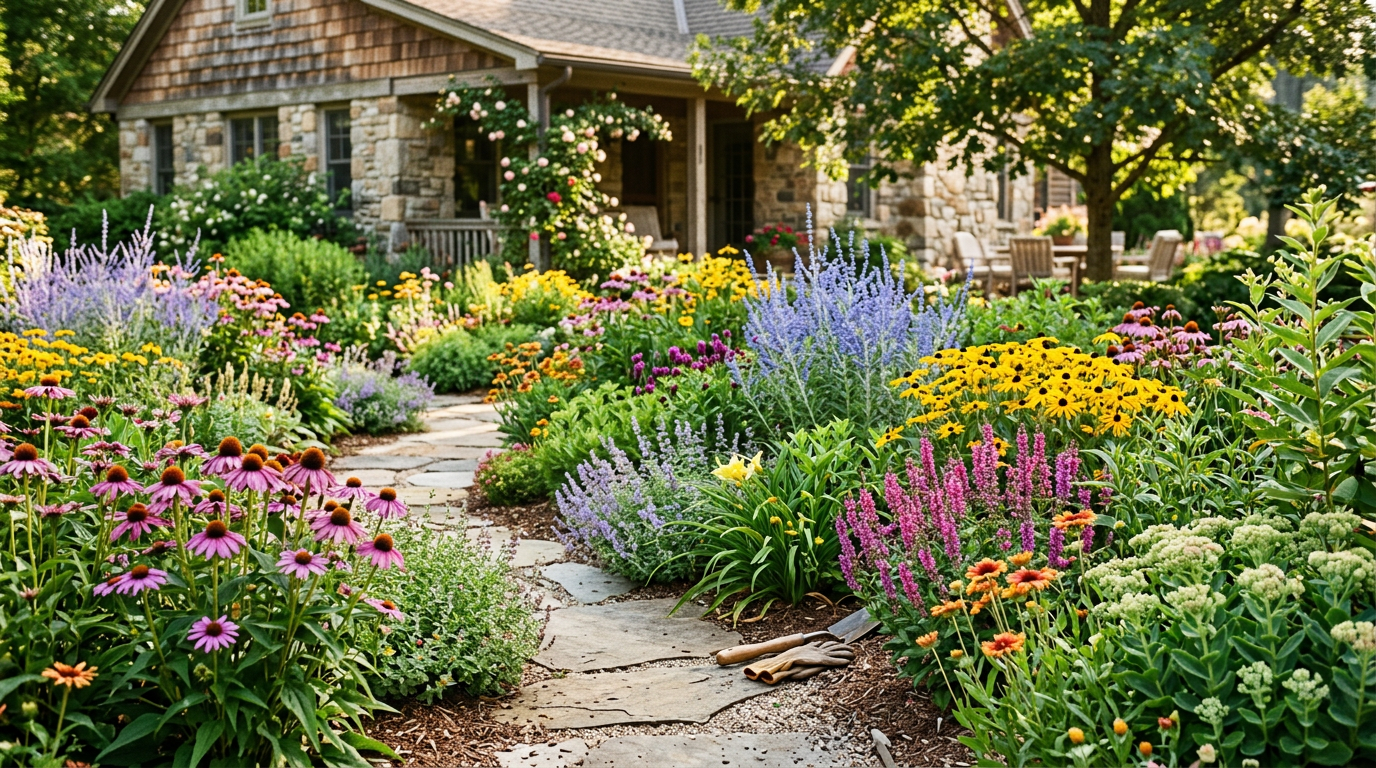
Let's be honest. That 'Full Sun' tag on a plant is both a promise and a threat. A promise of glorious blooms, and a threat that you're about to put this living thing in a blast furnace. Many plants claim to love sun, but by August, they look like they've gone ten rounds with a flamethrower. We're here to cut through the marketing fluff.
We're talking about plants for the sunniest, most unforgiving spots in your yard. The ones that bake from noon to dusk. These are the troopers, the survivors, the ones that will actually reward you for giving them a tough-love home. If your yard is the opposite, and you're dealing with a dark, shady corner, you'll want our guide to the best shade perennials instead. For everyone else, let's get into the sun-worshippers.
What 'Full Sun' Really Means
First, a quick definition so we're all on the same page. In landscaping, 'full sun' means a spot that gets a minimum of 6 to 8 hours of direct, unfiltered sunlight per day. The key word here is direct. Dappled light through a tree doesn't count. And crucially, afternoon sun (from about 1 PM to 5 PM) is much more intense and hotter than morning sun. The plants on this list can handle that afternoon scorcher.
The Unkillables: Long-Blooming Sun Champions
If you want color that just won't quit, these are your guys. They're the workhorses of the sunny border, pumping out flowers for months on end.
- Coneflower (Echinacea purpurea): The undisputed champion. Modern cultivars come in every color from classic purple ('Magnus') to wild orange and yellow ('Cheyenne Spirit'). They're magnets for bees and butterflies, making them a top pick for any native plants for pollinators garden upgrade. A 1-gallon 'Magnus' will run you about $15-$25 at a nursery.
- Black-Eyed Susan (Rudbeckia fulgida): That classic golden-yellow daisy with a dark brown center is a landscaping staple for a reason. 'Goldsturm' is the go-to variety. They bloom from mid-summer until frost and are incredibly tough. They can even handle tougher soil types, like we mention in our best plants for clay soil guide.
- Salvia (Salvia nemorosa): Look for perennial salvias like 'May Night' or 'Caradonna'. Their spikes of intense blue, violet, or pink flowers are a vertical dream. Bonus: deer and rabbits tend to leave them alone. Shear them back after the first flush of blooms, and they'll re-bloom all summer.
- Yarrow (Achillea millefolium): With its feathery foliage and flat-topped flower clusters, Yarrow adds a totally different texture. It's ridiculously drought-tolerant once established. Cultivars like 'Moonshine' (yellow) or 'Paprika' (red) are bulletproof.
- Coreopsis (Coreopsis verticillata): Also called Tickseed, 'Zagreb' and 'Moonbeam' are airy, fine-textured plants that are covered in small, bright yellow flowers for months. They are incredibly low-maintenance.
Structural Stars: Tall Perennials for Height & Drama
A great garden bed has layers. These taller plants create a backdrop, add vertical interest, and provide structure that looks good even when not in peak bloom.
- Russian Sage (Perovskia atriplicifolia): Is there a tougher plant? We doubt it. Silvery foliage and a haze of lavender-blue flowers from mid-summer to fall. It loves heat, sun, and poor soil. It's the definition of a plant that thrives on neglect. Seriously, don't fertilize this one.
- Joe Pye Weed (Eutrochium purpureum): A native giant that can reach 5-7 feet tall. Its huge, mauve-pink flower heads are a late-summer spectacle and a pollinator party. Give it space and enjoy the show.
- Ornamental Grasses: Don't sleep on grasses! They provide texture, movement, and four-season interest. Switchgrass (Panicum virgatum) is a tall, upright native, while Little Bluestem (Schizachyrium scoparium) offers amazing blue foliage and fall color. They are the backbone of many drought tolerant landscaping designs.
Ground-Level Heroes: Sun-Loving Groundcovers
Bare soil is an invitation for weeds and moisture loss. Cover it up with these tough, low-growing perennials that can handle being baked.
- Stonecrop (Sedum): There are two main types. Upright varieties like the classic 'Autumn Joy' ($12-$20 for a 1-gallon pot) are more of a clump-forming perennial with broccoli-like heads that turn from pink to deep rust in the fall. Creeping varieties like 'Angelina' or 'Dragon's Blood' form dense mats of succulent foliage that are perfect for rock walls or the front of a border.
- Creeping Thyme (Thymus serpyllum): Not just an herb. This stuff forms a dense, walkable mat of fragrant foliage that gets covered in tiny pink or purple flowers in early summer. It's perfect between pavers or spilling over a wall.
- Ice Plant (Delosperma cooperi): If you want eye-searing color, this is it. This succulent groundcover has iridescent, magenta-purple flowers that open in the sun. It needs sharp drainage and hates wet feet, but it loves the heat.
Planting & Care: Set Them Up for Success
You can't just chuck these in the ground and walk away, at least not in the first year. Even the toughest plants need a little help to get established. Perennials make up a huge segment of the nursery industry, with wholesale sales exceeding $966 million in the U.S. according to the 2019 USDA Census of Horticultural Specialties (https://www.nass.usda.gov/Publications/AgCensus/2017/Online_Resources/Horiculture/HORTIC.pdf). They're an investment worth protecting.
We learned the hard way that 'drought-tolerant' doesn't mean 'drought-proof' in year one. For the first season, water your new perennials deeply once or twice a week (more if it's over 90°F). A 2-3 inch layer of mulch (we prefer shredded hardwood) is non-negotiable. It keeps the soil cool, retains water, and suppresses weeds.
Once they survive their first winter, you can back off the water significantly. A little all-purpose granular fertilizer like Espoma Plant-tone in the spring is plenty. For plants like Coneflower and Black-Eyed Susan, deadheading (snipping off spent blooms) will encourage more flowers. For others, like Russian Sage, just leave them be. The key is to get them through that first year. After that, they'll earn their 'unkillable' reputation.
Frequently asked
What perennial blooms all summer in full sun?+
For continuous color, look to perennial Salvia 'May Night' or 'Caradonna,' which re-blooms if sheared back. Coreopsis 'Zagreb' is another excellent choice, covered in yellow flowers from June to September. Both are low-maintenance and thrive in hot, sunny locations once established.
What is the easiest low-maintenance perennial for sun?+
Sedum 'Autumn Joy' is arguably the easiest. It's a succulent, so it's incredibly drought-tolerant and thrives on neglect. It looks good from spring through winter and isn't picky about soil. Russian Sage and Yarrow are also top contenders for their 'plant it and forget it' nature.
Do full sun perennials need a lot of water?+
During their first year, yes, they need consistent watering to establish a deep root system. Once established, however, the best full-sun perennials are highly drought-tolerant and need very little supplemental water, except during extreme, prolonged heat waves. Mulching is key to reducing water needs.
What flowers can handle direct hot sun?+
Flowers with tough, often silvery or waxy foliage are best adapted for direct hot sun. Yarrow (Achillea), Russian Sage (Perovskia), and Ice Plant (Delosperma) are champions in blistering heat. Coneflower (Echinacea) and Black-Eyed Susan (Rudbeckia) also perform exceptionally well in direct, hot conditions.
Can I plant these perennials in containers?+
Yes, many of these perennials do well in containers, but you'll need a large pot to prevent roots from overheating and drying out too quickly. Salvia, Coreopsis, and smaller ornamental grasses work well. Be prepared to water containers much more frequently than garden beds, often daily in summer.