
Best Perennials for Full Sun: Our 20+ Unkillable Picks
Stop guessing which plants can handle the heat. We've got the definitive list of sun-loving perennials that come back year after year, no coddling required.
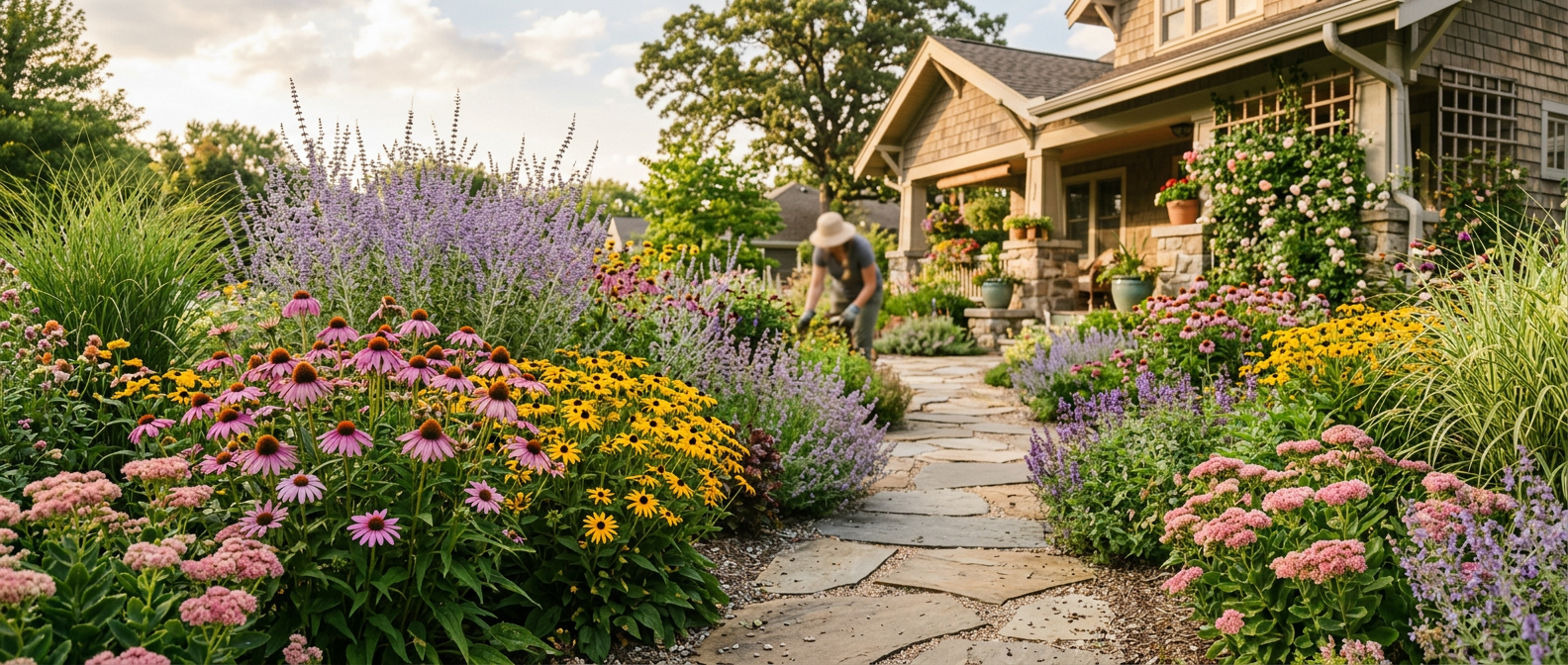
Let's talk about that brutal, sun-scorched patch in your yard. You know the one. It's where good intentions and delicate plants go to die a slow, crispy death. We've all been there, staring at a patch of baked dirt wondering if anything but a cactus could survive.
The good news? It's not a lost cause. It's a blank canvas for some of the toughest, most beautiful plants in the game: full sun perennials. These are the workhorses that come back year after year, bigger and better, laughing in the face of summer heat. They're the backbone of a garden that looks fantastic without demanding your every waking moment.
What "Full Sun" Actually Means (And Why It Matters)
Before you spend a dime, let's get one thing straight. In the plant world, "full sun" isn't a suggestion; it's a requirement. It means a spot that receives a minimum of six, and ideally eight or more, hours of direct, unfiltered sunlight per day.
Not all sun is created equal. The scorching afternoon sun from noon to 4 PM is way more intense than gentle morning light. If your spot gets blasted during these peak hours, you absolutely need plants that can handle the stress. Knowing which kind of sun you have helps, but if the total exposure is 6+ hours, you're in the full-sun club. Get this part wrong, and you're just buying expensive, short-lived compost.
Our Criteria for the "Best" Sun Perennials
We don't just throw pretty flowers on a list. To make the Dirt Cheap Genius cut, a sun perennial has to earn its spot. Our criteria are simple and non-negotiable:
- Drought Tolerance: It has to survive a missed watering (or three) once established. We're building a garden, not a life-support system.
- Long Bloom Season: We want color for months, not weeks. Bonus points for plants that provide interest even when not in bloom.
- Low Maintenance: No divas allowed. We look for plants that don't need constant deadheading, staking, or coddling.
- Pollinator Value: It should feed the bees and butterflies. A garden should be an ecosystem, not a sterile museum.
The Unkillables: Our Top Perennials for Blazing Sun
Here they are—the tried-and-true champions of the sunny border. We've grown them, we love them, and we trust them to perform.
The All-Stars (If you only plant 5, plant these)
- Coneflower (Echinacea purpurea): The classic prairie flower. 'Magnus' is a bulletproof purple, while 'Cheyenne Spirit' offers a stunning mix of red, orange, and yellow. They bloom for months and feed goldfinches with their seed heads in the fall.
- Black-Eyed Susan (Rudbeckia hirta): The iconic 'Goldsturm' cultivar is a machine, producing a sea of golden-yellow flowers from mid-summer to fall. It's the definition of cheerful and tough.
- Catmint (Nepeta faassenii): 'Walker's Low' is the MVP of the sunny border. Its haze of lavender-blue flowers goes on for months, it's deer and rabbit resistant, and it tolerates drought like a champ. Shear it back after the first flush of flowers for a repeat performance.
- Salvia (Salvia nemorosa): The spiky purple flowers of varieties like 'May Night' and 'Caradonna' are pollinator magnets. Like Catmint, you can cut them back mid-season for another round of blooms.
- Stonecrop (Sedum): 'Autumn Joy' is a must-have. Its broccoli-like heads emerge in summer, turn pink in late summer, and deepen to a rich copper in the fall. It provides four seasons of interest and asks for nothing in return.
The Supporting Cast (Expand your palette)
- Russian Sage (Perovskia atriplicifolia): With its silvery foliage and airy lavender flower spikes, this plant looks incredible backlit by the late afternoon sun. It thrives on neglect.
- Yarrow (Achillea millefolium): The flat-topped flower clusters are perfect landing pads for butterflies. 'Moonshine' is a reliable soft yellow, while other varieties come in pink, red, and white. The ferny foliage is a great textural contrast.
- Beardtongue (Penstemon digitalis): 'Husker Red' or the improved 'Dark Towers' offer incredible deep-burgundy foliage that stands out all season, topped with delicate white or pink tubular flowers that hummingbirds adore.
- Shasta Daisy (Leucanthemum x superbum): For that classic white-petal, yellow-center look, 'Becky' is the gold standard. It's taller and sturdier than older varieties and won't flop over after a rainstorm.
- Daylily (Hemerocallis): The ultimate "plant it and forget it" perennial. While each flower lasts only a day, they produce them in abundance. The reblooming 'Stella de Oro' is famous for a reason, but thousands of cultivars exist in every color imaginable.
Creating a Sun-Loving Garden Bed: A Genius Layout
Don't just dig holes randomly. Think like a designer, even if you're wearing muddy boots. Use the "Thriller, Filler, Spiller" method for a bed that looks full and intentional.
- Thrillers (The Tall Guys): Put these in the back of the bed (or the center of an island bed). They provide height and drama. Russian Sage, Joe Pye Weed (Eutrochium purpureum), and tall Garden Phlox ('David') are excellent choices.
- Fillers (The Middle Ground): These plants bulk up the main body of the bed. This is where your Coneflowers, Black-Eyed Susans, Shasta Daisies, and Salvias go.
- Spillers (The Edges): Plant these at the front to soften the border and spill over the edge. Catmint 'Walker's Low', creeping Sedums, and Coreopsis 'Moonbeam' work perfectly.
This simple layering technique creates a cohesive, professional look. And before you plant a single thing, deal with your soil. If you have heavy, dense clay, you need to amend it with compost to improve drainage. Many sun lovers hate having "wet feet." For more on this, check out our guide on the best plants for clay soil.
Planting and Care: Don't Overthink It
We learned the hard way years ago that "drought-tolerant" doesn't mean "no water ever," especially in the first year. Water new plants deeply once or twice a week for the first growing season to help them establish strong, deep roots. After that, they can handle the dry spells.
The single most important thing you can do for a new sun garden is to mulch. A 2- to 3-inch layer of shredded bark, leaf mold, or pine straw keeps the soil cool, holds in moisture, and suppresses weeds. According to the Colorado State University Extension, a good layer of mulch can reduce the water needs of established plants by up to 50%. (Source: https://extension.colostate.edu/topic-areas/yard-garden/mulches-for-home-grounds-7-214/)
As for fertilizer, keep it simple. We scratch in a handful of a balanced, all-purpose granular fertilizer like Espoma Plant-tone (around $15 for a 4lb bag) around each plant in the spring and that's it. Don't kill them with kindness.
Attracting the Good Guys: Pollinators Love These Sun Bathers
Your sunny garden isn't just for you; it's a five-star buffet for bees, butterflies, and hummingbirds. Planting for them is the easiest way to make your garden feel truly alive. Echinacea, Penstemon, and Salvia are absolute magnets for native bees. The tubular flowers of Agastache (Anise Hyssop) are hummingbird candy. Black-Eyed Susans provide seeds for birds in the fall.
By choosing from this list, you're not just planting flowers, you're creating a vibrant habitat. It's a core principle of a garden that works with nature, not against it. To go deeper on this, read our guide to native plants for pollinators. Many of these powerhouse perennials also happen to be some of the best drought tolerant plants for landscaping you can choose, saving you water and work.
So there you have it. That sun-blasted problem area is actually an opportunity to create a stunning, low-effort garden that sizzles with color all season long. Stop fighting your site and start working with it. Pick a few from this list, give them a good start, and get ready to enjoy the show without all the fuss. And if you're dealing with the opposite problem, don't worry—we've got you covered with our list of the best shade perennials too.
Frequently asked
What perennial blooms all summer in full sun?+
For non-stop color, look to Catmint ('Walker's Low'), Coreopsis ('Moonbeam'), and reblooming Salvias like 'May Night'. With a simple mid-season shearing after their first bloom, these plants will flower from late spring often until the first frost.
What are the lowest maintenance perennials for sun?+
The lowest-effort options are Sedum ('Autumn Joy'), Russian Sage, Yarrow, and Daylilies. These plants thrive on neglect once established, requiring little to no supplemental water, fertilizer, or deadheading to look their best year after year.
How do you prepare soil for full sun perennials?+
Most sun perennials need well-drained soil. Before planting, amend your native soil by mixing in 2-4 inches of compost. This improves drainage in heavy clay and helps retain moisture in sandy soil, providing a nutrient-rich foundation for strong root growth.
Can you plant full sun perennials in containers?+
Absolutely! Many sun perennials do well in pots. Choose compact varieties of Salvia, Coreopsis, or Daylilies. Remember that containers dry out much faster than garden beds, so you will need to water them more frequently, often daily in peak summer heat.