
Best Perennials for Full Sun: 20+ Unkillable Picks
Stop watching your garden get scorched. We've compiled the ultimate list of tough-as-nails perennials that absolutely love basking in 6+ hours of direct sun.
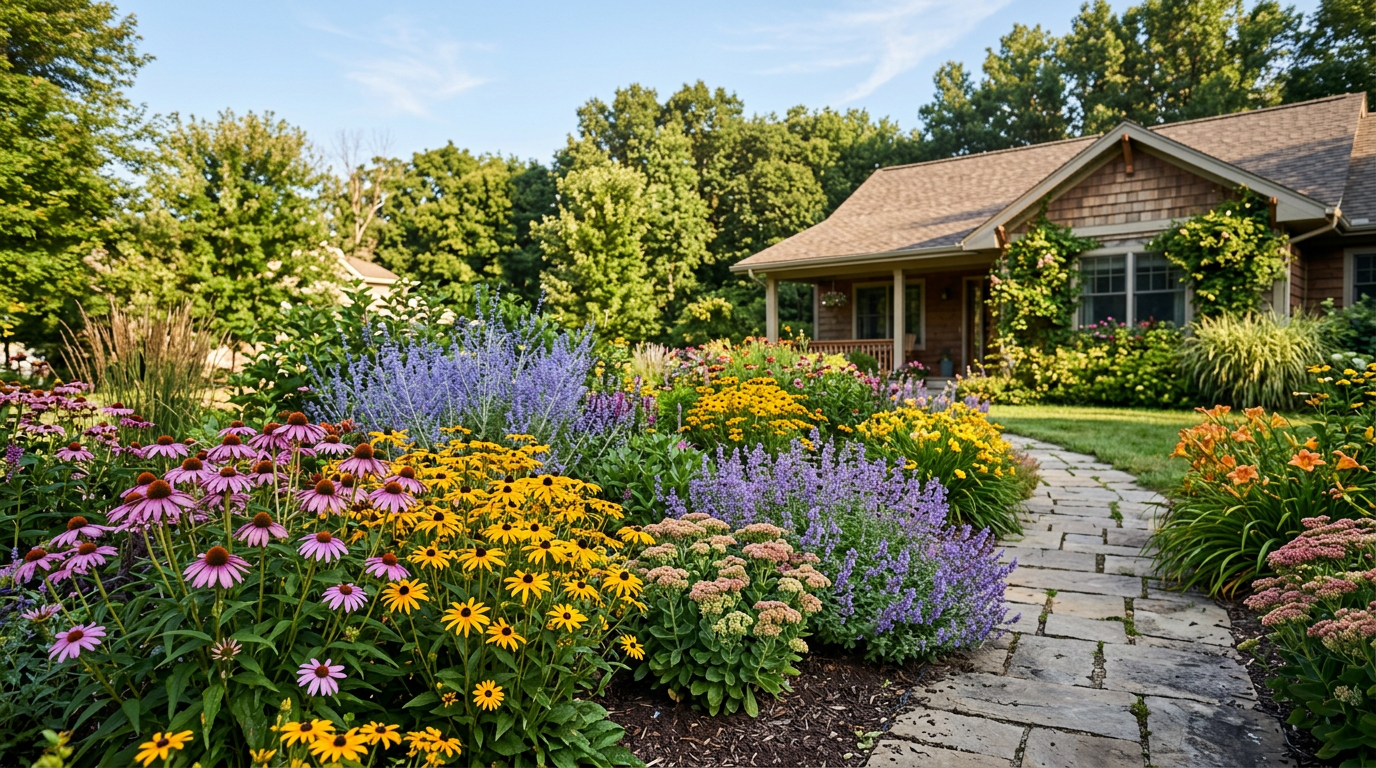
That one spot in your yard. You know the one. It gets blasted by the sun from noon until dusk, turning it into a botanical blast furnace. You’ve tried planting things there, only to watch them crisp up and surrender by August. It’s frustrating, and it feels like a waste of valuable garden real estate.
Well, we're here to tell you that a full-sun spot isn't a problem—it's an opportunity. You just need the right plants for the job. Not delicate divas, but tough-as-nails perennials that laugh in the face of a heatwave. We've spent years finding the plants that don't just survive full sun, they demand it. Forget gatekeeping and fancy horticultural jargon. These are our top, unkillable picks for a sun-drenched, low-maintenance, beautiful garden.
First, What Does "Full Sun" Actually Mean?
Let's clear this up, because garden centers can be vague. "Full sun" isn't just a bright spot. The non-negotiable definition is at least six (6) hours of direct, unfiltered sunlight per day.
Often, this sun exposure happens during the most intense part of the day, from roughly 10 a.m. to 4 p.m. If your plant gets morning sun and then shade all afternoon, that's part-sun. If it's under a high-canopy tree with dappled light, that's filtered shade. For the plants on this list, you need 6+ hours of direct, unimpeded rays. They have evolved to handle that intensity, and without it, they'll often get floppy, produce fewer flowers, and be more susceptible to disease.
The Unkillable All-Stars
If you're starting from scratch or just want guaranteed success, start here. These are the titans of the sunny border. In our test gardens, these are the plants we can practically ignore, and they still look fantastic.
- Coneflower (Echinacea purpurea): The undisputed champion. Native, amazing for pollinators, and blooms its head off mid-summer. Classic purple is great, but varieties like the white ‘White Swan’ or vibrant ‘Cheyenne Spirit’ mix are bulletproof. They ask for nothing but sun and decent drainage.
- Black-Eyed Susan (Rudbeckia fulgida): A golden-yellow beacon of late summer. The ‘Goldsturm’ variety is a classic for a reason—it’s a reliable workhorse. They spread to form a nice clump but aren't aggressive bullies. Let the seed heads stand for winter interest and to feed the goldfinches.
- Sedum (Hylotelephium spectabile): Specifically, 'Autumn Joy' Stonecrop. This plant looks good for four seasons. It emerges like little green broccoli in spring, forms a tidy mound in summer, bursts into pink-then-bronze flowers in fall, and provides structure in the winter. It is the definition of a low-maintenance plant.
- Russian Sage (Perovskia atriplicifolia): If you have a hot, dry, neglected spot, plant Russian Sage. Its silvery-green foliage and haze of lavender-blue flowers are a showstopper from mid-summer to fall. It smells great and deer tend to leave it alone. Give it space; it likes to spread out.
- Yarrow (Achillea millefolium): With feathery foliage and flat-topped flower clusters, Yarrow adds a different texture. The yellow ‘Moonshine’ variety is famously stable and non-floppy. It thrives on neglect and poor soil. Seriously, don't fertilize it.
Long-Blooming Champions
Want color that doesn't quit? These perennials are marathon bloomers, providing flowers for months, not weeks. They are essential for keeping the garden interesting all season long.
- Catmint (Nepeta x faassenii): 'Walker's Low' is the industry standard. It creates a mound of grey-green foliage topped with spikes of lavender-blue flowers from May through September. When it flags mid-season, shear it back by a third and it'll flush back out. Pollinators go absolutely wild for it.
- Salvia (Salvia nemorosa): 'May Night' and 'Caradonna' are superstars. Their deep violet-blue flower spikes appear in late spring. The secret weapon? Deadhead them. Once the first flush of flowers fades, cut the stalks back to the base, and you'll get a second, often a third, wave of blooms.
- Coreopsis (Coreopsis verticillata): Also known as Tickseed, the ‘Moonbeam’ and ‘Zagreb’ varieties are airy and covered in cheerful flowers for most of the summer. They are incredibly drought tolerant plants for landscaping once established and bring a soft, fine texture to the garden.
- Shasta Daisy (Leucanthemum x superbum): The classic, happy-faced daisy. Cultivars like 'Becky' are tough, tall, and bloom for a solid chunk of the summer. They make excellent cut flowers. A simple, timeless choice that always delivers.
Beyond Blooms: Texture, Foliage & Structure
A great garden isn't just about flowers. It’s about contrasting shapes, textures, and year-round structure. These plants are the backbone of a visually interesting sunny border.
- Lamb's Ear (Stachys byzantina): Grown for its fuzzy, silver, strokably-soft leaves. It forms a dense mat that's great at suppressing weeds. The 'Helene von Stein' variety is a good choice because it rarely flowers, focusing all its energy on that gorgeous foliage. It needs sharp drainage to avoid rotting in humidity.
- Ornamental Grasses: Don't sleep on grasses. They add movement, sound, and winter beauty. Little Bluestem (Schizachyrium scoparium) is a stellar native grass that turns a beautiful copper-orange in the fall. Switchgrass (Panicum virgatum 'Northwind') provides a strong, upright vertical accent.
- Baptisia (False Indigo): A beast of a plant in the best way. It forms a large, shrub-like clump with blue-green foliage and impressive spikes of lupine-like flowers in late spring. After blooming, it remains a handsome foliage plant all season. It's extremely long-lived.
Planting for Sun-Drenched Success
You can’t just plop these plants in the ground and walk away. A little prep goes a long way.
-
Soil is Everything: Most of these plants hate 'wet feet.' They need well-draining soil. If you have heavy clay, you'll need to amend it. Dig in compost, gravel, or soil conditioner to improve its structure. If your soil is truly impossible, check out our guide to the best plants for clay soil for some crossover options.
-
Water Wisely: For the first year, water your new perennials deeply once or twice a week (more if it's scorching hot) to help them establish a deep root system. After year one, most of these plants are remarkably drought-tolerant and will only need water during prolonged dry spells.
-
Mulch is Mandatory: Apply a 2-3 inch layer of shredded hardwood bark or pine bark mulch around your plants. We like a basic pine bark mulch, which you can get for around $3.50 for a 2 cu. ft. bag. Mulch conserves soil moisture, keeps roots cool, and prevents weeds. Keep it a couple of inches away from the plant's crown to prevent rot.
Choosing the right plants also has a massive ecological impact. According to the USDA's Forest Service, pollinators like bees and butterflies are responsible for the reproduction of over 75% of the world's flowering plants. By planting pollinator-friendly powerhouses like Coneflower, Salvia, and Catmint, you're directly supporting that vital ecosystem. Many of these sun-lovers are also native plants that are perfect for pollinators.
A Final Word
Your sun-baked problem area is a blank canvas. By choosing from this list of tough, reliable, and beautiful perennials, you can create a garden that thrives on the heat and light you thought was a curse. Start with a few, see how they do, and don't be afraid to move things around. A garden is a living experiment, not a static painting. Now go get your hands dirty. And if you have the opposite problem, we've got you covered with our guide to the best shade perennials too.
Frequently asked
What perennial blooms all summer in full sun?+
Catmint (Nepeta 'Walker's Low') and Coreopsis 'Moonbeam' are workhorses, blooming for months. Deadheading Salvia 'May Night' also encourages reblooming all summer long. Consistent color comes from planting a mix of early, mid, and late-season bloomers for a succession of flowers.
What is the most low-maintenance perennial for full sun?+
Sedum 'Autumn Joy' is a top contender. It requires almost no supplemental water once established, isn't picky about soil, and doesn't need deadheading. It provides interest from spring emergence through its winter seed heads. Russian Sage is another extremely low-care option that thrives on neglect.
Do full sun perennials need a lot of water?+
Not usually! Most of the best perennials for sun are naturally adapted to hot, dry conditions. They need consistent water during their first year to establish roots, but after that, many are highly drought-tolerant and prefer deep, infrequent watering over constant sprinkling.
Can I plant these perennials in containers?+
Absolutely. Many sun perennials do great in pots, but you'll need a large container (at least 18-24 inches in diameter) to prevent roots from overheating and drying out too quickly. You will also need to water containers much more frequently than garden beds, sometimes daily in peak summer.
What's a good full-sun perennial that deer won't eat?+
Deer tend to avoid plants with fuzzy or highly fragrant foliage. Russian Sage, Yarrow, Lamb's Ear, and Baptisia are all excellent deer-resistant choices for a sunny spot. No plant is 100% deer-proof, but these are rarely their first choice for a snack.