
Best Perennials for Full Sun: Our 20+ Unkillable Picks
Stop guessing which flowers can handle the heat. We've compiled the definitive list of tough-as-nails perennials that will turn your sun-baked yard into a vibrant, low-maintenance paradise.
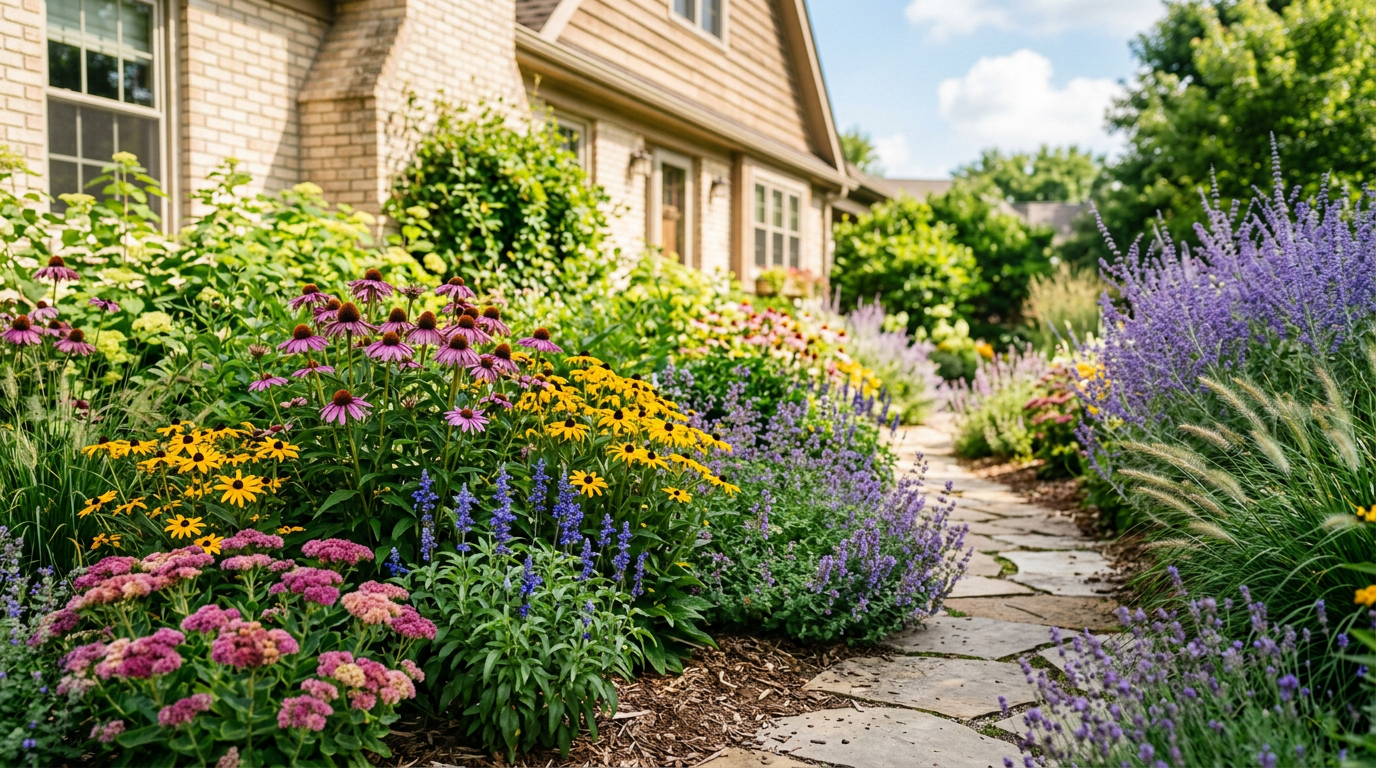
Let's get one thing straight: a sun-scorched yard isn't a problem, it's an opportunity. Too many gardeners see a patch of ground that gets blasted by the sun all day and throw in the towel, assuming nothing will survive. They're wrong. That patch is your ticket to a low-maintenance, high-impact garden filled with some of the toughest, most beautiful plants on the planet.
We’re not here to give you vague advice. We’re here to give you a shopping list. These are the best perennials for full sun—plants that we’ve tested, tortured, and watched thrive in our own sun-baked test beds. They laugh at the heat, bloom their heads off, and come back every year for more. Welcome to easy mode.
First, What 'Full Sun' Actually Means
Before you spend a single dollar, you need to be a sun detective. In the gardening world, "full sun" isn't just a suggestion; it's a specific measurement: at least 6 to 8 hours of direct, unfiltered sunlight per day.
This is non-negotiable. If you plant a Hosta from our best shade perennials list in a spot that gets 8 hours of afternoon sun, you're not a gardener—you're a chef, and that Hosta is on the menu. Its leaves will scorch, turn brown, and it will slowly wither away, cursing your name.
So, watch your yard. Where does the sun hit when you leave for work? Where is it at lunch? Where is it in the late afternoon? The spot that's lit up for the longest duration is your prime real estate for the sun-lovers on this list.
The Long-Blooming All-Stars
If you want color that just won't quit, these are your workhorses. They start in late spring or early summer and keep pumping out flowers until fall, asking for very little in return.
- Coneflower (Echinacea purpurea): The undisputed champion. Modern cultivars come in every color from classic purple ('Magnus') to fiery oranges and reds ('Cheyenne Spirit'). They're tough, drought-tolerant, and magnets for butterflies and bees, making them a cornerstone of any native plants for pollinators garden.
- Black-Eyed Susan (Rudbeckia fulgida): If you can kill a Black-Eyed Susan, we're almost impressed. The 'Goldsturm' variety is a classic for a reason—it forms a dense clump and is covered in golden-yellow flowers from July to October. A true plant-and-forget perennial.
- Salvia (Salvia nemorosa): The spiky purple flowers of varieties like 'May Night' and 'Caradonna' are garden design staples. They're deer-resistant, bee-friendly, and if you shear them back after their first big flush of blooms, they'll re-bloom later in the season.
- Coreopsis (Coreopsis verticillata): 'Moonbeam' and 'Zagreb' are two fantastic threadleaf varieties that create a fine-textured mound covered in cheerful yellow flowers all summer long. They are airy, bright, and handle heat and drought with ease.
Drought-Tolerant Powerhouses
Want to water less? Of course you do. These plants thrive on neglect and are perfect for a water-wise landscape. Once established (meaning, after their first year), they can handle surprisingly long dry spells. We love them for our lazy-gardener designs.
- Yarrow (Achillea millefolium): With its flat-topped flower clusters and feathery, fern-like foliage, Yarrow adds a unique texture. Cultivars like 'Moonshine' (yellow) or 'Paprika' (red) are bulletproof. It prefers to be kept on the dry side and hates rich, overly-fertile soil.
- Russian Sage (Perovskia atriplicifolia): This isn't a sage, and it's not from Russia, but don't hold that against it. Its silvery foliage and haze of lavender-blue flowers in late summer are breathtaking. It provides structure and an airy feel, and deer won't touch it. It's one of our top drought tolerant plants for landscaping.
- Sedum 'Autumn Joy' (Hylotelephium 'Herbstfreude'): This plant is a four-season superstar. It emerges in spring with fleshy, succulent leaves, forms broccoli-like green flowerheads in summer that turn pink in late summer, and finally age to a rich, coppery red in fall. We leave the dried seed heads up for winter interest.
- Lavender (Lavandula angustifolia): 'Munstead' and 'Hidcote' are two of the hardiest English lavenders. Give them perfect drainage (think sandy or gravelly soil) and all the sun you can, and they'll reward you with fragrant purple flowers and silvery foliage.
Groundcovers and Border Front-Liners
Every garden needs plants to fill in the gaps and soften the edges. These low-growers are perfect for the front of a sunny border, spilling over a wall, or covering a hot, dry slope.
- Creeping Phlox (Phlox subulata): In spring, this plant is an absolute showstopper, forming a dense mat completely covered in pink, purple, or white flowers. It stays low the rest of the year, providing a weed-suppressing green carpet.
- Ice Plant (Delosperma cooperi): Don't let the name fool you; this plant loves heat. Its succulent, needle-like foliage is topped with intensely colored, daisy-like flowers that open in the sun. It's practically indestructible in dry, well-drained soil.
- Catmint (Nepeta x faassenii): 'Walker's Low' is a perennial of the year for a reason. It's not too tall, not too short, and produces clouds of lavender-blue flowers for months on end above soft, gray-green foliage. It's billowy, beautiful, and bees go crazy for it.
Architectural Giants for Backyard Drama
If you want to make a statement, you need some height and structure. These plants command attention and create a bold backdrop for their shorter neighbors.
- Joe Pye Weed (Eutrochium purpureum): A native powerhouse that can reach 5-7 feet tall. In late summer, its huge, dusty-rose flower heads are a beacon for every butterfly in a five-mile radius. A must-have for the back of the border.
- Switchgrass (Panicum virgatum): An ornamental grass that provides texture and movement. 'Northwind' is an incredibly popular variety for its strict, upright habit (4-5 feet tall) and steely-blue foliage. It looks great all year round.
- Hibiscus (Hibiscus moscheutos): Commonly known as Dinner Plate Hibiscus, and for good reason. These plants produce shockingly large flowers (up to 10-12 inches across!) in shades of red, pink, and white. They love sun and consistent moisture.
- Globe Thistle (Echinops ritro): The perfectly spherical, metallic-blue flower heads are unlike anything else in the garden. They're striking, long-lasting, and make fantastic dried flowers. Plus, they're tough as nails.
Setting Your Sun Garden Up for Success
Great plants deserve a great start. While many of these perennials tolerate poor soil, a little prep goes a long way. The goal isn't to create super-rich soil; it's to improve drainage and water retention.
In our test garden, much of which is unforgiving hardpan, we’ve found a simple recipe works wonders. For every new bed, we layer on 2-3 inches of a good-quality compost like Black Kow composted manure (about $7.98 for a 1-cubic-foot bag at Lowe's) and till it into the top 6-8 inches of soil. This single step breaks up compaction and gives the roots a fighting chance. If you're dealing with serious compaction, amending with expanded shale or pine bark fines can dramatically improve drainage, which is crucial for many sun-lovers. This is especially vital if you have dense soil; check out our guide on the best plants for clay soil for more on that battle.
The U.S. perennial plant market is booming, expected to grow by over $13 billion by 2028, with a major driver being the demand for low-maintenance, water-wise plants. Homeowners are getting smarter, realizing that a yard full of drought-tolerant perennials can reduce outdoor water use by up to 60% or more, according to the EPA. (Source: https://www.epa.gov/watersense/landscaping-tips) By choosing the right plants, you're not just saving yourself work; you're part of a massive trend towards more sustainable, sensible landscaping.
Once planted, water your new perennials deeply every few days for the first couple of weeks to help them get established. Then, mulch with 2-3 inches of pine straw or shredded hardwood. Mulch is the gardener's best friend—it holds in moisture, keeps roots cool, and smothers weeds. After that first year, you can back off the watering and let them prove how tough they really are.
Frequently asked
What is the easiest perennial to grow in full sun?+
Black-Eyed Susans (Rudbeckia) are arguably the easiest. They tolerate a wide range of soils, are drought-resistant once established, and bloom profusely from mid-summer to fall with almost no intervention. Just plant them in a sunny spot and enjoy the show.
What perennial blooms all summer in full sun?+
Coneflowers (Echinacea) and certain varieties of Salvia, like 'May Night', are excellent choices for all-summer blooms. Deadheading (removing spent flowers) will encourage them to produce new buds continuously, extending their flowering season from late spring right through to the first frost.
Can I plant full sun perennials in containers?+
Absolutely. Many sun perennials thrive in pots. Choose compact varieties like 'Walker's Low' Catmint, Coreopsis, or smaller Sedums. Just remember that container plants dry out much faster than those in the ground, so you'll need to water them more frequently during hot spells.
What are some full sun perennials that don't need a lot of water?+
For a truly low-water garden, focus on drought-tolerant powerhouses like Yarrow (Achillea), Russian Sage (Perovskia), and Sedum. Once these plants are established after their first year, they require very little supplemental water, thriving in hot, dry conditions.
What's the difference between an annual and a perennial?+
It's simple: annuals complete their life cycle in one year (plant, flower, die) and you have to replant them every spring. Perennials live for three or more years, typically dying back to the ground in winter and returning from their roots each spring.