
Best Companion Plants for Tomatoes: A Genius Guide
Stop letting pests ruin your tomato harvest. We're breaking down the science of companion planting with a no-nonsense list of what to plant (and what to avoid) next to your tomatoes for a healthier, more productive garden.
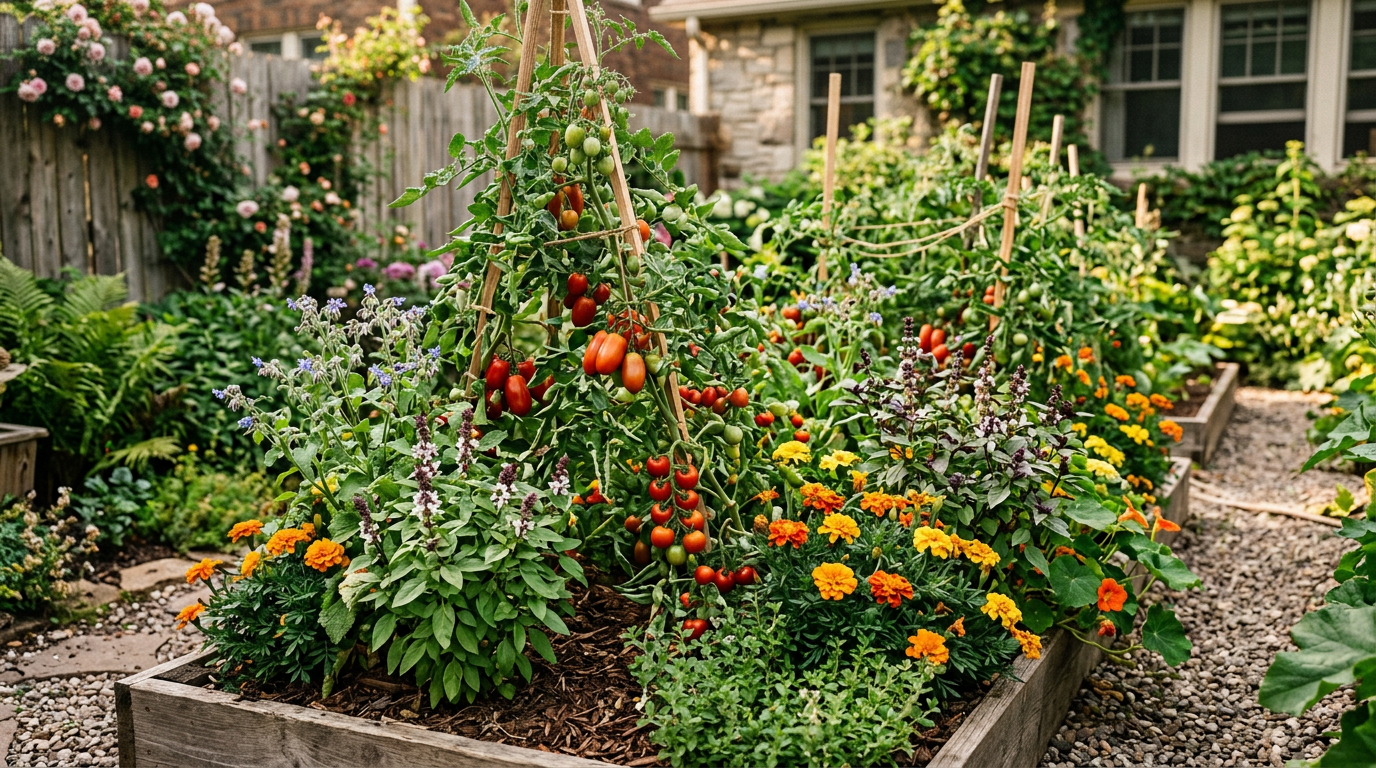
Let's be honest. Growing tomatoes can feel like a full-contact sport. You fend off hornworms the size of a toddler's finger, battle mysterious blights, and pray for enough sun. But what if you could recruit a team of bodyguards to do half the work for you? That's companion planting.
This isn't some mystical garden lore passed down on a tattered scroll. It's a strategic way to build a small, bustling ecosystem where plants help each other out. Think of it as creating a neighborhood watch for your vegetable patch. Done right, it means fewer pests, healthier soil, and a better harvest. If you're just getting started, this is one of the key concepts we wish we'd known when we first read a guide on how to start a vegetable garden.
What Is Companion Planting, Really?
At its core, companion planting is about diversity. Instead of a sterile monoculture where one pest or disease can wipe everything out, you're creating a complex system with checks and balances.
Here’s how it works:
- Pest Deterrence: Some plants release scents or chemicals that repel common tomato pests. Garlic's pungent smell confuses aphids, and marigolds wage a secret underground war against nematodes.
- Trap Cropping: You plant something a pest loves more than your tomatoes. Aphids will flock to tasty nasturtiums, leaving your precious 'maters alone. It's a noble sacrifice.
- Attracting Beneficial Insects: Certain flowers and herbs act like a landing strip for helpful predators like ladybugs, lacewings, and parasitic wasps. They arrive for the nectar and stay to feast on the bad guys.
- Improving the Environment: Low-growing plants can act as a living mulch, keeping the soil cool and moist. Taller plants can offer a bit of shade in scorching climates. Legumes (beans, peas) can even fix nitrogen in the soil, though they're tricky partners for tomatoes.
- Allelopathy: This is the fancy term for one plant releasing biochemicals that affect another. Sometimes it's bad (like fennel), but sometimes it's good. The science is still out on whether basil really makes tomatoes taste sweeter, but millions of Italian grandmothers can't be wrong.
The A-Team: The Absolute Best Companions for Tomatoes
If you only plant a few companions, make it these. This is the starting lineup for a winning tomato season.
1. Basil
This is the undisputed champion. Basil and tomatoes are a classic pairing in the kitchen and an even better one in the garden. Its strong scent is said to repel tomato hornworms and whiteflies. We interplant Genovese basil between every one of our tomato plants, and our hornworm problem has dropped to nearly zero.
2. French Marigolds (Tagetes patula)
Not all marigolds are created equal. You want French Marigolds. These aren't just for looks; they are nematode assassins. Their roots release a substance (thiophene) that is toxic to root-knot nematodes, microscopic worms that create galls on tomato roots and stunt their growth. This is one of the most scientifically-backed companion pairings out there. Don't plant 'Signet' marigolds, as they can have the opposite effect.
3. Borage
This fuzzy-leafed herb is a powerhouse. It deters tomato hornworms and cabbage worms with its scent. Even better, its vibrant blue, star-shaped flowers are an absolute magnet for pollinators and beneficial predatory insects. It's one of the best native plants for pollinators you can add. Bonus: The flowers are edible and taste a bit like cucumber.
4. Garlic, Onions, and Chives
Anything in the allium family is a great tomato buddy. Their strong, sulfurous compounds confuse and repel a wide range of pests, especially aphids. Planting a border of chives or garlic around your tomato bed is a simple, effective, and edible defense system.
5. Carrots
This one might seem odd, but it works. You can plant carrots near your tomatoes. The carrots grow and mature in the cooler weather of spring, and you can harvest them right as the tomatoes are starting to get big and leafy. Growing carrots helps loosen and aerate the soil, which benefits the tomato roots. It's a great way to maximize space with some of the easiest vegetables to grow for beginners.
Scientific Proof: The Marigold Effect
Don't just take our word for it. The power of French Marigolds to combat nematodes is well-documented. Research from agricultural institutions like the University of Florida (UF/IFAS) has repeatedly shown that specific cultivars of Tagetes patula are effective biofumigants. When planted in a vegetable bed, their roots release compounds that can reduce populations of root-knot nematodes by over 80% in a single season. This is a natural alternative to chemical nematicides, protecting your soil's biome and making your garden safer and healthier. The key is to get a dense planting and allow them to establish before the nematodes become a major issue. (Source: University of Florida, EDIS Publication ENY-056).
Flowers That Do More Than Look Pretty
Beyond marigolds, a few other flowers provide major benefits.
- Nasturtiums: These are the ultimate trap crop for aphids. Aphids will colonize the nasturtiums, leaving your tomatoes alone. Check the nasturtium leaves periodically; if they're covered, you can snip them off and dispose of the pests. The peppery leaves and flowers are also delicious in a salad.
- Calendula (Pot Marigold): Not a true marigold, but a useful ally. It repels a number of pests, including asparagus beetles and tomato hornworms, and its resinous roots are thought to deter nematodes as well. It's also known for attracting beneficial hoverflies.
- Sweet Alyssum: This low-growing, carpet-forming flower is a fantastic living mulch. It chokes out weeds, keeps the soil cool and moist, and its tiny white flowers attract a horde of beneficial insects, including hoverflies whose larvae devour aphids.
The Do-Not-Plant List: Enemies of the Tomato
Just as important as knowing what to plant is knowing what to avoid. Planting these next to your tomatoes is asking for trouble.
- The Brassica Family (Broccoli, Cabbage, Kale, Cauliflower): They release compounds that can inhibit the growth of tomato plants. They are also heavy feeders and will compete for nutrients.
- Fennel: This is garden enemy #1 for many plants. Fennel releases an allelopathic chemical from its roots that stunts the growth of most of its neighbors, including tomatoes. Keep it in a pot far away.
- Corn: A terrible neighbor. Both corn and tomatoes are heavy feeders and susceptible to the exact same pest: the corn earworm, which is also called the tomato fruitworm. You're basically setting up a buffet and inviting your worst enemy.
- Potatoes, Eggplant, and Peppers: This is the most common mistake beginners make. All of these are in the Nightshade family, just like tomatoes. Planting them together is a recipe for disaster. They are all susceptible to the same devastating soil-borne diseases, particularly Early and Late Blight. A blight outbreak can spread from one plant to the next, wiping out your entire crop in a matter of weeks.
Our Dirt Cheap Genius Tomato Bed Layout
Theory is great, but here’s a practical layout we've used with great success in our garden. This works perfectly for a standard 4x8 raised bed.
Last season, we built a new bed and wanted to give our tomatoes the best possible start. If you're building one, you'll want to read up on how deep should a raised bed be to give those roots plenty of room.
Here was our game plan:
- Center Line: We planted four indeterminate 'Big Boy' tomato plants evenly spaced down the middle of the 4x8 bed, giving them about 2 feet of space each.
- Interplanting: Between each tomato plant, we tucked in a 'Genovese' basil plant. This put the pest-repelling scent right where it needed to be.
- The Border Guard: Around the entire perimeter of the bed, about 6 inches in from the edge, we planted a dense wall of 'Sparky Mix' French Marigolds. We bought the seeds from Burpee for $4.49 a packet and sowed them thick.
- Living Mulch: In the open spaces on either side of the central tomato line, we sowed loose-leaf lettuce and spinach. We harvested this early and often, and it kept the soil cool and weed-free as the summer heat kicked in.
- The Corners: In the four corners of the bed, we planted clumps of garlic chives.
The result? We had almost no aphids, zero hornworms, and the healthiest tomato roots we've seen in years. We had a continuous harvest of lettuce in the spring, herbs all summer, and a bumper crop of tomatoes in August.
Frequently asked
What is the best companion plant for tomatoes?+
Basil is the classic and arguably best companion for tomatoes. It's known to repel tomato hornworms and whiteflies, and many gardeners swear it improves the tomato's flavor. It’s easy to grow in the same conditions that tomatoes love, making it a perfect partner in the garden bed.
What should you not plant next to tomatoes?+
Avoid planting members of the Brassica family (cabbage, broccoli), corn, and fennel near tomatoes. Also, keep other nightshades like potatoes and eggplant separate to prevent the rapid spread of shared diseases like blight, which can wipe out your entire crop.
Do marigolds really help tomatoes?+
Yes, specifically French Marigolds (*Tagetes patula*). They release a chemical from their roots called thiophene which is toxic to root-knot nematodes, a major microscopic pest that damages tomato roots. They act as a natural, underground bodyguard for your plants. Other marigold types don't have the same effect.
Can I plant peppers and tomatoes together?+
It's generally not recommended. Both are in the nightshade family and are heavy feeders that compete for the same nutrients. More importantly, they are susceptible to the same soil-borne diseases like blight and Verticillium wilt. Planting them together allows disease to spread easily.
How close should I plant companion plants to tomatoes?+
For herbs like basil, plant them 6-12 inches away, close enough to mingle but not so close they compete for root space. For border plants like marigolds or chives, a perimeter 6-8 inches from the tomato's mature drip line is ideal. Living mulches like lettuce can be seeded closer.