
Best Companion Plants for Tomatoes: A Genius Guide
Stop letting pests and poor soil dictate your tomato harvest. We're breaking down the science-backed companion plants that will turn your patch into a powerhouse.
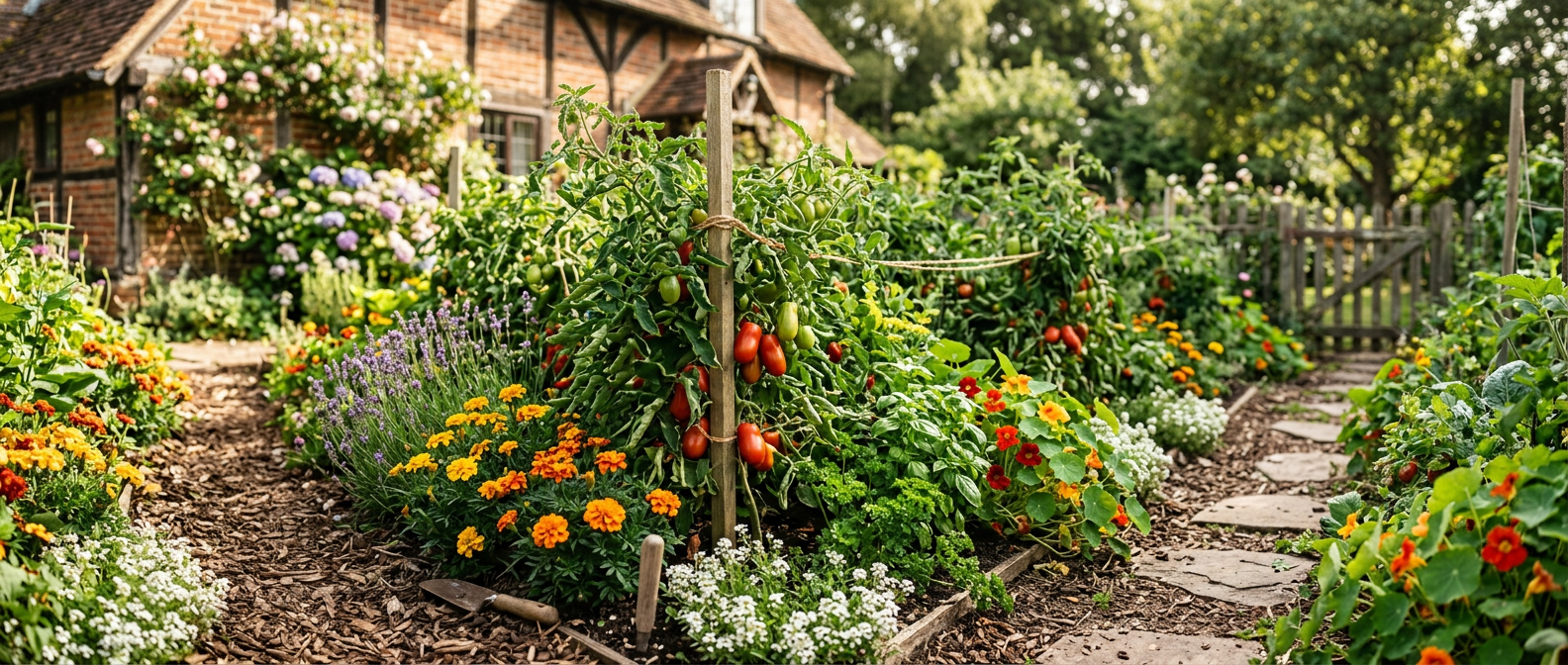
Let's get one thing straight: companion planting isn't some mystical garden ritual whispered among hippies. It's a strategy. A smart, efficient, dirt-cheap way to build a stronger, healthier, and more productive vegetable garden. And when it comes to a crop as universally loved (and frequently attacked) as the tomato, your planting strategy is everything.
Think of your garden bed as a tiny city. You want a diverse population of residents who help each other out, not a monoculture monolith that's just begging for a single pest or disease to wipe it out. By choosing the right neighbors for your tomatoes, you can naturally repel pests, attract beneficial insects, improve soil structure, and maybe even—as the old-timers swear—make your tomatoes taste better. If you're just getting your hands dirty for the first time, this is a core concept right up there with our guide on how to start a vegetable garden.
The 'Why' Behind Companion Planting
So what's actually happening down in the soil? Companion planting works on a few simple principles:
- Pest Deterrence & Confusion: Many aromatic herbs, like basil or chives, produce strong smells that mask the scent of the tomato plant, confusing pests like the dreaded tomato hornworm. It’s like botanical camouflage.
- Trap Cropping: Some plants, like nasturtiums, are more attractive to certain pests (like aphids) than your tomatoes are. These sacrificial lambs lure the pests away from your prize crop. You plant them, let them get munched on, and then remove the infested plant, pests and all.
- Attracting Beneficials: Many flowering companions, like borage and parsley, produce nectar that attracts predatory insects like hoverflies, lacewings, and parasitic wasps. These good guys then feast on the bad guys (aphids, caterpillars) that want to destroy your tomatoes.
- Improving Soil Health: Plants with deep taproots, like carrots, can help break up compacted soil. Legumes fix nitrogen. And low-growing plants can act as a living mulch, keeping the soil cool and suppressing weeds.
- Disease Prevention: The biggest mistake rookie gardeners make is planting a block of the same thing. This allows fungal diseases like blight to hop from plant to plant with ease. Interplanting with other species creates natural barriers, slowing the spread of disease.
Best Herbs to Plant with Tomatoes
Herbs are the easiest and most effective companions to start with. They're compact, useful in the kitchen, and work overtime in the garden.
- Basil: This is the undisputed champion. It's said to repel tomato hornworms and whiteflies. While the claim that it improves tomato flavor is anecdotal, so many gardeners swear by it that we consider it a must-try. We plant 'Genovese' or 'Sweet Basil' every year, about 6-12 inches from the base of each tomato plant.
- Chives & Garlic: Members of the allium family are powerhouses against aphids. Their strong oniony scent is a major deterrent. A border of chives around your tomato bed is both beautiful and functional.
- Borage: This is a personal favorite. Borage is a fantastic companion because it deters tomato hornworms and cabbage worms. Its beautiful blue, star-shaped flowers are also beloved by pollinators. It's an annual that readily self-seeds, so you'll likely have it for years to come. It thrives in the same conditions as our best perennials for full sun.
- Parsley & Dill: These attract a host of beneficial insects, including parasitic wasps that lay their eggs on hornworms. Let a few of your parsley plants flower; that's when they are most attractive to the good bugs.
- Mint (with a warning): Mints are great at repelling pests, but they are incredibly invasive. Never plant mint directly in your garden bed. Plant it in a pot and place the pot near your tomato plants. Trust us on this.
Top Flowers for Tomato Companionship
Don't just plant vegetables. Flowers are critical for a healthy garden ecosystem, providing the nectar and pollen that fuel your beneficial insect army.
- Marigolds: Specifically, French Marigolds (Tagetes patula). They are famous for producing a substance that is toxic to root-knot nematodes, microscopic pests that attack tomato roots and can devastate a crop. You're not going to find a cheaper or more effective form of nematode control. We like the 'Sparky Mix' for its hardiness and color. The effect is most potent when the marigolds are tilled into the soil at the end of the season, releasing their nematicidal compounds.
- Nasturtiums: The ultimate trap crop for aphids. Aphids will flock to the nasturtiums, leaving your tomatoes alone. Check the nasturtium leaves every few days; if they're covered in aphids, just snip the infested leaves off and dispose of them. Plus, the flowers and leaves are edible with a nice peppery kick for salads.
- Calendula (Pot Marigold): Not to be confused with French Marigolds, Calendula is another winner. It repels a number of pests and its sticky resin can trap insects like whiteflies. The flowers are also edible and have medicinal properties.
- Sweet Alyssum: This low-growing flower is a magnet for hoverflies, whose larvae are voracious aphid eaters. It makes a fantastic living mulch around the base of your tomato cages, suppressing weeds and retaining moisture.
Friendly Vegetables for Your Tomato Patch
Intercropping vegetables helps maximize your space and creates beneficial relationships.
- Carrots: You can plant carrots around your tomatoes. The tomatoes provide some shade as they grow, and the carrots help loosen the soil. You'll harvest the carrots long after your main tomato season is over.
- Lettuce & Spinach: These fast-growing leafy greens are perfect for planting around the base of young tomato plants. You'll get a full harvest of greens before the tomatoes get large enough to shade them out completely. They act as a living mulch, keeping the soil cool and moist, which tomatoes love.
- Asparagus: This is a long-term partnership. Tomatoes produce solanine, which repels the dreaded asparagus beetle. In return, asparagus produces compounds that deter nematodes that can plague tomatoes. It's a classic example of mutual benefit.
- Onions: Like their chive and garlic cousins, the strong scent of onions helps to confuse and repel a wide range of pests that are looking for your tomatoes.
What NOT to Plant Near Tomatoes (The Bad Neighbors)
Just as important as knowing what to plant is knowing what to avoid. Planting these next to your tomatoes is asking for trouble.
- Brassicas (Broccoli, Cabbage, Kale, Cauliflower): These plants are heavy feeders and will compete with your tomatoes for essential nutrients, often stunting the growth of both.
- Potatoes, Eggplant, & Peppers: While often grown together, it's risky. They are all in the nightshade family, making them susceptible to the same devastating diseases, particularly Early and Late Blight. A blight infection can spread through a patch of nightshades like wildfire. If you must plant them near each other, give them plenty of space for airflow.
- Corn: Corn is a major pest magnet, especially for the corn earworm, which is the exact same pest as the tomato fruitworm. Planting them together is like ringing a dinner bell.
- Fennel: Fennel produces a substance that can inhibit the growth of most garden plants, including tomatoes. Keep it isolated in its own corner of the garden or in a container.
- Walnut Trees: Black walnut trees produce a chemical called juglone, which is highly toxic to tomatoes and many other plants. Don't plant your vegetable garden anywhere near the drip line of a walnut tree.
Our Pro-Level Tomato Companion Layout
Last season, in one of our 4' x 8' raised beds, we put these principles into practice. We planted three 'San Marzano' indeterminate tomatoes down the center, spaced about 30 inches apart. Between each tomato, we planted a 'Genovese' basil plant. Along the north edge of the bed, we planted a row of carrots. Along the south edge, we planted a row of 'Sparky Mix' French Marigolds and allowed some vining 'Alaska' nasturtiums to spill over the side.
This polyculture approach creates a robust, self-regulating system. The flowers attract beneficial insects that are essential for any garden looking to support local ecosystems; we're big fans of integrating native plants for pollinators throughout our properties for this very reason. The herbs help confuse pests, and the diverse root systems improve the soil. For feeding, we rely on a simple organic fertilizer like Neptune's Harvest Tomato & Veg Formula (around $20 for a 36 oz bottle) every few weeks.
The scientific backing for some of these pairings is robust. While anecdotal evidence about flavor abounds, the pest control aspect is well-documented. Research published by the University of Florida's IFAS demonstrated that incorporating French marigolds into a rotation can reduce root-knot nematode populations by up to 99%, serving as a powerful natural alternative to chemical nematicides. (Source: https://edis.ifas.ufl.edu/publication/NG045) This isn't just gardening; it's integrated pest management, and it's how you get a truly impressive harvest without spraying a bunch of junk on your food.
Frequently asked
Can I plant peppers and tomatoes together?+
Yes, but with caution. Both are nightshades and heavy feeders, so ensure ample space and rich soil. They also share some diseases, like blight, so monitor them closely for any signs of trouble. It's a common but not always ideal pairing if disease pressure is high in your area.
How close should I plant companion plants to tomatoes?+
It depends. Plant low-growing herbs like basil 6-12 inches away. Vining plants like nasturtiums can be planted at the base to spread out. For root vegetables like carrots, give them at least 8-12 inches so their roots don't compete directly with the tomato's root ball.
What is the best flower to plant with tomatoes?+
French Marigolds (*Tagetes patula*) are arguably the best. They release a substance from their roots that actively kills root-knot nematodes, a major soil pest for tomatoes. They are cheap, easy to grow, and also help deter pests above ground. They're a true workhorse.
Does planting basil next to tomatoes really make them taste better?+
This is a widely debated piece of garden lore. While there's no hard scientific proof of flavor transfer, many experienced gardeners swear by it. At worst, you get fresh basil for your sauce and the proven pest-repelling benefits. It's a no-lose situation in our book.
What's a good companion plant to keep soil cool around tomatoes?+
A living mulch is perfect for this. Low-growing, fast-maturing plants like leaf lettuce, spinach, or sweet alyssum work wonderfully. They cover the soil, suppress weeds, and reduce moisture evaporation from the summer sun, creating a more stable environment for tomato roots.