
Small Backyard Design Ideas That Don't Suck (or Cost a Ton)
Your small yard isn't a lost cause. With the right design tricks, you can turn that postage-stamp-sized space into a functional, beautiful outdoor oasis.
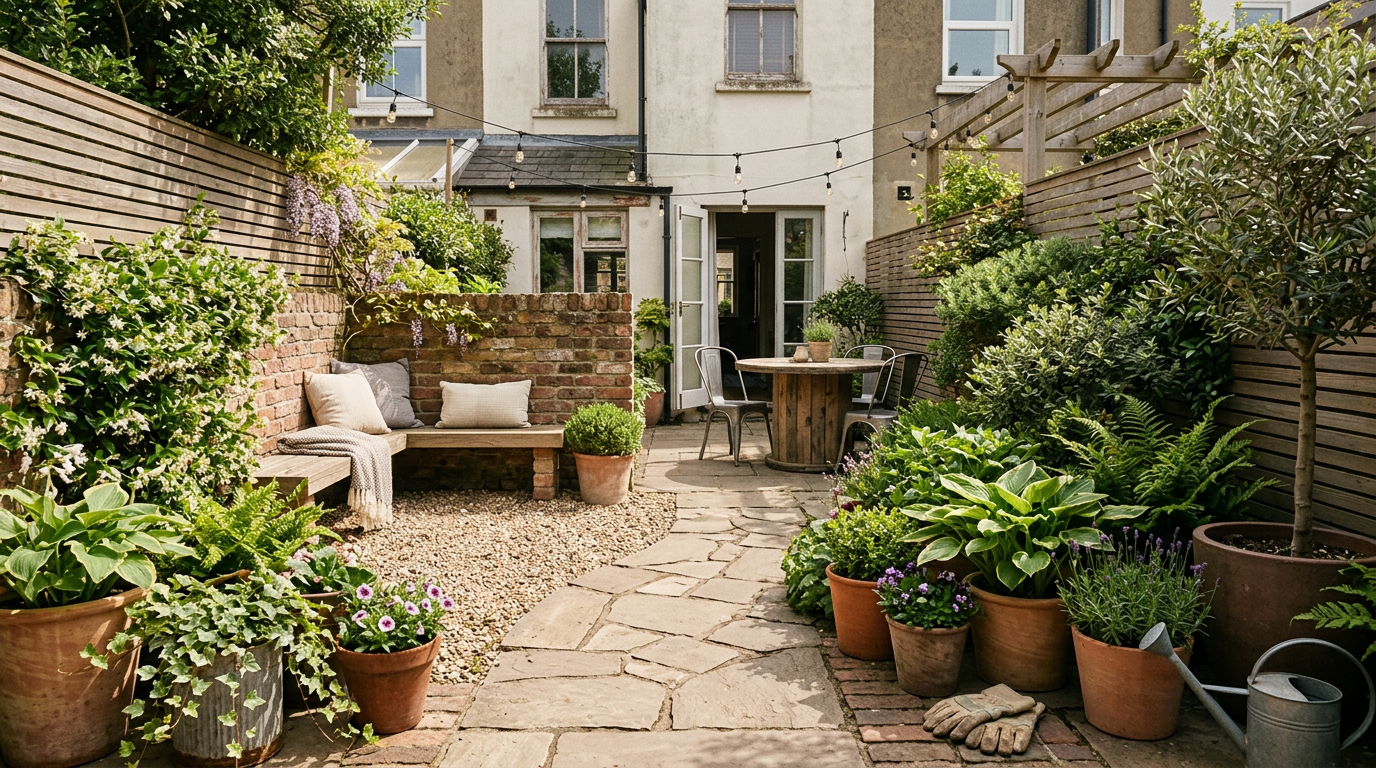
Let's be honest. Most of us see a 'small backyard' and think 'big problem.' It feels like a leftover space, an architectural apology where you can't entertain, can't garden, and can barely fit a lawn chair without hitting a fence. We're here to tell you that's nonsense. A small yard isn't a limitation; it's a call for creativity.
We've transformed countless tiny, forgotten plots into lush, functional outdoor rooms. The key isn't to wish for more square footage, but to use every inch you have with intention. Forget the sprawling lawns and massive decks you see on TV. We're going to get clever with vertical space, smart furniture, and a few visual tricks that will make your tiny yard the most popular 'room' in your house.
The "Go Vertical or Go Home" Strategy
When you can't build out, you build up. Your fences and the side of your house aren't just boundaries; they're blank canvases. This is the single most important concept in small yard design. Reclaiming this vertical real estate frees up the floor for, you know, living.
- Wall Planters: Don't just put pots on the ground. Mount them. Products like the WallyGrow Eco Wall Planter (around $25 each) make it dead simple to create a living wall of succulents, herbs, or flowers. For a cheaper, more rustic look, you can mount simple terra cotta pots to a fence using pot hangers. Suddenly, you have a garden that takes up zero floor space.
- Trellises and Lattices: A simple wood lattice panel from Lowe's or Home Depot (around $40 for a 4'x8' sheet) is a small-yard superhero. Lean one against a wall or fence and grow climbing plants like clematis or jasmine. It adds greenery, fragrance, and a sense of height and enclosure. It’s also perfect for hanging small lanterns or tools.
- Hanging Lights: String lights are a must, but don't just drape them from corner to corner. Run them up a wall, wrap them around a trellis, or zig-zag them at different heights to create a ceiling effect. This draws the eye upward and makes the space feel taller and more intimate.
Zone Out: Creating Rooms Without Walls
A small, empty square of grass or concrete feels... small. But if you divide that same square into two or three distinct functional areas, or 'zones,' your brain perceives it as a larger, more complex space. You're creating rooms without walls.
How do you do it? Easy:
- Outdoor Rugs: This is the fastest way to define a zone. Place a durable outdoor rug, like a nuLOOM Wynn Hand Woven Jute Rug (an 8'x10' can be found for under $200), under a small seating area. Instantly, you've created a 'living room.' The area is visually separated from, say, your grill station or a small container garden.
- Paver Pads: You don't need to pave the whole yard. Create a simple 8'x8' or 10'x10' patio with affordable concrete pavers. This defines your dining or lounging spot and adds textural contrast to the surrounding grass or gravel. It signals 'this is where you sit and relax.'
- Furniture Groupings: This is zoning at its most basic. A small bistro table and two chairs in one corner creates a 'cafe.' A single chaise lounge and a small side table in another corner creates a 'reading nook.' Each group has a purpose and carves out its own territory.
We once helped a client with a 15x20 foot yard who was convinced it was useless. By creating a small paver patio for a bistro set and defining a separate 'lounge' on a patch of artificial turf with an outdoor rug and two club chairs, the yard suddenly felt like it had two distinct, usable rooms.
The Right Furniture for a Tight Squeeze
That massive 8-person dining table isn't going to work here. Small-space furniture isn't about sacrifice; it's about being clever and multi-functional.
- Bistro Sets: A small round table with two chairs is classic for a reason. It offers a huge amount of function (dining, morning coffee, workspace) for a tiny footprint. Look for foldable models like the Grand Patio 3-piece folding bistro set (around $150) that can be stashed away if you need the space.
- Storage Benches: Instead of chairs, consider a storage bench. It provides seating and a place to hide your gardening tools, cushions, or kid's toys. It's a two-for-one deal that reduces clutter, which is a key enemy of small spaces.
- Corner Sectionals: It sounds counter-intuitive, but a small L-shaped outdoor sectional tucked tightly into a corner can actually be more space-efficient than a bunch of separate chairs. It maximizes seating while leaving the center of the yard open, making it feel less cluttered and easier to navigate.
Think about pieces you can move easily. Lightweight chairs, nesting tables, and portable ottomans give you the flexibility to reconfigure the space for different needs—a dinner for two one night, and open standing room for a party the next. This is a core tenet behind our favorite low-maintenance backyard ideas; flexibility means less fuss.
Hardscaping Hacks for the Spatially Challenged
Your ground cover is the foundation of your design. For small yards, the choice between a deck, pavers, or gravel can make a big difference in both cost and feel.
- Decks: A low-profile deck can be great, but it's often the most expensive option and can make a tiny yard feel even smaller if it's too high.
- Pavers: As mentioned, a simple paver patio is a fantastic, durable choice. Permeable pavers are even better, as they help with drainage—a common issue in small, enclosed urban yards.
- Gravel/Pea Stone: This is our secret weapon for budget-friendly, chic small yards. A pea gravel patio is cheap, easy to install yourself, and provides a satisfying crunch underfoot. It has a modern, minimalist feel and is great for drainage. Frame it with a steel or brick edge, add a few chairs and a fire pit, and you have an elegant space for a fraction of the cost of pavers.
Investing in a quality patio or hardscape area is almost always a good financial move. A recent study found that outdoor projects remain a top priority for homeowners, with 55% planning to upgrade their outdoor spaces, often focusing on patios and decks to improve functionality. (Source: 2024 Houzz & Home U.S. Study, https://www.houzz.com/magazine/2024-houzz-home-us-study-finds-renovation-spending-steady-as-homeowners-prioritize-needs-stsetivw-vs~172295551). A functional patio makes the house live larger, which is a huge bonus.
Play with Perception: Visual Tricks to Enlarge Your Space
Now for the fun part: fooling the eye. With a few design tricks borrowed from interior design, you can make your yard feel double its actual size.
- The Outdoor Mirror: This is our favorite 'wow' moment on a job. Mount a large, inexpensive, weather-proof mirror on a fence or wall. It will reflect the greenery and light, creating a stunning illusion of depth. It's like adding a window to another, secret garden. Just be mindful of placement to avoid creating a hazard for birds.
- Lighting is Everything: We talked about string lights, but don't stop there. Use uplighting at the base of a small tree or a textured wall to draw the eye up. Use small solar-powered spotlights to highlight key plants in your container garden. A well-lit space feels safer, more intentional, and infinitely larger at night. A good set of Hampton Bay 48 ft. LED String Lights runs about $50 at Home Depot and can single-handedly transform a space from 'backyard' to 'bistro.'
- Cohesive Color Palette: Sticking to a limited palette of 2-3 colors for your furniture, pots, and decor makes the space feel serene and unified, rather than chaotic and small. Lighter colors like whites, light grays, and pale blues can make the space feel more open and airy.
Plant Smart: The Right Greenery for Small Spaces
You can absolutely have a lush garden in a tiny yard. You just have to be selective.
- Container is King: This is the most obvious one. Use pots. Lots of them. Vary the sizes and group them in clusters of three or five to create impact. This is where you can have fun with herbs (a 'cocktail garden' of mint and basil right by the door), tomatoes, and colorful annuals.
- Choose Columnar or Dwarf Varieties: Want a tree or a shrub? Look for 'columnar' or 'dwarf' varieties. A 'Sky Pencil' Holly gives you beautiful vertical structure without the wide sprawl of a traditional holly bush. Many dwarf fruit trees are happy in large containers.
- Think Up: Plant climbers! A climbing rose, a clematis, or even a hardy kiwi vine on a trellis gives you a massive green impact for a tiny ground footprint. These are wonderful low-maintenance backyard ideas because once established, they mostly take care of themselves.
Your small backyard isn't a sentence to a life lived indoors. It's an opportunity to create a dense, beautiful, and incredibly functional outdoor room. It forces you to be purposeful, to choose every element with care. And frankly, a well-designed small yard is often more charming and usable than a giant, empty lawn. Get vertical, get smart with your choices, and get outside. Want more high-impact, low-effort tips? Check out our guide to low-maintenance backyard ideas.
Frequently asked
How can I make my small backyard look bigger?+
Use vertical space with wall planters and trellises, stick to a light color palette, and use strategic lighting. An outdoor mirror is a game-changer, reflecting light and greenery to create a powerful illusion of depth. Defining zones with rugs also makes it feel more expansive.
What's the cheapest way to design a small backyard?+
Focus on DIY projects. A simple gravel or pea stone patio is far cheaper than pavers or a deck. Use container gardening instead of building raised beds, thrift second-hand furniture, and use string lights for high-impact, low-cost ambiance.
What kind of furniture is best for a small patio?+
Look for compact bistro sets, foldable chairs, and nesting tables. Benches that offer built-in storage are fantastic. A small L-shaped outdoor sectional can work well by tucking into a corner to maximize seating without cluttering the center of the space.
Can I have a garden in a tiny backyard?+
Absolutely. Vertical gardens, wall-mounted planters, and container gardening are your best friends. Grow herbs, vegetables, and flowers in pots of various sizes. Choose dwarf plant varieties and climbers like clematis that grow up, not out, to maximize your green space.
How do I add privacy to a small backyard?+
Use tall, narrow plants like bamboo (clumping varieties!) or 'Sky Pencil' holly in containers along the fence line. A trellis with a fast-growing vine can create a living privacy screen. You can also install simple privacy screens or outdoor curtains for a flexible solution.