
Low Maintenance Backyard Ideas That Actually Work
Stop spending every weekend on yard work. Here are our proven, no-nonsense strategies for creating a beautiful backyard that practically takes care of itself.
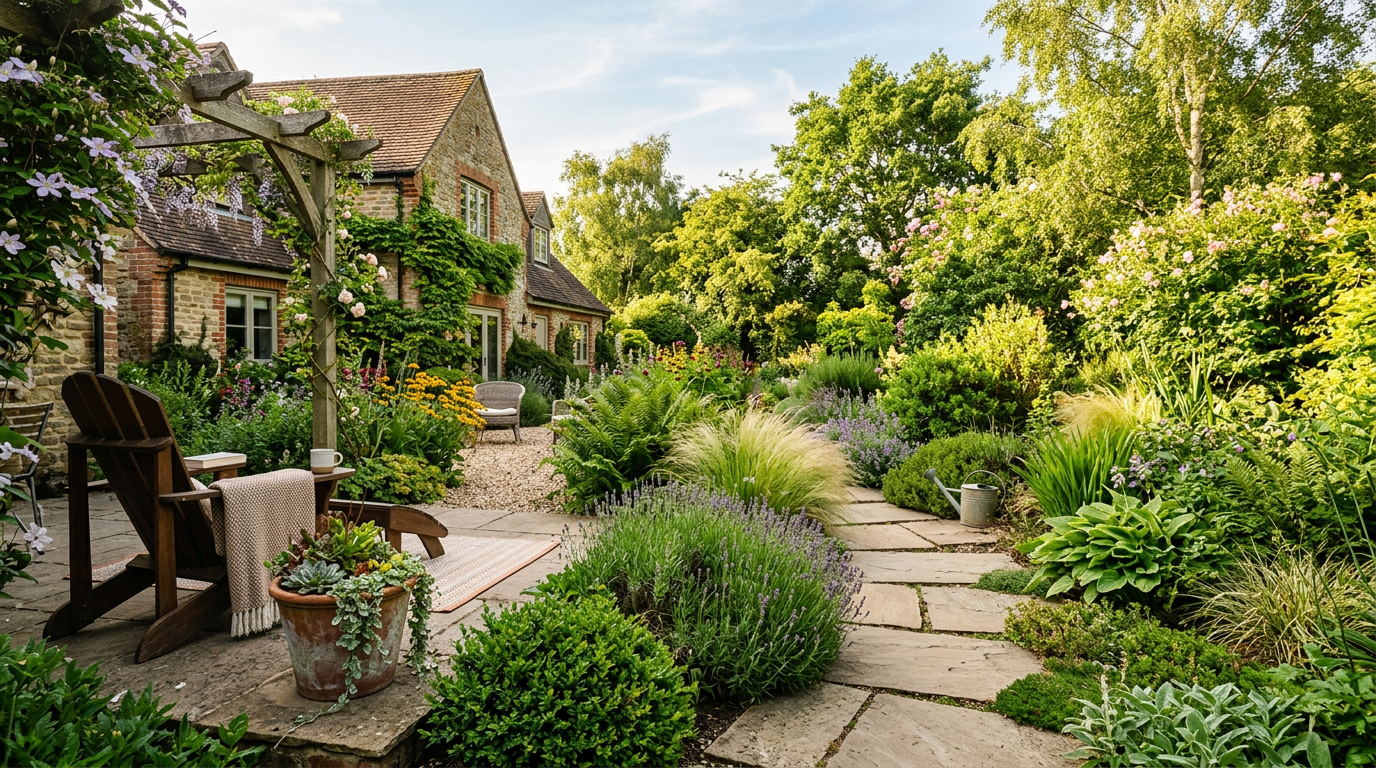
Let's be honest. You want a backyard that looks like it belongs on a magazine cover, but you want to put in the effort of someone who's just binge-watched three seasons of a show on the couch. We get it. The dream of a perfect outdoor oasis often crashes into the reality of weekend-long mowing, weeding, and watering.
The good news? It doesn't have to be that way. The gatekeepers of traditional landscaping want you to believe that a beautiful yard requires constant, back-breaking labor (and a steady purchase of their products). We’re here to tell you that’s nonsense. A stunning, enjoyable, and low-maintenance backyard is entirely within your reach. You just have to be smarter than your soil.
We’ve designed, built, and maintained hundreds of yards. These are the strategies we use to give you your weekends back.
Ditch the Diva Lawn (Or at Least Shrink It)
The single biggest time and money suck in most backyards is the lawn. That perfect carpet of green turf is a diva. It demands constant mowing, fertilizing, watering, and weeding. Our first, most important piece of advice is to question its reign.
Shrinking your lawn is the fastest path to a low-maintenance life. Reclaim the edges, corners, and low-traffic areas. You don't need to go scorched-earth and eliminate it all at once. Start by expanding your garden beds or creating a new patio space. Every square foot of grass you remove is a square foot you don't have to mow.
For the lawn you keep, consider replacing high-maintenance Kentucky Bluegrass with hardier, more self-sufficient alternatives:
- Fescue Blends: Tall fescue varieties are deep-rooted, drought-tolerant, and crowd out weeds effectively.
- Clover: Once considered a weed, clover is making a huge comeback. It's green, fixes its own nitrogen (meaning less fertilizer), attracts beneficial pollinators, and stays green even in dry spells. You can overseed your existing lawn with a product like Scotts Clover Lawn seed mix, which runs about $25 for a 2 lb bag.
- Groundcovers: For areas where you don't need a durable play surface, groundcovers like Creeping Thyme or Sedum are fantastic lawn replacements. They suppress weeds and require virtually no care once established. We've got more tips on this in our guide to grass alternatives for your yard.
Hardscape is Your Best Friend
Hardscaping is the backbone of a low-maintenance yard. It’s any non-living element: patios, decks, pathways, and retaining walls. It’s the ultimate “set it and forget it” foundation. You install it once, and your main task for the next decade is sweeping it occasionally.
Think of hardscaping as the permanent structure of your outdoor room. A well-placed patio defines your seating and dining area, eliminating a huge chunk of lawn. Winding pathways of gravel or flagstone create visual interest and guide movement without requiring a mower.
Here are some of our favorite low-maintenance hardscape materials:
- Pavers: Concrete or stone pavers create durable, classic patios and walkways. They're more expensive upfront (often $15-$25 per square foot, installed) but last for decades. Using polymeric sand in the joints will drastically reduce weed growth.
- Decomposed Granite (DG): This is one of our go-to materials for a cheap, effective, and natural-looking surface. DG is finely crushed rock that compacts into a firm, water-permeable surface perfect for paths and casual patios. It costs about $50-$70 per cubic yard, or around $2-$3 per square foot installed.
- Pea Gravel: For a more informal look, you can't beat pea gravel. It’s perfect for fire pit areas, side yards, and secondary paths. At about $60 per cubic yard, it's a budget-friendly way to cover a lot of ground. Just be sure to use a quality steel or aluminum edging to keep it contained.
Plant Smarter, Not Harder with Native Plants
Here is the secret weapon that professional landscapers use: native plants. These are the plants that have spent thousands of years adapting to your specific climate, soil, and rainfall patterns. They are the opposite of the fussy, imported annuals you find at big-box garden centers.
Why go native? Because native plants:
- Require less water: Their root systems are designed to thrive on your area's natural rainfall.
- Don't need fertilizer: They are adapted to your local soil conditions.
- Are more pest-resistant: They have co-evolved with local insects and diseases and are naturally more resilient.
- Support local wildlife: They provide food and shelter for birds, butterflies, and beneficial insects.
According to the U.S. Environmental Protection Agency, a landscape designed with water-efficient native plants can reduce outdoor water use by 50% or more compared to a traditional lawn and garden. Given that outdoor water use can account for 30% of total household water consumption, that's a massive saving in both time and money. (Source: epa.gov/watersense/outdoors)
Instead of planting a delicate rose that needs constant spraying and pruning, choose a rugged native alternative. In the Midwest, that might be a Purple Coneflower (Echinacea purpurea). In the Southwest, a vibrant Blackfoot Daisy (Melampodium leucanthum). In the Northeast, a beautiful New England Aster (Symphyotrichum novae-angliae). A quick search for "native plant nursery near me" will give you far better options than a national chain store. For more ideas, check out our guide to designing with native plants.
Mulch Like You Mean It
Mulch is the unsung hero of the low-maintenance garden. A thick layer of organic mulch is the simplest thing you can do to slash your weeding and watering time. We're not talking about a decorative dusting of red wood chips. We mean a solid 3- to 4-inch layer over all of your garden beds.
A proper layer of mulch does three critical jobs:
- Suppresses Weeds: It smothers existing weed seeds and blocks sunlight, preventing them from germinating. The few that get through are easy to pull.
- Retains Moisture: It acts like a sponge, soaking up water and releasing it slowly to the plant roots, dramatically reducing the need for irrigation.
- Improves Soil: As organic mulches like shredded bark or wood chips break down, they add valuable nutrients to the soil.
You can often get free wood chips from local arborists looking to offload them. If not, a bag of basic shredded hardwood mulch, like the Vigoro Brown Mulch at Home Depot, costs less than $4. It's the best money you'll ever spend on your garden. Learn how to mulch your garden beds properly.
Automate Your Watering
Even with drought-tolerant plants, you'll still need to water, especially when they're first establishing. But that doesn't mean you have to stand there with a hose. Automating your irrigation is a game-changer.
Forget wasteful overhead sprinklers that spray water everywhere. We exclusively recommend targeted watering systems:
- Drip Irrigation: This is the gold standard. A network of tubes with small emitters delivers water directly to the base of each plant, drop by drop. There’s almost no evaporation or runoff. A starter kit like the Rain Bird Drip Irrigation Starter Kit costs about $40 and can cover a decent-sized garden bed.
- Soaker Hoses: These hoses have thousands of tiny pores that weep water along their entire length. They are fantastic for straight-line planting beds and vegetable gardens.
In our own test garden, we ripped out the sprinklers and installed a drip system connected to a smart timer. It cut our weekly watering time from about 2 hours of dragging hoses to literally zero. We paired it with a Rachio 3 Smart Sprinkler Controller (~$200), which uses weather data to automatically skip watering sessions when it rains. This is how you achieve peak landscaping laziness. Get all the details in our beginner's guide to drip irrigation.
Choose Long-Lasting Furniture and Features
Your final step is to furnish your new low-maintenance oasis with things that don't create more work. Avoid cheap pine furniture that needs to be sanded and sealed every single year. Instead, invest in materials that can handle the elements:
- Poly-wood: Made from recycled plastics, brands like Polywood or Trex Outdoor Furniture make indestructible furniture that looks like wood but requires only an occasional wipe-down.
- Teak: This tropical hardwood is naturally resistant to rot and insects thanks to its high oil content. It weathers to a beautiful silvery-grey and lasts for decades.
- Powder-Coated Aluminum: Lightweight, rust-proof, and available in countless styles and colors.
By choosing wisely in the beginning—from the ground up—you can build a backyard that invites you to relax, not to work. A yard built on a foundation of smart hardscaping, native plants, and automated systems is a yard that serves you, not the other way around.
Frequently asked
What is the lowest maintenance ground cover?+
Pea gravel or decomposed granite are the absolute lowest maintenance, requiring only occasional raking. For living ground cover, creeping thyme or clover are great options as they suppress weeds, require little to no mowing, and are drought-tolerant once established in your landscape.
How can I make my backyard look good with no grass?+
Combine hardscaping like a paver patio with gravel pathways and deep garden beds filled with native perennials and ornamental grasses. Use large planters for visual interest and a focal point like a fire pit or a simple water feature to create a stylish, grass-free space.
Are rock gardens low maintenance?+
Yes, but with a catch. Rock gardens are excellent for drought-tolerant plants and require no mowing. However, they can collect leaves and debris, and weeds can still pop through if you don't use a high-quality landscape fabric underneath. They also absorb and radiate heat.
What plants are good for a low maintenance backyard?+
Native plants are your best bet. Look for perennials like Coneflower (Echinacea), Black-Eyed Susan (Rudbeckia), and ornamental grasses like Switchgrass. Drought-tolerant succulents and shrubs like Boxwood or Juniper also require very little care once they are established in your landscape.