
Paver Patio Cost: A No-BS Price Breakdown for 2024
Stop guessing what your dream patio will set you back. We're pulling back the curtain on paver patio costs, from budget-friendly DIY to full-service pro installation.
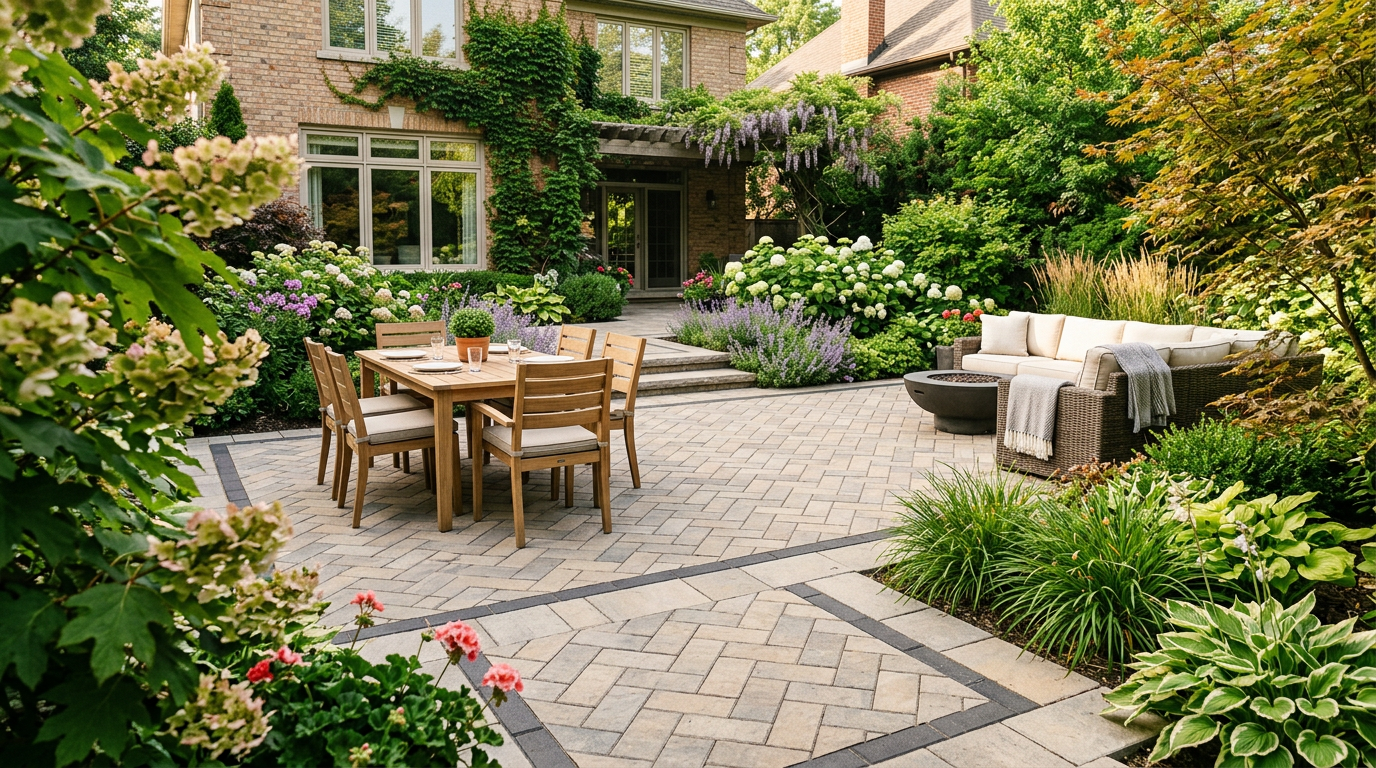
Let's cut to the chase. You want a paver patio, and you want to know what it's going to cost. Not some vague range from a lead-gen website trying to sell your info to a dozen contractors. You want real numbers to build a real budget.
We get it. We've planned and built hundreds of patios, from tiny 10x10 squares to sprawling multi-level masterpieces. The single most common question we hear is, "So, what's the damage?"
The answer is always "it depends," but that's not helpful. So, we're breaking down every single factor that goes into the cost of a paver patio. Whether you're hiring a pro or tackling it yourself, this is the only guide you'll need.
The Short Answer: Paver Patio Cost Per Square Foot
If you want the quick numbers for your back-of-the-napkin math, here they are:
- Professional Installation: $20 to $50 per square foot.
- DIY Installation: $8 to $20 per square foot.
So, for a standard 200-square-foot patio (10' x 20'), you're looking at:
- Pro Install: $4,000 to $10,000
- DIY Install: $1,600 to $4,000
Why the huge range? Because "paver patio" can mean anything from basic concrete squares on a simple base to intricate bluestone patterns with built-in lighting and seating walls. The low end of the pro range ($20/sq. ft.) represents a straightforward job with budget-friendly materials, easy site access, and level ground. The high end ($50+/sq. ft.) involves premium materials, complex patterns, significant site prep (like excavation on a slope), and limited machine access.
Now, let's dissect what makes up those numbers.
Cost Factor #1: Paver Materials
This is your biggest single variable. The pavers themselves can account for 25-50% of the total project cost. They're sold by the square foot, and the options are vast.
-
Concrete Pavers: This is the most common and cost-effective choice. They're durable, come in endless shapes, colors, and textures, and are engineered for consistency. Brands like Belgard and Techo-Bloc are industry standards. Expect to pay $3 to $10 per square foot for the pavers alone. A basic paver like the Belgard Holland Stone might be $3.50/sq. ft., while a more decorative, textured option like their Catalina Grana could be $6-$9/sq. ft.
-
Clay Brick Pavers: For a classic, timeless look, you can't beat true brick pavers. They are incredibly durable and their color won't fade. They're a bit more expensive than concrete. Brands like Pine Hall Brick are a good benchmark. Expect to pay $8 to $15 per square foot.
-
Natural Stone: This is the premium category. Flagstone, bluestone, travertine, and granite offer unparalleled natural beauty, but they come at a price. They are also more difficult to install due to irregular shapes and thicknesses, which increases labor costs. Material costs can range from $15 to over $40 per square foot.
-
Permeable Pavers: These are an environmentally friendly option designed to let water pass through into the ground below. The pavers themselves are often priced similarly to high-end concrete pavers, but the base preparation is much deeper and more complex, driving up the total project cost significantly.
Cost Factor #2: The Base & Site Prep
This is the most important part of the job and the one place you absolutely cannot cut corners. A bad base means a failed patio. Period. We've been called in to fix patios that looked like a roller coaster after one winter because the original installer skimped on the base.
A proper base consists of:
- Excavation: Removing 7-10 inches of topsoil and clay. The cost depends on soil type, access for machinery, and disposal fees.
- Geotextile Fabric: A layer that separates the gravel base from the soil below, preventing mixing and settling.
- Gravel Base: Typically 4-8 inches of compacted ¾" crushed stone (often called #57 stone). This is the structural foundation.
- Sand Bedding: A 1-inch layer of coarse sand that the pavers are set in.
For a pro install, the cost of this base preparation is baked into the per-square-foot price. For DIY, you're looking at $3 to $6 per square foot just for the base materials (fabric, gravel, sand) plus delivery fees.
Steep slopes, poor drainage, or difficult access for an excavator will all increase the time and cost of this stage.
Cost Factor #3: Labor Costs (The Pro vs. DIY Divide)
For a professionally installed patio, labor is typically the biggest line item, often making up 50-60% of the total cost. Landscape contractors and masons charge anywhere from $50 to $100+ per person per hour. An experienced 2-3 person crew can typically excavate, prep, and lay about 100-150 square feet of a simple patio per day.
This is where DIY saves a massive amount of money. If you're willing to trade your sweat and weekends for cash, you can cut your total cost in half or more. But don't underestimate the work. It's back-breaking. If you're considering it, read our DIY Paver Patio Step by Step guide first to see what you're in for.
You'll also need to rent equipment. A plate compactor is non-negotiable for the base ($80-$100/day), and a wet saw with a diamond blade for cuts is a lifesaver ($70-$90/day).
According to the National Association of Realtors' 2023 Remodeling Impact Report, a new patio has one of the highest returns on investment for outdoor projects, with homeowners recouping an estimated 100% of the cost at resale. It's not just an expense; it's an investment in your property's value and your own enjoyment. (Source: https://www.nar.realtor/research-and-statistics/research-reports/remodeling-impact-report)
"Hidden" Costs That Will Wreck Your Budget
These are the items first-timers always forget to budget for.
- Edge Restraints: Absolutely essential for holding the patio together. You'll need one for every linear foot of open edge. A product like Snap-Edge costs about $2.00 per linear foot.
- Polymeric Sand: This special sand is swept into the joints and hardens to lock pavers in place and prevent weeds. A bag of high-quality sand like Gator Maxx G2 costs $40-$60 and covers 35-65 square feet, depending on joint width.
- Delivery Fees: Your pavers and base material are heavy. Unless you have a dump truck, expect to pay $50 to $200+ per delivery.
- Paver Sealer (Optional): A good sealer can protect against stains and enhance color. Expect to pay $100-$200 for a 5-gallon pail, which covers about 1,000 square feet.
- Waste Disposal: Getting rid of the excavated dirt can cost a few hundred dollars if you need to rent a dumpster or pay for hauling.
Upgrades That Drive Up the Price
Want to go beyond a simple square? These popular additions will increase your budget, but also the functionality and wow-factor of your space.
- Complex Patterns: A simple running bond pattern is fastest to lay. Herringbone or basketweave patterns require more cuts and time, increasing labor costs by 10-20%.
- Curves and Inlays: Bending your patio edge or adding a contrasting border looks amazing, but it's a ton of extra cutting. This can add $5-$10 per square foot to the labor cost.
- Seating Walls: A popular addition that adds permanent seating and defines the space. Costs range from $100 to $250 per linear foot.
- Fire Pits: The perfect patio centerpiece. You can build a fire pit area for a few hundred dollars in materials, or have a custom gas-powered one installed for thousands.
- Landscape Lighting: Don't let your beautiful patio disappear at night. Adding integrated landscape lighting ideas can cost anywhere from $1,000 to $5,000+ for a pro installation.
So, Is a Paver Patio Worth It?
Yes. A thousand times, yes. While the initial cost can seem high, a well-built paver patio is a 30+ year investment in your home. It extends your living space, provides a foundation for family memories, and offers a fantastic return when it's time to sell.
It's a perfect project for a small backyard design where every square foot counts, and it's a cornerstone of most low-maintenance backyard ideas. By understanding the true costs involved, you can build a realistic budget, avoid nasty surprises, and create an outdoor space you'll love for decades.
Frequently asked
What is the cheapest way to build a paver patio?+
The cheapest method is a DIY installation using standard 4x8 concrete pavers from a big-box store. By handling the labor yourself and choosing budget materials, you can often build a patio for under $10 per square foot, especially if your site requires minimal excavation.
Is a concrete slab cheaper than pavers?+
Initially, a poured concrete slab is often cheaper, typically costing $10-$18 per square foot installed. However, pavers are easier and cheaper to repair. A single cracked paver can be replaced, while a cracked slab often requires expensive patching or complete replacement.
How long does a paver patio last?+
A properly installed paver patio with a deep, compacted base can easily last 25 to 50 years or more. The pavers themselves are incredibly durable. The lifespan is almost entirely dependent on the quality of the base preparation underneath them.
Can I put pavers directly on dirt?+
Absolutely not. This is the #1 mistake that guarantees failure. Placing pavers on dirt will result in a lumpy, sinking, weed-infested mess within a single season. A proper, compacted gravel and sand base is non-negotiable for a patio that lasts.