
How Much Does a Paver Patio Cost? (A Full Breakdown)
Let's cut the crap. We'll give you real numbers on what a paver patio actually costs, from DIY savings to professional installation and everything in between.
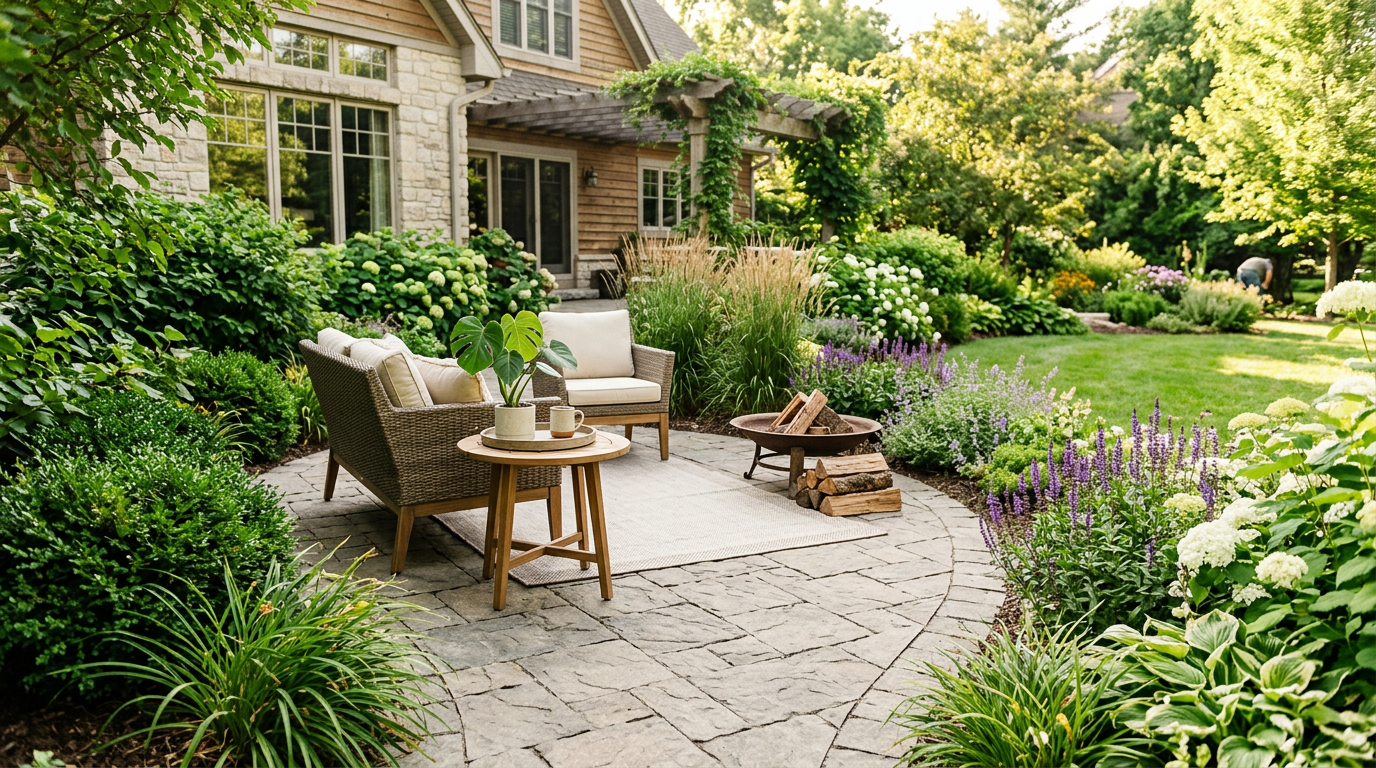
Let's be honest, trying to find a straight answer online for "how much does a paver patio cost" is a nightmare. You get vague ranges, articles written by robots, and contractors who won't give you a number until they're standing in your yard. It’s classic gatekeeping.
We're not about that. We believe you deserve real numbers to build a real budget. We've built dozens of paver patios, from simple squares to intricate, multi-level masterpieces. We know where the money goes. So let's break down every single dollar, from the gravel base to the final grain of polymeric sand.
The Short Answer: Paver Patio Cost Per Square Foot
No more fluff. Here are the numbers you're looking for.
- Professionally Installed Paver Patio: $15 to $35 per square foot. This is a wide range, and we'll break down why in a minute. For a standard 12'x16' (around 200 sq. ft.) patio, you're looking at $3,000 to $7,000.
- DIY Paver Patio: $5 to $15 per square foot. If you're willing to do the back-breaking work yourself, you're only paying for materials and maybe a plate compactor rental. That same 200 sq. ft. patio would cost you $1,000 to $3,000.
Why the huge range? Because "paver patio" can mean anything from a handful of concrete slabs from Home Depot to an elaborate bluestone terrace with built-in lighting. The final price tag comes down to four key factors.
What's Driving Your Paver Patio Cost? (The Big 4)
Understanding these four elements is the key to controlling your budget. The final cost is a direct result of the choices you make here.
Factor 1: Materials (Pavers, Base, Sand)
This is the most obvious cost. Your choice of paver has the single biggest impact on the material price.
- Concrete Pavers: This is the workhorse of the industry. They are affordable, durable, and come in hundreds of styles and colors. Expect to pay $3 to $8 per square foot. Brands like Belgard and Unilock offer fantastic quality that looks high-end without the high-end price. A basic 4x8 Holland paver will be on the low end, while a multi-piece, textured paver like Belgard's Mega-Lafitt will be on the higher end.
- Clay Brick Pavers: For a classic, timeless look. They are more expensive than concrete, running $8 to $20 per square foot. They hold their color forever but can be more brittle during installation.
- Natural Stone (Bluestone, Flagstone, Travertine): This is the premium option. It's beautiful, unique, and expensive. Costs can range from $15 to $40+ per square foot. Each stone is irregular, which also dramatically increases labor costs for fitting and leveling.
- Base Materials: This is the most important part of the job, and it's not free. You need a 4-6 inch base of compacted ¾” crushed stone (like DOT #57), which costs about $40-$60 per cubic yard, and a 1-inch screed layer of coarse sand, which is another $30-$50 per cubic yard. For our 200 sq. ft. example, you'd need about 4 cubic yards of base rock and 1 of sand, costing around $250-$350 just for the stuff nobody will ever see.
Factor 2: Labor (The Back-Breaking Part)
There's a reason labor accounts for 50-70% of a professionally installed patio's cost. It's brutal, skilled work. A professional crew isn't just laying pavers. They are:
- Excavating: Digging out 7-8 inches of soil across the entire patio area (that's about 4-5 tons of dirt for a 200 sq. ft. patio).
- Grading: Ensuring the area is sloped correctly (about ¼ inch per foot) for proper drainage away from your house.
- Hauling & Compacting: Moving tons of gravel into the excavated area and compacting it in lifts with a 200 lb. plate compactor.
- Screeding: Creating a perfectly flat and level 1-inch bed of sand.
- Laying: Placing each paver by hand, ensuring tight joints and a level surface.
- Cutting: Using a diamond-blade wet saw to make precise cuts for edges and patterns.
This is skilled, physically demanding labor. You're paying for their expertise, their efficiency, and their professional-grade equipment that ensures the job is done right once.
Factor 3: Size and Complexity
This is straightforward. A bigger patio requires more materials and more labor, so it costs more. But complexity is just as important.
- Shape: A simple square or rectangle is the cheapest and fastest to install. As soon as you add curves, you add hours of labor for cutting pavers, which drives up the cost.
- Pattern: A simple "running bond" pattern is efficient. A more complex "herringbone" or "basketweave" pattern requires significantly more cuts, sometimes doubling the cutting time and increasing material waste by 10-15%.
- Add-ons: Want a matching seating wall? A set of paver steps? A built-in fire pit? Each of these adds significant material and labor costs. A simple seating wall can easily add $1,500-$3,000 to the project.
Factor 4: Site Prep and Accessibility
Every yard is different. If a contractor can't easily get their equipment to the site, your costs will go up.
- Access: Is your backyard behind a narrow gate? Up a steep hill? If the crew has to move all materials by wheelbarrow instead of using a mini-skid steer, the labor hours (and your bill) will skyrocket.
- Demolition: Do you have an old, cracked concrete slab or rotting deck that needs to be removed first? Demolition and disposal can add $500 to $2,000 or more.
- Grading & Drainage: If your yard is a swampy mess or has a severe slope, significant work may be needed to correct drainage before any patio work can even begin. This can involve installing French drains or building retaining walls, adding thousands to the cost.
A Real-World Paver Patio Cost Example (200 sq. ft.)
Let's put it all together. Here's a sample budget for a basic 200 sq. ft. patio using mid-range concrete pavers.
| Item | DIY Cost | Pro-Installed Cost | | :--- | :--- | :--- | | Belgard Concrete Pavers (~$5/sqft) | $1,000 | $1,000 | | Base Gravel & Sand | $300 | $300 | | Edge Restraints (e.g., Snap-Edge) | $100 | $100 | | Polymeric Sand (e.g., Techniseal) | $80 | $80 | | Tool Rental (Compactor, Saw) | $200 | $0 | | Labor & Overhead | $0 | $3,520 | | TOTAL | $1,680 | $5,000 |
As you can see, the materials are a fraction of the cost. When you hire a pro, you're paying for a guaranteed result without spending two weekends breaking your back. Is it worth it? That's the next question.
Pro vs. DIY: Is Saving Money Worth the Sweat?
Saving over $3,000 is tempting, and for the right person, a DIY patio is a hugely rewarding project. If you're considering it, we've got the perfect guide for you. Check out our DIY Paver Patio Step by Step walkthrough for a complete plan.
But be realistic. It's not easy. I once helped a friend with his "weekend" patio project that turned into three weekends of hauling gravel and cursing a rented wet saw. You need to be in good physical shape and have an eye for detail. A mistake in the base prep—the most critical step—can lead to a lumpy, sinking patio in a year or two, costing you more in the long run to fix.
Hiring a pro gets you speed, expertise, and often, a warranty. A good crew can knock out a 200 sq. ft. patio in 2-3 days, a job that would take a DIYer two full weekends. Plus, a patio is a major investment in your home. According to the 2023 Remodeling Impact Report from the National Association of Realtors, homeowners can expect to recoup over 95% of the cost of a new paver patio at resale, making it one of the highest ROI outdoor projects. (Source: www.nar.realtor/research-and-statistics/research-reports/remodeling-impact) A professionally installed patio is a safe bet to achieve that value.
How to Save Money on a Paver Patio (Without Cutting Corners)
Whether you go pro or DIY, you can still be smart with your budget. Here are some tips that don't compromise the quality of the final product:
- Stick with Standard Materials: Choose a high-quality concrete paver in a standard color and size. They look fantastic and are a fraction of the cost of natural stone.
- Simplify the Design: A rectangular patio with a simple running bond pattern is the most cost-effective. It minimizes cuts and labor time. A well-designed small patio can have a bigger impact than a giant, boring one. We have tons of small backyard design ideas that prove it.
- Do the Demo Yourself: If you have an old patio or deck to remove, you can save a few hundred dollars by doing the demolition and hauling yourself.
- Enhance it Later: Build the patio now and add the fancy stuff over time. You can always add landscape lighting ideas or a seating area next year. Building a fire pit is a great phase-two project; check out our guide on how to build a fire pit area.
- Get Multiple Quotes: If hiring a pro, get at least three itemized quotes. Don't just look at the bottom line; compare their proposed base depth, materials, and timeline. This is one of our top tips for any cheap backyard makeover ideas that deliver high impact.
Ultimately, a paver patio is one of the best investments you can make in your outdoor living space. It's durable, beautiful, and functional. By understanding where the costs come from, you can make smart choices, build an accurate budget, and create a patio you'll enjoy for decades—without getting ripped off.
Frequently asked
Is a paver patio cheaper than a concrete slab?+
Initially, a simple poured concrete slab is often cheaper ($8-$15/sq.ft.). However, pavers are easier to repair (just replace one paver), offer more design variety, and can have a better long-term value. A cracked concrete slab is a major, costly repair.
What is the best base for a paver patio?+
The industry standard is a 4-6 inch layer of compacted ¾” clean crushed stone (like DOT #57), followed by a 1-inch layer of coarse concrete sand for leveling. This combination provides excellent drainage and a stable foundation to prevent settling and heaving.
How long does a paver patio last?+
A properly installed paver patio can easily last 25-50 years or more. The longevity is almost entirely dependent on the quality of the base preparation. A poorly prepared base will cause sinking and shifting within a few years, while a solid one ensures durability for decades.
Can I put a fire pit on a paver patio?+
Yes, but use caution. Concrete pavers are fire-resistant but can be damaged or discolored by intense, direct heat. Use a steel fire pit with legs to create an air gap, or place a fire-resistant mat underneath. A built-in fire pit requires a steel insert and fire brick lining.
Are expensive pavers worth it?+
It depends on your budget and style. Expensive pavers like natural stone or porcelain offer unique looks and superior durability. However, modern concrete pavers from brands like Belgard and Unilock offer fantastic quality, warranties, and design options at a much lower price point for most homeowners.