
How Much Does a Paver Patio Cost? (A Full Breakdown)
Stop guessing what you'll pay for that dream patio. We're pulling back the curtain on paver patio costs, from budget DIY projects to high-end pro installations.
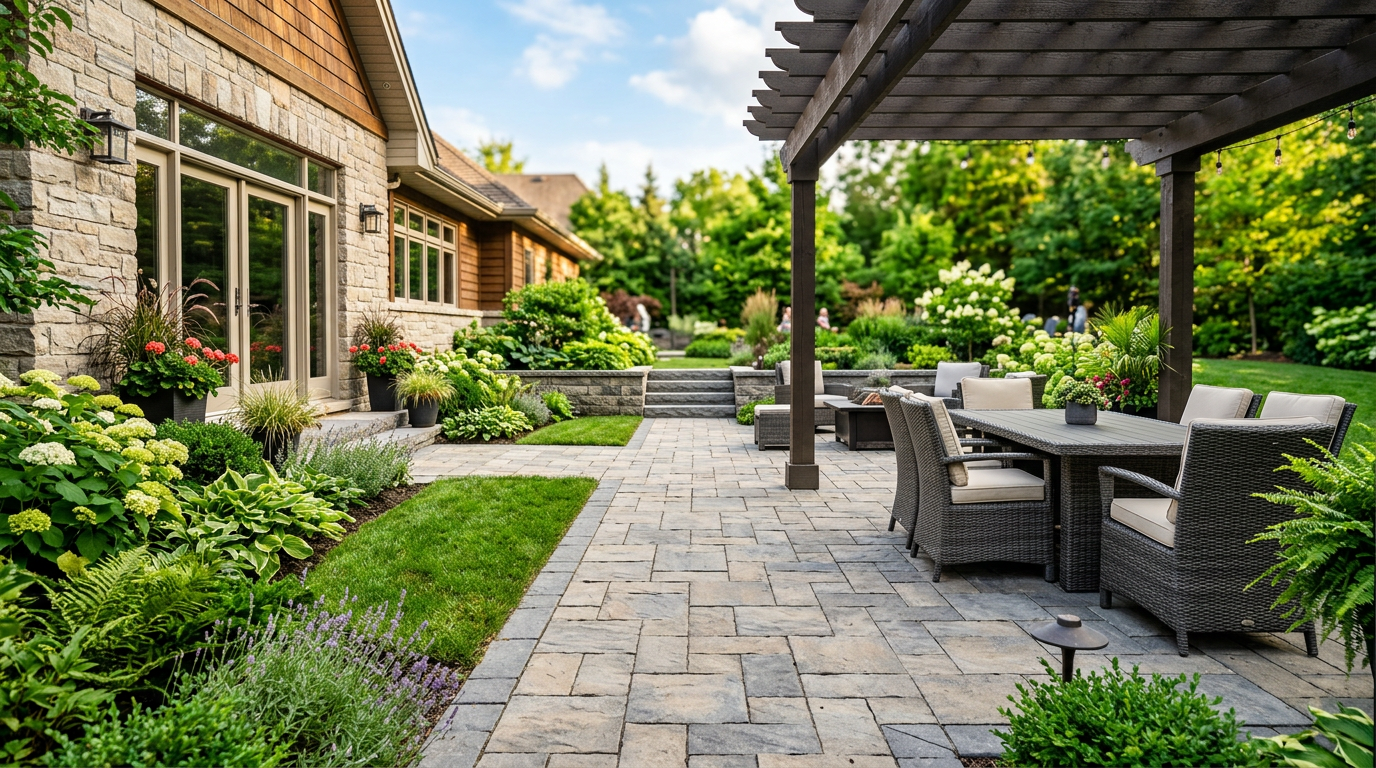
Let's get right to it. "How much does a paver patio cost?" is one of the top questions we hear. The honest, no-fluff answer is: it depends. But that's not helpful, is it? Gatekeeping prices helps no one but the contractors who want to surprise you with a big bill.
So, we're going to break it all down for you. No vague ranges, just real numbers based on the materials you'll buy and the labor you'll hire (or do yourself). We've installed hundreds of patios, from tiny 100-square-foot landings to sprawling outdoor living rooms. We know where the costs hide and where you can save a buck without wrecking your project's longevity.
By the end of this, you'll be able to build a realistic budget and talk to a contractor without feeling like you're getting taken for a ride. Or, you'll feel empowered to tackle it yourself with our DIY Paver Patio Step by Step guide.
The Short Answer: Paver Patio Cost Per Square Foot
If you just want the quick-and-dirty numbers for your budget spreadsheet, here they are. These prices typically include the base materials, sand, and the pavers themselves.
- DIY Paver Patio Cost: $5 - $10 per square foot. This assumes you own basic tools (shovel, wheelbarrow) and will rent heavy equipment like a plate compactor. Your main costs are the pavers, gravel base, sand, and edge restraints.
- Professionally Installed Paver Patio Cost: $15 - $30 per square foot. This is a huge range, we know. A simple patio using standard concrete pavers will be closer to $15/sq ft. A complex design with high-end natural stone pavers on a challenging, sloped property could push past $30/sq ft.
So, for a common 20'x20' (400 sq ft) patio:
- DIY: $2,000 - $4,000
- Pro-Installed: $6,000 - $12,000
Now, let's dig into why these numbers vary so much.
What Drives the Cost? A Line-Item Breakdown
The final price tag is a sum of several parts. Understanding these parts is key to controlling your budget.
1. The Pavers Themselves (The "Fun" Part)
This is where you'll spend your time at the landscape supply yard. The material you choose has the biggest impact on your material cost.
- Concrete Pavers: The industry standard. They're durable, come in endless shapes, colors, and textures, and are incredibly cost-effective. Brands like Belgard, Cambridge, and Techo-Bloc are what most pros use. Cost: $3 - $8 per square foot.
- Clay Brick Pavers: For that classic, timeless look. They are super dense and hold their color forever. They tend to be a bit more expensive and require more skill to lay evenly. Cost: $5 - $12 per square foot.
- Natural Stone Pavers (Flagstone, Bluestone, Travertine): This is the high end. Each stone is unique, providing a beautiful, organic look. They are also the most expensive material and often cost more to install due to their irregular shapes and thickness. Cost: $15 - $35+ per square foot.
- Porcelain Pavers: A great option for a sleek, modern front yard landscaping ideas vibe. They are non-porous, stain-resistant, and won't fade. They require a perfectly level base, so installation can be more exacting. Cost: $8 - $15 per square foot.
2. Base Materials (The "Boring But Critical" Part)
We cannot stress this enough: do not cheap out on your base. A paver patio is only as good as the foundation you build for it. A proper base prevents sinking, shifting, and weeds. Labor for this part is intensive, which is why pro costs are what they are.
- Excavation: You need to dig out 7-9 inches of soil (4-6" for the base, 1" for sand, plus the paver height). A contractor will use a mini-excavator. If you DIY, it's a shovel and a strong back. Cost is mostly labor, but figure $1 - $3 per square foot as part of a pro's bid.
- Geotextile Fabric: This woven fabric separates your gravel base from the soil below, preventing them from mixing over time. It's cheap insurance. Cost: ~$0.50 per square foot.
- Gravel Base (e.g., ¾" Clean Stone, Paver Base): This is the load-bearing layer. You need a minimum of 4 inches, and we recommend 6 inches for patios that will see heavy furniture or foot traffic. Cost: ~$50 - $80 per cubic yard. One yard covers about 80 sq ft at 4" deep.
- Bedding Sand (e.g., Concrete Sand): A 1-inch layer of coarse sand goes on top of the compacted gravel. This is what you actually set the pavers into. Cost: ~$50 per cubic yard or $6 for a 0.5 cu ft bag.
3. Labor Costs (The Biggest Variable)
If you hire a pro, this is where most of your money goes. And for good reason. It's back-breaking work.
Labor includes: demolition of an old patio, excavation and dirt removal, hauling and spreading tons of gravel and sand, compacting the base (this is vital!), carefully laying and leveling each paver, making precise cuts around edges, and finishing the job. A professional crew can knock out a 400 sq ft patio in 2-4 days. The same job might take a DIYer two full weekends.
Expect labor to account for 50-60% of the total project cost. If your total quote is $8,000, about $4,000-$4,800 of that is paying for the skill, speed, and equipment of the installation crew.
4. Add-ons and Finishing Touches
These are the items that take a patio from good to great, but they all add to the bottom line.
- Edge Restraints: Absolutely non-negotiable. This hidden plastic or metal edging holds the entire system together. We like Snap-Edge or similar products. Cost: $2 - $4 per linear foot.
- Polymeric Sand: This special sand is swept into the joints and then activated with water. It hardens like a grout, locking pavers together and preventing both weeds and ant hills. A must-have. We use Alliance Gator Maxx G2. Cost: ~$30 - $45 per 50lb bag (one bag covers 50-80 sq ft).
- Sealing: Applying a sealant can enhance the color of your pavers and protect them from stains. Cost: $1 - $3 per square foot for professional application.
- Extras: Want a seating wall, a fire pit, or some elegant landscape lighting ideas? These will be quoted as separate line items. A simple seating wall can add $2,000-$5,000 to the project.
Example Patio Cost Scenarios
Let's put it all together with three common scenarios.
Scenario 1: The "Weekend Warrior" DIY Patio (120 sq ft) This is a perfect project for a small, unused corner of the yard. You're doing all the work and just buying materials.
- Pavers: 120 sq ft of Belgard Holland Stone from a local dealer @ $3.50/sq ft = $420
- Base/Sand: ~2 cubic yards of gravel base & sand = $150
- Edging: ~44 linear feet of edging = $100
- Polymeric Sand: 2 bags = $70
- Plate Compactor Rental: 1 day = $100
- Misc (blades, gloves, etc.): $60
- Total DIY Cost: ~$900, or $7.50 per square foot.
Scenario 2: The "Standard & Stylish" Pro-Installed Patio (400 sq ft) This is the most common project we see. A good-sized space for dining and lounging, built to last by a professional crew.
- Total Project Quote: 400 sq ft @ an all-in price of $22/sq ft = $8,800
- What that includes (roughly):
- Materials: Pavers ($2000), Base/Sand/Misc ($1000) = $3,000
- Labor & Overhead: Excavation, installation, cleanup = $5,800
Scenario 3: The "Luxe Outdoor Room" Pro-Installed Patio (600 sq ft) A premium project with high-end materials and features. This isn't a cheap backyard makeover ideas project; it's a full-blown extension of the home.
- Pavers: 600 sq ft of natural bluestone @ $20/sq ft = $12,000
- Installation: Complex install @ $18/sq ft (labor + base) = $10,800
- Add-ons:
- Granite-capped seating wall = $6,000
- Integrated LED hardscape lighting = $2,500
- Total Pro Cost: ~$31,300, or about $52 per square foot.
Is a Paver Patio a Good Investment?
Looking at a potential $10,000 bill can be tough, but it's important to frame it as an investment, not just an expense. Paver patios provide a massive return in two ways: lifestyle and resale value. Unlike a wood deck that needs yearly staining and eventually rots, a paver patio is a low-maintenance feature that will outlast nearly any other landscape element. If you have a tiny yard, a well-designed patio can be the most impactful of all small backyard design ideas.
Don't just take our word for it. According to the National Association of Realtors' 2023 Remodeling Impact Report, a new stone paver patio recovers an estimated 100% of its value at resale. (Source: https://www.nar.realtor/research-and-statistics/research-reports/remodeling-impact-report). Buyers see a beautiful, ready-to-use outdoor space and value it highly.
The final cost of a paver patio is up to you. By choosing cost-effective materials, simplifying your design, and doing some of the prep work yourself, you can dramatically lower the price. But whatever you do, build it on a solid base. A beautiful patio that sinks in two years is the most expensive patio of all.
Frequently asked
Is a paver patio cheaper than a concrete slab?+
Initially, a simple poured concrete slab is cheaper ($6-$12/sq ft). However, pavers offer better long-term value as they don't crack and individual stones can be replaced easily. Stamped concrete costs are often comparable to a basic paver patio installation.
What is the most expensive part of a paver patio?+
Labor is almost always the most expensive component, often making up 50-60% of the total project cost. For materials, natural stone like bluestone or travertine is significantly more expensive than standard concrete pavers, which can also drive up the price.
How long does a paver patio last?+
A properly installed paver patio can easily last 50 years or more. The key is a well-compacted base of at least 4-6 inches of gravel. Unlike concrete which can crack over large areas, pavers are a flexible system and individual stones can be replaced if damaged.
Can I put a fire pit on a paver patio?+
Yes, but with caution. Concrete pavers are fire-resistant but can be damaged by extreme, prolonged heat. Use a steel fire pit with legs to keep the heat source elevated, and consider placing it on a separate fire-resistant pad or using a fire pit mat to protect the pavers.
How much value does a paver patio add to a home?+
A paver patio is an excellent investment. The National Association of Realtors reports that homeowners can expect to recover nearly 100% of the cost of a new stone paver patio when they sell their home, thanks to the boost in curb appeal and usable outdoor space.