
Front Yard Landscaping Ideas for Ranch Homes
Ranch homes have a unique, low-slung profile that can be a landscaping puzzle. We'll show you how to solve it with smart design, creating curb appeal that works with your home's architecture, not against it.
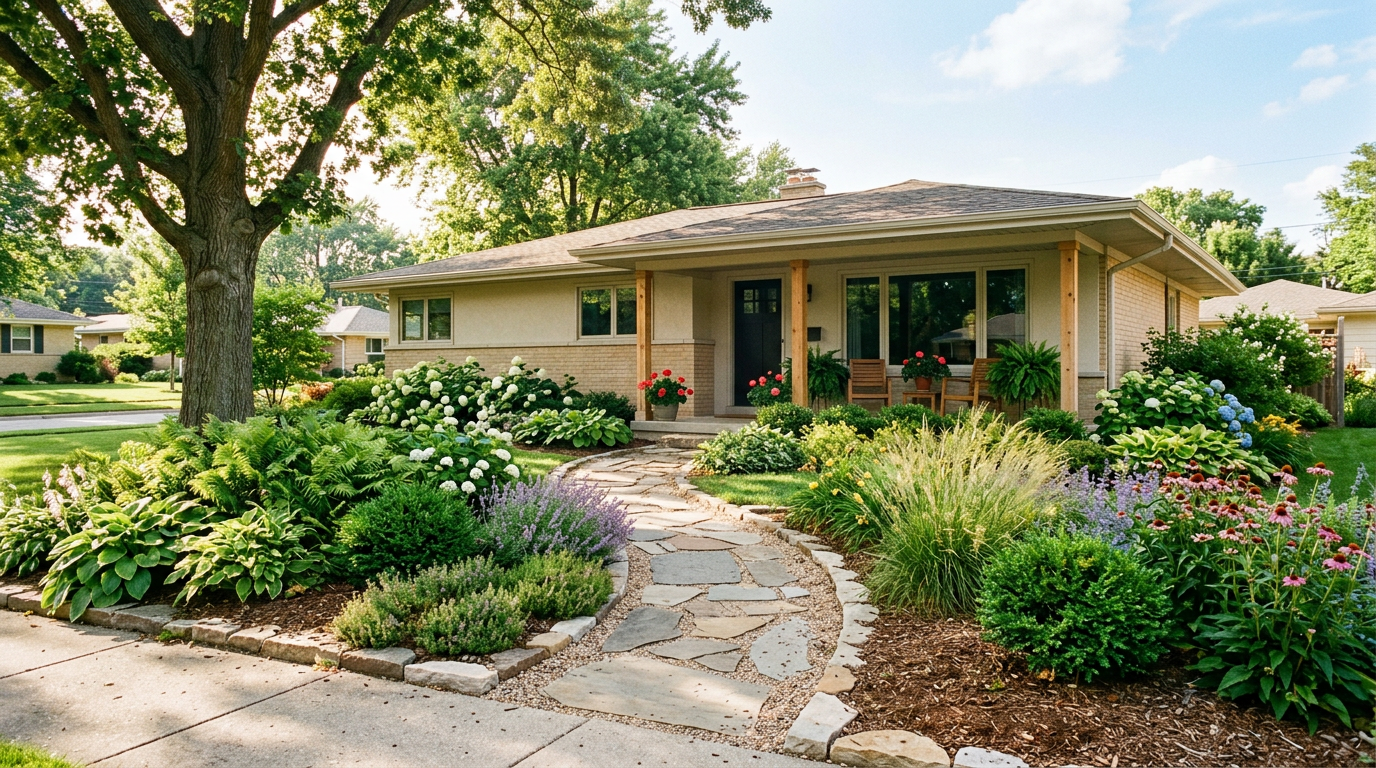
Let's be direct: ranch homes are fantastic, but they can be a landscaping nightmare. That long, low-slung profile often results in a front yard that looks flat, squat, and just plain boring. Too many homeowners either plant a sad row of identical shrubs that looks like a green mustache or just give up and let the lawn run straight into the foundation.
We're here to tell you there's a better way. You don't need a landscape architect and a six-figure budget. You just need a solid plan that works with the unique architecture of a ranch house. We’ve landscaped dozens of them, and we've figured out the secrets to creating depth, interest, and serious curb appeal.
Ditch Symmetry, Embrace Balance
The biggest mistake we see is trying to create perfect mirror-image symmetry. A ranch home is rarely symmetrical itself—the garage is on one side, the front door is off-center. Fighting this is a losing battle. Instead, aim for balance.
Think of your front yard like a scale. If you have a big, visually heavy garage door on the right, you need to add visual weight to the left. This is the perfect spot for a specimen tree with some character, like a Paperbark Maple or a clump River Birch. It provides height that draws the eye up and away from the long roofline.
On the other side, you can balance that tree with a deep, layered planting bed that stretches out from the house. By using different visual weights, you create a dynamic, interesting composition that feels intentional and sophisticated.
Layer Your Beds for Vertical Lift
To fight the ranch-home-flats, you need to think vertically. The key is creating deep garden beds (at least 4-5 feet from the foundation) and layering your plants like you're arranging stadium seating. Every plant should have a view.
Here’s the simple formula:
- Front Row (Low): Use groundcovers and low-growing perennials. Creeping Phlox, 'Angelina' Sedum, or Liriope create a soft, finished edge. This is your 1-foot-and-under crew.
- Mid-Row (Medium): This is for your workhorse shrubs and larger perennials. Think 'Green Velvet' Boxwoods for structure, Endless Summer Hydrangeas for color, or Coneflowers for pollinator-friendly blooms. These are typically in the 2-4 foot range.
- Back Row (High): Against the house, you need height. This is where you put your tallest plants. Ornamental grasses like Karl Foerster Feather Reed Grass are a non-negotiable for us—they offer verticality without blocking windows. Slender Hinoki Cypress or a climbing vine on a small trellis also work wonders.
This layering technique instantly adds depth and makes the yard feel much larger and more lush.
Your Walkway is Not an Afterthought
That skinny 3-foot concrete contractor path has to go. It's wildly out of scale with the horizontal expanse of a ranch house. It makes the house look wider and the entry feel cheap and uninviting.
Upgrade to a generous, welcoming path that’s at least 4-5 feet wide. A wider path feels more luxurious and is more practical. More importantly, add a gentle curve. A soft, sweeping walkway is the perfect antidote to the rigid, straight lines of the roof and foundation. It creates a more organic journey to the door and makes the front yard feel like a distinct, designed space.
For materials, we love bluestone or flagstone for a natural look. Concrete pavers are a more budget-friendly and durable option. If you’re feeling ambitious, a paver walkway is a killer weekend project. We break down the whole process in our DIY Paver Patio Step by Step: A Complete Weekend Guide, and the principles are exactly the same.
Go Modern with Clean Lines and Materials
Many ranch homes hail from the mid-century modern era, making them perfect candidates for a clean, contemporary landscape design. If that’s your style, lean into it. For more on this, check out our guide to Modern Front Yard Landscaping Ideas for Max Curb Appeal.
The key principles are:
- Limited Palette: Stick to greens, whites, and maybe one accent color. Use dark mulch like black or chocolate brown to make the green foliage pop.
- Strong Lines: Use geometric planters, like simple cast-concrete troughs or Corten steel boxes, to create structure.
- Repetition: Instead of a mix of 20 different plants, plant masses of the same 3-5 plants. A grid of ornamental grasses or a row of Sky Pencil Hollies creates a powerful, unified statement.
- Minimalist Hardscape: Think clean concrete pads, gravel beds, and sharp, defined edges.
Light It Up for 24/7 Curb Appeal
Don't let all your hard work disappear when the sun goes down. A well-executed lighting plan can make a ranch home look absolutely stunning at night, highlighting its architectural features and adding a ton of drama.
Focus on three things:
- Uplighting: Place one or two spotlights on your specimen tree(s) and key architectural features of the house.
- Path Lighting: Use low-profile path lights to safely illuminate your new, wider walkway.
- Wall Washing: Use a wide-angle floodlight to cast a gentle, even glow across a long brick or stone wall.
You don't need to spend a fortune. A high-quality kit like the VOLT All-Star Path & Area Light Kit (around $450) provides everything you need to get started with professional-grade results. It’s one of the best investments you can make for curb appeal, and we have plenty more recommendations in our full guide to Landscape Lighting Ideas That Don't Look Cheap.
Low-Maintenance is the Name of the Game
Nobody wants to spend every weekend weeding and watering. The goal is to create a beautiful front yard that mostly takes care of itself. The secret? Choose the right plants and do the prep work.
Using native plants is the ultimate landscaping hack. They are adapted to your local climate, soil, and rainfall, meaning they need far less water, fertilizer, and fussing than exotic species. According to the EPA's WaterSense program, a household with an automatic sprinkler system can use 50% more water outdoors than one without. By using native, drought-tolerant plants, you can slash that usage, saving water and money. (Source: https://www.epa.gov/watersense/statistics-and-facts)
Combine native plants with a thick, 3-inch layer of quality hardwood mulch. Mulch is your best friend. It suppresses weeds, retains soil moisture (so you water less), and breaks down over time to enrich the soil. For a deep dive into easy-care strategies, our post on Low Maintenance Backyard Ideas That Actually Work has tips that apply just as well to the front yard.
By combining these strategies—embracing asymmetry, layering plants, upgrading your hardscaping, and lighting it all beautifully—you can transform your flat front yard into a stunning landscape that perfectly complements your ranch home.
Frequently asked
How do I landscape the front of my ranch house on a budget?+
Focus on high-impact, low-cost moves. Start with deep mulching to define beds and suppress weeds. Plant smaller, younger perennials and shrubs that will grow over time. Edge your beds cleanly with a sharp spade and use affordable solar lights for a touch of nighttime drama.
What are the best foundation plants for a ranch home?+
Use a mix of textures and heights. Low-growing evergreens like dwarf mugo pine or 'Green Velvet' boxwood provide year-round structure. Mix in perennials like coneflowers or salvia for color and ornamental grasses like 'Little Bluestem' for height and movement. Avoid planting a single, monotonous row.
How can I add height to my ranch style front yard?+
Layer your plantings. Place taller elements, like a Japanese Maple or a cluster of Karl Foerster feather reed grass, in the back of your beds. Use mid-sized shrubs in the middle and low groundcovers in front. A strategically placed arbor or trellis can also add verticality instantly.
Should my walkway be straight or curved for a ranch house?+
A gently curved walkway is usually best. It softens the long, horizontal lines of a ranch home and creates a more natural, meandering journey to the front door. Make sure it's wide enough—at least 4 to 5 feet—to feel generous and proportional to the house.