
Cheap Backyard Makeover Ideas That Don't Look Cheap
Tired of a backyard that looks... sad? We've got high-impact, low-cost backyard makeover ideas that will give you the most bang for your buck without breaking the bank.
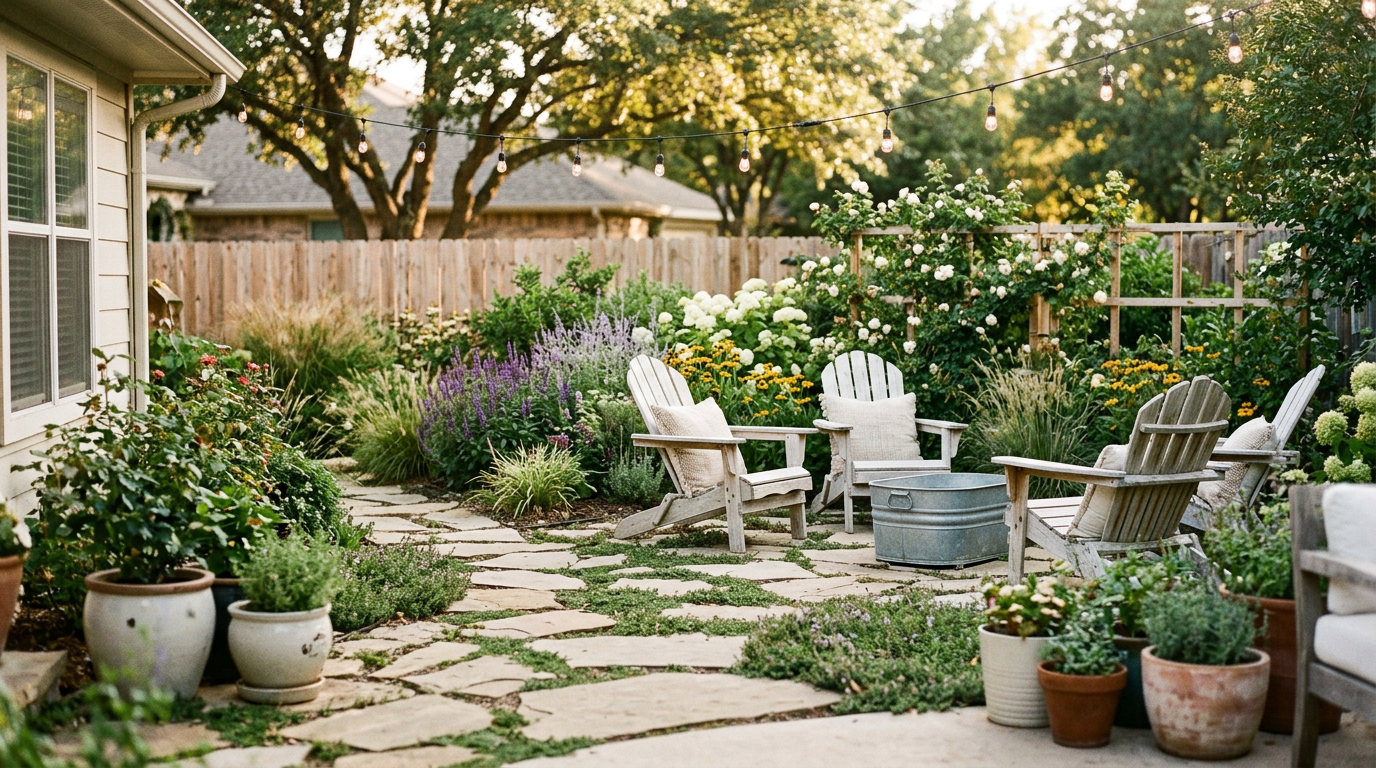
Let's be honest. You scroll through Instagram and see these pristine backyards with custom fire pits, sprawling paver patios, and outdoor kitchens that cost more than a new car. Then you look out your window at a patch of sad grass, a stained concrete slab, and a general sense of... meh. The dream of a backyard oasis feels like it requires a second mortgage.
We're here to tell you it doesn't. Welcome to Dirt Cheap Genius, where we believe a killer backyard is about smarts, not just dollars. Forget the gatekeeping and the six-figure quotes. We're going to break down the real, actionable, cheap backyard makeover ideas that deliver the biggest visual punch for the least amount of cash. It's time to trade in that lawn-envy for some serious sweat equity.
First, A Reality Check on Landscaping Costs
Before we get to the fun stuff, let's talk numbers. Why does landscaping feel so expensive? Because it often is. The cost is primarily in two areas: materials (hardscaping like stone, pavers, and wood) and labor. Professional labor is skilled and worth it, but it's also the biggest line item you can slash by doing the work yourself.
According to HomeAdvisor, the average cost of a full professional landscape installation can run from $3,500 to over $16,000. But don't let that number scare you. Investing in landscaping can also yield an ROI of over 100%. Our goal here is to get you that high-end look and feel for a tiny fraction of the cost by being smart with your money and labor. (Source: https://www.homeadvisor.com/cost/landscaping/)
The secret is to minimize expensive materials and maximize your own effort on high-impact tasks. We're not building a new patio; we're making your old one look new. We're not buying mature trees; we're planting smart. Let's get to it.
The Foundation: Clean, Define, and Mulch
This is the least glamorous but most important step. You cannot have a nice backyard if it's messy. A weekend spent on these tasks will produce a more dramatic before-and-after than any other tip on this list, all for less than $100.
- The Great Cleanup: Get ruthless. Pull every single weed. Rake up old leaves and debris. Power wash your siding, walkways, and patio. Move all the forgotten junk (that rusty grill, the kids' broken toys) to the curb or the dump. A clean slate is non-negotiable.
- Edge Everything: The difference between a DIY yard and a pro-looking yard is crisp edges. Use a half-moon edger or even a simple spade to cut a clean, 3-inch deep edge wherever a garden bed meets the lawn, a walkway, or a patio. It creates a sharp line of separation that looks incredibly tidy.
- Mulch is Your Best Friend: Mulch is the magic eraser of landscaping. It suppresses weeds, retains soil moisture, and—most importantly for a makeover—provides a rich, uniform color that makes your plants pop. A dark brown or black mulch, like Scotts Earthgro Brown Mulch at about $3.50 per 2-cu ft bag, provides incredible contrast. For a 100 sq. ft. bed, you'll need about 10 bags for a 2-inch layer. That's a $35 investment for a massive visual upgrade. This is the cornerstone of any list of low-maintenance-backyard-ideas.
Paint Your Way to a New Patio (Seriously)
Got a stained, cracked, or just plain boring concrete slab patio? Your first thought might be to rip it out or cover it with expensive pavers. Stop right there. Your secret weapon is a gallon of paint.
Modern porch and patio paints are incredibly durable and designed for high-traffic outdoor use. For about $40, a gallon of a product like Behr Premium Porch & Patio Floor Paint can completely resurface your outdoor living space. The key is in the prep work:
- Clean Thoroughly: Power wash it first, then scrub with a concrete cleaner/degreaser to remove any oils or grime.
- Patch and Repair: Fill any significant cracks with a concrete patch product.
- Prime and Paint: Use a primer designed for concrete, then apply two thin coats of your paint, allowing ample dry time in between. A charcoal gray or a modern taupe can make the space look brand new.
The same logic applies to a tired, graying wood deck or fence. A weekend of cleaning and applying a fresh coat of stain, like Thompson's WaterSeal (around $35/gallon), can bring it back to life and make the entire yard feel more vibrant and cohesive.
Create a High-Design Zone with Gravel
Want a spot for a fire pit or a separate seating area but can't stomach the cost of pavers? Pea gravel or decomposed granite (DG) is the answer. We've installed countless high-end paver patios, but for our own homes and for clients on a tight budget, a well-executed gravel patio is an absolute game-changer.
We're talking about a genuine, high-impact design move, not just dumping some rocks on the ground. Here’s the basic process for a 10x10 foot patio:
- Mark and Excavate: Mark out your area and dig down about 4-5 inches.
- Tamp and Fabric: Tamp the soil flat, then lay down a high-quality, permeable landscape fabric. This is crucial for preventing weeds.
- Add Your Gravel: Fill the area with about 4 inches of pea gravel or DG. One cubic yard (around $50-$70 from a landscape supplier) is usually enough for a 10x10 area at this depth.
- Edge It: Contain the gravel with a clean edge using simple metal or plastic landscape edging for a sharp, finished look.
For a total cost of around $150-$200 and a weekend of work, you've just created a brand new, functional, and stylish outdoor room. It's one of our favorite tricks for making the most of a yard and is especially effective in small backyard design ideas where creating distinct zones is key.
Plant Smart, Not Expensive
Nothing says “backyard oasis” like lush greenery, but walking into a nursery can feel like financial suicide. Those big, beautiful 5-gallon shrubs and mature perennials? They come with a hefty price tag. The Dirt Cheap Genius approach is to play the long game.
- Buy Small: That tiny 1-quart perennial for $5 will often be the same size as the 1-gallon, $15 version by the end of the season. Buy smaller, healthier plants and let them grow. Your wallet will thank you.
- Divide and Conquer: Do you or a neighbor have big, overgrown clumps of hostas, daylilies, or ornamental grasses? In the spring or fall, you can literally dig them up, slice them in half (or quarters) with a sharp spade, and replant the divisions. It's free plants!
- Seeds are Cheap: For annual flowers and vegetables, start them from seed indoors a few weeks before the last frost. A $2 packet of zinnias can give you 30 plants, a value you'll never find at a nursery.
- Go Native: Choose plants native to your region. They're adapted to your climate, require less water and fertilizer, and support local pollinators.
The Right Light Changes Everything
Bad lighting can make even the most expensive landscape look cheap. We're talking about those weak, blue-tinted solar stakes that line a walkway like a miniature airport runway. Ditch them. Good lighting creates mood, highlights features, and extends the use of your yard into the evening.
Affordable, high-impact lighting is totally achievable.
- Cafe/String Lights: This is the easiest win. A set of heavy-duty outdoor string lights, like the Hampton Bay 24-light set from Home Depot for about $50, strung over a patio or seating area, instantly creates a festive, inviting atmosphere.
- Invest in One Good Kit: Instead of a dozen cheap solar lights, consider a single low-voltage transformer kit. A starter kit like the VOLT All-Star Spotlight Kit runs about $300, which feels like a splurge, but it includes a powerful transformer and several high-quality brass fixtures. Use them to uplight one or two feature trees or wash a wall with a soft glow. The effect is dramatic and looks incredibly professional. This is one of the core tenets we cover in our guide to landscape lighting ideas that don't scream 'budget'.
You don't need to light up the whole yard. A few strategically placed lights are far more effective than a blanket of dim ones. Focus on creating depth and highlighting the best parts of your newly made-over space.
Frequently asked
How can I make my backyard look good for cheap?+
The fastest way is to clean, declutter, and mow. Then, add a fresh layer of dark mulch to all your garden beds and create crisp edges. These two actions alone can make a messy yard look intentional and cared for, all for under $100.
What is the cheapest ground cover for a backyard?+
Mulch is the cheapest initial ground cover, but it needs to be topped up annually. For a more permanent, walkable surface, a pea gravel or decomposed granite patio is the most affordable option, far cheaper than pavers, concrete, or decking.
How do you do a budget-friendly garden?+
Start plants from seed instead of buying large nursery starts. Focus on perennials that come back every year, and buy them in smaller 1-quart sizes. Ask neighbors for cuttings or divisions of their established plants like hostas or sedum to get free plants.
Can I really just paint my concrete patio?+
Absolutely. A worn, stained concrete slab can be completely transformed with a few coats of porch and patio paint. Make sure to properly clean and prep the surface first. For about $50 in paint and supplies, you can create a fresh, modern look for your outdoor space.